
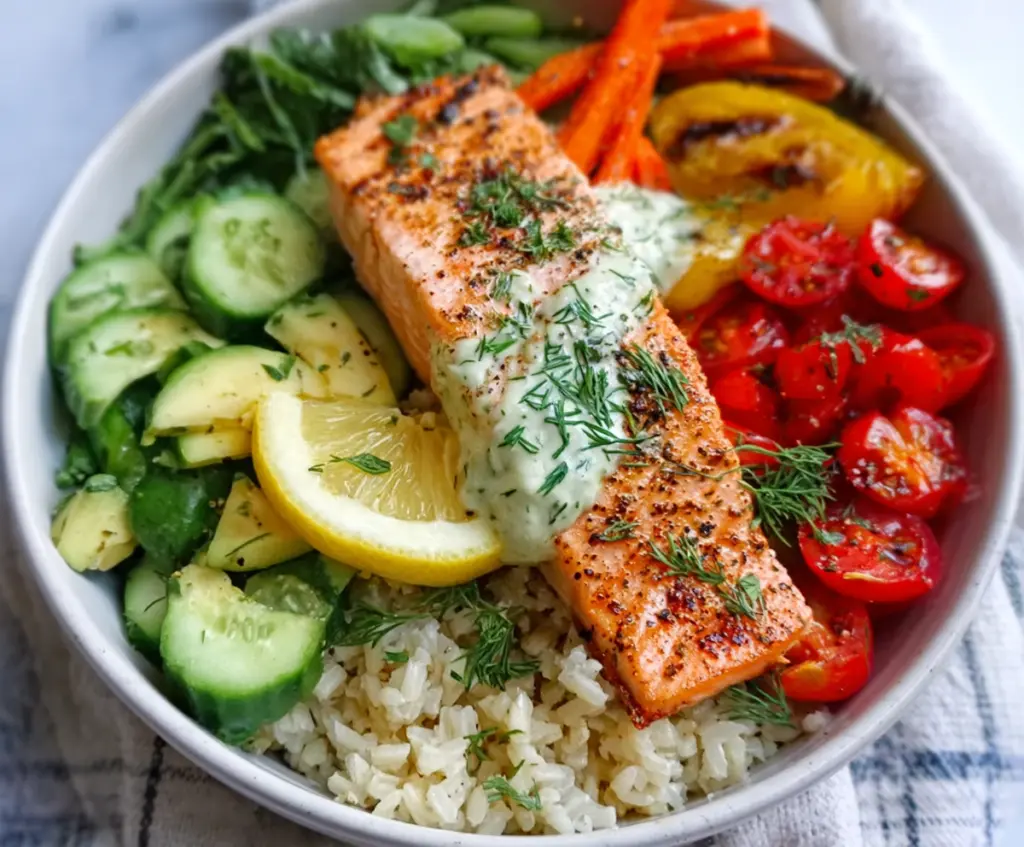
Lemon Dill Salmon Bowls
Lemon Dill Salmon Bowls are a fresh and bright meal that’s packed with tender salmon, zesty lemon, and the fresh, herby kick of dill. The combination of flaky fish, crisp…
Tip: save now, cook later.Lemon Dill Salmon Bowls are a fresh and bright meal that’s packed with tender salmon, zesty lemon, and the fresh, herby kick of dill. The combination of flaky fish, crisp veggies, and a touch of citrus makes each bite light and satisfying. It’s a perfect dish when you want something healthy but still flavorful and filling.
I love making these bowls when I want a quick dinner that doesn’t feel heavy. The lemon and dill bring such a nice brightness that really wakes up the whole bowl. Plus, it’s easy to switch up the greens or grains you add underneath, so it feels different every time I make it. A little tip I like is to roast the salmon just until it flakes easily—that way it stays moist and tender.
These bowls are great for meal prep too! I often make a batch at the start of the week and then have ready-to-go lunches or dinners all week long. Adding a squeeze of fresh lemon right before eating really brings everything together. It’s one of those dishes that’s as simple as it is delicious, and my family always asks for seconds when I serve it.
Key Ingredients & Substitutions
Salmon: Fresh salmon fillets are the star here. If fresh isn’t available, frozen is fine—just thaw it fully before cooking. You can also substitute with other firm fish like trout or cod.
Lemon & Dill: Lemon zest and juice give bright acidity, while fresh dill adds a herbaceous note. If dill is unavailable, try fresh parsley or tarragon for a different but tasty twist.
Vegetables: Carrots, bell peppers, cucumbers, and cherry tomatoes add color and crunch. Feel free to swap in any fresh veggies you like such as zucchini, radishes, or snap peas.
Greek Yogurt Sauce: This makes the sauce creamy and tangy. For dairy-free diets, use a plant-based yogurt. The sauce really lifts the salmon flavor.
Brown Rice: Brown rice adds a nutty base and fiber. Quinoa, couscous, or cauliflower rice work well if you want a different grain or grain-free option.
How Do I Get Perfectly Cooked, Flaky Salmon Every Time?
Cooking salmon just right can feel tricky, but it’s all about timing and temperature.
- Preheat your oven to 400°F (200°C) for even cooking.
- Drizzle olive oil and season simply with salt, pepper, and lemon zest for clean flavor.
- Roast the salmon for about 12-15 minutes, depending on thickness—avoid overcooking, as salmon can dry out quickly.
- Test doneness by gently pressing with a fork; the salmon should flake easily but still feel moist inside.
- Let the salmon rest a few minutes after roasting to lock in juices.
These steps keep the fish tender and flavorful without fuss.
Equipment You’ll Need
- Baking sheet – perfect for roasting salmon and veggies all at once for easy cleanup.
- Parchment paper or foil – keeps the baking sheet clean and prevents sticking.
- Mixing bowl – handy for making the lemon dill sauce and tossing veggies.
- Knife and cutting board – essential for chopping veggies and slicing lemon.
- Measuring spoons – for precise amounts of olive oil, lemon juice, and herbs.
Flavor Variations & Add-Ins
- Swap salmon for grilled chicken or shrimp if you want a different protein that cooks quickly.
- Try swapping dill for fresh basil or parsley for a new herbal twist on the sauce.
- Add avocado slices for creamy richness and extra healthy fats.
- Mix cooked quinoa or cauliflower rice in place of brown rice for different textures and nutrition profiles.
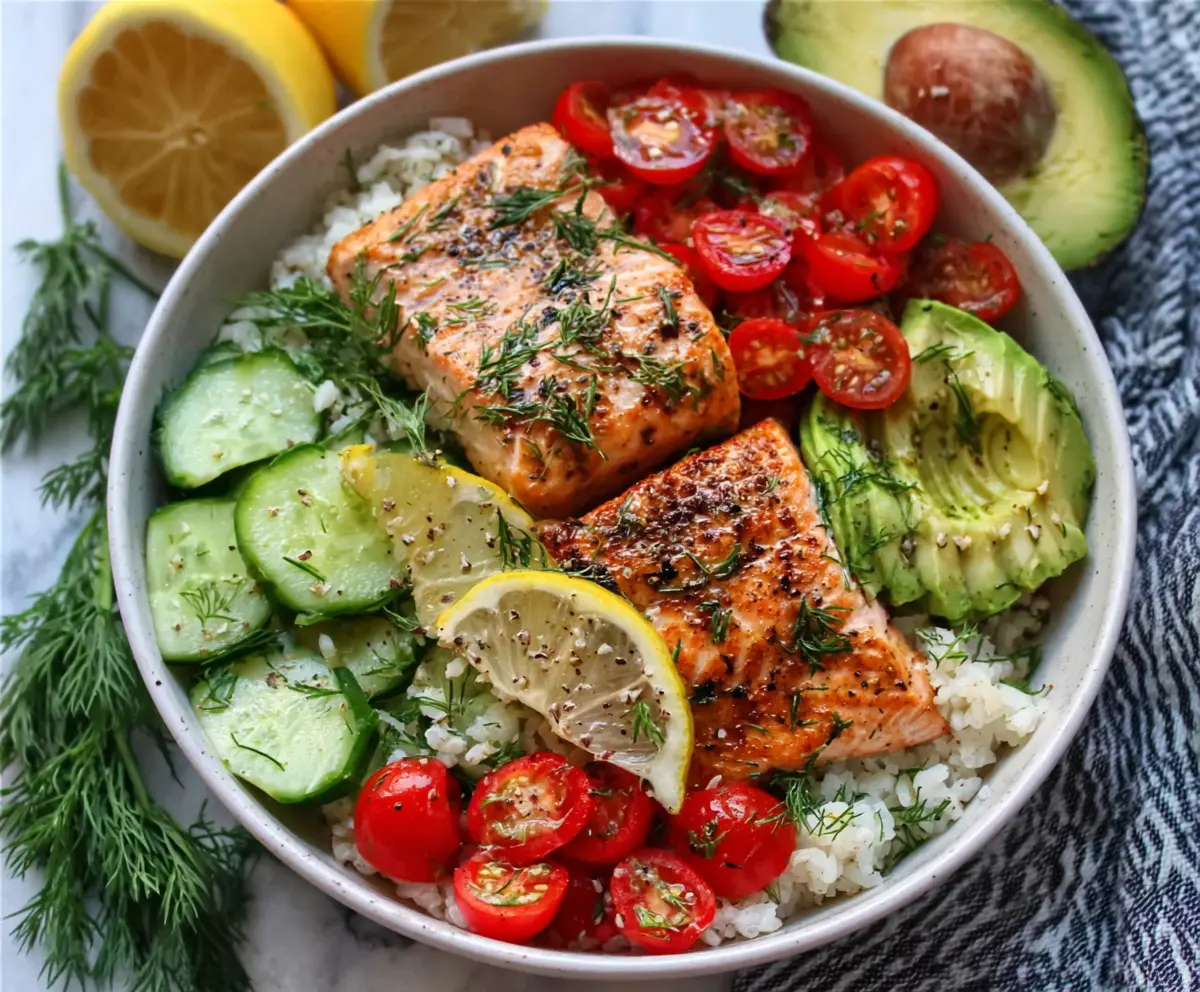
How to Make Lemon Dill Salmon Bowls
Ingredients You’ll Need:
For the Salmon and Veggies:
- 2 salmon fillets (about 6 oz each)
- 1 lemon (zested and sliced)
- 1 tbsp olive oil
- Salt and black pepper, to taste
- 1 cup cooked brown rice (or rice of choice)
- 1 cup cherry tomatoes, halved
- ½ yellow bell pepper, sliced
- 1 large carrot, cut into sticks
- ½ cucumber, sliced
- 1 cup fresh spinach or mixed greens
- ¼ cup fresh dill, chopped
For the Lemon Dill Sauce:
- ½ cup plain Greek yogurt
- 1 tbsp fresh dill, chopped
- 1 tbsp lemon juice
- 1 tsp lemon zest
- Salt and black pepper, to taste
How Much Time Will You Need?
This recipe takes about 10 minutes to prepare and 15 minutes to roast the salmon and vegetables, so plan for roughly 25 minutes total from start to finish.
Step-by-Step Instructions:
1. Preheat Oven and Prepare Salmon & Veggies:
Heat your oven to 400°F (200°C). Line a baking sheet with parchment paper or foil for easy cleanup. Place the salmon fillets on the sheet, drizzle with olive oil, then sprinkle with salt, pepper, and lemon zest. Arrange the carrot sticks and yellow bell pepper slices around the salmon. Drizzle veggies lightly with olive oil and season with salt and pepper.
2. Roast Salmon and Vegetables:
Place the baking sheet in the oven and roast for 12-15 minutes. The salmon is done when it flakes easily with a fork, and the vegetables turn tender but still crisp.
3. Make the Lemon Dill Sauce:
While the salmon and veggies are roasting, mix the Greek yogurt, lemon juice, lemon zest, fresh dill, salt, and black pepper in a small bowl. Set this flavorful sauce aside for later.
4. Assemble the Bowls:
Divide the cooked brown rice and fresh spinach or mixed greens evenly between bowls. Add cucumber slices and cherry tomatoes around the edges.
5. Add Salmon, Veggies, and Sauce:
Top each bowl with a piece of the roasted salmon and some of the roasted carrots and bell peppers. Spoon some lemon dill sauce over the salmon. Garnish with additional fresh dill and a lemon slice for a bright finish.
6. Serve and Enjoy:
Serve your Lemon Dill Salmon Bowls right away. Before eating, squeeze a bit of fresh lemon juice over the top if you like it extra zesty. Enjoy your fresh, healthy, and tasty meal!
Can I Use Frozen Salmon for This Recipe?
Yes! Just be sure to thaw the salmon completely in the fridge overnight before cooking. This helps it cook evenly and maintain a tender texture.
Can I Prep Lemon Dill Salmon Bowls Ahead of Time?
Absolutely! You can roast the salmon and vegetables and prepare the sauce in advance. Store everything separately in airtight containers in the fridge for up to 2 days, then assemble just before serving.
What Can I Substitute for Brown Rice?
Quinoa, couscous, or cauliflower rice all work well as alternatives depending on your dietary preferences or what you have on hand.
How Do I Store and Reheat Leftovers?
Keep leftovers in airtight containers in the fridge for up to 3 days. Reheat gently in the oven or microwave, adding a bit of water or lemon juice to keep the salmon moist.