
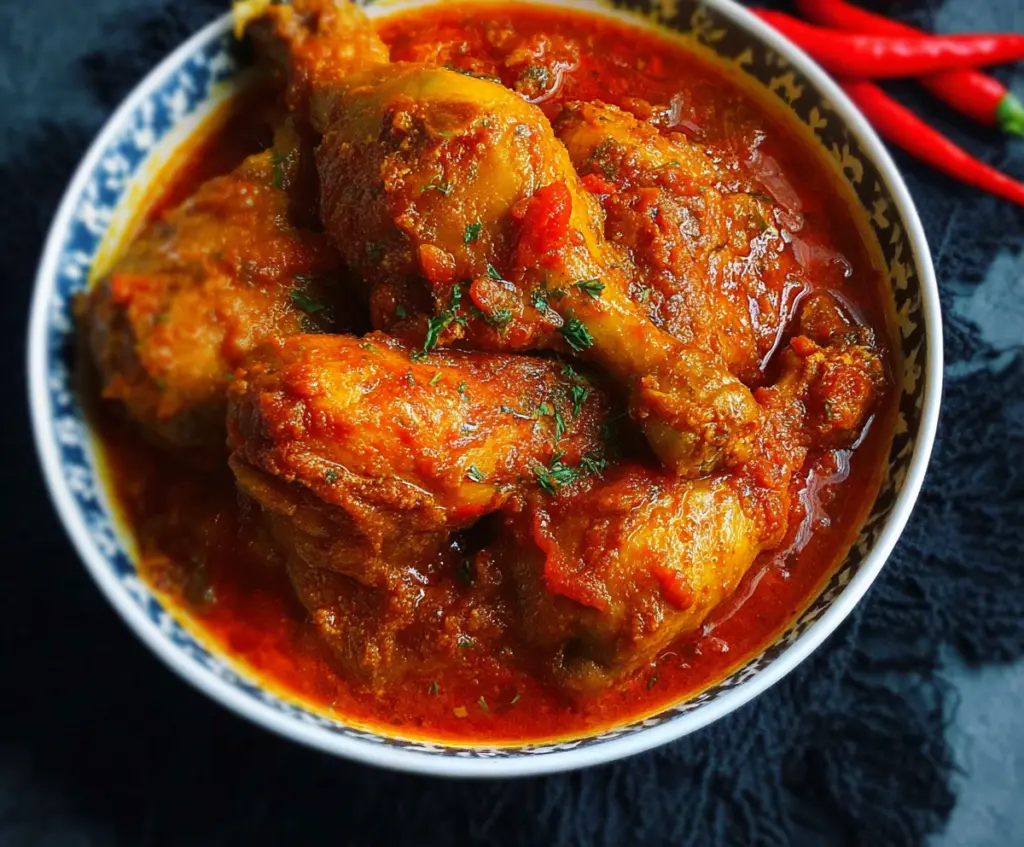
Nigerian Chicken Stew
Nigerian Chicken Stew is a vibrant and hearty dish packed with tender chicken pieces simmered in a rich, spicy tomato sauce. The stew is known for its bold flavors, combining…
Tip: save now, cook later.Nigerian Chicken Stew is a vibrant and hearty dish packed with tender chicken pieces simmered in a rich, spicy tomato sauce. The stew is known for its bold flavors, combining ingredients like fresh tomatoes, red peppers, onions, and warming spices that give it a delightful kick. It’s a comforting meal that’s colorful, fragrant, and full of life.
I love making this stew because it reminds me of lively family gatherings where everyone gathers around to enjoy big bowls of flavorful food. What I find special is how easy it is to customize the stew to your taste—whether you like it extra spicy or a little milder, it always turns out delicious. Plus, the sauce is perfect for soaking up with rice or bread, which makes eating it even more satisfying.
My favorite way to serve Nigerian Chicken Stew is over a mound of fluffy white rice or with soft, warm plantains on the side. It’s one of those meals that warms you up from the inside and leaves you feeling happy and full. I think what makes this stew so great is its ability to bring people together, sharing not just a meal, but a moment of joy and comfort around the table.
Key Ingredients & Substitutions
Chicken: I like using drumsticks and thighs because they stay juicy and soak up the stew flavor well. You can use any cut, but avoid too-lean pieces that might dry out.
Tomatoes & Peppers: Fresh ripe tomatoes are best for a natural sweetness. If fresh aren’t available, canned tomatoes work fine. For heat, Scotch bonnet peppers add authentic spice but you can swap for habanero or jalapeño if you prefer less heat.
Oil: Traditional recipes often use palm oil for its bold flavor and color, but vegetable or canola oil work well if you want a milder taste.
Spices: Thyme and curry powder give the stew depth and warmth. Feel free to adjust the curry amount depending on your preference. Garlic and ginger add fresh aroma that lifts the whole dish.
How Do You Get That Rich, Thick Stew Base?
The pepper and tomato sauce is the heart of this stew. Blending fresh tomatoes, bell peppers, Scotch bonnets, and onions creates a vibrant base. Here’s how to build that rich sauce:
- Sauté onions, garlic, and ginger in oil until soft for a fragrant start.
- Cook tomato paste briefly to remove raw taste and deepen color.
- Add your blended pepper-tomato mix and simmer gently for 10-15 minutes.
- Keep cooking until oil separates and rises to the edges—this signals a well-cooked, flavorful sauce.
Patience here is key. Stir occasionally to prevent sticking, and let the sauce thicken naturally for that classic stew texture.
Equipment You’ll Need
- Large heavy-bottom pot – perfect for browning chicken and simmering the stew evenly without burning.
- Blender or food processor – makes blending tomatoes and peppers easy for a smooth sauce.
- Wooden spoon – great for stirring the stew gently without scratching your pot.
- Sharp knife and cutting board – essential for prepping chicken, onions, and peppers safely and efficiently.
- Lid for the pot – helps simmer the stew and lock in flavors while cooking the chicken through.
Flavor Variations & Add-Ins
- Use goat meat or beef chunks instead of chicken for a richer, deeper flavor; just adjust cooking time to make meat tender.
- Add sliced carrots or green bell peppers when simmering to bring a touch of sweetness and extra veggies.
- Try swapping fresh Scotch bonnet peppers with dried chili flakes for a different spice profile and ease of storage.
- Stir in a handful of chopped spinach or kale near the end for added color, nutrients, and freshness.
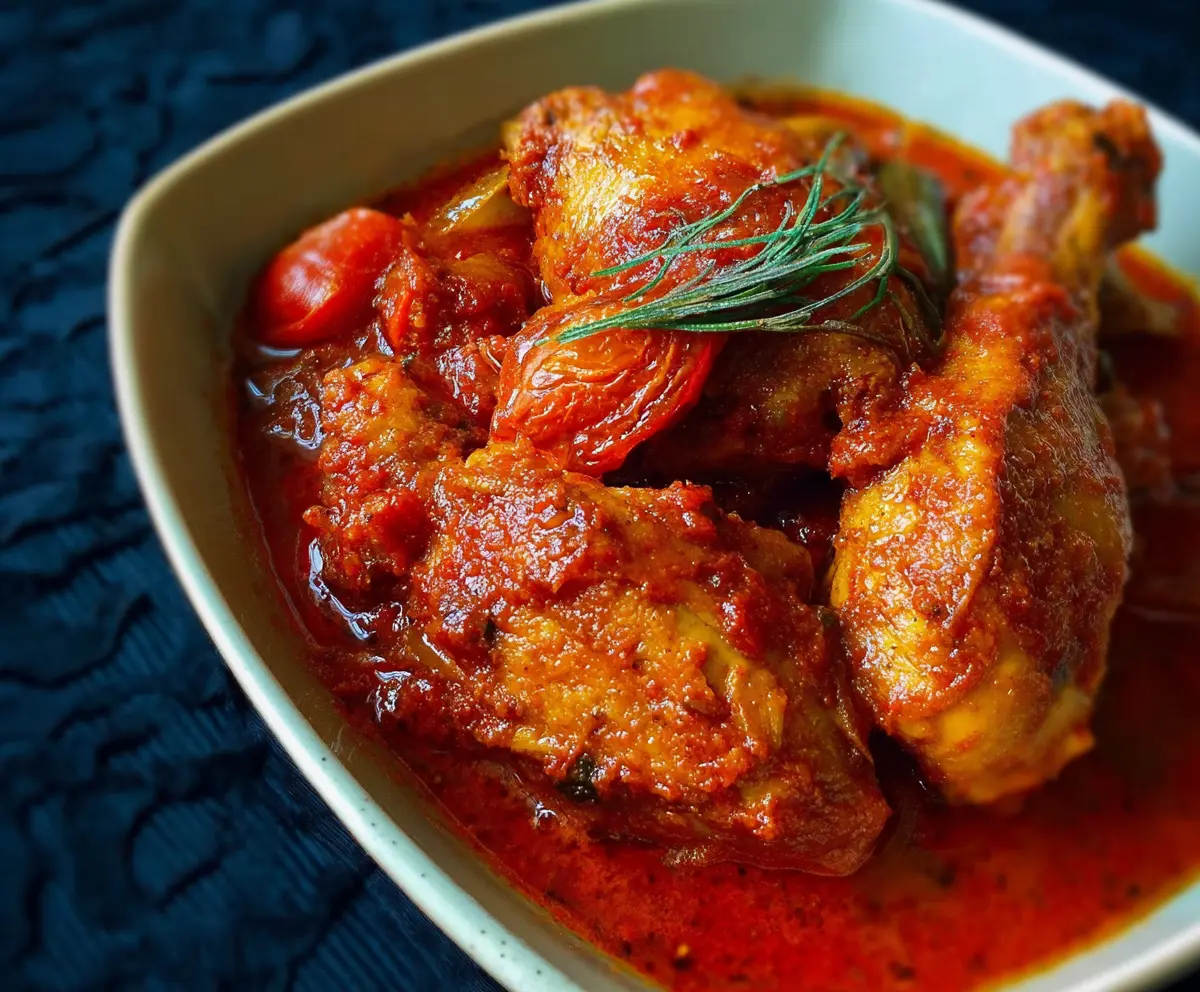
Nigerian Chicken Stew
Ingredients You’ll Need:
For the Chicken:
- 1.5 lbs chicken pieces (drumsticks, thighs, or desired cuts)
- Salt to taste
- 2 cloves garlic, minced (half of the total)
- 1/2-inch piece ginger, minced (half of the total)
- 1 teaspoon thyme
- 1 teaspoon curry powder
- About 2 tablespoons vegetable oil (for browning)
For the Tomato-Pepper Sauce:
- 4 large ripe tomatoes
- 3 large red bell peppers (or red sweet peppers)
- 3 Scotch bonnet peppers (adjust for spice level)
- 1 large onion, divided (half roughly chopped, half finely chopped)
- 2 cloves garlic, minced (remaining)
- 1/2-inch piece ginger, minced (remaining)
- 1/4 cup vegetable oil (or palm oil for authentic flavor)
- 2 tablespoons tomato paste
- 2 bay leaves
- 1 chicken bouillon cube (or 1 teaspoon chicken bouillon powder)
- Salt to taste
- Water as needed
- Fresh parsley or cilantro (optional, for garnish)
How Much Time Will You Need?
This Nigerian Chicken Stew takes about 15 minutes to prep and 45 minutes to cook, making it roughly 1 hour in total. Browning the chicken and simmering the rich tomato-pepper sauce brings out deep flavors that are worth the wait!
Step-by-Step Instructions:
1. Prepare and Brown the Chicken:
Start by rinsing the chicken pieces and patting them dry. In a bowl, season the chicken with salt, half of the minced garlic and ginger, thyme, and curry powder. Let it sit for 10-15 minutes to absorb the flavors. Heat about 2 tablespoons of oil in a large pot over medium heat. Brown the chicken pieces on all sides until golden and set them aside.
2. Make the Pepper-Tomato Blend:
Roughly chop the tomatoes, red bell peppers, Scotch bonnet peppers, and half the onion. Blend these until smooth but not too watery. This blend will form the vibrant base of your stew.
3. Cook the Pepper Sauce:
In the pot where you browned the chicken, add the remaining oil. Sauté the remaining half of the onion until it becomes translucent. Add the remaining minced garlic and ginger, cooking for 1-2 minutes until fragrant. Stir in tomato paste and cook for about 3 minutes to take away the raw taste. Pour in the blended pepper-tomato mixture, add bay leaves and chicken bouillon, and season with salt. Allow to simmer, stirring occasionally for 10-15 minutes until the sauce thickens and the oil starts separating at the edges.
4. Simmer Chicken in the Stew:
Return the browned chicken pieces to the pot, carefully stirring them into the sauce. Add a little water if needed to cover the chicken halfway. Cover and simmer on medium-low heat for 25-30 minutes or until the chicken is tender and fully cooked. Stir occasionally to prevent sticking and distribute flavor.
5. Final Touches and Serving:
Taste and adjust seasoning if needed. If the sauce feels too watery, remove the lid and simmer uncovered for a few more minutes to thicken. Remove bay leaves before serving. Garnish with fresh chopped parsley or cilantro if you like.
6. Enjoy Your Meal:
Serve this delicious Nigerian Chicken Stew hot, ideally alongside fluffy white rice, fried plantains, or any side you prefer. It’s a warm, satisfying dish that’s perfect for sharing with friends and family.
Can I Use Frozen Chicken for This Stew?
Yes, you can! Just make sure to thaw the chicken completely in the fridge overnight before cooking. Pat it dry to avoid excess moisture that could affect browning.
How Can I Make the Stew Less Spicy?
Reduce the number of Scotch bonnet peppers or substitute them with milder peppers like jalapeños or red bell peppers. You can also remove the seeds and membranes from the peppers to lessen the heat.
Can I Prepare the Stew Ahead of Time?
Absolutely! The flavors deepen if you make the stew a day ahead. Store it in an airtight container in the fridge for up to 3 days, and reheat gently on the stove before serving.
How Should I Store Leftovers?
Keep leftovers in an airtight container in the refrigerator for up to 3 days. Reheat on the stovetop over low heat, stirring occasionally to ensure even warming and avoid drying out.