
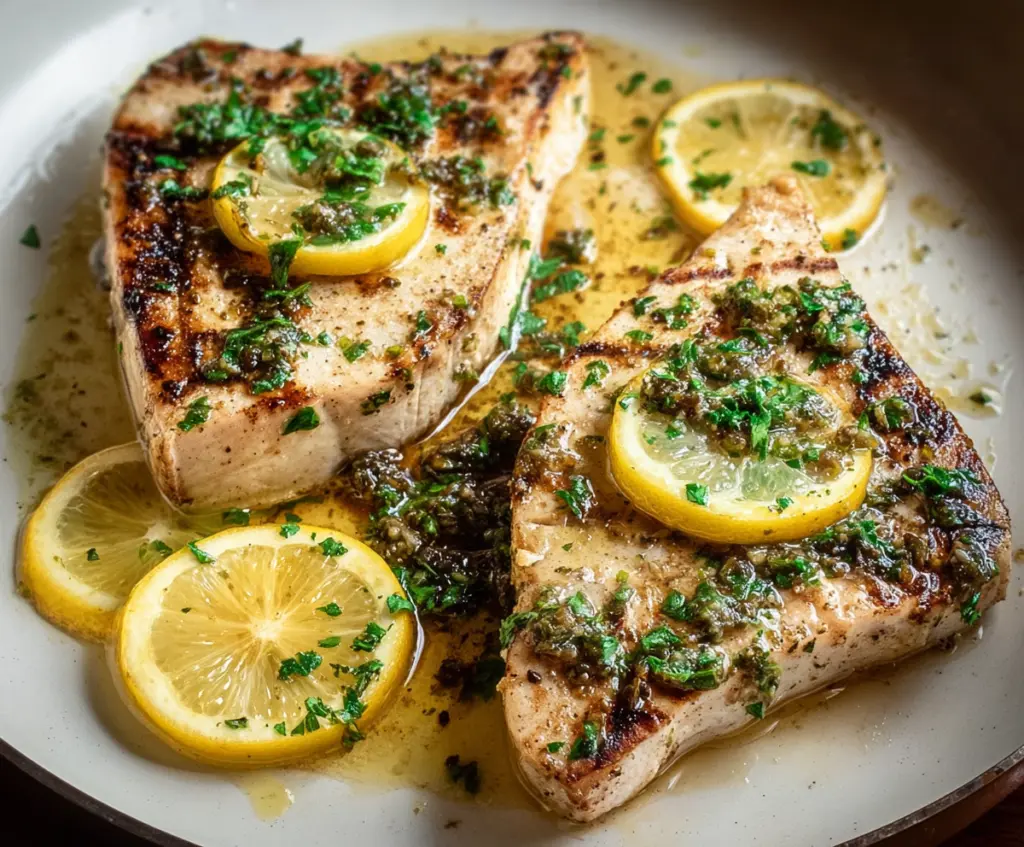
Oven-Baked Swordfish with Lemon Butter
Oven-Baked Swordfish with Lemon Butter is a simple and tasty way to enjoy a hearty, meaty fish. The swordfish steaks stay tender and flaky as they bake, soaking up the…
Tip: save now, cook later.Oven-Baked Swordfish with Lemon Butter is a simple and tasty way to enjoy a hearty, meaty fish. The swordfish steaks stay tender and flaky as they bake, soaking up the bright, buttery lemon sauce that adds just the right amount of zing. It’s a dish that feels light but still satisfying, perfect for a quick weeknight dinner or a laid-back weekend meal.
I love how easy this recipe is to put together—just pop the swordfish in the oven with the lemon butter drizzled on top, and you’re pretty much set. The butter keeps the fish nice and moist while the lemon adds freshness that keeps each bite bright. Whenever I make this, the house fills with a wonderful, inviting aroma that always makes me smile as I sit down to eat.
My favorite way to serve it is alongside some steamed veggies or a simple green salad to keep things balanced and fresh. A little crusty bread on the side to soak up any leftover lemon butter makes it all the more enjoyable. Whenever I bring this to the table, everyone usually ends up asking for seconds or at least the recipe because it’s just that good.
Key Ingredients & Substitutions
Swordfish: This fish has a firm texture that holds up well to baking. If you can’t find swordfish, try mahi-mahi or halibut for a similar meaty feel.
Butter & Lemon: Butter adds richness, while lemon brightens the dish. For a dairy-free option, use olive oil or a plant-based butter substitute. Fresh lemon juice is best for that zesty kick.
Garlic & Parsley: Garlic brings warmth, and parsley adds freshness. Feel free to experiment with other herbs like dill or basil if you want a different flavor twist.
Capers: These add a salty, tangy note that balances the butter nicely. If you don’t have capers, green olives chopped finely can work as a substitute.
How Do You Get a Perfect Golden Crust and Juicy Swordfish Inside?
Searing the fish before baking is key. It locks in moisture and creates a nice crust.
- Heat the pan and oil until shimmering—this helps to prevent sticking.
- Place the swordfish in the hot skillet without moving it—let it sear 2-3 minutes per side.
- Don’t overcrowd the pan; give the fish space so it browns evenly.
- After searing, finish cooking in the oven with lemon butter to keep the fish moist and infuse it with flavor.
Resting the fish for a couple of minutes post-baking helps juices redistribute, keeping each bite tender.
Equipment You’ll Need
- Oven-safe skillet – perfect for searing swordfish on the stove and finishing it in the oven without extra dishes.
- Small saucepan or microwave-safe bowl – to melt butter and mix lemon, garlic, and herbs easily.
- Tongs or a fish spatula – makes flipping the swordfish steaks simple and gentle to keep them intact.
- Sharp knife – for slicing lemons thinly and trimming the fish if needed.
Flavor Variations & Add-Ins
- Swap swordfish for salmon or mahi-mahi for a milder taste that still bakes well.
- Add a pinch of red pepper flakes to the lemon butter for a gentle spicy kick.
- Stir in fresh chopped basil or dill for a different herb aroma.
- Mix in some finely chopped sun-dried tomatoes to the butter sauce for a tangy, rich twist.
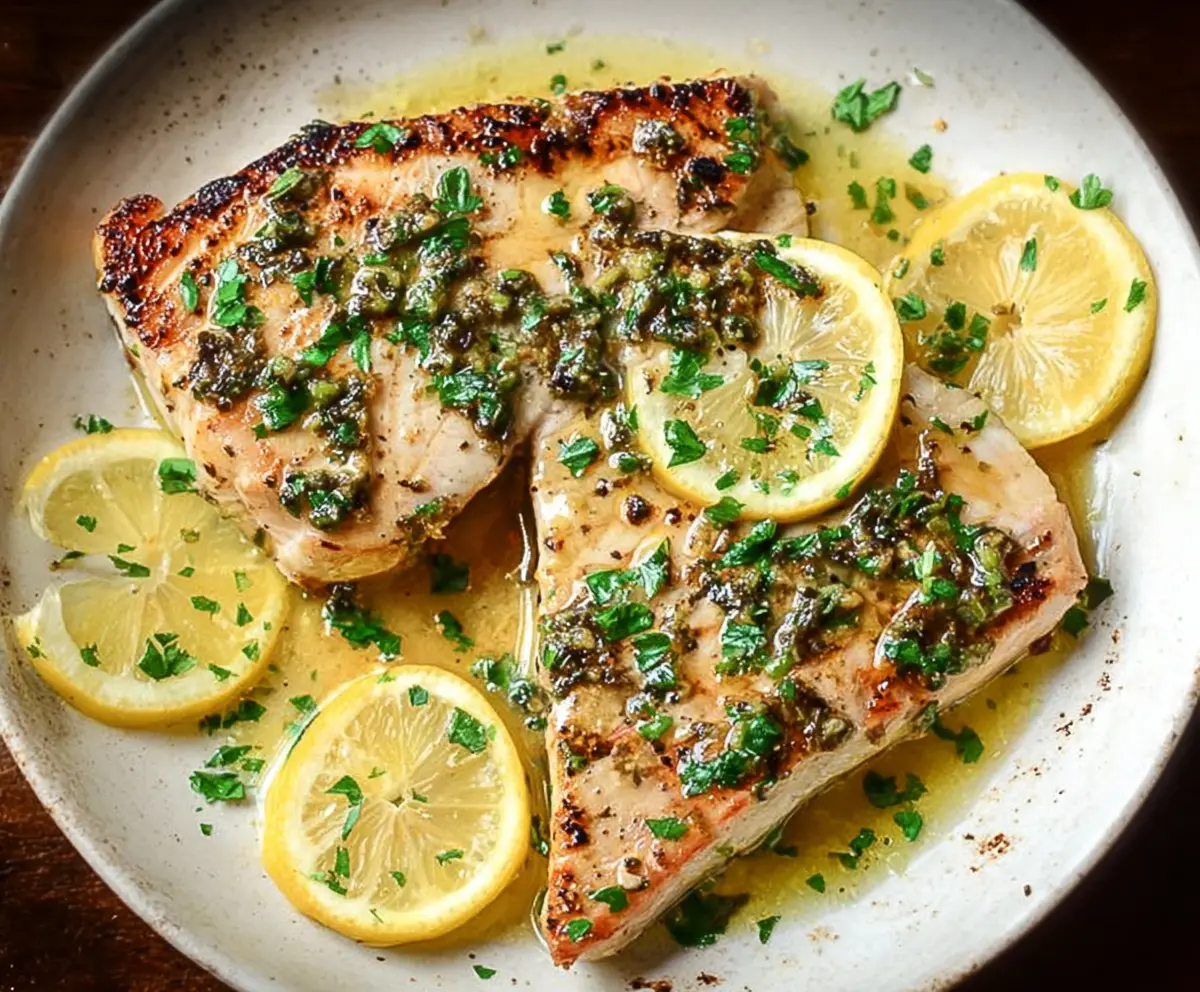
Oven-Baked Swordfish with Lemon Butter
Ingredients You’ll Need:
Main Ingredients:
- 2 swordfish steaks (about 6-8 oz each)
- Salt and freshly ground black pepper, to taste
- 1 tablespoon olive oil
Lemon Butter Sauce:
- 3 tablespoons unsalted butter
- 2 cloves garlic, minced
- 1 lemon, thinly sliced (plus extra lemon juice if desired)
- 2 tablespoons fresh parsley, finely chopped
- 1 tablespoon capers, drained
How Much Time Will You Need?
This dish takes about 15 minutes of preparation including seasoning and melting the lemon butter sauce. The searing and baking together take roughly 12-15 minutes. So, total time from start to table is around 30 minutes — quick and easy!
Step-by-Step Instructions:
1. Prepare and Season the Fish:
Preheat your oven to 400°F (200°C). Pat the swordfish steaks dry with paper towels to help them sear nicely. Season both sides generously with salt and freshly ground black pepper for balanced flavor.
2. Sear the Swordfish:
Heat 1 tablespoon olive oil in a large oven-safe skillet over medium-high heat. When the oil’s hot and shimmering, place the swordfish steaks in the pan. Sear each side for 2-3 minutes until you get a nice golden-brown crust. This seals in the juices and adds flavor.
3. Add Lemon and Butter Sauce, Then Bake:
Remove the skillet from heat. Lay lemon slices on top of the fish. Melt the butter in a small saucepan or microwave-safe bowl, then stir in minced garlic, chopped parsley, and capers. Pour this warm lemon butter evenly over the swordfish and lemon slices. Transfer the skillet to the oven and bake for 8-10 minutes, or until the swordfish is opaque and flakes easily with a fork.
4. Rest and Serve:
Take the skillet out of the oven and let the fish rest for a few minutes — this keeps it juicy. Serve hot, spooning some of the delicious lemon butter sauce from the pan over the top. Garnish with extra fresh parsley and lemon slices if you like. It’s perfect with steamed veggies, rice, or a simple green salad!
Can I Use Frozen Swordfish for This Recipe?
Yes, you can! Just make sure to thaw it completely in the fridge overnight before cooking. Pat it dry well to remove excess moisture, which helps achieve a good sear.
Can I Make Oven-Baked Swordfish with Lemon Butter Ahead of Time?
It’s best served fresh, but you can prepare the lemon butter sauce a day ahead and refrigerate it. Reheat gently before pouring over the cooked fish. Leftover cooked swordfish can be stored in an airtight container in the fridge for up to 2 days.
What Can I Use Instead of Swordfish?
If swordfish isn’t available, try mahi-mahi, halibut, or salmon steaks. These options have a similar texture and hold up well to searing and baking.
How Do I Know When the Swordfish Is Cooked?
The fish should be opaque and flake easily with a fork. Baking for 8-10 minutes after searing typically ensures it’s cooked through without drying out.