
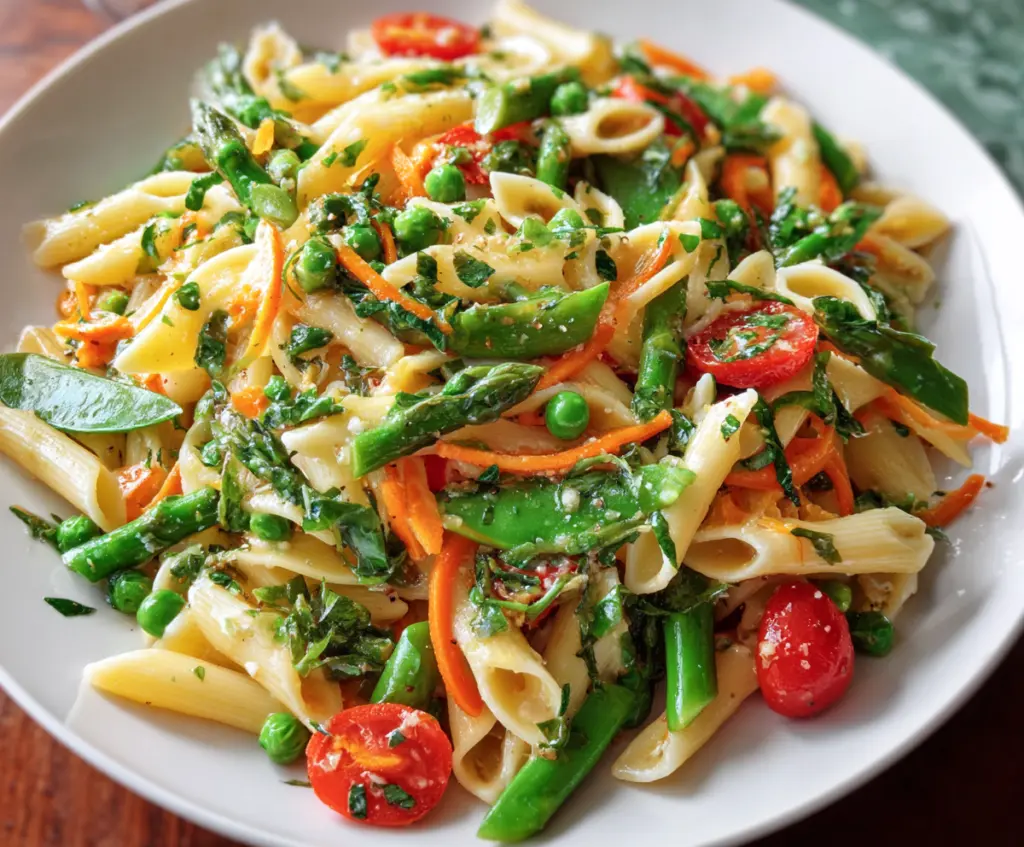
Pasta Primavera
Pasta Primavera is a bright and cheerful dish, full of fresh veggies and tender pasta tossed in a light garlic and olive oil sauce. It’s a perfect way to enjoy…
Tip: save now, cook later.Pasta Primavera is a bright and cheerful dish, full of fresh veggies and tender pasta tossed in a light garlic and olive oil sauce. It’s a perfect way to enjoy the flavors of spring or summer, with crisp asparagus, sweet peas, and colorful bell peppers all mixed together. The pasta is usually coated just enough to carry the flavors without feeling heavy, making each bite fresh and satisfying.
I love making Pasta Primavera when I want something healthy but still comforting. It’s quick to prepare, and I often use whatever vegetables I have on hand, so it feels like a little creative adventure every time. Adding a sprinkle of Parmesan cheese on top is my favorite finishing touch—it gives the dish a subtle richness without overpowering the veggies.
This dish is great for evenings when you want something that feels light but still fills you up. I like serving it with a simple green salad and some crusty bread to soak up any extra sauce. Pasta Primavera always reminds me of easy dinners with friends, where the focus is just good food and great company. It’s simple, colorful, and always hits the spot!
Key Ingredients & Substitutions
Pasta: Penne works well here because its shape holds the sauce and veggies nicely. You can swap for fusilli, farfalle, or bowtie pasta for a fun twist.
Vegetables: Asparagus, snap peas, green peas, carrots, and cherry tomatoes add great color and crunch. If you don’t have these, zucchini, bell peppers, or broccoli are tasty alternatives.
Garlic & Olive Oil: These build the flavor base. Use fresh garlic for the best aroma, but garlic powder can work in a pinch. Olive oil adds richness, but you can try avocado oil for a milder taste.
Parmesan Cheese: It adds a salty, nutty finish. For a dairy-free option, leave it out or sprinkle with nutritional yeast for a similar umami effect.
Fresh Herbs: Parsley brightens the dish nicely. Basil or chives also make great substitutes and add fresh notes.
How Can You Keep Vegetables Crisp and Colorful?
Blanching veggies with the pasta is key here—it cooks them just enough without turning them mushy. Here’s how I like to do it:
- When the pasta has 3-4 minutes left to cook, toss in the tougher veggies like asparagus, snap peas, and peas.
- Drain the pasta and veggies together to keep the timing just right.
- Finish cooking softer veggies like cherry tomatoes and carrots in the pan for a couple of minutes for the best texture.
This way, the veggies stay bright and slightly crisp, which makes each bite fresh and satisfying. Also, don’t forget to reserve some pasta water to help loosen the sauce—it makes the dish silky without adding heaviness.
Equipment You’ll Need
- Large pot – to boil the pasta and blanch the vegetables all in one go.
- Large skillet or sauté pan – lets you cook the garlic and veggies evenly while tossing the pasta.
- Colander – handy for draining pasta and vegetables together quickly.
- Wooden spoon or tongs – easy for stirring and mixing the pasta without breaking it.
- Measuring cups and spoons – for accurate oil, cheese, and seasoning amounts.
Flavor Variations & Add-Ins
- Add grilled chicken or shrimp for extra protein—works well when you want a heartier meal.
- Swap Parmesan for crumbled feta or goat cheese for a tangy twist.
- Include roasted bell peppers or zucchini to give the dish more color and texture.
- Stir in red pepper flakes or fresh basil for a little heat or herbal freshness.
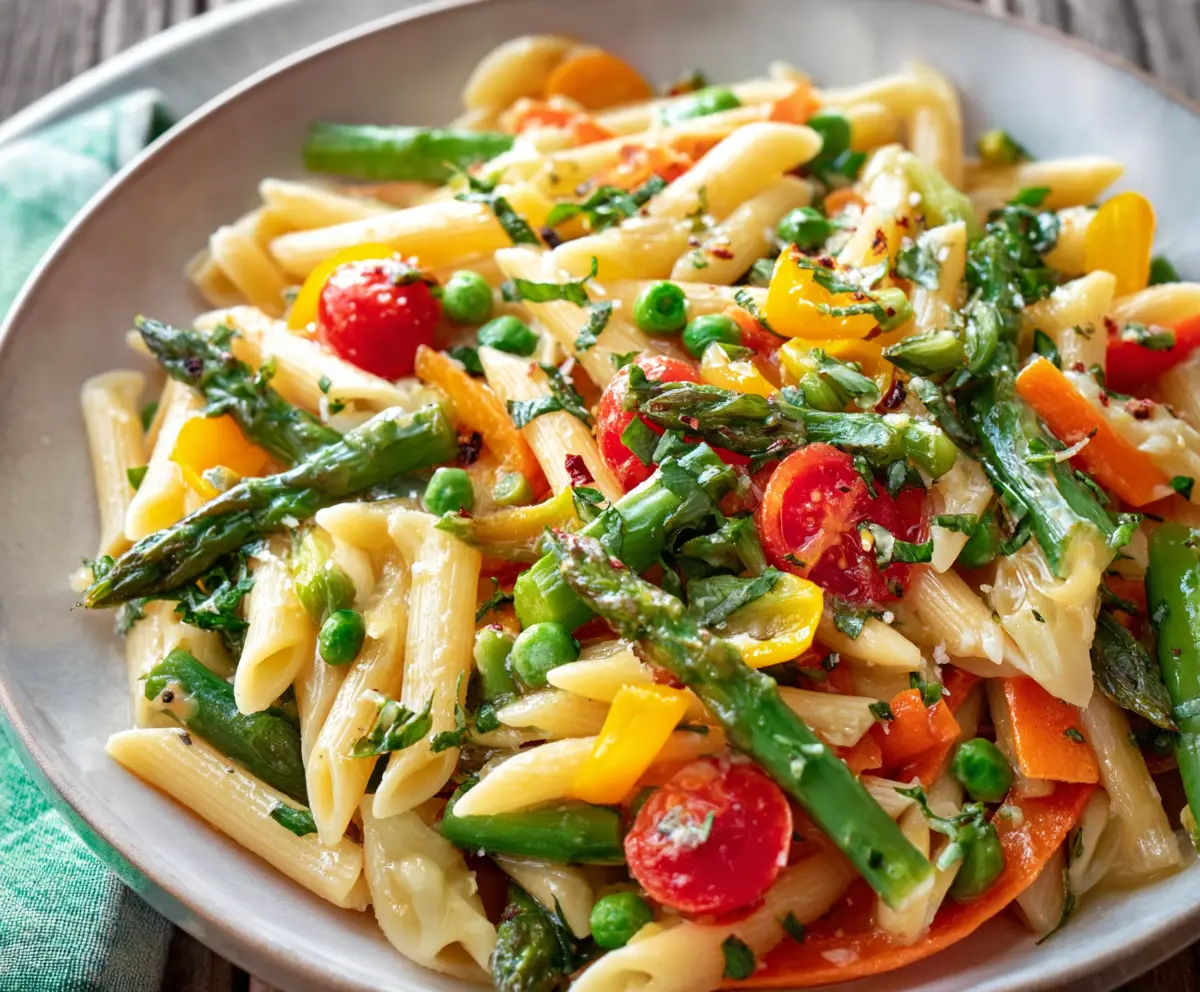
How to Make Pasta Primavera?
Ingredients You’ll Need:
Main Ingredients:
- 12 oz penne pasta
- 1 cup asparagus spears, trimmed and cut into 2-inch pieces
- 1 cup snap peas, trimmed
- 1 cup fresh or frozen green peas
- 1 cup cherry tomatoes, halved
- 1 medium carrot, julienned or shredded
- 3 cloves garlic, minced
- 1/4 cup fresh parsley, chopped
- 1/4 cup olive oil
- 1/4 cup grated Parmesan cheese, plus extra for serving
- Salt and freshly ground black pepper to taste
- Optional: Lemon zest or juice for brightness
How Much Time Will You Need?
This dish takes about 20-25 minutes total. It includes 10-12 minutes to boil pasta and blanch vegetables, then about 10 minutes to sauté the garlic, veggies, and toss everything together. It’s a quick and fresh meal perfect for any day of the week.
Step-by-Step Instructions:
1. Cooking Pasta and Blanching Vegetables:
Bring a large pot of salted water to a boil. Add the penne pasta and cook according to package directions until al dente. When the pasta has about 3-4 minutes left, add asparagus, snap peas, and green peas to the boiling water to blanch them. Once done, drain pasta and vegetables together, keeping about 1/2 cup of pasta water for later use.
2. Sautéing the Vegetables:
Heat olive oil in a large skillet over medium heat. Add minced garlic and cook for about 1 minute until fragrant but not browned. Add the julienned carrots and sauté for 2 minutes until slightly tender. Then add cherry tomatoes and cook for another 2 minutes until they soften nicely.
3. Combining Everything:
Add the cooked pasta and blanched vegetables to the skillet. Toss well to combine all ingredients. Sprinkle chopped parsley and grated Parmesan cheese over the mixture. Add a splash of the reserved pasta water if needed to loosen the sauce and help everything blend beautifully. Season with salt and freshly ground black pepper to taste. For a bright, fresh note, add lemon zest or a squeeze of lemon juice if you like.
4. Serving:
Serve your Pasta Primavera immediately, offering extra Parmesan cheese on the side for topping. Enjoy this fresh, colorful dish that’s bursting with the flavors of tender vegetables and simple seasonings!
Can I Use Frozen Vegetables for Pasta Primavera?
Yes! Frozen peas work perfectly and can be added directly when blanching the pasta. For other frozen veggies, just thaw them briefly or add a bit earlier in the sauté step to avoid excess water in the dish.
How Can I Make Pasta Primavera Vegan?
Replace the Parmesan cheese with a vegan cheese alternative or sprinkle nutritional yeast for a cheesy flavor. Make sure to use a good quality olive oil and plenty of fresh herbs to keep it flavorful.
What’s the Best Way to Store Leftovers?
Store leftover pasta in an airtight container in the fridge for up to 3 days. Reheat gently on the stove with a splash of water or olive oil to keep it from drying out.
Can I Prepare This Recipe Ahead of Time?
You can blanch the vegetables ahead and store them separately in the fridge. Cook the pasta just before serving to keep it from becoming mushy, then toss everything together for best texture.