
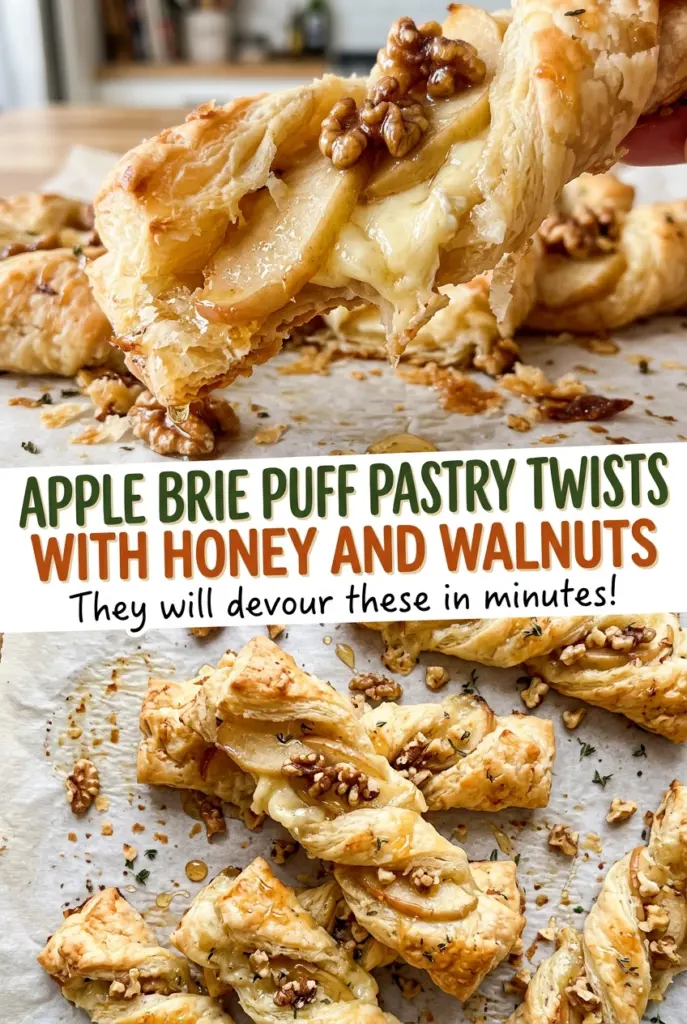
Apple Brie Puff Pastry Twists with Honey and Walnuts
The apples soften quickly in the skillet, but the filling isn’t ready when it first looks glossy. Keep stirring until the pan is nearly dry, then give the mixture time…
Tip: save now, cook later.The apples soften quickly in the skillet, but the filling isn’t ready when it first looks glossy. Keep stirring until the pan is nearly dry, then give the mixture time to cool completely. That small pause keeps these Apple Brie Puff Pastry Twists with Honey and Walnuts from turning into a damp, slippery mess when you fold the pastry.
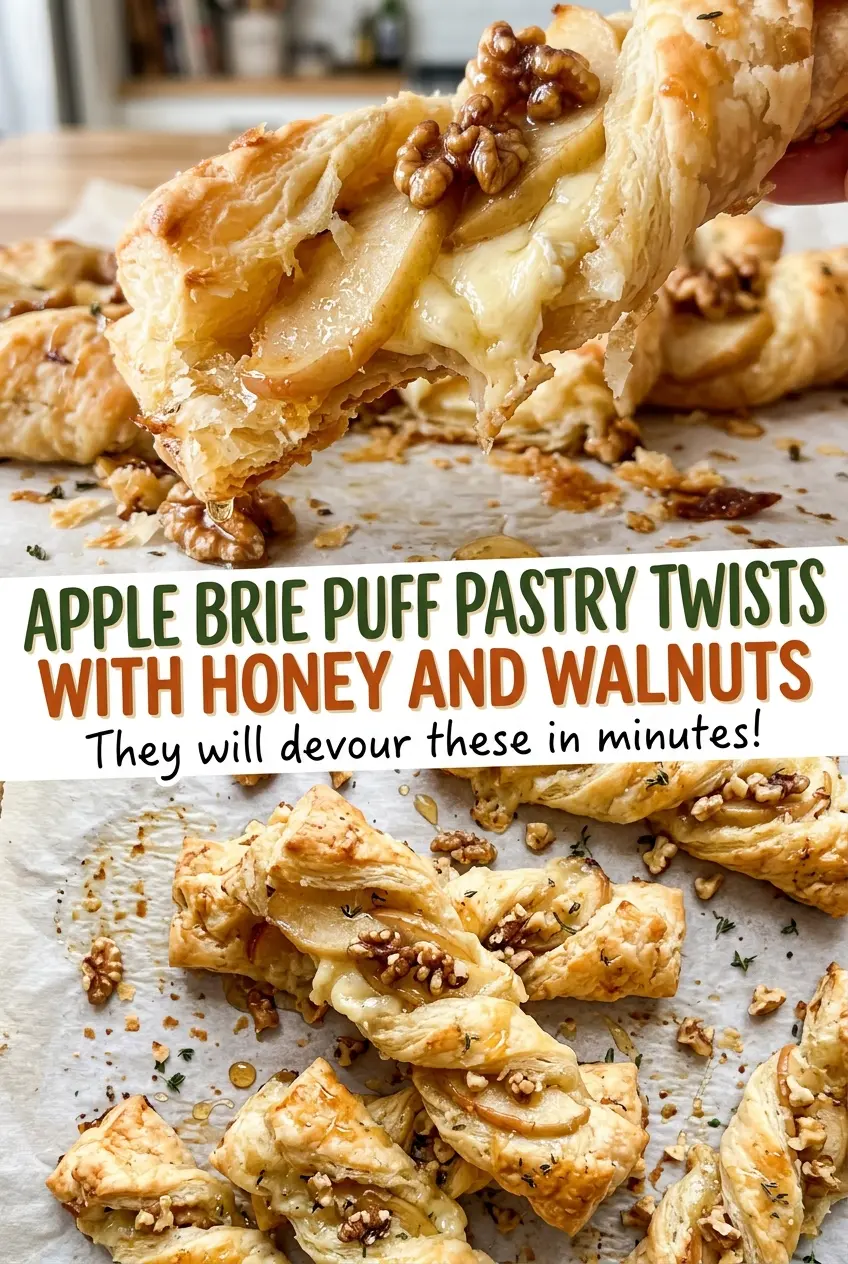
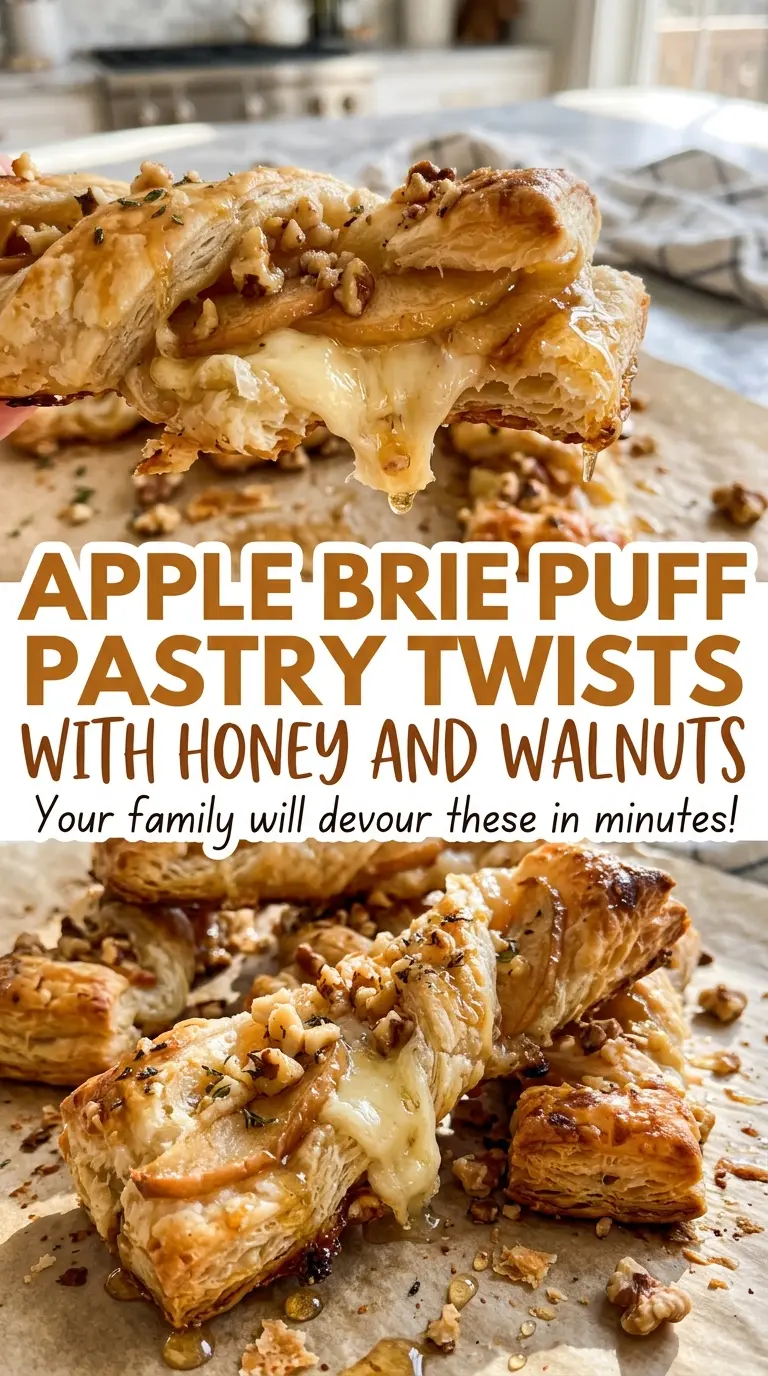
I like how the Brie melts into the cinnamon-scented apples while the puff pastry rises around them in crisp, golden layers. The twists look special, but the shaping is forgiving: fold the pastry over the filling, cut it into strips, and give each one a couple of turns. Honey goes on after baking, so it stays fragrant instead of disappearing into the oven, and walnuts bring a welcome crunch.
Kitchen Note
Puff pastry is easiest to handle when it’s thawed enough to roll but still cold. I work briskly once the filling is on; a warm, floppy sheet is much harder to twist neatly.
Save these Apple Brie Puff Pastry Twists for a golden, flaky appetizer with warm apples, melted Brie, honey, and walnuts.
Why a Wet Apple Filling Can Leave Puff Pastry Gummy
Apples give off liquid as they soften, and puff pastry needs a filling that won’t flood the layers. If the fruit goes onto the pastry while the skillet is still wet, that extra moisture has nowhere to go once the top half is folded over it. The pastry can brown on the outside while the layers close to the filling stay soft.
Cooking the diced apple with brown sugar, cinnamon, and butter until the pan is nearly dry deals with that moisture before assembly. The fruit should look tender and lightly coated, not swimming in syrup. Cooling it completely matters, too: warm filling releases steam against the pastry and makes the dough harder to handle. Those two cues—little to no liquid in the skillet and a fully cool filling—are more useful than relying on the clock alone.
The Brie melts into the apple mixture, so you still get a tender, savory center without adding a separate sauce. Keeping the filling in a single layer on one half of the pastry also makes the folded twists easier to seal and shape.
What the Apples, Brie, and Pastry Each Bring
- Apple — A firm apple gives you tender little pieces that don’t disappear into puree. A tart variety such as Granny Smith balances the brown sugar and honey; a sweeter apple makes the filling gentler and sweeter. Dice it finely so it softens in the skillet within the cooking time.
- Brie — Brie softens into a creamy, mild center and pairs naturally with the cooked apple. Cut it into small pieces so it distributes across the filling instead of leaving a few oversized pockets. Camembert works in the same amount if that’s what you have; it brings a slightly earthier taste.
- Frozen puff pastry — Use a sheet that’s thawed but still cold, and roll it to the stated rectangle so the filling and strips are even. A gluten-free puff pastry sheet is a workable swap, though the rise and crispness depend on the brand. Follow its thawing guidance and use the same rectangle as your target.
- Egg and water — The beaten egg wash helps the exposed pastry turn deep golden in the oven. If you’re avoiding egg, brush the twists with milk instead; the finish will be less glossy, but the pastry will still bake.
- Walnuts and honey — Walnuts add a crisp, slightly bitter edge that balances the sweet drizzle. Chopped pecans can replace them in the same amount for a softer, sweeter crunch. Maple syrup can stand in for the honey, though its flavor is more woodsy and less floral; drizzle it over the twists after baking.
From a Dry Apple Filling to Twisted, Golden Layers
Cook the apple until the skillet is nearly dry
Melt the butter in a small skillet over medium heat, then stir in the diced apple, brown sugar, cinnamon, and salt. Cook, stirring often, for 4–6 minutes, until the apple is softened and the pan is nearly dry. Transfer the mixture to a plate and let it cool completely before it touches the pastry. If you can still see liquid collecting in the skillet, keep cooking until that liquid has mostly evaporated.
Roll and fill one half of the pastry
Heat the oven to 400°F and line a large baking sheet with parchment paper. Roll the cold puff pastry on the parchment into a 10×12-inch rectangle. Spread the cooled apple mixture over one 10×6-inch half, then scatter the small pieces of Brie over the apple. Leave the uncovered half clear so it can fold neatly over the filling.
Fold, seal, and twist the strips
Fold the uncovered pastry half over the filling and gently press the edges to seal. Cut crosswise into 8 equal strips, keeping the cuts straight so the twists bake at a similar pace. Twist each strip 2–3 times, then space the twists on the lined baking sheet. If a little filling peeks out, tuck it back inside before baking.
Brush and bake until deep golden
Beat the egg with the water and brush it over the twists, covering the exposed pastry without letting a puddle collect on the pan. Bake for 16–20 minutes, until the pastry is puffed and deep golden brown. Pale pastry needs more time; use the color and lift of the layers as your cue rather than pulling the twists as soon as they puff.
Rest before adding the topping
Let the twists rest on the baking sheet for 5 minutes after they come out of the oven. Drizzle them with honey and sprinkle with chopped walnuts once they’ve had that short rest. The pastry stays crisp at the edges, and the honey and nuts remain easy to see and taste on top.
Three Easy Changes That Keep the Twists Balanced
Use gluten-free puff pastry
Replace the regular puff pastry with one gluten-free sheet and roll it to the same rectangle. Gluten-free brands vary in how well they puff, so expect a slightly different rise and handle the dough according to its package guidance while keeping the filling cool.
Make a nut-free topping
Leave off the walnuts and sprinkle toasted pumpkin seeds over the honey instead. You’ll keep a crisp finish without the walnut flavor; add the seeds after baking so they stay crunchy.
Dial back the sweetness
Skip the honey drizzle and keep the walnuts. The topping will be less sticky and sweet, letting the Brie and cinnamon apple stand out more clearly.
Storage and Reheating
- Refrigerator: Store cooled leftovers in an airtight container for up to 3 days. The pastry will soften as it sits.
- Freezer: Freeze cooled twists in a single layer, then transfer them to an airtight container for up to 2 months. The pastry is best frozen before adding the honey and walnuts; add the topping after reheating.
- Reheating: Warm on a parchment-lined baking sheet at 350°F for about 8 minutes, until crisp and heated through. The microwave softens the pastry, so use the oven for the best texture.
Answers to the Questions That Come Up While Baking These Twists
Apple Brie Puff Pastry Twists with Honey and Walnuts
Ingredients
Equipment
Method
- Melt the butter in a small skillet over medium heat.
- Add the apple, brown sugar, cinnamon, and salt; cook, stirring often, until the apple is softened and the pan is nearly dry, 4–6 minutes.
- Transfer the apple mixture to a plate and cool completely.
- Heat the oven to 400°F.
- Line a large baking sheet with parchment paper.
- Roll the puff pastry into a 10x12-inch rectangle on the parchment.
- Spread the cooled apple mixture over one 10x6-inch half of the pastry.
- Scatter the Brie over the apple.
- Fold the uncovered half of the pastry over the filling and gently press the edges to seal.
- Cut crosswise into 8 equal strips.
- Twist each strip 2–3 times and space them on the baking sheet.
- Beat the egg with the water.
- Brush the egg mixture over the twists.
- Bake until puffed and deep golden brown, 16–20 minutes.
- Let the twists rest on the baking sheet for 5 minutes.
- Drizzle with honey.
- Sprinkle with walnuts.