
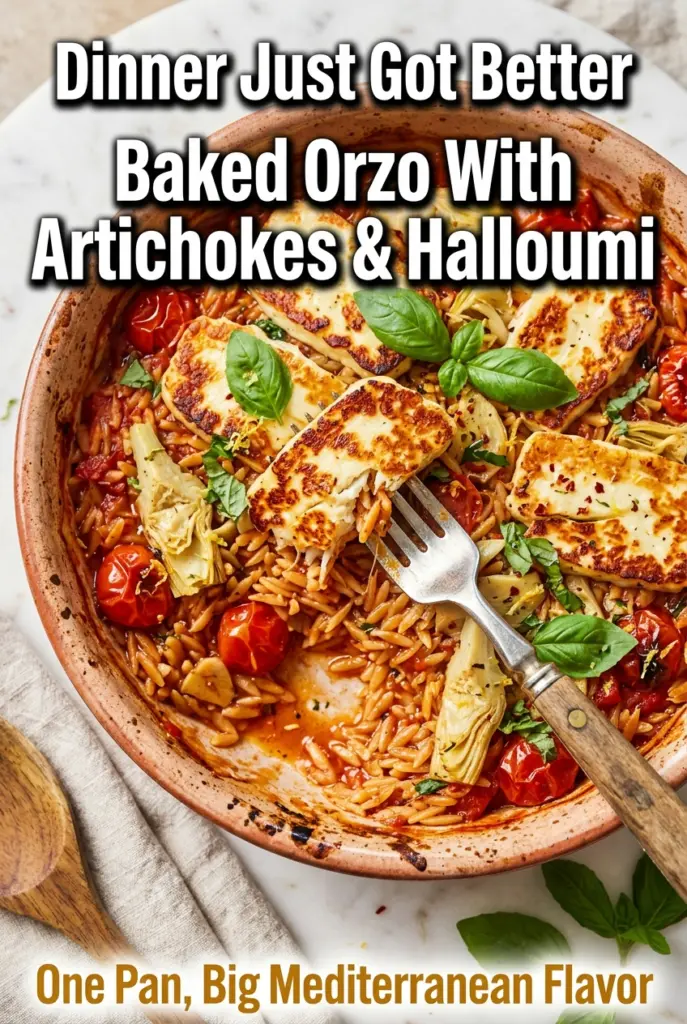
Baked Orzo With Artichokes, Tomato, and Halloumi
Golden baked orzo with artichokes, tomato, and halloumi is the kind of pan dinner that lands on the table looking far more complicated than it is. The orzo turns tender…
Tip: save now, cook later.Golden baked orzo with artichokes, tomato, and halloumi is the kind of pan dinner that lands on the table looking far more complicated than it is. The orzo turns tender in a rich tomato broth, the artichokes bring a briny bite that keeps every forkful interesting, and the halloumi finishes with a crisp, salty crust that makes the whole dish feel complete. It eats like a cozy baked pasta, but lighter and brighter than the usual heavy casserole.
What makes this version work is the balance of liquid and timing. The orzo cooks directly in the sauce, so it picks up flavor instead of tasting like plain pasta stirred in at the end. The dish stays uncovered in the oven, which helps the top reduce slightly while the center stays saucy. The lemon goes in at the end for a reason: it wakes up the tomatoes and cuts through the richness of the cheese without turning the whole dish sharp.
Below, I’ll walk you through the parts that matter most, including how to keep the orzo from drying out and how to get the halloumi properly golden instead of rubbery. There are a few good ways to adapt it too, depending on what you have on hand.
The orzo stayed creamy without getting mushy, and the halloumi got those perfect crisp edges on top. I was worried the artichokes would take over, but they balanced the tomatoes so well.
Baked orzo with artichokes, tomato, and halloumi deserves a Pinterest spot for the night you want one pan, a crisp cheese topping, and barely any cleanup.
The Liquid Ratio That Keeps Baked Orzo Creamy Instead of Gummy
Baked orzo can go wrong in two directions: it turns dry before the pasta is tender, or it goes soft and gluey because there’s too much liquid left at the end. The fix is to treat it more like risotto than a pasta bake. The orzo needs enough broth to absorb, but not so much that it swims. That’s why this dish starts on the stove, then finishes uncovered in the oven, where the liquid reduces at the same time the pasta cooks.
The other trap is overbaking. Orzo keeps softening after it leaves the oven, so pull it when it still looks a little loose around the edges. It should be saucy, not soupy. Once the cheese goes on and the dish rests for a minute or two, the texture settles into that sweet spot where the spoon drags through it but nothing feels stiff.
What Each Ingredient Is Actually Doing in This Dish
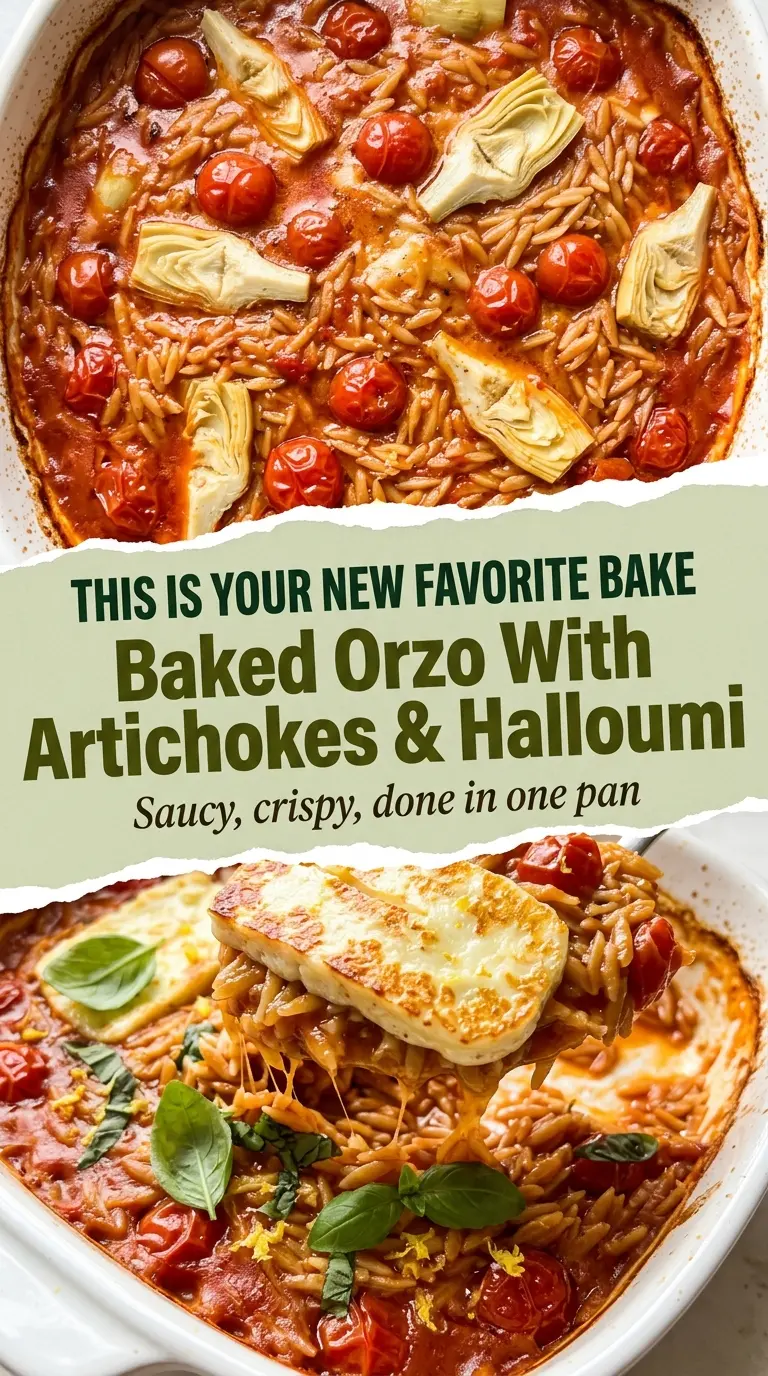
- Orzo — This is the backbone of the dish and it has to be dry when it goes in. Fresh or pre-cooked pasta won’t absorb the tomato broth the same way, and you’d lose the creamy, baked texture that makes this work.
- Crushed tomatoes — These give you body without needing to cook a separate sauce first. A good-quality can matters here because the flavor is front and center; if yours tastes sharp, a pinch of sugar can soften it, but a long simmer isn’t necessary.
- Artichoke hearts — They bring salt, tang, and a little chew that keeps the dish from tasting flat. Canned or jarred artichokes both work well, but drain them thoroughly so they don’t water down the sauce.
- Halloumi — This is the ingredient you don’t substitute lightly, because it’s doing something feta or mozzarella can’t: holding its shape and crisping on the outside. Slice it thick enough to sear without melting into the pan.
- Lemon zest and juice — Add these at the end, not before. The zest gives lift and the juice brightens the tomatoes, but if you cook them too long, the finish goes dull and one-note.
- Vegetable broth — This deepens the base without overpowering the artichokes. If you only have water, use it, but add a little extra salt because the pasta needs seasoning from the cooking liquid itself.
Building the Sauce, Baking the Pasta, and Crisping the Halloumi
Softening the Onion Until It Turns Sweet
Cook the onion in olive oil over medium heat until it looks translucent and starts to collapse, about 5 to 6 minutes. You’re not looking for color here; you want it soft enough that it melts into the sauce later. If the onion browns too fast, the heat is too high and the garlic will burn before the base has any depth. Add the garlic, oregano, and red pepper flakes just long enough to smell them bloom in the oil.
Letting the Orzo Cook in the Tomato Broth
Once the tomatoes, broth, and water go in, bring everything to a gentle simmer before adding the dry orzo. Stir it well so every piece is coated and submerged, then nestle the artichokes and cherry tomatoes throughout the pan. The surface should look loose and glossy going into the oven. If it looks dry before baking, the pasta will catch before it cooks through.
Knowing When It’s Ready to Come Out
After 18 to 20 minutes, the orzo should be mostly tender and the liquid should have thickened into a saucy, spoonable consistency. A little liquid around the edges is good. If the pan looks dry in the center, it stayed in too long or the dish was too shallow. Stir in the lemon zest and juice right away so the heat can carry the citrus through the whole pan.
Seering the Halloumi Without Turning It Rubbery
Use a separate skillet and medium-high heat for the halloumi. It should sizzle as soon as it hits the pan and turn deeply golden in about 2 minutes per side. If the cheese just sits there and sweats, the pan isn’t hot enough. Add it on top of the baked orzo and return the dish to the oven briefly so the cheese warms through without losing its crust.
How to Adapt This for Different Pans, Diets, and Pantry Swaps
Dairy-Free Version Without Losing the Mediterranean Feel
Skip the halloumi and finish the dish with toasted breadcrumbs, chopped olives, or a handful of pine nuts for contrast. You’ll lose the salty squeak of the cheese, but the tomatoes, artichokes, and lemon still carry the dish well. A drizzle of good olive oil at the end helps replace some of the richness.
Gluten-Free Swap for the Orzo
Use a gluten-free orzo or small gluten-free pasta shape that holds its structure in the oven. Watch the liquid closely, because some gluten-free pastas absorb more slowly and can go from underdone to soft with not much warning. Add a splash more broth only if the pan looks dry before the pasta is tender.
What to Use If You Can’t Find Halloumi
A thick slab of feta won’t crisp the same way, but it will still give you salt and contrast if you crumble it over the top after baking. Paneer is the closest swap for texture because it sears cleanly and holds its shape. If you use mozzarella, expect melt instead of crust.
Storage and Reheating
- Refrigerator: Store leftovers in an airtight container for up to 3 days. The orzo will thicken as it sits, and the halloumi will lose some of its crispness.
- Freezer: This dish is better fresh than frozen. The pasta can turn soft and the cheese texture changes once thawed.
- Reheating: Rewarm gently in a covered skillet or in the oven with a splash of broth or water to loosen the sauce. Microwaving works in a pinch, but stop and stir halfway through so the edges don’t dry out before the center heats.
Answers to the Questions Worth Asking
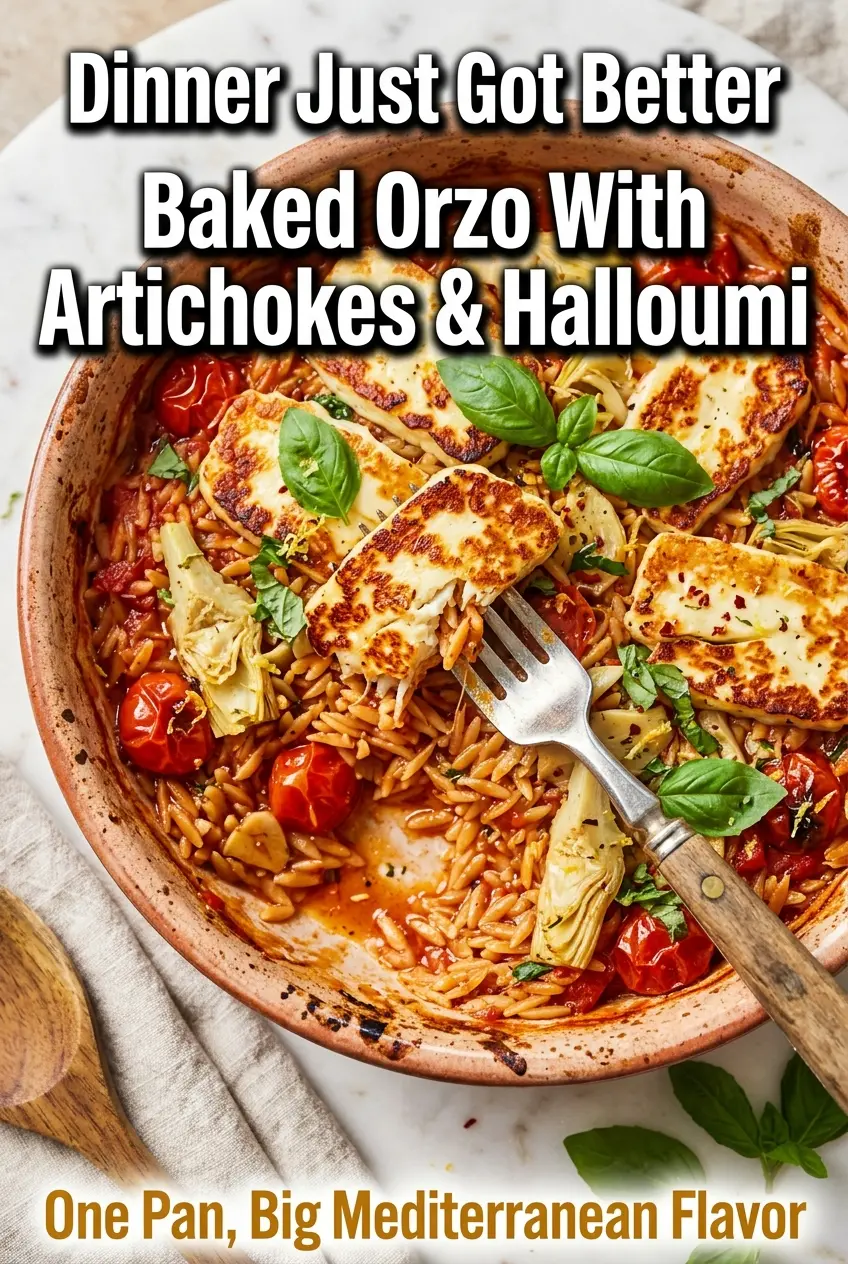
Baked Orzo With Artichokes, Tomato, and Halloumi
Ingredients
Equipment
Method
- Preheat your oven to 200°C (400°F) and have a large oven-safe baking dish or skillet ready.
- Heat 2 tbsp olive oil in a wide oven-safe pan or skillet over medium heat, then add the diced onion and cook 5–6 minutes until softened and translucent.
- Add the minced garlic, dried oregano, and crushed red pepper flakes, stir, and cook 1 minute until fragrant.
- Pour in the crushed tomatoes, vegetable broth, and water, stir well, and bring to a gentle simmer.
- Add the dry orzo directly to the tomato broth mixture, stir to combine, ensure it is submerged, and season generously with salt and black pepper.
- Nestle the artichoke hearts and halved cherry tomatoes into the orzo mixture, distributing them evenly.
- Transfer the pan to the oven (uncovered) and bake 18–20 minutes until the orzo is mostly cooked and absorbed most of the liquid with a slightly saucy look.
- While the orzo bakes, heat 2 tbsp olive oil in a separate non-stick skillet over medium-high heat.
- Sear the halloumi slices 2 minutes per side until golden and crisp on each face.
- Remove the orzo from the oven and stir in the lemon zest and lemon juice.
- Arrange the seared halloumi slices on top of the orzo.
- Return to the oven for a final 5 minutes until the halloumi is warmed through and lightly golden.
- Remove from the oven, scatter fresh basil leaves over the top, and serve immediately from the dish with a bubbling, golden surface.