
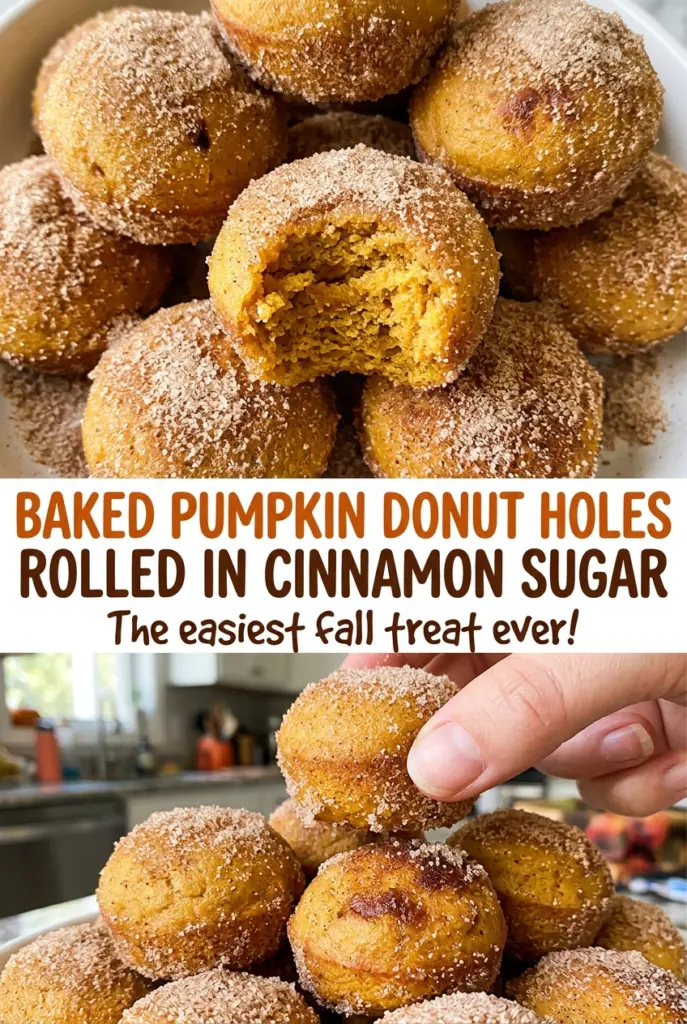
Baked Pumpkin Donut Holes Rolled in Cinnamon Sugar
When the mini muffin pan comes out of the oven, these little pumpkin rounds should spring back when you press the tops lightly. They’re tender inside, but still sturdy enough…
Tip: save now, cook later.When the mini muffin pan comes out of the oven, these little pumpkin rounds should spring back when you press the tops lightly. They’re tender inside, but still sturdy enough to pick up and roll in cinnamon sugar. I like that they deliver the cozy feel of a donut without frying or shaping dough by hand.
For these baked pumpkin donut holes, the batter starts with pumpkin puree and warm spices, then gets a buttery cinnamon-sugar coating while the centers are still warm. That last step gives each bite a fine, sweet crust that contrasts with the soft crumb underneath. The recipe makes 24, which is just right for sharing or keeping a few on the counter for a quick treat.
Use a 24-well mini muffin pan so the holes bake evenly and come out in the right size for coating. Once they’re rolled, the cinnamon sugar catches in every little curve, and the whole batch smells like pumpkin and cinnamon.
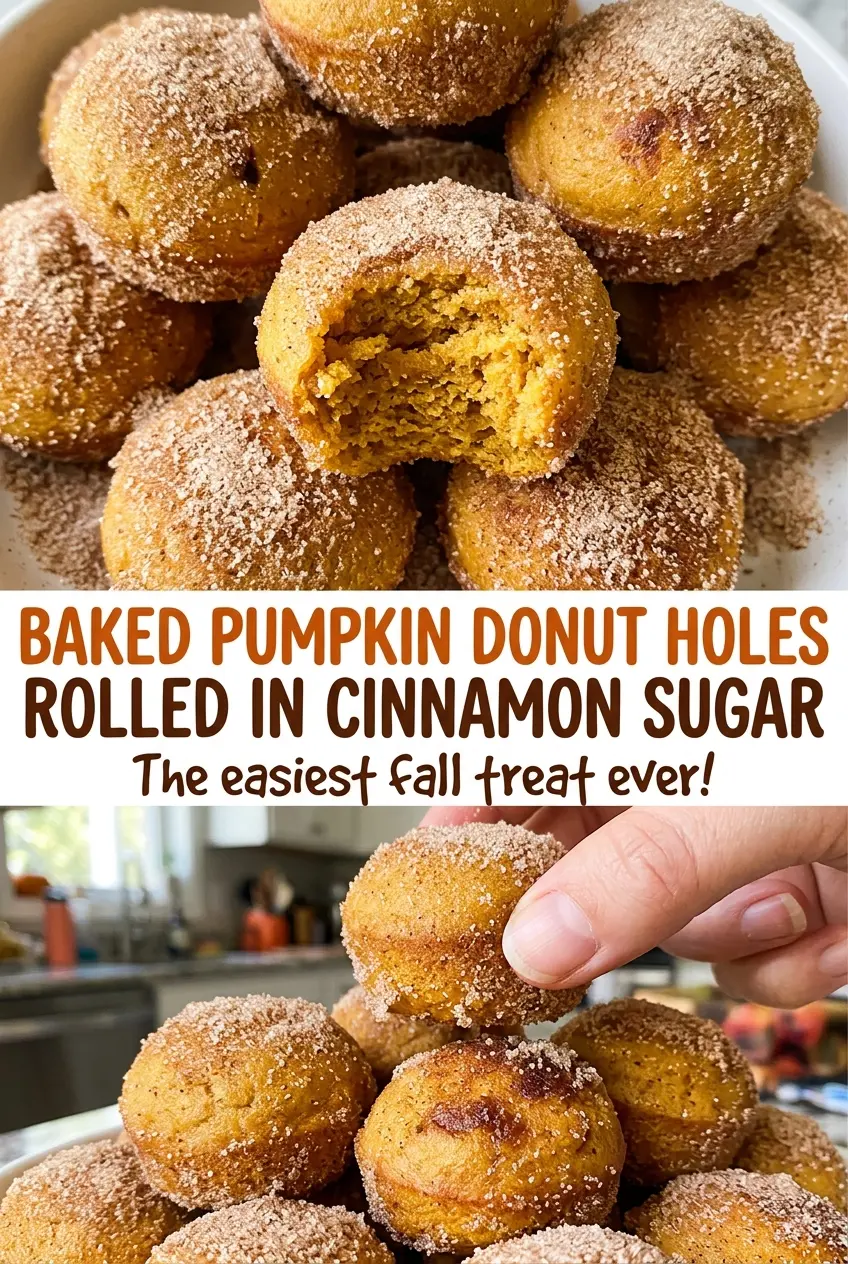
Kitchen Note
Let the donut holes cool in the pan for the full 5 minutes before lifting them out. They’re delicate straight from the oven, and that short pause helps them keep their shape as you move them to the rack.
Save these baked pumpkin donut holes for a cozy bake day: soft pumpkin centers wrapped in a cinnamon-sugar coating.
Why Pumpkin Pie Filling Throws Off the Cinnamon-Sugar Balance
Plain pumpkin puree brings pumpkin flavor and moisture without adding its own sweetener or spice blend. That matters here because the batter’s sweetness comes from brown sugar, while the cinnamon, ginger, and nutmeg are measured separately. The cinnamon-sugar coating adds another distinct layer after baking.
Pumpkin pie filling is already sweetened and seasoned, so using it in place of puree changes more than the pumpkin flavor. It can make the finished donut holes sweeter and blur the clear cinnamon-and-pumpkin balance. A can labeled pumpkin puree is the right choice; pumpkin pie filling is a different product, even when the cans sit beside each other on the shelf.
This distinction also keeps the recipe easy to adjust with confidence. The batter gets its spice from the ingredients you whisk in, and the coating stays bright and cinnamon-forward. Starting with plain puree lets those flavors come through without having to guess what’s already been added.
What Gives These Pumpkin Donut Holes Their Soft Crumb and Crisp Coating

- Pumpkin puree — It contributes moisture and a mellow pumpkin base to the crumb. Choose plain puree with a smooth consistency; the most important quality check is that it isn’t pumpkin pie filling.
- All-purpose flour and baking powder — Flour gives the batter structure, while baking powder helps the small rounds rise in the oven. Fresh baking powder matters because a weak leavener can leave the centers heavier than you want.
- Brown sugar, egg, milk, and neutral oil — Together, these bring sweetness, structure, and moisture. A neutral-tasting oil keeps the pumpkin and spices in front; there’s no need to reach for a specialty oil.
- Cinnamon, ginger, and nutmeg — The separate spices let the pumpkin batter taste warm and rounded rather than like cinnamon alone. Ground spices lose their aroma over time, so use jars that still smell fragrant when opened.
- Granulated sugar and unsalted butter — Granulated sugar gives the outside its familiar fine crunch, while melted butter helps the coating cling. Unsalted butter keeps the coating from adding extra salt to an already seasoned bite.
Mixing and Baking the Donut Holes Without Tough Centers
Get the Mini Muffin Pan Ready
Heat the oven to 350°F and coat all 24 wells of a mini muffin pan with nonstick cooking spray. Having the pan ready before mixing means the batter can go straight into the oven once it’s portioned. Use a 24-well pan for the bake time here; larger wells won’t cook at the same rate.
Whisk the Dry and Wet Mixtures Separately
In a medium bowl, whisk together the flour, baking powder, cinnamon, ginger, nutmeg, and salt so the leavener and spices are spread through the flour. In another bowl, whisk the pumpkin puree, brown sugar, egg, milk, oil, and vanilla until smooth. Keeping the mixtures separate until both are combined helps distribute the ingredients evenly through the batter.
Fill the Wells and Bake Until They Spring Back
Add the pumpkin mixture to the flour mixture and stir just until no dry flour remains. Divide the batter among the prepared wells, filling each about two-thirds full so there’s room for the tops to rise. Bake for 10 to 12 minutes at 350°F; the tops should spring back when lightly pressed, and a toothpick inserted in the center should come out clean.
Cool Until Warm, Then Coat
After the 5-minute pause in the pan, transfer the donut holes to a wire rack and let them cool until warm but not hot, about 10 minutes. Stir the granulated sugar and cinnamon together in a shallow bowl while they cool. Brush each donut hole all over with melted butter, then roll it in the cinnamon sugar until the coating covers the surface.
Three Simple Ways to Adapt the Cinnamon-Sugar Donut Holes
Make the Coating Dairy-Free
Replace the milk with the same amount of unsweetened, unflavored non-dairy milk, and use dairy-free butter for brushing. The pumpkin and spices remain the focus, though the coating may taste a little less rich than one made with butter.
Make the Batter Cinnamon-Forward
Leave out the ginger and nutmeg in the batter and keep the ground cinnamon. You’ll get a simpler, more familiar cinnamon flavor that pairs neatly with the cinnamon-sugar exterior.
Serve Them Without the Sugar Coating
Skip the melted butter and cinnamon sugar for a less sweet, more muffin-like pumpkin bite. The centers still have their brown sugar and spices, but you lose the crisp, buttery exterior that makes them feel like donut holes.
Storage and Reheating
- Refrigerator: Store in an airtight container for up to 4 days. The cinnamon-sugar coating will soften as it sits.
- Freezer: Freeze cooled donut holes in an airtight container for up to 2 months. The coating may lose some of its texture after thawing.
- Reheating: Warm one or two at a time in the microwave in short bursts, just until warm. Longer heating can dry out the small centers.
Questions I Get Asked About These Pumpkin Donut Holes
Baked Pumpkin Donut Holes Rolled in Cinnamon Sugar
Ingredients
Equipment
Method
- Heat the oven to 350°F and coat a 24-well mini muffin pan with nonstick cooking spray.
- Whisk the flour, baking powder, ground cinnamon, ginger, nutmeg, and salt in a medium bowl.
- In a separate bowl, whisk the pumpkin puree, brown sugar, egg, milk, oil, and vanilla extract until smooth.
- Add the pumpkin mixture to the flour mixture and stir just until no dry flour remains.
- Divide the batter among the muffin wells, filling each about two-thirds full.
- Bake for 10 to 12 minutes, until the tops spring back when lightly pressed and a toothpick inserted in the center comes out clean.
- Cool the donut holes in the pan for 5 minutes.
- Transfer them to a wire rack and cool until warm but not hot, about 10 minutes.
- Stir the granulated sugar and ground cinnamon together in a shallow bowl.
- Brush each warm donut hole all over with the melted butter.
- Roll each donut hole in the cinnamon sugar until coated.