
Best Sausage Stuffing
The bread cubes are the first clue that this stuffing is on the right track: they should feel dry and crisp before they meet the broth, not soft around the…
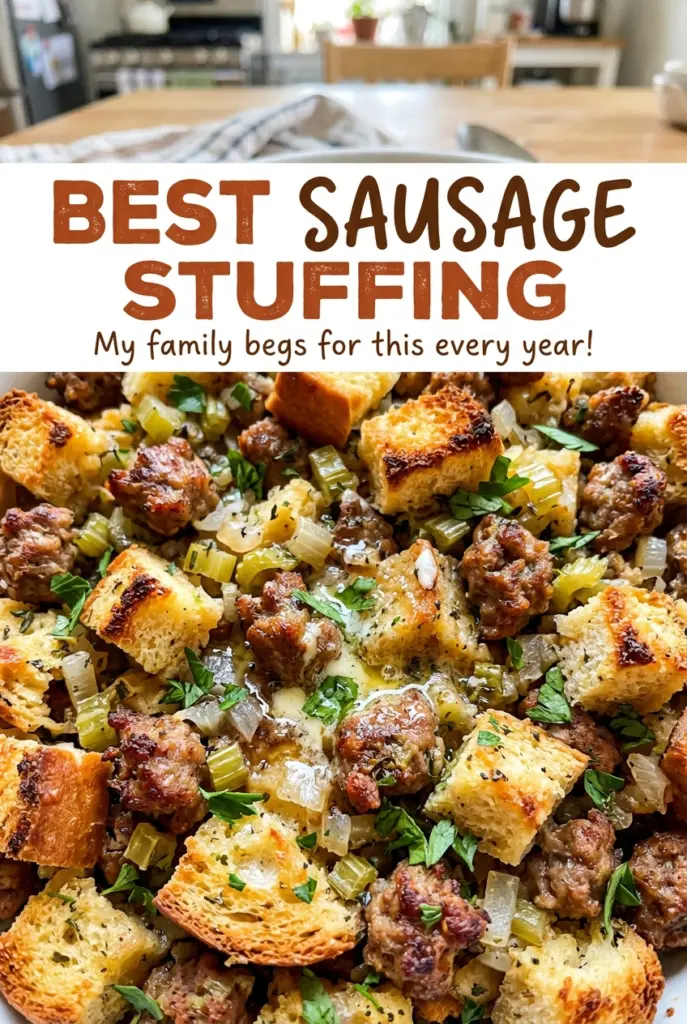
Tip: save now, cook later.The bread cubes are the first clue that this stuffing is on the right track: they should feel dry and crisp before they meet the broth, not soft around the edges. I learned to give them their full bake instead of trying to rush the prep, because damp bread turns a pan of sausage stuffing heavy before it even reaches the oven.
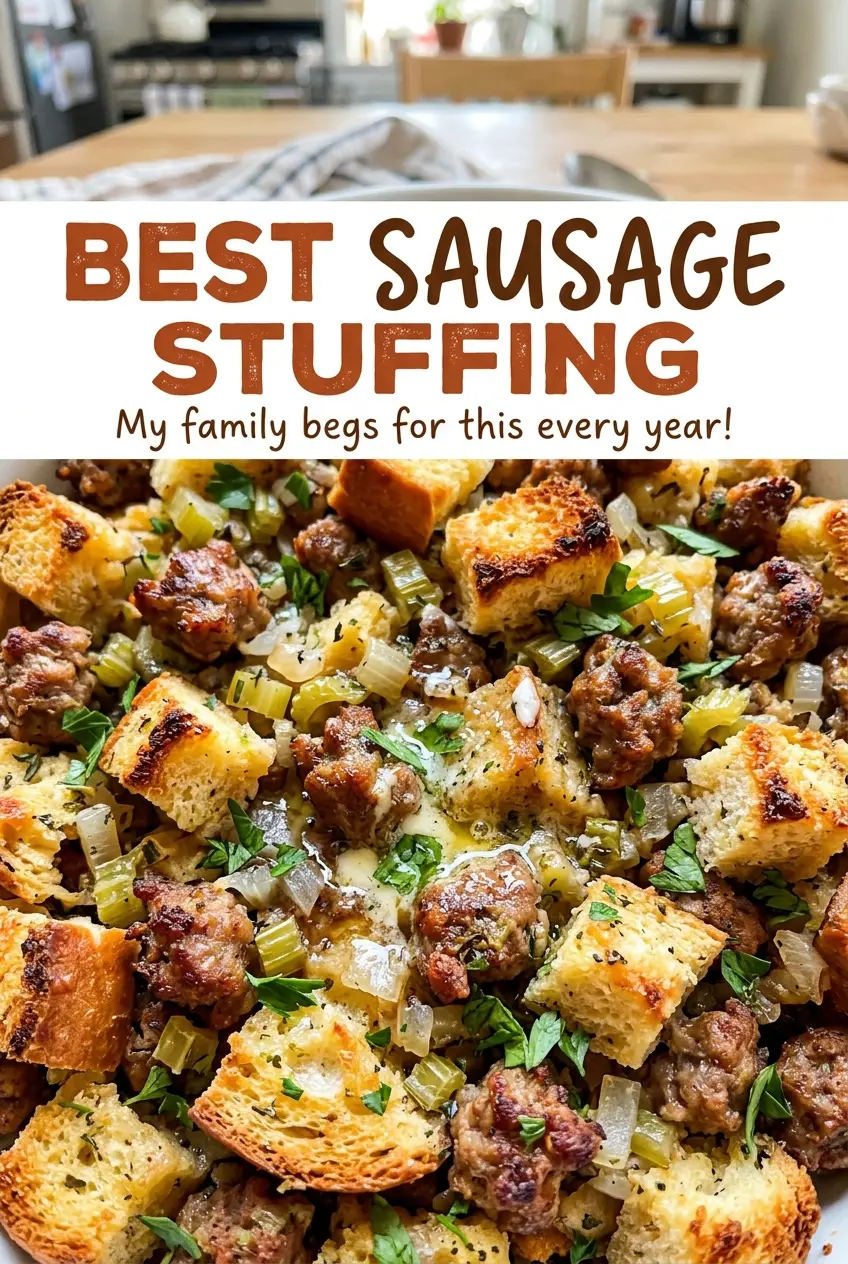
For this Best Sausage Stuffing, I brown bulk pork sausage, then cook the onion and celery in the same skillet. Those vegetables pick up the savory bits left behind, and the dried sage and thyme season the whole bowl rather than just the top. Eggs whisked with chicken broth help the bread hold together, while the covered-then-uncovered bake gives you a tender center and a golden top.
It’s a generous casserole for 10, with enough sausage in every scoop and crisp edges around the pan. Let it rest before serving so it settles into pieces instead of falling apart on the spoon.
Kitchen Note
Give the baked stuffing the full 10-minute rest before scooping. The hot center settles during that pause, so servings hold together instead of sliding apart.
Save Best Sausage Stuffing for a crisp-topped casserole with browned pork sausage, tender vegetables, and a savory, well-seasoned center.
Why the Sausage Belongs in the Vegetable Pan
When sausage and vegetables are cooked in separate pans, the vegetables miss the browned bits that carry much of the meat’s savory flavor. Here, the sausage browns first and comes out with a slotted spoon; the onion and celery then soften in that same skillet with the butter. The skillet does double duty, and the flavor is spread through the stuffing instead of sitting in isolated bites.
The order also gives the vegetables time to soften before the bread and broth go in. Onion and celery that are still firm won’t become tender just because they’re surrounded by bread in the casserole. Cooking them first lets their sweetness mellow and gives the dried herbs a warm, buttery base to cling to. It’s a small bit of sequencing that makes each spoonful taste connected, with the pork, vegetables, and herbs working together rather than competing for attention.
Use a large skillet so the sausage has room to brown instead of crowding and steaming. Breaking it into small pieces as it cooks helps distribute it evenly later, while the slotted spoon leaves the skillet ready for the vegetables.
Which Ingredients Give This Stuffing Its Structure

- Sturdy white bread — The bread needs enough structure to take up broth without breaking into paste. An inexpensive sturdy loaf works well; a delicate sandwich bread is more likely to collapse. Cut the cubes evenly so they dry at about the same rate. Gluten-free sturdy white bread is a workable swap, though its texture may be more delicate when tossed.
- Bulk pork sausage — It brings both the meat and much of the seasoning, so choose a sausage you like the taste of on its own. Bulk sausage is convenient because it can be broken into small pieces as it browns; links with casings are less suited to this mixture. A store-brand bulk sausage is fine here.
- Unsalted butter — Butter helps soften the vegetables and adds richness without bringing extra salt. Since the sausage is already seasoned, unsalted butter gives you better control than salted butter. Divide it as listed: some greases the baking dish, and the rest cooks the vegetables.
- Dried sage and thyme — Dried herbs suit the long bake and season the butter and vegetables evenly. Fresh herbs won’t have the same concentration, so keep the dried herbs for the most predictable result. Check that your dried herbs smell fragrant; old, faded jars contribute little.
- Low-sodium chicken broth and eggs — The broth moistens the bread, and the eggs help the mixture set into a sliceable stuffing rather than loose, wet cubes. Low-sodium broth lets the sausage and measured salt remain balanced. Use large eggs so the binding is consistent.
Dry the Bread, Brown the Sausage, Then Bake in Two Stages
Dry the cubes until crisp
Heat the oven to 300°F and spread the 3/4-inch bread cubes across a large rimmed baking sheet. Bake for 35–45 minutes, stirring once, until the cubes feel dry and crisp rather than soft in the middle. Keep an eye on the texture near the end; the goal is dried bread, not deeply browned toast. Once it’s ready, raise the oven temperature to 350°F.
Brown the sausage and soften the vegetables
Cook the bulk pork sausage in a 12-inch skillet over medium heat for 8–10 minutes, breaking it into small pieces as it browns. Check that it reaches 160°F, then transfer it with a slotted spoon to a large bowl. Melt the remaining 3 tablespoons of butter in the same skillet and cook the diced onion and celery for 8–10 minutes, until softened. Stir in the sage, thyme, kosher salt, and black pepper, then add the vegetables to the bowl.
Moisten the bread evenly
Add the dried cubes to the bowl and toss them with the sausage and vegetables. Whisk the chicken broth and eggs together before pouring them over the bread, then toss until the cubes are evenly moistened. Use a broad folding motion so the sausage and vegetables don’t sink to the bottom of the bowl. If you spot a dry pocket, turn the mixture over and toss again rather than leaving that section untouched.
Cover first, then uncover for color
Grease a 9×13-inch baking dish with 1 tablespoon of butter and transfer the mixture into it. Cover tightly with foil and bake at 350°F for 25 minutes; the covered stage heats the center without letting the top brown too quickly. Remove the foil and bake for another 20–25 minutes, until the center reaches 165°F and the top is golden brown. The finished surface should look toasted, not pale or wet.
Three Ways to Change the Flavor or Fit a Dietary Need
Use hot bulk pork sausage
Swap in hot bulk pork sausage for a more peppery, gently spicy casserole. Keep the other seasonings the same for a familiar sage-and-thyme flavor underneath the heat; the sausage will make the overall dish bolder and saltiness can vary by brand.
Make it gluten-free with sturdy white bread
Replace the white loaf with sturdy gluten-free white bread and cut it into the same size cubes. Dry it until crisp as described, then toss gently so the pieces don’t crumble. Gluten-free bread can absorb liquid differently, so check that the mixture looks evenly moistened before it goes into the dish.
Make a vegetarian version with plant-based sausage
Use plant-based bulk sausage crumbles in place of the pork and brown them according to their package directions. Keep the butter, vegetables, broth, and eggs; the result stays savory and cohesive, though the sausage flavor and browned bits will be different from pork.
Storage and Reheating
- Refrigerator: Refrigerate leftovers within 2 hours and keep them covered for 3–4 days. The bread softens as it sits, so the crisp top won’t stay crisp.
- Freezer: Freeze cooled portions in an airtight container for up to 3 months. Thaw in the refrigerator overnight for more even reheating.
- Reheating: Cover a larger portion with foil and warm it in a 325°F oven until hot throughout; uncover briefly at the end if you want to bring back some crispness. Microwave individual portions covered, using short intervals. Leaving it uncovered for the entire reheat can dry the edges before the center warms.
Answers to the Stuffing Questions That Come Up at the Counter
Best Sausage Stuffing
Ingredients
Equipment
Method
- Heat the oven to 300°F.
- Spread the bread cubes on a large rimmed baking sheet and bake for 35–45 minutes, stirring once, until dry and crisp.
- Raise the oven temperature to 350°F.
- Grease a 9x13-inch baking dish with 1 tablespoon of the butter.
- Cook the sausage in a 12-inch skillet over medium heat for 8–10 minutes, breaking it into small pieces, until browned and cooked to 160°F.
- Transfer the sausage to a large bowl with a slotted spoon.
- Melt the remaining 3 tablespoons butter in the skillet, add the onion and celery, and cook for 8–10 minutes until softened.
- Stir in the sage, thyme, salt, and pepper.
- Transfer the onion and celery mixture to the bowl with the sausage.
- Add the dried bread cubes to the bowl and toss to combine.
- Whisk the chicken broth and eggs together, pour over the bread mixture, and toss until evenly moistened.
- Transfer the mixture to the prepared baking dish and cover tightly with foil.
- Bake for 25 minutes.
- Remove the foil and bake for another 20–25 minutes, until the center reaches 165°F and the top is golden brown.
- Let the stuffing rest for 10 minutes before serving.