
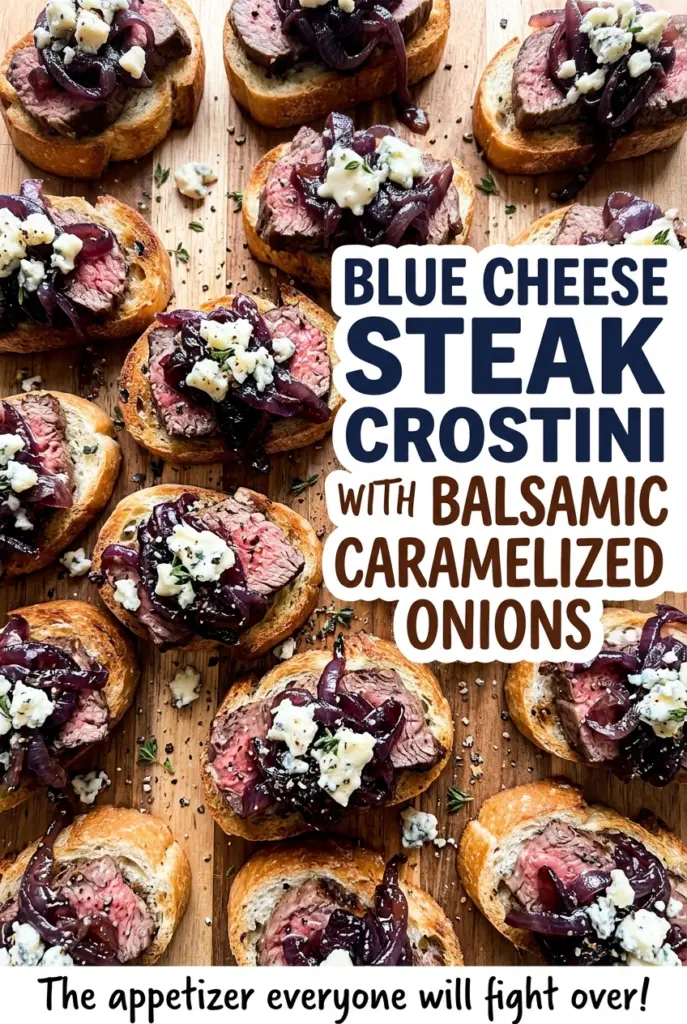
Blue Cheese Steak Crostini with Balsamic Caramelized Onions
The onions start out sharp and firm, then slowly turn soft, sweet, and deep gold in the skillet. It takes patience, but that long, gentle cook is what gives Blue…
Tip: save now, cook later.The onions start out sharp and firm, then slowly turn soft, sweet, and deep gold in the skillet. It takes patience, but that long, gentle cook is what gives Blue Cheese Steak Crostini with Balsamic Caramelized Onions its rich, savory bite instead of a pile of hurried, pale onions.
I add the balsamic only after the onions are golden, so it can turn glossy around them without taking over their sweetness. The crisp baguette gives the steak and creamy blue cheese a sturdy base, and each bite lands somewhere between tangy, buttery, and beefy. These are the kind of crostini I like to put out while they’re still warm, with the bread crisp at the edges and the onions tucked into every little bite.
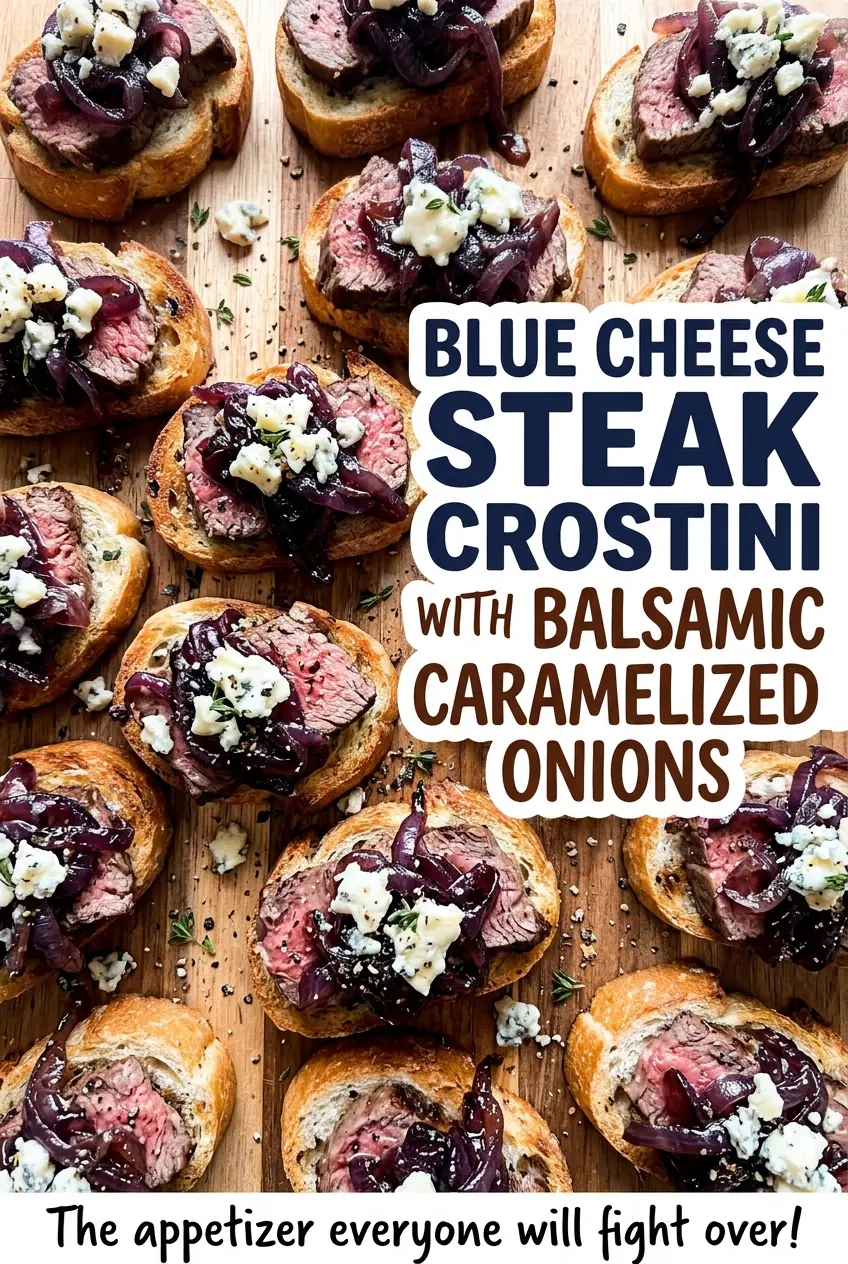
Kitchen Note
Let the steak rest for the full 3 minutes before you slice it. That short pause gives the juices a chance to settle, so more stays in the thin slices instead of running onto the cutting board.
Save these Blue Cheese Steak Crostini for a gathering when you want crisp toast, tender steak, and sweet balsamic onions in one easy-to-pick-up bite.
Why Balsamic Belongs in the Pan Only After the Onions Turn Golden
Onions need time to soften and brown; balsamic needs only a few minutes. Adding the vinegar after the onions are deeply golden keeps the long cook focused on the onions themselves, rather than reducing the vinegar until its sharpness dominates. At the end, it coats the softened slices and becomes glossy as it nearly evaporates.
Keep the skillet at medium-low and stir every few minutes. If the onions are catching on the bottom before they’re soft, the heat is too high for this slow step; lower it rather than rushing them. Their color should deepen gradually, and the texture should become very soft before the vinegar goes in. The full 35 to 45 minutes is useful here, not a sign that something has gone wrong.
This also gives the crostini a better balance. The onions bring sweetness and a little acidity, while the blue cheese is salty and pungent. When the vinegar is reduced until glossy, it clings to the onions instead of leaving a wet puddle that could soak the toast.
What the Steak, Blue Cheese, and Baguette Each Bring to the Bite
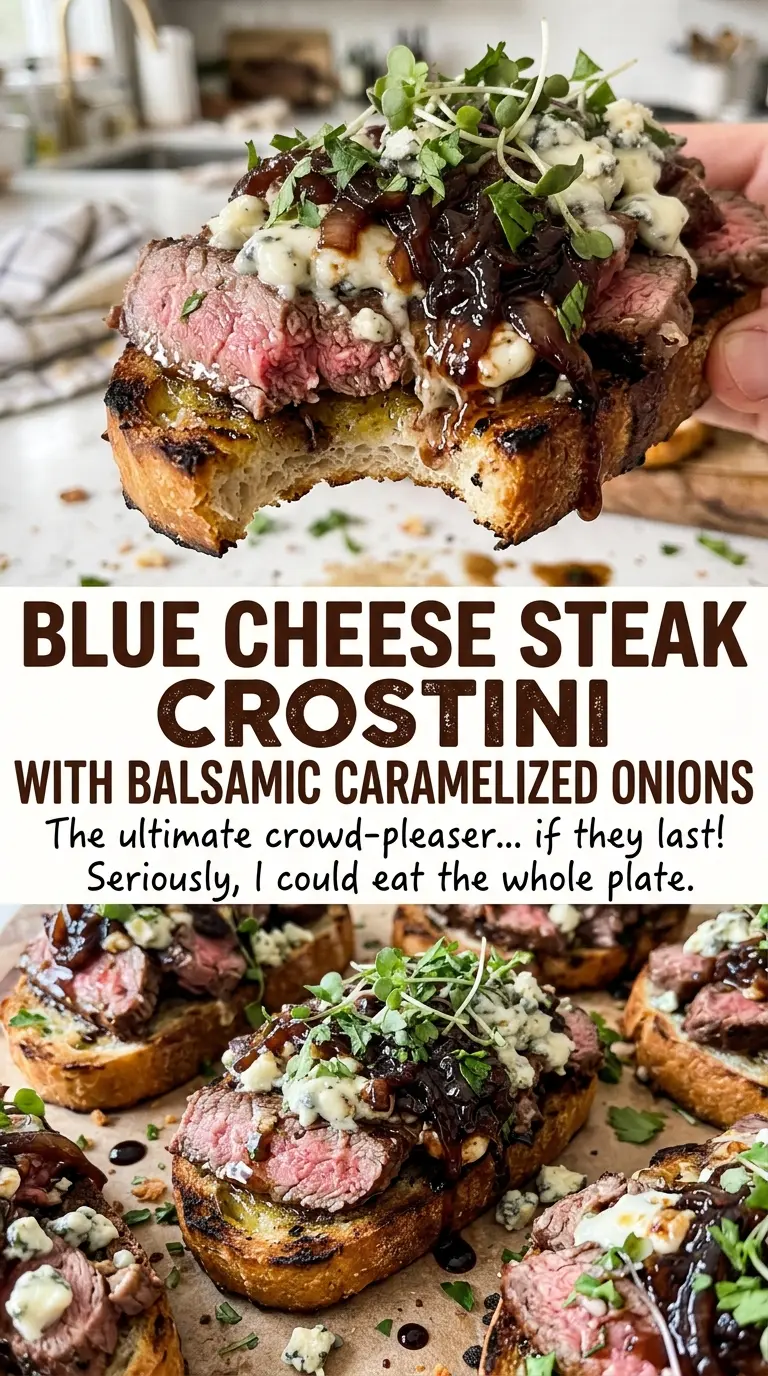
- Sirloin steak — Boneless sirloin gives you a beefy, tender topping without too much fat sliding off the toast. Choose a piece that’s evenly 1 inch thick so it cooks predictably; a 1-inch-thick boneless ribeye is a workable swap, though it’ll be richer. Use the same thermometer endpoint rather than relying on the clock alone.
- Yellow onions and balsamic vinegar — Yellow onions soften into a sweet, savory base, and ordinary balsamic is plenty for this job; there’s no need to use an expensive aged bottle. If yellow onions aren’t available, two medium red onions sliced the same way will work, with a slightly sharper, deeper-colored result.
- Baguette — A baguette has a firm crumb and crust that can hold the creamy topping without collapsing. A gluten-free baguette is the most useful bread swap; choose one that gives you 24 slices about 1/2 inch thick, since softer gluten-free bread can be more delicate once topped.
- Cream cheese and blue cheese — Softened cream cheese makes the blue cheese spreadable and keeps its sharp flavor from overwhelming the steak. A block of blue cheese is easy to crumble yourself, but pre-crumbled blue cheese works too. For a milder, tangier spread, replace the blue cheese with the same amount of crumbled goat cheese and mash it with the cream cheese.
The Order That Keeps the Steak Juicy and the Toast Crisp
Give the onions their slow skillet time
Melt the butter in a 12-inch skillet over medium-low heat, then add the thinly sliced onions and 1/2 teaspoon of the salt. Cook for 35 to 45 minutes, stirring every few minutes, until they’re very soft and deeply golden. Stir in the balsamic vinegar and cook for 2 to 3 minutes, until glossy and nearly evaporated. Move the onions to a plate and wipe the skillet clean before cooking the steak.
Sear the steak, then slice across the grain
Pat the steak dry, then season it with the remaining 1 teaspoon salt and the black pepper. Heat 1 tablespoon olive oil in the skillet over medium-high heat and cook the steak for about 4 to 5 minutes per side, checking with an instant-read thermometer until it reaches 145°F. Transfer it to a cutting board and let it rest for 3 minutes. Slice thinly against the grain so each piece is easier to bite through.
Toast both sides until crisp and golden
Heat the oven to 400°F and arrange the baguette slices on an 18×13-inch rimmed baking sheet. Brush both sides with the remaining 2 tablespoons olive oil; coating both sides helps the slices toast evenly. Bake for 8 to 10 minutes, turning once halfway through, until crisp and golden. Keep an eye on the thinner slices near the end, since they can color faster.
Mash the spread and build each crostini
In a medium bowl, mash the softened cream cheese and crumbled blue cheese together with a fork until combined. If the cream cheese is still cold, it will resist mashing and leave larger lumps, so give it time to soften first. Spread the mixture over the toasted baguette slices, then top each one with sliced steak and caramelized onions. The toppings are easiest to place while the bread is still firm and easy to handle.
Two Useful Ways to Adapt These Steak Crostini
Turn the toppings into low-carb bites
Replace the baguette with 24 thick cucumber rounds. They’ll be cool and crisp rather than crunchy and toasted, so spoon on a modest amount of spread and assemble close to serving time; cucumber releases moisture as it sits.
Make a half batch for a smaller gathering
Halve every ingredient to make 12 crostini for about 4 servings. Use the same pan sizes, temperatures, and doneness cues; the onions still need their slow cook, while the smaller steak or onion quantity may finish at a different point within the stated time ranges.
Storage and Reheating
- Refrigerator: Store the steak, onions, spread, and toasted bread separately in airtight containers. Refrigerate the perishable toppings within 2 hours and use the steak and spread within 3 to 4 days; toast will soften as it sits.
- Freezer: Freeze the cooked steak and onions separately in airtight containers for up to 2 months. Thaw them in the refrigerator; the finished crostini and blue cheese spread aren’t good candidates for freezing because their textures suffer.
- Reheating: Warm the steak and onions gently in a skillet until steaming hot, reheating leftovers to 165°F. Re-crisp the bread in a 400°F oven, watching closely so the slices don’t darken too much; assemble after reheating.
Questions That Come Up While Making These Crostini
Blue Cheese Steak Crostini with Balsamic Caramelized Onions
Ingredients
Equipment
Method
- Melt the butter in a 12-inch skillet over medium-low heat, then add the onions and 1/2 teaspoon of the salt. Cook, stirring every few minutes, for 35-45 minutes, until the onions are very soft and deeply golden.
- Stir in the balsamic vinegar and cook for 2-3 minutes, until glossy and nearly evaporated. Transfer the onions to a plate and wipe the skillet clean.
- Pat the steak dry and season it with the remaining 1 teaspoon salt and the pepper. Heat 1 tablespoon of the olive oil in the skillet over medium-high heat, then cook the steak for about 4-5 minutes per side, checking with an instant-read thermometer until it reaches 145°F.
- Transfer the steak to a cutting board and let it rest for 3 minutes, then slice it thinly against the grain.
- Heat the oven to 400°F. Arrange the baguette slices on an 18x13-inch rimmed baking sheet, brush both sides with the remaining 2 tablespoons olive oil, and bake for 8-10 minutes, turning once halfway through, until crisp and golden.
- Mash the cream cheese and blue cheese together in a medium bowl with a fork until combined.
- Spread the blue cheese mixture over the toasted baguette slices, then top each with sliced steak and caramelized onions.