
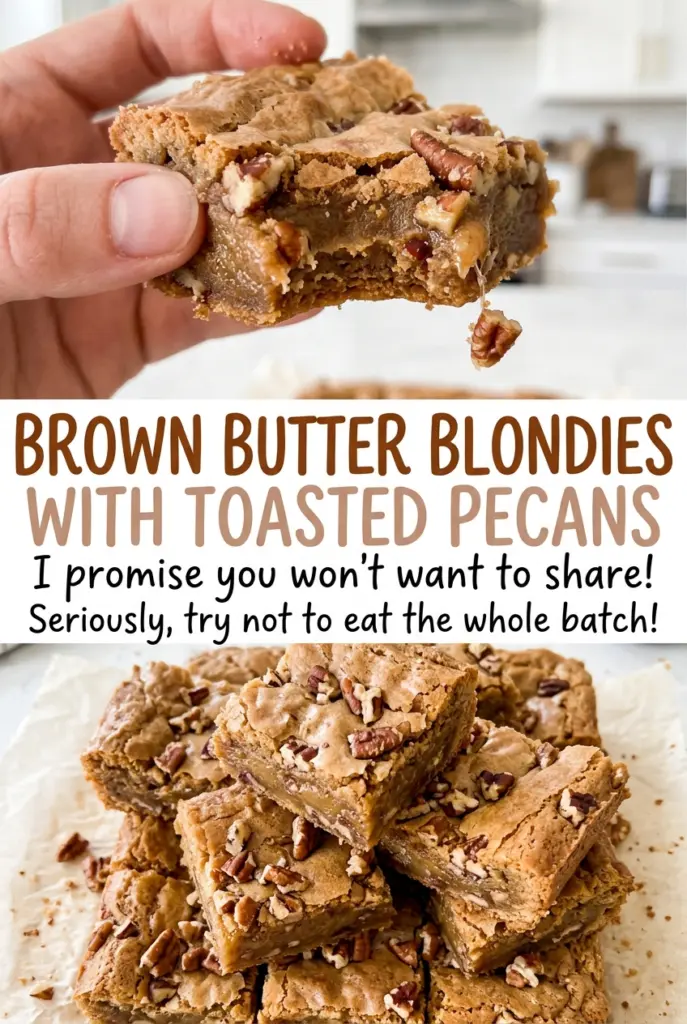
Brown Butter Blondies with Toasted Pecans
The butter goes from quiet bubbling to a nutty smell and amber flecks faster than you’d expect, and that final stretch is where these blondies get their character. I watch…
Tip: save now, cook later.The butter goes from quiet bubbling to a nutty smell and amber flecks faster than you’d expect, and that final stretch is where these blondies get their character. I watch the skillet closely and swirl it often; once the flecks turn amber, I pour everything into the bowl so the butter doesn’t keep cooking in the hot pan. Those browned bits belong in the batter, too. They bring the toasted, almost caramel-like flavor that makes these brown butter blondies with toasted pecans taste different from a standard bar cookie.
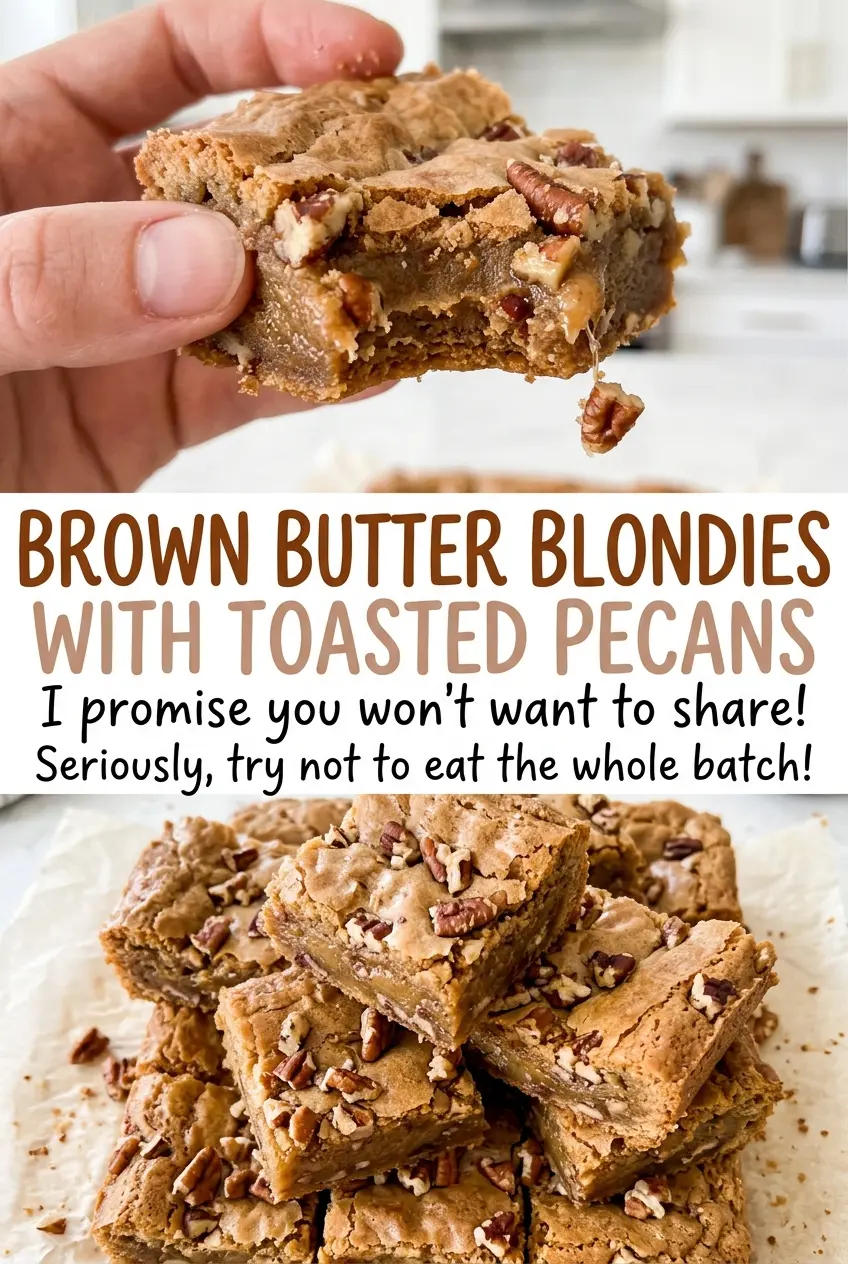
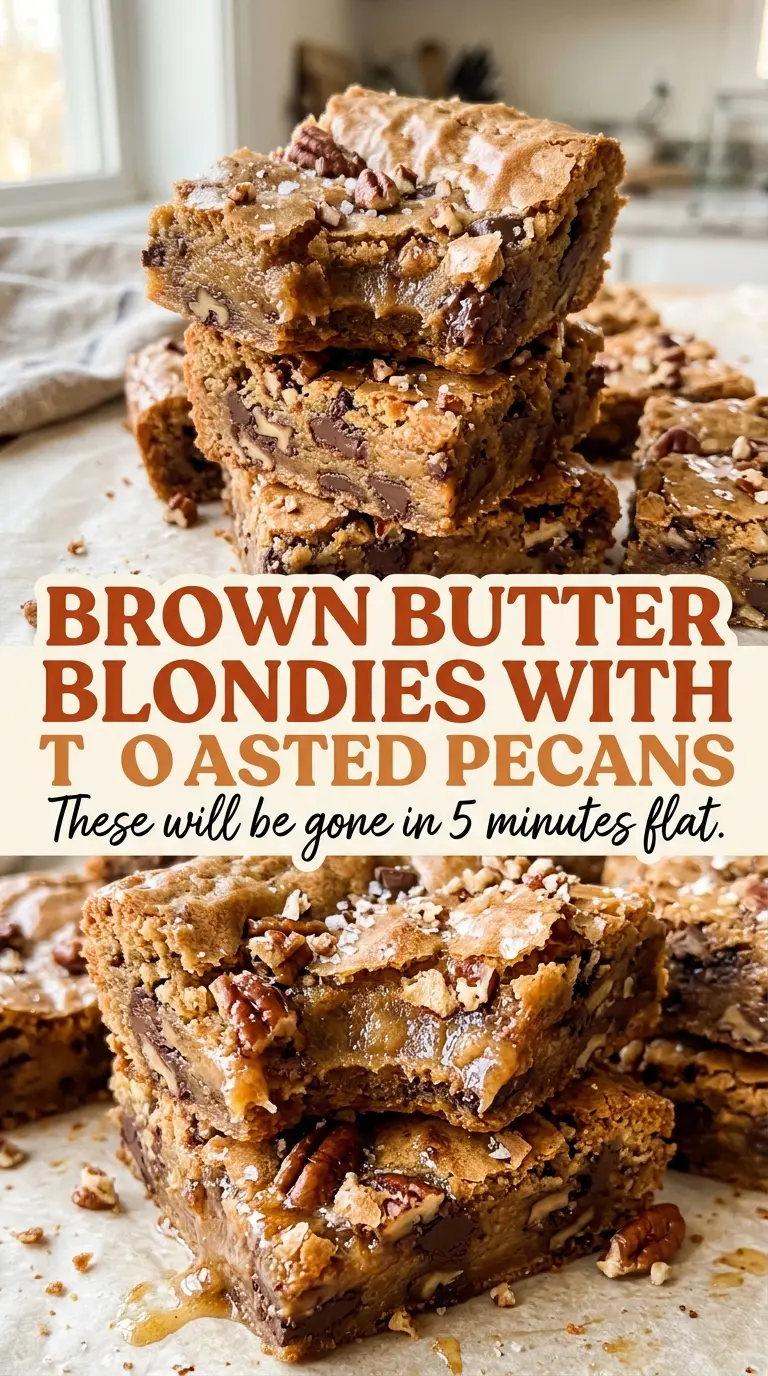
The batter comes together in one bowl after the dry ingredients are mixed separately, and it’s thick enough to spread into the corners of the pan. Light brown sugar keeps the flavor mellow, while toasted pecans add a crisp bite against the soft center. I let the blondies cool completely before cutting so the middle has time to set into neat, chewy squares. The edges turn golden, the center holds a few moist crumbs, and the pecans stay fragrant in every bite.
Kitchen Note
Give the browned butter its full 10 minutes to cool before adding the eggs. If it’s still piping hot, the eggs can start to cook as you whisk, and you’ll lose the smooth batter these bars need.
Save these brown butter blondies with toasted pecans for a bake with crisp edges, a chewy middle, and warm toasted-butter flavor.
Why the extra yolk matters in a pan of blondies
Blondies need enough structure to hold a clean square, but too much egg white can make the crumb feel more cake-like than chewy. Here, two whole eggs provide the structure, and one extra yolk adds richness without another white. That balance works especially well alongside melted butter: the batter stays dense and tender rather than puffing into a light cake.
Whisk the eggs and yolk into the warm butter and brown sugar until the mixture looks combined, then stop. You’re not trying to beat air into it. Over-whisking can make the finished bars lighter and more cake-like, while a gentle mix keeps the texture closer to a soft cookie bar. Once the flour goes in, folding just until the dry streaks disappear helps preserve that tender center.
The ingredients that build the brown-butter flavor and chewy bite
- Unsalted butter — Ordinary unsalted butter works well; there’s no need to seek out a specialty brand. Browning it concentrates the buttery flavor and creates the toasted flecks that give the bars their signature taste. Pour all of those flecks into the batter rather than leaving them behind in the skillet.
- Light brown sugar — Its mild molasses flavor pairs with the browned butter without overwhelming it, and packing it keeps the amount consistent. Dark brown sugar can replace it one-for-one for a deeper molasses note, though the finished blondies will taste less delicate.
- Eggs and extra yolk — Use large eggs, as listed, so the batter has the intended balance of moisture and structure. Separate one yolk carefully; a little leftover white won’t ruin the batch, but don’t add the whole extra white in place of the yolk.
- Pecans — Fresh pecans taste sweeter and more fragrant after toasting, and a dry skillet brings out that aroma quickly. Store-brand chopped pecans are fine here; the brief toast matters more than buying an expensive variety.
- All-purpose flour and baking powder — All-purpose flour gives the bars enough structure to slice, while the small amount of baking powder keeps them from baking up too dense. Whisk these with the fine salt first so the leavening is evenly distributed before it meets the wet ingredients.
- Vanilla extract — A standard pure or imitation vanilla extract both work in this browned-butter batter. The toasted butter and pecans carry most of the flavor, so a premium bottle isn’t essential.
How to brown the butter without losing the toasted bits
Prepare the pan and toast the pecans
Heat the oven to 350°F and line a 9×13-inch metal pan with parchment, leaving an overhang on two sides. Lightly coat the parchment and exposed sides with cooking spray so the bars release cleanly. Toast the pecans in a dry skillet over medium heat for 3–5 minutes, stirring often. When they smell fragrant, transfer them to a plate so the hot skillet doesn’t keep toasting them.
Watch the butter change color
Melt the butter in the skillet over medium heat, swirling often for 5–8 minutes. It will bubble as moisture cooks off, then the foam clears enough to reveal amber-brown flecks on the bottom. The nutty smell is a useful cue; don’t wait for the flecks to turn dark brown, because they can burn quickly. Pour the butter and every browned bit into a large heatproof bowl, then let it cool for 10 minutes.
Whisk the wet mixture and fold gently
Whisk the light brown sugar into the warm butter, then whisk in the eggs and egg yolk until combined. Add the vanilla and whisk it through. In a separate medium bowl, whisk together the flour, baking powder, and fine salt, then fold that mixture into the butter mixture. Stop as soon as no dry streaks remain, and fold in the cooled pecans without stirring the batter smooth.
Spread, bake, and cool before slicing
Spread the thick batter evenly in the prepared pan, nudging it into the corners so the edges bake at the same pace as the middle. Bake at 350°F for 25–30 minutes, until the edges are golden and a toothpick inserted in the center comes out with a few moist crumbs. A clean toothpick can mean the center has gone too far for a tender blondie. Cool in the pan for 20 minutes, lift the slab onto a rack using the parchment overhang, and wait until it’s completely cool before cutting.
Two simple ways to change the pecan texture
Leave out the pecans for a smoother blondie
Omit the pecans and keep the rest of the batter and method the same. The bars lose the crunchy bites and let the browned-butter flavor come through more clearly. If you’re baking for someone with a nut allergy, use clean equipment and ingredients that haven’t had contact with nuts.
Keep the pecans in larger pieces
Chop the pecans more coarsely before toasting and folding them in. You’ll get distinct nutty pockets and a firmer crunch instead of pecans spread evenly through every bite. Stir them often as they toast so the larger pieces brown without scorching.
Storage and Reheating
- Room temperature: Keep cut blondies in an airtight container for up to 3 days. The edges soften gradually, but the centers stay chewy.
- Freezer: Freeze completely cooled, cut blondies in an airtight container for up to 2 months. Separate layers with parchment, then thaw at room temperature.
- Reheating: Warm an individual blondie in the microwave for about 10 seconds if you want it slightly warm. Longer heating can dry the edges, so use short bursts rather than heating the whole batch.
Questions that come up when baking these blondies
Brown Butter Blondies with Toasted Pecans
Ingredients
Equipment
Method
- Heat the oven to 350°F.
- Line a 9x13-inch metal baking pan with parchment paper, leaving an overhang on two sides, then lightly coat the parchment and exposed sides with cooking spray.
- Toast the pecans in a dry skillet over medium heat for 3-5 minutes, stirring often, until fragrant.
- Transfer the pecans to a plate to cool.
- Melt the butter in the skillet over medium heat, swirling often, for 5-8 minutes, until it smells nutty and has amber-brown flecks.
- Immediately pour the butter, including the browned bits, into a large heatproof bowl and cool for 10 minutes.
- Whisk the brown sugar into the warm butter.
- Whisk in the eggs and egg yolk until combined.
- Whisk in the vanilla extract.
- In a medium bowl, whisk together the flour, baking powder, and salt.
- Fold the flour mixture into the butter mixture just until no dry streaks remain.
- Fold in the toasted pecans.
- Spread the batter evenly in the prepared pan.
- Bake for 25-30 minutes, until the edges are golden and a toothpick inserted in the center comes out with a few moist crumbs.
- Cool the blondies in the pan for 20 minutes.
- Use the parchment overhang to lift them onto a rack.
- Cool completely before cutting.