

Cabbage Dumplings with Pork and Ginger Dipping Sauce
The first dumpling usually tells me whether I squeezed the cabbage enough: if the pan fills with liquid before the wrappers are tender, the filling brought too much water along.…
Tip: save now, cook later.The first dumpling usually tells me whether I squeezed the cabbage enough: if the pan fills with liquid before the wrappers are tender, the filling brought too much water along. Salting the napa cabbage and pressing it dry takes a few extra minutes, but it keeps the pork filling cohesive and lets the dumplings brown instead of steam in a puddle. These cabbage dumplings with pork and ginger dipping sauce get crisp bottoms in the skillet while the covered pan steams the wrappers tender.
I like the contrast between the savory pork filling and the bright dipping sauce, where fresh ginger and rice vinegar cut through the toasted sesame oil. Each dumpling gets a spoonful of filling and a firm seal, then cooks in batches so the bottoms have room to turn golden. The method is straightforward once the filling is ready, and the finished dumplings come to the table with crisp bases, tender wrappers, and a punchy ginger sauce.

Kitchen Note
Keep the unused wrappers covered while you work. Their edges dry quickly, and a dry edge is much harder to press into a tight seal.
Save these pork and ginger cabbage dumplings for a crisp-bottomed dinner with a bright, savory dipping sauce.
Why Napa Cabbage Needs a Squeeze Before It Meets the Pork
Napa cabbage releases a surprising amount of water once it’s salted. If that moisture goes straight into the bowl, it loosens the pork mixture and can seep out as the dumplings cook. The result is a softer filling and less reliable browning; the bottoms need a dry, hot skillet to develop that crisp golden crust.
Give the chopped cabbage ten minutes with the salt, then squeeze it firmly over the sink. Don’t stop when it merely looks wilted. Press until you’ve removed as much liquid as you can, because the filling should feel cohesive when the pork, scallions, ginger, soy sauce, sesame oil, and white pepper are mixed together. That texture makes it easier to portion the filling neatly and seal each wrapper without a wet edge.
This step also makes the filling taste more concentrated. The pork and ginger season the cabbage rather than having their flavor diluted by cabbage liquid. You’ll notice the difference most clearly after the dumplings steam: the filling stays together, and the wrappers remain tender instead of soggy.
What Napa Cabbage, Fresh Ginger, and Sesame Oil Bring to These Dumplings
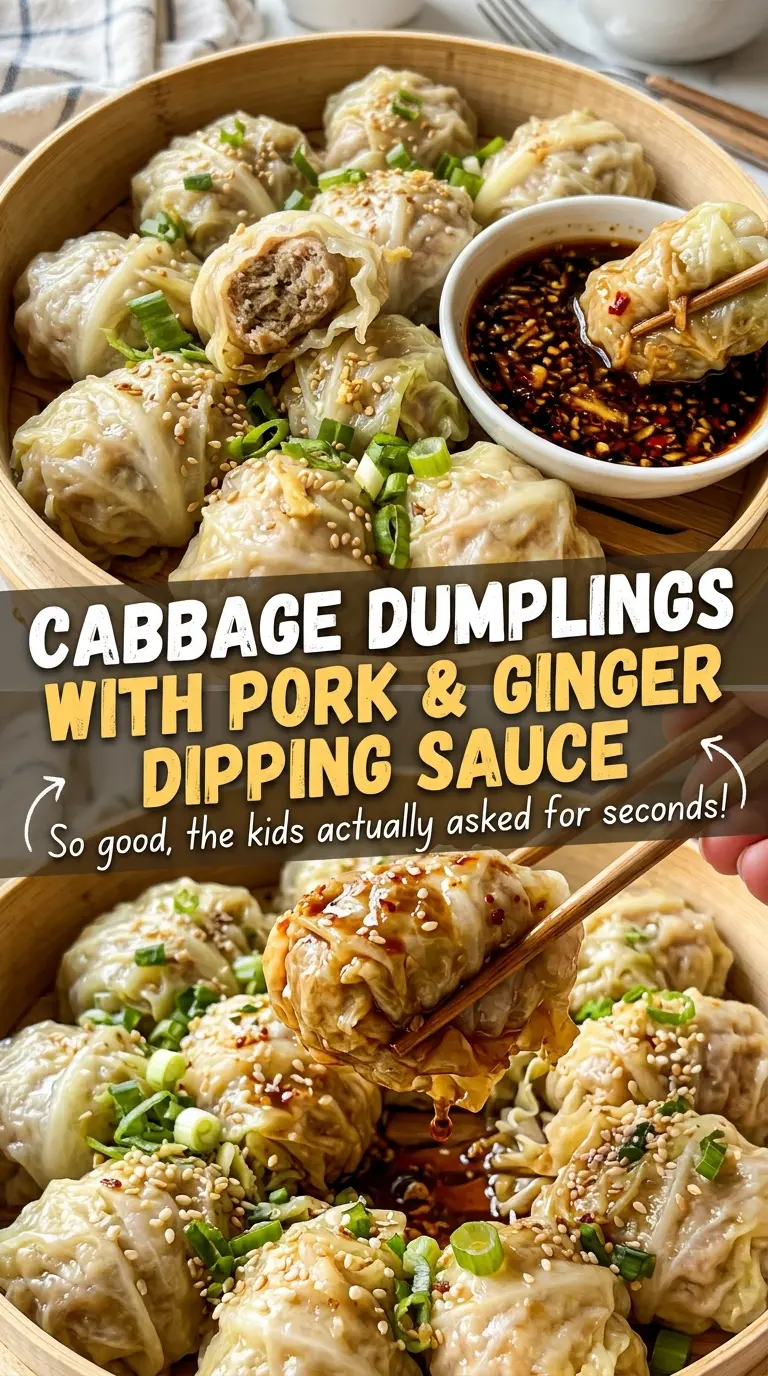
- Napa cabbage — Its tender leaves blend easily into the pork and soften during steaming. Chop it finely so it distributes through the filling instead of leaving large pieces that make folding awkward. Green cabbage can stand in at the same volume, but it has a firmer bite and a more pronounced cabbage flavor.
- Ground pork — Pork gives the filling a rich, savory base that stays moist through the covered steaming stage. Ground chicken works as a substitution, though it’s leaner and needs to reach a higher safe temperature; see the variation below.
- Fresh ginger — Finely grated fresh ginger contributes a juicy, sharp warmth to both the filling and sauce. It’s worth using fresh here; dried ground ginger won’t give either mixture the same bright, fragrant character.
- Soy sauce — It seasons both the pork and the dipping sauce, so its salty savoriness carries through the whole dish. Low-sodium soy sauce works in the same amount if you prefer a less salty result.
- Toasted sesame oil — A little adds its nutty aroma to the filling and sauce. Keep the neutral oil for the skillet: toasted sesame oil is there for flavor, not for crisping the dumpling bottoms.
- Round dumpling wrappers — Their shape makes it easy to fold each wrapper in half around the filling. Keep the stack covered as you fill the dumplings, and use a little water on the edge to help it seal.
How to Fill, Brown, and Steam the Dumplings in Three Batches
Mix a Filling That Holds Together
Toss the finely chopped napa cabbage with the salt and let it stand for ten minutes, then squeeze it firmly over the sink. Combine the squeezed cabbage with the ground pork, sliced scallions, grated ginger, soy sauce, toasted sesame oil, and white pepper. Mix until the filling looks evenly combined and holds together rather than falling apart in loose pieces. Stir the dipping sauce ingredients in a small bowl until the sugar dissolves, then set it aside.
Seal Each Wrapper Without Overfilling It
Set one tablespoon of filling in the center of a round wrapper. Keep the rest of the wrappers covered while you work, and moisten the wrapper edge with a little of the reserved water. Fold the wrapper in half and press firmly along the edge to seal; if filling reaches the edge, wipe it away before pressing so the seam can close. Repeat until all 36 dumplings are filled.
Brown First, Then Steam Under a Lid
Heat two teaspoons of neutral oil in a 12-inch skillet over medium-high heat and arrange 12 dumplings flat-side down. Cook for about two minutes, until the bottoms are golden brown. Pour in one-third cup of the remaining water and cover the skillet immediately, then reduce the heat to medium and steam for 7–9 minutes. Check through the side of a center dumpling with an instant-read thermometer; the pork needs to reach 160°F.
Let the Bottoms Crisp Again
Once the wrappers are tender and the pork is cooked through, uncover the skillet. Let the remaining water evaporate, then cook for about one to two minutes so the dumpling bottoms turn crisp again. Transfer the batch to a serving plate and repeat with the remaining dumplings, oil, and water in two more batches. Serve with the ginger dipping sauce.
Easy Ways to Change the Filling or Dipping Sauce
Ground Chicken Instead of Pork
Use a pound of ground chicken in place of the pork and keep the other filling ingredients the same. Chicken is leaner, so don’t rely on the pork timing alone: steam until the center of a dumpling reaches 165°F. The filling will taste a little lighter and less rich.
A Sharper, Less-Sweet Dipping Sauce
Leave the sugar out of the dipping sauce if you prefer a more direct mix of soy, vinegar, and ginger. The sauce will taste sharper and saltier, with less sweetness to soften the vinegar. Stir the remaining sauce ingredients together as usual.
Storage and Reheating
- Refrigerator: Keep cooked dumplings in an airtight container for 3–4 days. The bottoms will soften in storage.
- Freezer: Freeze cooked dumplings in a single layer until firm, then transfer them to an airtight freezer container for up to 2–3 months. Their crisp texture won’t be quite the same after thawing and reheating.
- Reheating: Warm them in a covered skillet over medium-low heat with a splash of water until steaming hot throughout, then uncover to dry and crisp the bottoms. Don’t use high heat from the start; the bottoms can scorch before the centers heat through. Reheated leftovers should reach 165°F.
Questions That Come Up When Making Pork Cabbage Dumplings
Cabbage Dumplings with Pork and Ginger Dipping Sauce
Ingredients
Equipment
Method
- Toss the cabbage with the salt and let it stand for 10 minutes.
- Squeeze the cabbage firmly over the sink to remove as much liquid as possible.
- Combine the pork, squeezed cabbage, scallions, ginger, soy sauce, sesame oil, and white pepper in a bowl, mixing until the filling is cohesive.
- Stir together the soy sauce, rice vinegar, ginger, sugar, and sesame oil in a small bowl until the sugar dissolves.
- Place 1 tablespoon of filling in the center of each wrapper, keeping the remaining wrappers covered.
- Moisten the wrapper edge with a little of the 2 tablespoons water, fold it in half, and press firmly to seal.
- Heat 2 teaspoons of oil in a 12-inch skillet over medium-high heat and arrange 12 dumplings flat-side down in the skillet.
- Cook for about 2 minutes, until their bottoms are golden brown.
- Pour 1/3 cup of the remaining water into the skillet and cover immediately.
- Reduce the heat to medium and steam for 7–9 minutes, until the wrappers are tender and the pork reaches 160°F when checked through the side of a center dumpling with an instant-read thermometer.
- Uncover and cook until the water evaporates and the bottoms are crisp again, about 1–2 minutes, then transfer the dumplings to a serving plate.
- Repeat with the remaining dumplings, oil, and water in two batches.