
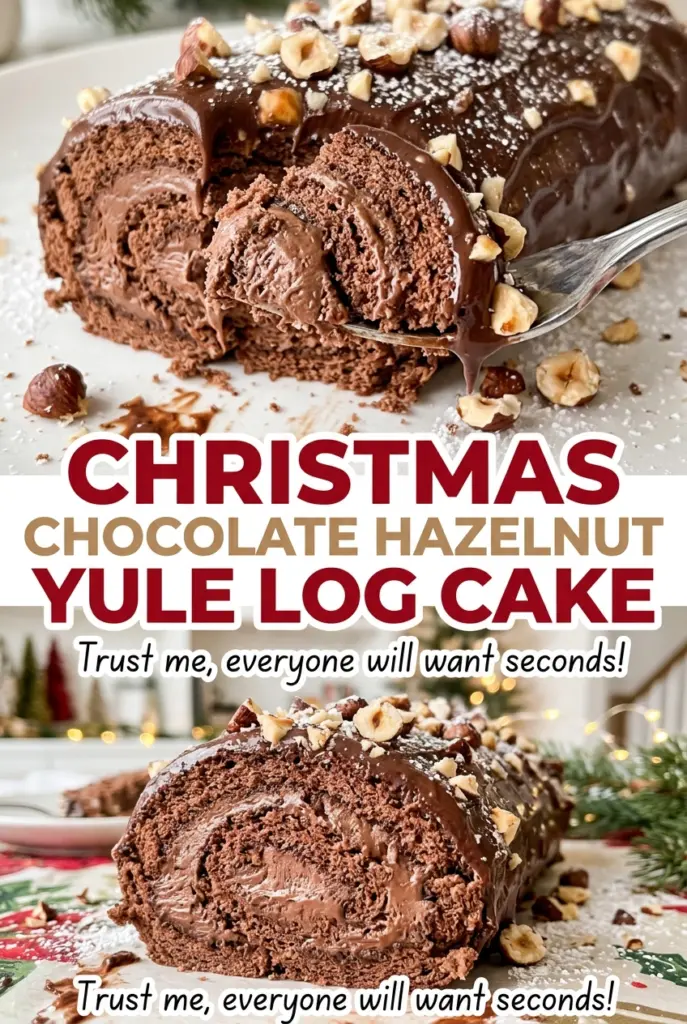
Christmas Chocolate Hazelnut Yule Log Cake
Right when the oven door opens, this cake is a thin cocoa sheet, not a tall celebration cake. That’s exactly what you want: a tender sponge that wraps around chocolate-hazelnut…
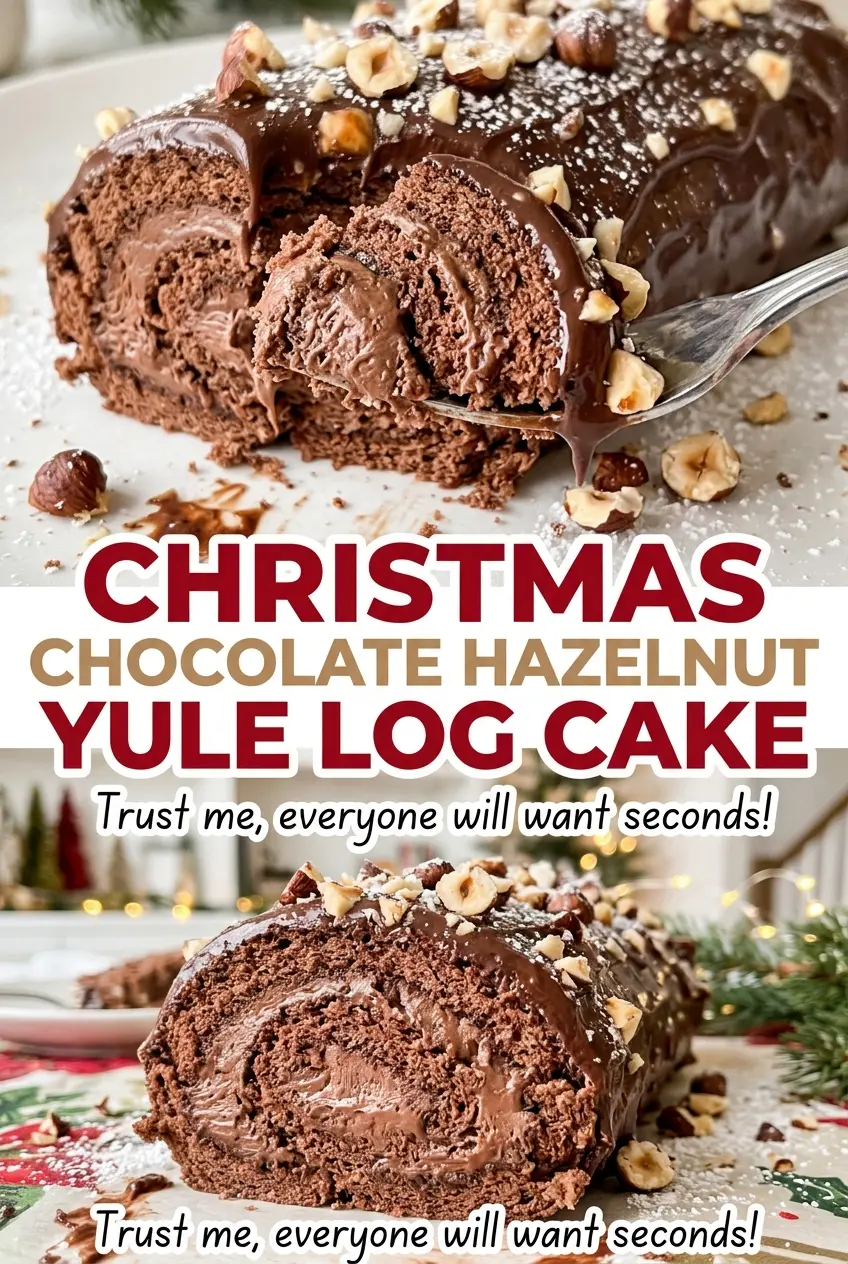
Tip: save now, cook later.Right when the oven door opens, this cake is a thin cocoa sheet, not a tall celebration cake. That’s exactly what you want: a tender sponge that wraps around chocolate-hazelnut cream, then takes bark lines from a fork. I make this Christmas Chocolate Hazelnut Yule Log Cake when I want the familiar log shape without stacking layers, and the small diagonal branch makes the platter look finished without elaborate decorating.
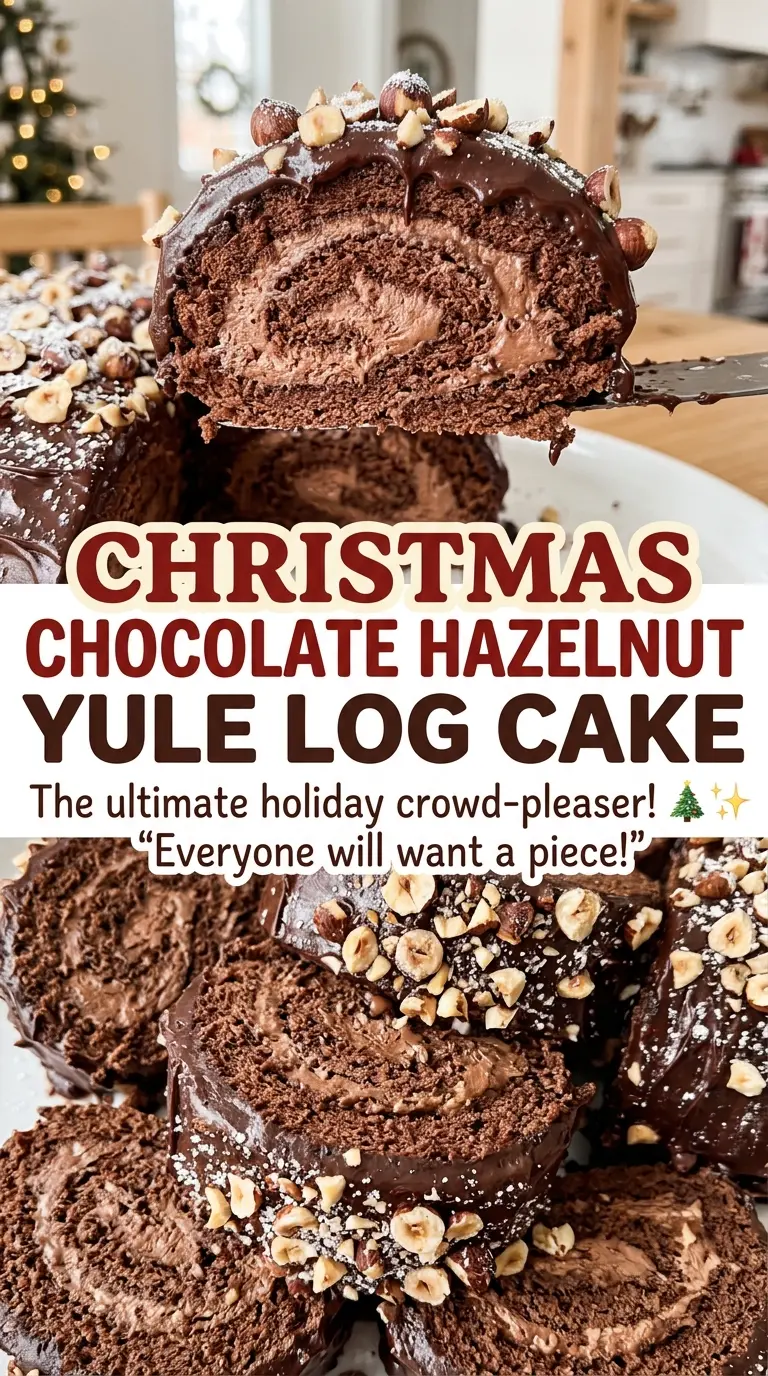
There’s a lovely contrast in each slice: the sponge stays soft and light, while the chocolate-hazelnut filling brings a deep, creamy center. I keep the decoration simple and let the rolled shape do most of the work. Give the ganache its full chill before you start baking, and the rest of the assembly feels much less rushed. The finished log looks festive, but every part is made with familiar ingredients and straightforward techniques.
Kitchen Note
Stop whipping the chilled ganache as soon as it turns fluffy and holds medium-stiff peaks. It only needs about a minute or two, and pushing it past that point can make it stiff and harder to spread smoothly.
Save this chocolate hazelnut yule log for a holiday dessert with a soft cocoa spiral, creamy filling, and easy fork-drawn bark.
Why a warm roll gives this thin sponge a head start
A rolled cake asks a thin sponge to bend without splitting, and the best time to teach it that curve is while it’s still hot. Once the cake cools flat, its surface is less flexible; forcing it into a tight roll later puts stress on the outer edge. Rolling it around a towel right out of the oven lets it cool in the shape it will need for filling.
The towel does more than give you something to hold. Powdered sugar keeps the warm cake from sticking, while the towel supports the sponge as you guide it into a cylinder. Roll from a short end so the finished log has a good spiral when sliced. Let it cool seam-side down, then unroll it gently to add the filling. A small crack or two isn’t a disaster—the ganache coating covers the outside—but getting the shape started while the sponge is pliable makes a clean, even roll much easier.
How the chocolate, hazelnut, and egg foam each earn their place
- Semisweet chocolate — Finely chopped chocolate melts smoothly when covered with hot cream and gives the filling a balanced cocoa taste. A reliable grocery-store bar works well; chopping it small matters more than buying an expensive brand. Chocolate chips can be less predictable in ganache because they’re made to hold their shape.
- Chocolate-hazelnut spread — This brings the recognizable hazelnut flavor and sweetness to the ganache, so the filling tastes rounder than plain chocolate cream. A smooth, familiar spread is the right choice here; a crunchy one would interrupt the soft filling.
- Heavy cream — The fat in heavy cream helps the chocolate mixture become a smooth ganache that can be whipped after chilling. Milk or a lower-fat cream won’t give it the same rich, stable texture, so stick with heavy cream for this filling.
- Eggs and granulated sugar — Beaten together, these form the airy base that gives this thin cake its lift. Room-temperature eggs blend and whip more readily than cold eggs. Large eggs are important for keeping the batter’s proportions right.
- Flour and unsweetened cocoa powder — Flour gives the sponge enough structure to hold its spiral, while cocoa adds chocolate flavor without making the cake as rich as the filling. Standard all-purpose flour and pantry cocoa work well; sift them together so they fold into the egg foam without lumps.
- Vanilla and baking powder — Vanilla rounds out the chocolate, and baking powder gives the sponge a little extra lift. Both are worth measuring carefully; the batter is delicate, and neither needs a substitute to make this cake work.
From glossy ganache to a clean spiral: the stages that matter
Make a smooth ganache base
Put the finely chopped semisweet chocolate and chocolate-hazelnut spread in a heatproof bowl. Heat the heavy cream in a small saucepan until steaming, pour it over the chocolate, and leave it undisturbed for 3 minutes before whisking smooth. Let it cool until it’s no longer warm, about 30 minutes, then cover and refrigerate until firm but scoopable, at least 4 hours. If the chocolate still looks lumpy after whisking, keep stirring until the mixture is smooth before chilling.
Build the egg foam gently
Heat the oven to 350°F, coat a 10×15-inch jelly-roll pan with cooking spray, and line it with parchment paper. Beat the room-temperature eggs, granulated sugar, and vanilla on high speed for 5 to 7 minutes, until pale and thick enough to fall from the beaters in ribbons. Sift the flour, cocoa powder, baking powder, and salt together, then fold the dry mixture into the eggs in two additions. Stop as soon as no dry streaks remain; vigorous mixing knocks air out of the batter.
Bake, then roll before the sponge cools
Spread the batter evenly in the prepared pan and bake for 10 to 12 minutes. The top should spring back when you press it lightly; leaving it in too long can dry the edges and make them more prone to cracking. Dust a clean kitchen towel with powdered sugar, turn the hot cake onto it, and peel away the parchment. Roll from a short end with the towel inside, then set it seam-side down and cool to room temperature, about 1 hour.
Fill the cooled cake without squeezing out the cream
Beat the chilled ganache on medium speed until fluffy and spreadable, about 1 to 2 minutes. Gently unroll the cake and spread about 1 cup of ganache over the surface, leaving a 1/2-inch border around the edges. Reroll the cake without the towel and place it seam-side down on a serving platter. Keep your hand light as you roll; pressing hard pushes the filling toward the ends.
Shape the branch and finish the bark
Cut a 2-inch piece from one end on a diagonal and set it against the side of the log to make a branch. Spread the remaining ganache over the log and branch, leaving the cut ends exposed so the spiral shows. Drag a fork through the frosting to make bark lines, then refrigerate the cake for at least 30 minutes before slicing. Those fork marks look most natural when they run along the length of the log rather than in perfectly straight, identical grooves.
Two useful ways to adapt this chocolate-hazelnut log
Make the sponge gluten-free
Replace the all-purpose flour with the same amount of a cup-for-cup gluten-free baking blend. Choose one formulated to replace wheat flour in baking; the sponge may be a little less elastic, so fold gently and handle the warm roll carefully.
Give the ganache a darker chocolate edge
Swap the semisweet chocolate for the same amount of bittersweet chocolate. The hazelnut spread still comes through, but the filling tastes more cocoa-forward and less sweet. Chop the chocolate finely so it melts evenly under the hot cream.
Storage and Reheating
- Refrigerator: Keep the covered cake refrigerated for up to 3 days. The ganache firms as it chills, while the sponge stays tender.
- Freezer: Freeze the finished cake or individual slices until firm, then wrap tightly and freeze for up to 1 month. Thaw overnight in the refrigerator before serving.
- Reheating: This cake is served chilled, so don’t microwave it; the ganache softens unevenly and can lose its neat finish.
Questions that come up while making a yule log
Christmas Chocolate Hazelnut Yule Log Cake
Ingredients
Equipment
Method
- Put the chopped semisweet chocolate and chocolate-hazelnut spread in a heatproof bowl.
- Heat the heavy cream in a small saucepan until steaming.
- Pour the steaming cream over the chocolate and let stand for 3 minutes.
- Whisk the mixture smooth.
- Let cool until no longer warm, about 30 minutes.
- Cover the ganache and refrigerate until firm but scoopable, at least 4 hours.
- Heat the oven to 350°F.
- Coat a 10x15-inch jelly-roll pan with nonstick cooking spray.
- Line the pan with parchment paper.
- Beat the eggs, granulated sugar, and vanilla extract in a large bowl on high speed for 5 to 7 minutes, until pale, thick, and ribboning from the beaters.
- Sift the all-purpose flour, unsweetened cocoa powder, baking powder, and salt together.
- Gently fold the dry mixture into the egg mixture in two additions until no dry streaks remain.
- Spread the batter evenly in the prepared pan.
- Bake for 10 to 12 minutes, until the top springs back when lightly pressed.
- Dust a clean kitchen towel with the powdered sugar.
- Turn the hot cake onto the towel.
- Peel off the parchment.
- Roll the cake up from a short end with the towel inside.
- Cool seam-side down to room temperature, about 1 hour.
- Beat the chilled ganache on medium speed until fluffy and spreadable with medium-stiff peaks, about 1 to 2 minutes.
- Gently unroll the cooled cake.
- Spread about 1 cup of the ganache over the cake, leaving a 1/2-inch border.
- Reroll the cake without the towel.
- Place the cake seam-side down on a serving platter.
- Cut a 2-inch piece from one end on a diagonal.
- Set the piece against the side of the log to form a branch.
- Spread the remaining ganache over the log and branch, leaving the cut ends exposed.
- Drag a fork through the frosting to make bark lines.
- Refrigerate for at least 30 minutes before slicing.