
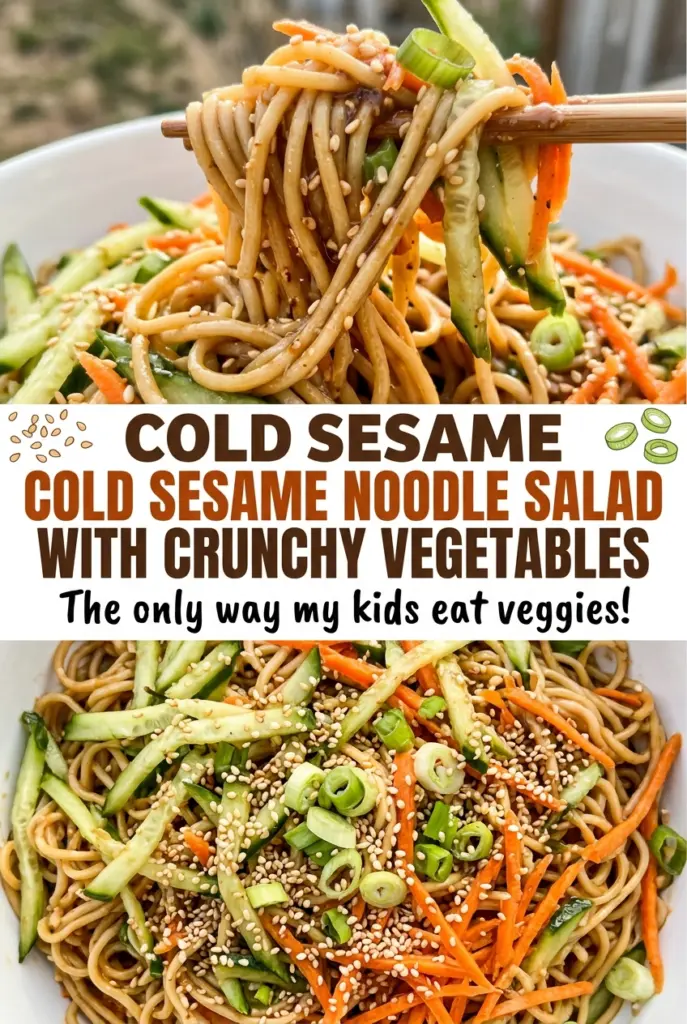
Cold Sesame Noodle Salad with Crunchy Vegetables
The dressing looks almost too thick when it first meets the spaghetti, and that’s the moment I used to reach for more water. A slower pour works better: whisking warm…
Tip: save now, cook later.The dressing looks almost too thick when it first meets the spaghetti, and that’s the moment I used to reach for more water. A slower pour works better: whisking warm water in gradually turns the tahini mixture smooth without leaving it watery. Once the noodles are cold, this sesame noodle salad coats every strand and still leaves the vegetables crisp enough to stand out.
I like the balance here: tahini makes the dressing creamy, while rice vinegar and fresh ginger keep it bright. The vegetables are cut into thin pieces so they’re easy to catch in a forkful, and the toasted sesame seeds go in at the end for a little crunch. After a short rest in the refrigerator, the salad is cold, savory, and ready for lunch or a shared table.
Kitchen Note
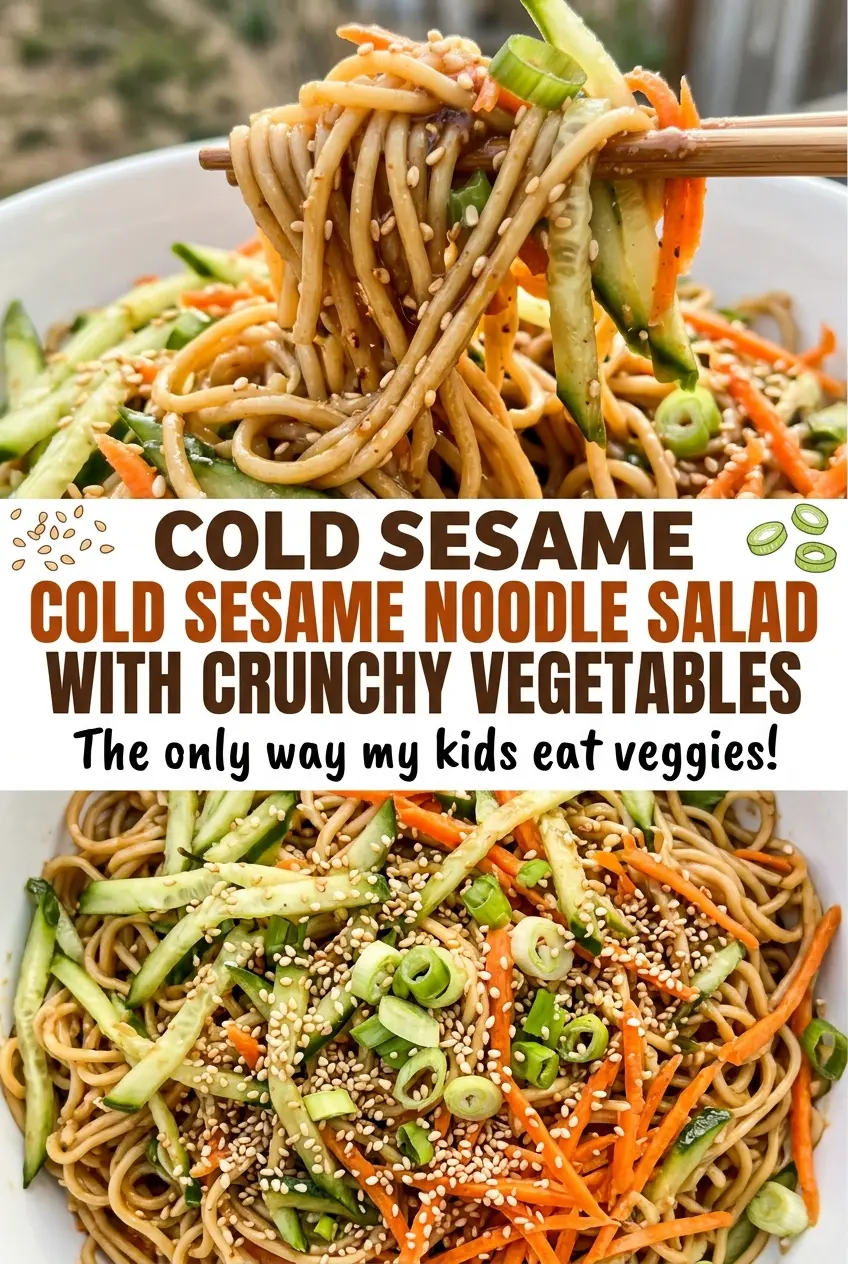
Fold the sesame seeds in after the noodles and vegetables are coated. That keeps their toasted crunch distinct instead of letting them disappear into the creamy dressing.
Save this cold sesame noodle salad for its creamy tahini dressing, crisp vegetables, and toasted sesame finish.
Why Tahini Dressing Tightens Before It Turns Silky
Tahini doesn’t behave like a thin vinaigrette. When it meets soy sauce and rice vinegar, it can seize into a dense paste before it loosens again. That brief thickening is normal; it doesn’t mean the dressing has gone wrong. Gradually whisking in warm water is what brings the mixture back to a smooth, pourable consistency.
Adding the water all at once makes it harder to judge the texture, especially because tahini varies a little from jar to jar. A slow addition gives you time to whisk out the thick streaks and see when the dressing flows easily from the whisk. You want it loose enough to coat the spaghetti, but not so thin that it runs straight to the bottom of the bowl. Starting with well-stirred tahini also matters: if the oil is sitting separately in the jar, the dressing can turn uneven before you even add the water.
The Ingredients That Give This Noodle Salad Its Contrast

- Tahini — It gives the dressing its creamy body and deep sesame flavor. Stir the jar until the settled paste and oil are fully combined before measuring; a basic, fresh tahini works well here, so there’s no need to seek out a specialty brand.
- Low-sodium soy sauce — This brings savory depth without making the dressing overly salty. Using the low-sodium version keeps the soy flavor in balance with the vinegar and honey; regular soy sauce will make the finished salad taste saltier.
- Unseasoned rice vinegar — Its clean acidity cuts through the tahini. Seasoned rice vinegar already contains added sweetening and salt, which can shift the dressing away from the intended balance.
- Toasted sesame oil — The toasted version provides the aroma that makes the sesame taste unmistakable. This is one place where freshness matters; keep the bottle tightly closed, since stale sesame oil can taste flat or unpleasant.
- Honey — It rounds out the sharpness of the vinegar and the savory soy sauce. A mild honey blends in neatly without taking over the ginger and sesame notes.
- Fresh ginger and garlic — Finely grating both lets them disperse through the dressing instead of leaving large, sharp pieces in a bite. Freshly grated ginger has a brighter, cleaner taste than dried ginger, and a fine grater gives the smoothest result.
- Dried spaghetti — Its long strands give the dressing plenty of surface to cling to, and an inexpensive package works just fine. Cook it until al dente so the chilled noodles keep some chew instead of turning soft.
- English cucumber, carrots, and red bell pepper — These are the cool, crisp counterpoint to the creamy sauce. Cut the cucumber and carrots into matchsticks and slice the pepper thinly so each bite gets a little vegetable without overwhelming the noodles.
- Scallions, cilantro, and sesame seeds — Scallions add a gentle onion note, while cilantro gives the salad a fresh herbal edge. Chopped fresh cilantro and sesame seeds both taste best when they’re fresh, and the seeds bring a toasted finish that complements the tahini.
How to Coat Cold Spaghetti Without Losing Its Chew
Whisk the Tahini Dressing Smooth
Whisk the tahini, soy sauce, rice vinegar, sesame oil, honey, ginger, and garlic together in a medium bowl until smooth. The mixture will be thick before the water goes in, so keep whisking rather than trying to thin it with an unmeasured splash. Add the warm water gradually, whisking as you pour, until no thick streaks remain. Stop when the dressing is smooth and pourable.
Cook and Cool the Spaghetti
Bring a large pot of water to a boil, add the spaghetti, and cook it for 8 to 10 minutes or according to the package directions, until al dente. Check a strand near the shorter end of the cooking window; it should have a little bite in the center, not a hard core. Drain the pasta, then rinse it under cold running water until it’s cool. Let it drain well so extra rinse water doesn’t dilute the dressing.
Build the Salad in a Large Bowl
Add the cooled spaghetti to a large bowl with the thinly sliced red bell pepper, cucumber and carrot matchsticks, scallions, cilantro, and dressing. Toss until the noodles and vegetables are evenly coated, lifting from the bottom of the bowl so the dressing doesn’t collect underneath. If some strands are still pale, keep tossing rather than pouring extra dressing over just one spot. Fold in the sesame seeds after everything else is coated.
Chill, Toss Again, and Serve Cold
Refrigerate the salad for 20 minutes so it’s properly cold before serving. The noodles settle as they rest, so toss the whole bowl again once it comes out of the refrigerator. That final toss redistributes the dressing and brings the vegetables back through the spaghetti. Serve the salad cold.
Two Simple Changes for Different Tables
A Vegan Sesame Dressing
Replace the honey with the same amount of maple syrup. The dressing stays smooth and pourable, with a slightly more pronounced maple note and a less floral sweetness. The rest of the salad is already plant-based.
A Gluten-Free Noodle Salad
Use gluten-free spaghetti and gluten-free, low-sodium tamari in place of the wheat-based spaghetti and soy sauce. Cook the noodles according to their package directions and check them early so they stay firm when chilled. The dressing will keep its savory sesame character, though the noodles may have a slightly different bite.
Storage and Reheating
- Refrigerator: Store the salad covered and refrigerate it within 2 hours of serving. It keeps for 3 to 4 days, though the vegetables soften and the noodles absorb more dressing over time.
- Freezer: Freezing isn’t recommended; cucumber and other crisp vegetables turn watery after thawing, and the noodles lose their pleasant bite.
- Reheating: Serve it cold rather than reheating. Heat softens the vegetables and changes the texture of the tahini dressing.
Questions That Come Up With Cold Sesame Noodles
Cold Sesame Noodle Salad with Crunchy Vegetables
Ingredients
Method
- Whisk together the tahini, soy sauce, rice vinegar, sesame oil, honey, ginger, and garlic until smooth.
- Gradually whisk in the warm water until the dressing is smooth and pourable.
- Bring a large pot of water to a boil.
- Add the spaghetti to the boiling water.
- Cook for 8 to 10 minutes or according to package directions until al dente.
- Drain the spaghetti.
- Rinse it under cold running water until cool.
- Toss the cooled spaghetti with the red bell pepper, cucumber, carrots, scallions, cilantro, and dressing until evenly coated.
- Fold in the sesame seeds.
- Refrigerate for 20 minutes.
- Toss again and serve cold.