
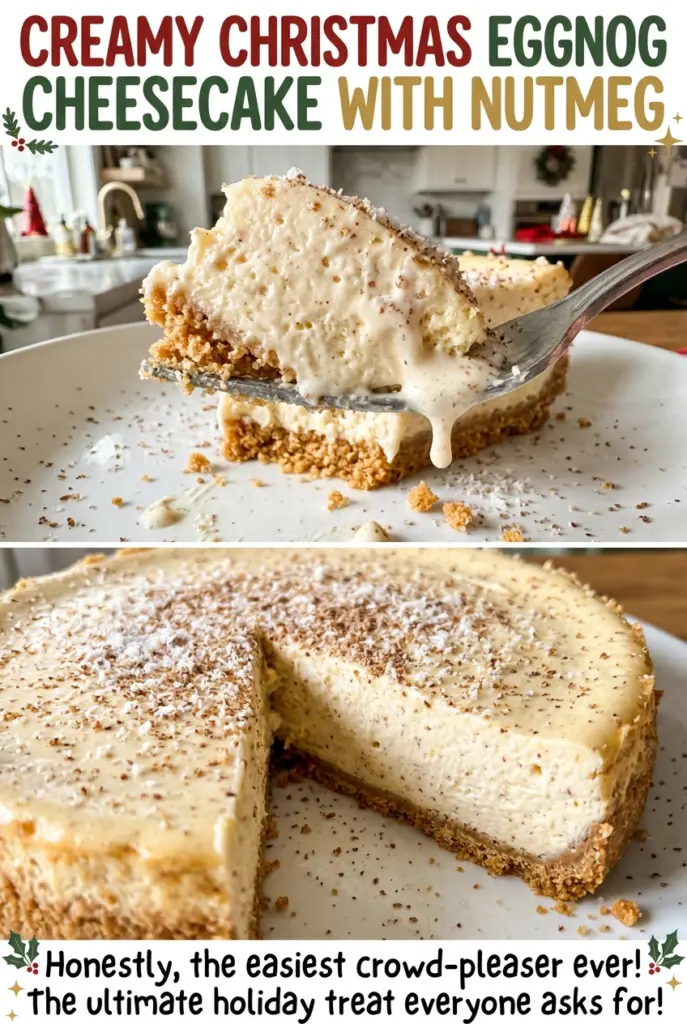
Creamy Christmas Eggnog Cheesecake with Nutmeg
The edges of a cheesecake settle before the center does, and that little wobble can look like trouble if you’re expecting the whole cake to feel firm in the oven.…
Tip: save now, cook later.The edges of a cheesecake settle before the center does, and that little wobble can look like trouble if you’re expecting the whole cake to feel firm in the oven. For this creamy Christmas eggnog cheesecake with nutmeg, that gentle movement is part of getting a smooth, tender slice instead of a dry one. The eggnog brings its familiar warm spice, while sour cream keeps the filling pleasantly tangy rather than overly sweet.
I keep the mixing gentle once the eggs go in, then let the cheesecake cool in stages instead of rushing it onto the counter. Those small choices give the rich filling time to set without losing its creamy texture. After a long chill, the slices cut cleanly and carry that unmistakable eggnog-and-nutmeg flavor all the way through.
Kitchen Note
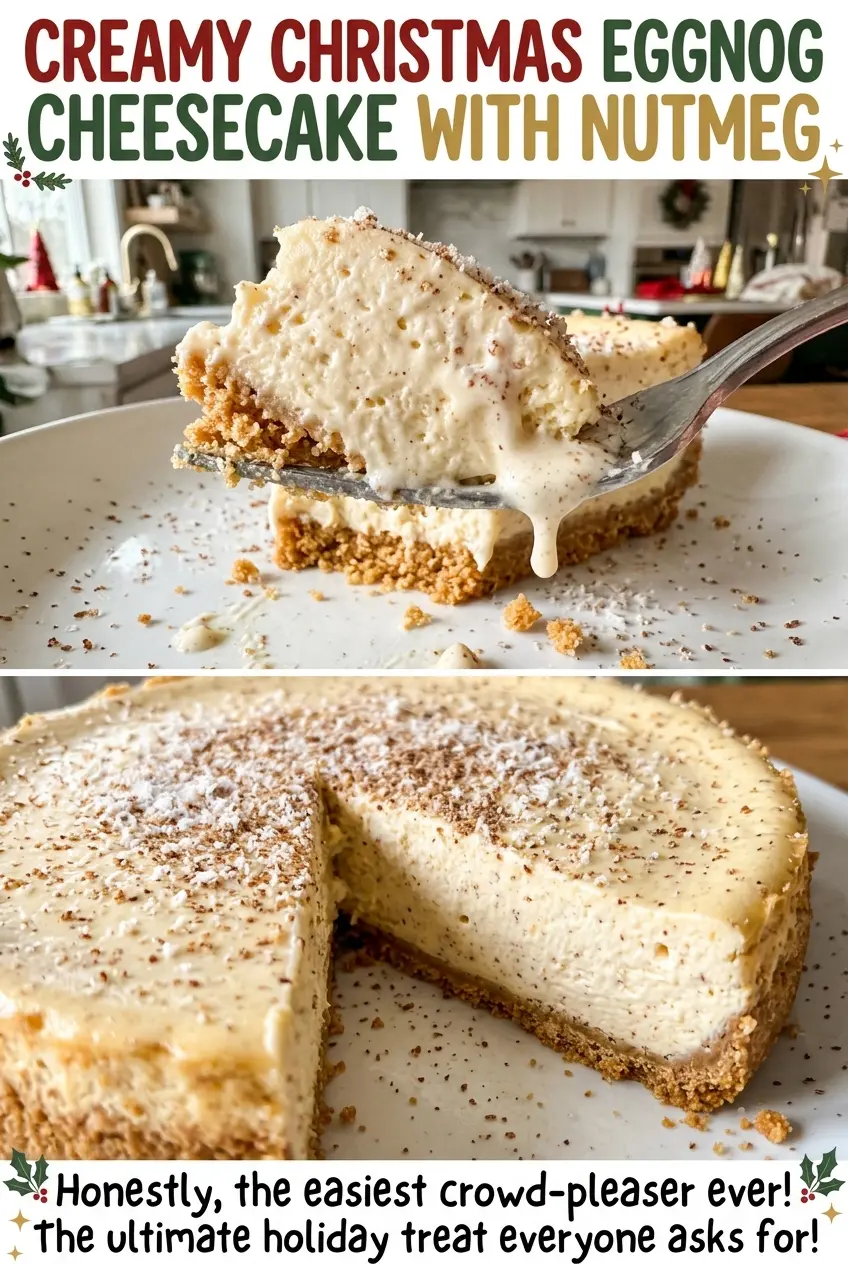
Once the eggs go in, keep the mixer on low and stop as soon as each one disappears into the batter. Beating longer than that adds air, and extra air can leave the finished cheesecake less smooth.
Save this creamy Christmas eggnog cheesecake with nutmeg for a holiday table: silky filling, a buttery graham cracker crust, and slices that can be chilled ahead.
Why this cheesecake needs a slow landing after the oven
A cheesecake keeps cooking gently after the oven turns off. If you take it straight from a hot oven to a cool counter, that fast temperature change can make the surface contract and crack. Letting it rest in the turned-off oven, then cooling it on a rack, gives the filling a gradual transition before its long refrigerator chill.
The water bath helps, too. It surrounds the springform pan with steady, moist heat, which is gentler than baking the filling in a dry oven. The foil around the pan keeps water away from the crust, so the base stays firm instead of turning damp. It’s a little extra setup, but it gives this rich filling a better chance of baking evenly from edge to center.
Don’t expect a cheesecake to look as firm in the oven as it will after chilling. The center should still move slightly when the pan is nudged; the refrigerator does the final setting. Waiting until the next day for that first slice is worth it.
What eggnog, sour cream, and nutmeg each bring to the filling
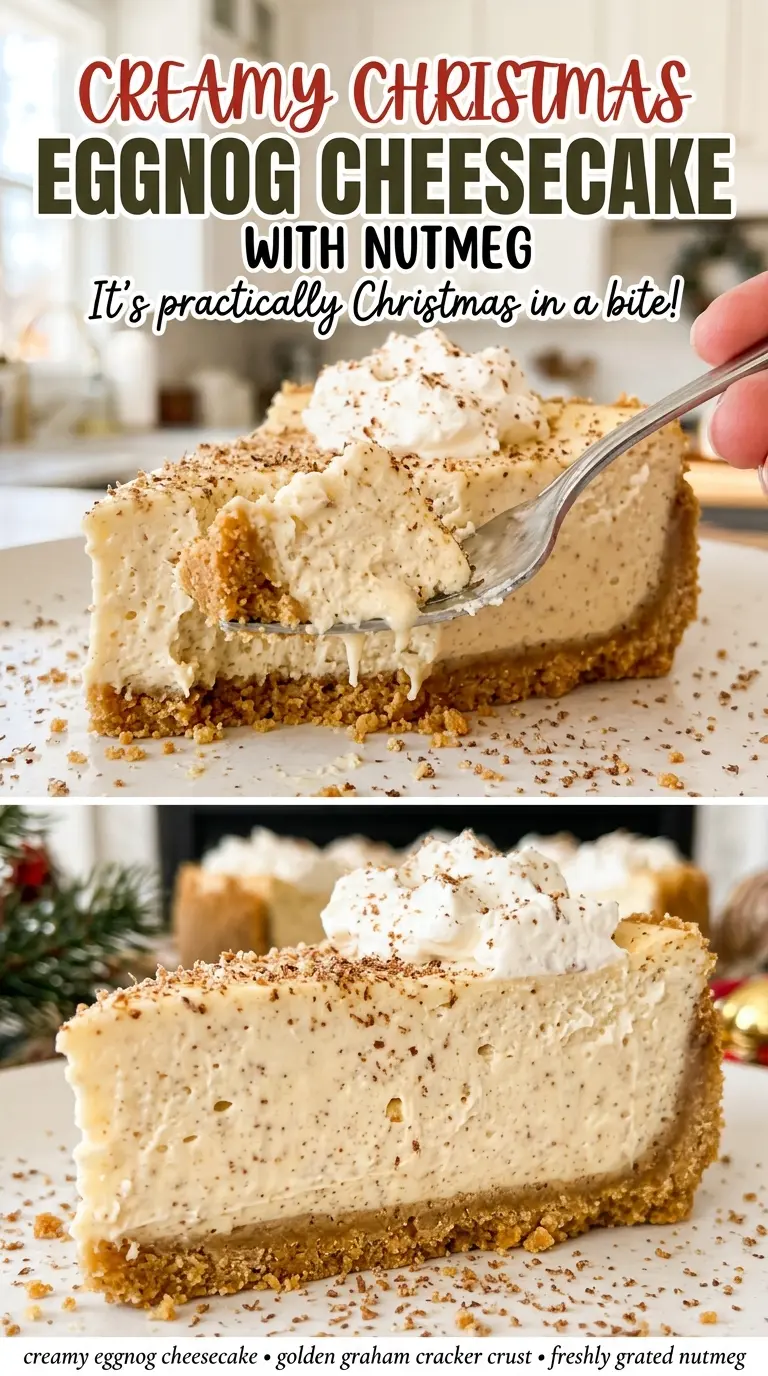
- Eggnog — It gives the filling its defining custardy taste and contributes liquid, so it’s not a good place to swap in plain milk. Use an eggnog you enjoy drinking; a strongly spiced variety will make the nutmeg more pronounced.
- Cream cheese — This is the structure and richness of the cheesecake, so use softened blocks rather than whipped cream cheese from a tub. Softening it before mixing helps it turn smooth without leaving small lumps.
- Sour cream — Its tang balances the richness of the cream cheese and eggnog. Plain, full-fat Greek yogurt is a workable one-for-one substitute, though the filling will taste a little tangier and may feel slightly firmer.
- Graham cracker crumbs and butter — The melted butter binds the crumbs into a base that holds together when sliced. For a gluten-free version, use gluten-free graham cracker crumbs in the same quantity; the crust will keep its familiar crumbly texture.
- Flour and eggs — Together, they help the filling set into slices that hold their shape. Bring the eggs to room temperature so they blend into the cream cheese mixture without needing extra mixing.
- Vanilla and ground nutmeg — Vanilla rounds out the dairy, while nutmeg gives the cheesecake its unmistakable eggnog character. Freshly opened ground nutmeg has a fuller aroma than a jar that’s been sitting in the cabinet for years.
From a pressed crumb crust to a gently set center
Set the graham cracker base
Heat the oven to 325°F and brush the inside of a 9-inch springform pan with 1 tablespoon of the melted butter. Wrap the outside of the pan with two layers of heavy-duty foil, covering the bottom and sides. Stir the remaining melted butter into the graham cracker crumbs, press the mixture firmly over the bottom, and bake for 10 minutes. Let the crust cool while you prepare the filling.
Mix the filling without whipping in extra air
Beat the softened cream cheese in a large bowl with an electric mixer on medium speed until smooth, about 2 minutes. Add the sugar and flour, then beat on low until combined, scraping the bowl as needed. Add the room-temperature eggs one at a time on low, mixing just until each is incorporated. Mix in the eggnog, sour cream, vanilla, and nutmeg on low just until the batter looks smooth.
Bake the cheesecake in its water bath
Pour the filling over the cooled crust and set the springform pan inside a large roasting pan. Pour hot water into the roasting pan until it reaches about halfway up the springform pan’s sides. Bake at 325°F for 75 to 90 minutes. The edges should look set while the center still has a slight wobble, and an instant-read thermometer inserted in the center should read 160°F.
Cool in stages, then chill until firm
Turn off the oven, prop the door open, and leave the cheesecake in the water bath for 1 hour. Carefully lift the springform pan out, remove the foil, and cool the cheesecake on a rack to room temperature, about 1 hour. Cover the pan and refrigerate for at least 8 hours before releasing the springform sides. Cutting before the chill is complete makes the soft filling harder to slice neatly.
Two practical ways to adapt this eggnog cheesecake
Make the crust gluten-free
Replace the regular graham cracker crumbs with the same quantity of gluten-free graham cracker crumbs and keep the butter and crust method unchanged. Choose crumbs with a texture similar to regular graham crumbs so the pressed base holds together when you cut the chilled cheesecake.
Use Greek yogurt in place of sour cream
Plain full-fat Greek yogurt can stand in for the sour cream in the same quantity. It keeps the filling creamy and adds a little more tang, with a slightly firmer finish than the sour cream version.
Storage and Reheating
- Refrigerator: Cover and refrigerate leftovers for up to 4 days. The crust softens a little as it sits, but the chilled filling stays creamy.
- Freezer: Freeze individual slices until firm, then wrap them well and place them in an airtight container for up to 2 months. Thaw slices in the refrigerator before serving.
- Reheating: This cheesecake is best served chilled, so don’t reheat it. Let frozen slices thaw in the refrigerator rather than warming them, which can soften the filling unevenly.
Questions that come up while making eggnog cheesecake
Creamy Christmas Eggnog Cheesecake with Nutmeg
Ingredients
Equipment
Method
- Heat the oven to 325°F.
- Brush the inside of a 9-inch springform pan with 1 tablespoon melted butter.
- Wrap the outside of the pan with two layers of heavy-duty foil.
- Stir the graham cracker crumbs with the remaining 5 tablespoons melted butter.
- Press the mixture firmly over the bottom of the pan.
- Bake for 10 minutes, then cool while you make the filling.
- Beat the cream cheese in a large bowl with an electric mixer on medium speed until smooth, about 2 minutes.
- Add the sugar and flour and beat on low until combined, scraping the bowl as needed.
- Beat in the eggs one at a time on low speed, mixing just until each is incorporated.
- Add the eggnog, sour cream, vanilla, and nutmeg, and mix on low just until smooth.
- Pour the filling over the cooled crust.
- Set the springform pan in a large roasting pan.
- Pour hot water into the roasting pan until it reaches about halfway up the sides of the springform pan.
- Bake at 325°F for 75 to 90 minutes, until the edges are set, the center still has a slight wobble, and the center reaches 160°F on an instant-read thermometer.
- Turn off the oven, prop the door open, and leave the cheesecake in the water bath for 1 hour.
- Carefully remove the springform pan from the water bath and remove the foil.
- Cool the cheesecake on a rack to room temperature, about 1 hour.
- Cover and refrigerate for at least 8 hours before releasing the springform sides and serving.