
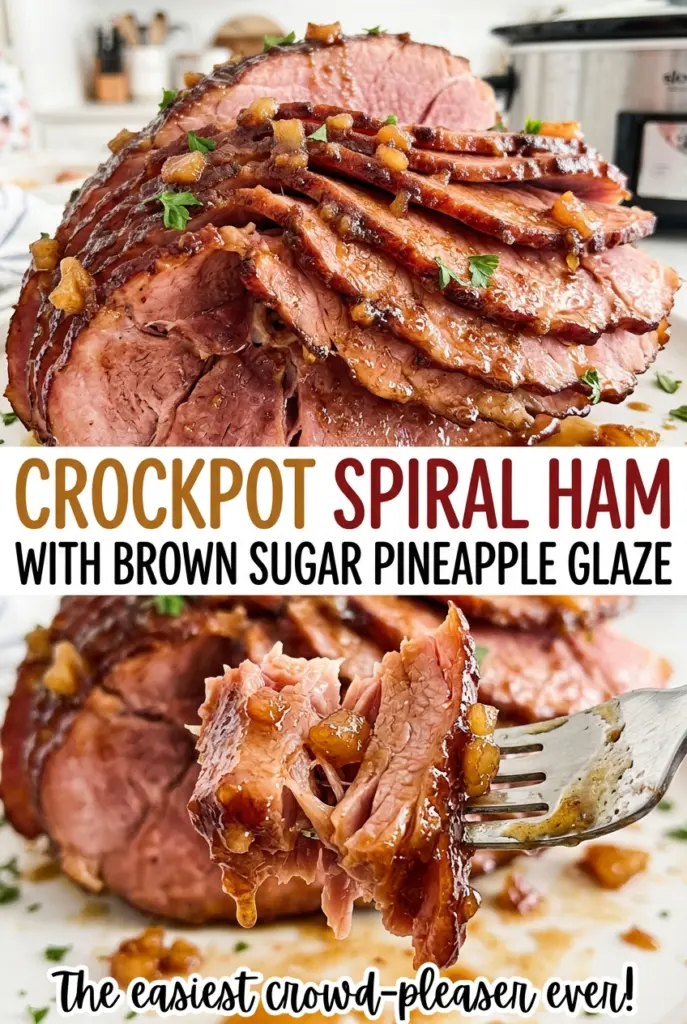
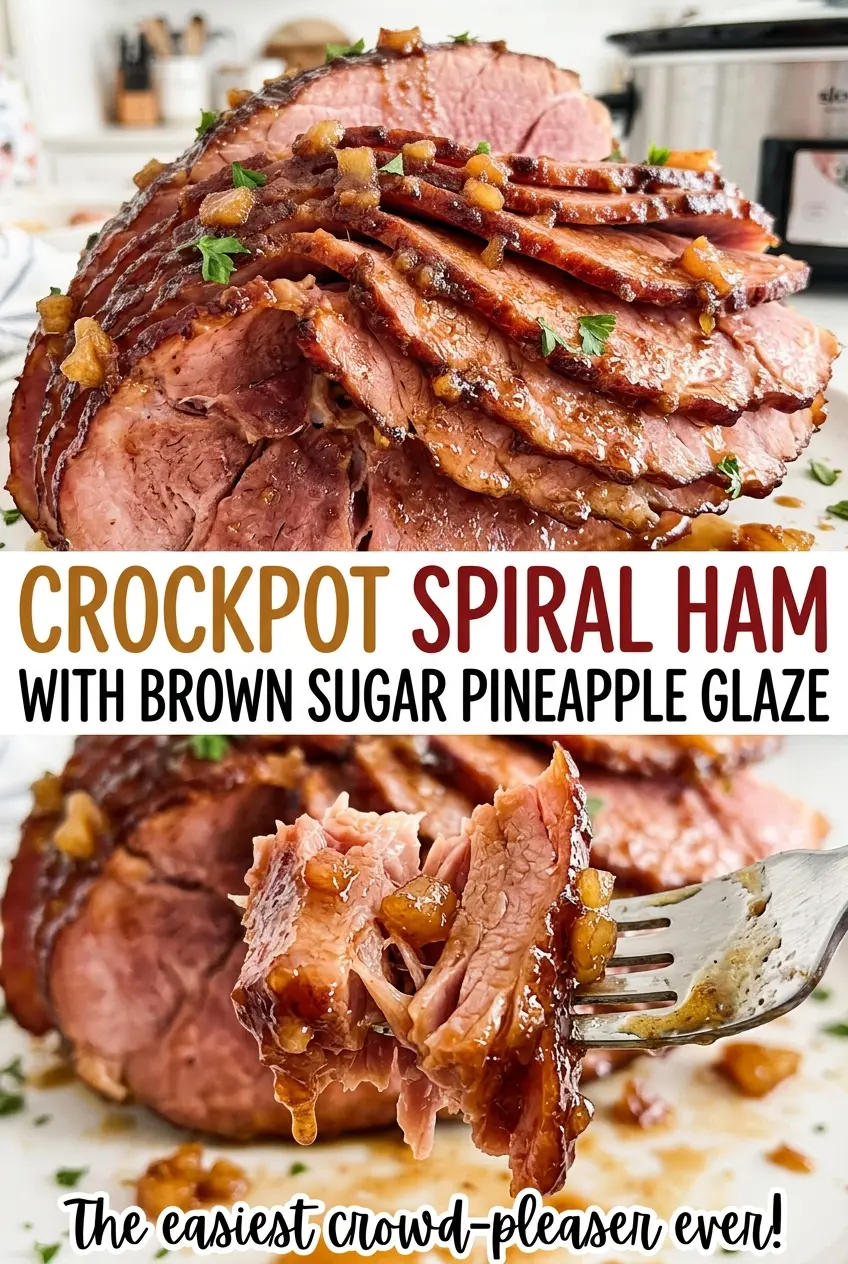
Crockpot Spiral Ham with Brown Sugar Pineapple Glaze
The spiral slices start to separate as the ham warms, and that’s where a slow cooker can either help or dry things out. For Crockpot Spiral Ham with Brown Sugar…
Tip: save now, cook later.The spiral slices start to separate as the ham warms, and that’s where a slow cooker can either help or dry things out. For Crockpot Spiral Ham with Brown Sugar Pineapple Glaze, I keep the ham cut-side down and let the covered cooker do the gentle warming. The glaze brings sweet pineapple and a little mustard tang to each slice without asking the ham to cook from raw.
Because the ham is already fully cooked, the goal is to warm it through without leaving it in the cooker longer than needed. I check the thickest part with a thermometer, then finish the strained cooking liquid on the stove so it turns into a glossy glaze instead of a thin puddle. The result is tender ham with a shiny coating and extra glaze to spoon alongside.
Kitchen Note
Whisk the cornstarch into cold water before it goes anywhere near the hot cooking liquid. A smooth slurry thickens evenly, while dry cornstarch dropped into the saucepan tends to clump.
Save this Crockpot Spiral Ham with Brown Sugar Pineapple Glaze for an easy centerpiece with warm pineapple glaze and tender spiral slices.
Why Spiral Ham Needs Gentle Heat, Not a Long Cook
A spiral-cut ham is already cooked, so the slow cooker isn’t there to tenderize raw meat. Its job is to warm the slices while the glaze flavors the outside. Treating it like a roast that needs hours and hours of cooking can leave the thinner edges dry before the center is ready.
The bone-in cut also makes thermometer placement worth a little care. Check the thickest part of the ham, keeping the probe away from the bone; a reading against the bone won’t tell you the temperature of the meat accurately. Since spiral slices don’t all have the same thickness, take your time finding the center of the thickest section rather than guessing from the outer slices.
Keeping the ham cut-side down gives the exposed sliced face less direct exposure to the hot cooker. Then use the temperature—not just the clock—as your cue to take it out. Slow cookers and ham shapes vary, so the timing window is a guide, while the thermometer tells you when this ham is ready.
What the Pineapple, Mustard, and Starch Each Bring to the Glaze
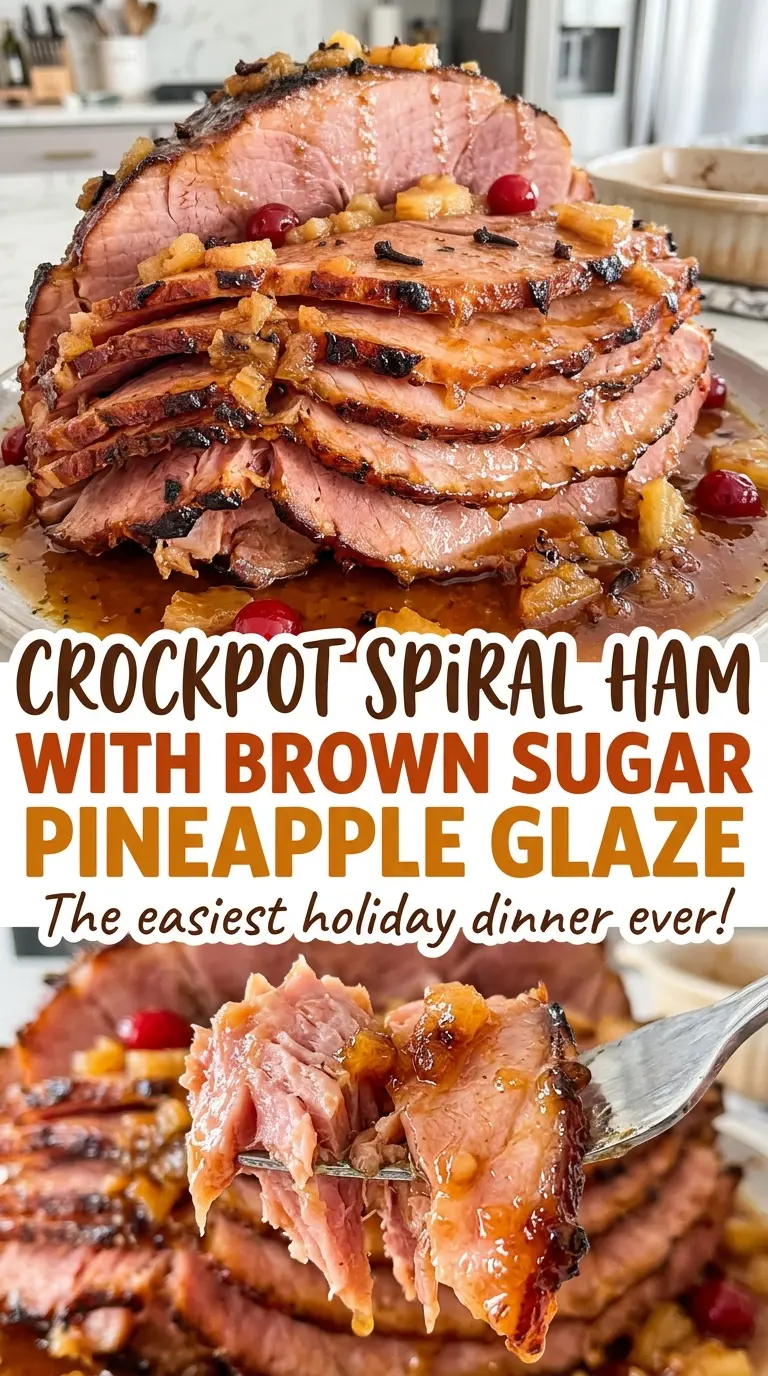
- Bone-in spiral-cut ham — Use the fully cooked cut specified here; its spiral slices make it easy to portion after warming. A boneless or uncut ham has a different shape and won’t follow the same timing as neatly. Choose a ham that fits inside the oval cooker with the lid closed.
- Pineapple juice — It supplies the fruit flavor and liquid base for the glaze. Plain juice gives a clean, balanced result; orange juice works measure-for-measure if that’s what you have, though the glaze will taste more citrusy and less tropical.
- Packed light brown sugar — It dissolves into the juice and gives the glaze its sweetness and caramel-like depth. Dark brown sugar can replace it measure-for-measure for a deeper molasses note; pack it firmly when measuring.
- Dijon mustard — Its tang keeps the sugary glaze from tasting one-dimensional. Yellow mustard can stand in measure-for-measure, but it brings a sharper, more familiar mustard taste rather than Dijon’s smooth, savory edge.
- Ground cloves — A small amount adds a warm background spice that suits ham. If you don’t enjoy cloves, leave them out; the glaze will be fruitier and less warmly spiced.
- Cornstarch and cold water — Together they form the slurry that thickens the strained cooking liquid. Arrowroot starch can replace cornstarch in the same measure and be whisked with cold water in the same way; it gives the finished glaze a slightly clearer sheen.
From Cut-Side-Down Placement to a Glossy Finish
Set the ham in the slow cooker
Use a 6- to 7-quart oval slow cooker and place the ham cut-side down. That position keeps the exposed sliced side facing into the cooker rather than upward. Check that the lid sits on securely before you start; don’t force a ham into a cooker that won’t close.
Whisk and pour the brown sugar glaze
Whisk the pineapple juice, packed light brown sugar, Dijon mustard, and ground cloves in a bowl until combined. Pour the mixture over the ham so the top and sides receive some of the glaze. The brown sugar doesn’t need to dissolve completely before it goes into the cooker, but break up any stubborn clumps as you whisk.
Warm the ham until the center reaches temperature
Cover and cook on LOW for 3 to 4 hours or HIGH for 2 to 3 hours. Check the thickest part without touching the bone; the ham is ready when it reaches 140°F. If it hasn’t reached that point at the early end of the time range, keep it covered and check again rather than relying on the clock alone.
Rest the ham while you prepare the liquid
Transfer the ham to a platter, tent it loosely with foil, and let it rest for 10 minutes. Strain the slow-cooker liquid into a small saucepan, then skim off the fat from the surface. Straining leaves you with a smoother base for the finishing glaze, while skimming keeps the sauce from feeling greasy.
Thicken the sauce and brush it over
Bring the strained liquid to a boil over medium-high heat. Whisk the cornstarch with cold water, then whisk that slurry into the saucepan and boil for 1 minute, until the glaze thickens. Brush the glaze over the ham and bring the remaining sauce to the table alongside it.
Small Glaze Changes That Shift the Sweetness and Spice
A less-sweet glaze
Use less brown sugar than the standard version if you prefer the fruit and mustard notes to stand out. The glaze will taste less sweet and may be a little less sticky, but the cornstarch slurry still gives the strained liquid body.
A stronger mustard note
For a more savory, tang-forward glaze, increase the Dijon slightly while keeping the other ingredients the same. The mustard becomes more noticeable against the brown sugar, so this is a good adjustment if you like a less candy-sweet finish.
Storage and Reheating
- Refrigerator: Refrigerate leftover ham and glaze within 2 hours, in covered containers, and use within 3 to 4 days. The glaze may firm up when cold.
- Freezer: The ham and glaze freeze well. Store them in airtight containers for up to 1 to 2 months for best quality; freezing may soften the texture of the slices slightly.
- Reheating: Warm portions gently in a covered microwave-safe dish, spooning some glaze over the ham first, until the leftovers reach 165°F. Avoid prolonged high heat, which can dry the thin spiral slices.
Questions That Come Up When Making Crockpot Spiral Ham
Crockpot Spiral Ham with Brown Sugar Pineapple Glaze
Ingredients
Equipment
Method
- Place the ham cut-side down in a 6- to 7-quart oval slow cooker.
- Whisk the pineapple juice, brown sugar, Dijon mustard, and ground cloves in a bowl until combined.
- Pour the glaze over the ham, cover, and cook on LOW for 3 to 4 hours or HIGH for 2 to 3 hours, until the ham reaches 140°F in the thickest part without touching the bone.
- Transfer the ham to a platter, tent loosely with foil, and let it rest for 10 minutes.
- Strain the slow-cooker liquid into a small saucepan and skim off the fat.
- Bring the liquid to a boil over medium-high heat.
- Whisk the cornstarch with the cold water.
- Whisk the slurry into the saucepan and boil for 1 minute, until thickened.
- Brush the glaze over the ham.
- Serve the remaining glaze alongside.