

Dutch Baby Pancake with Caramelized Pears and Cinnamon
When the batter hits the hot, buttered skillet, the edges start climbing before you can even get the pan back into the oven. That quick puff is the fun part…
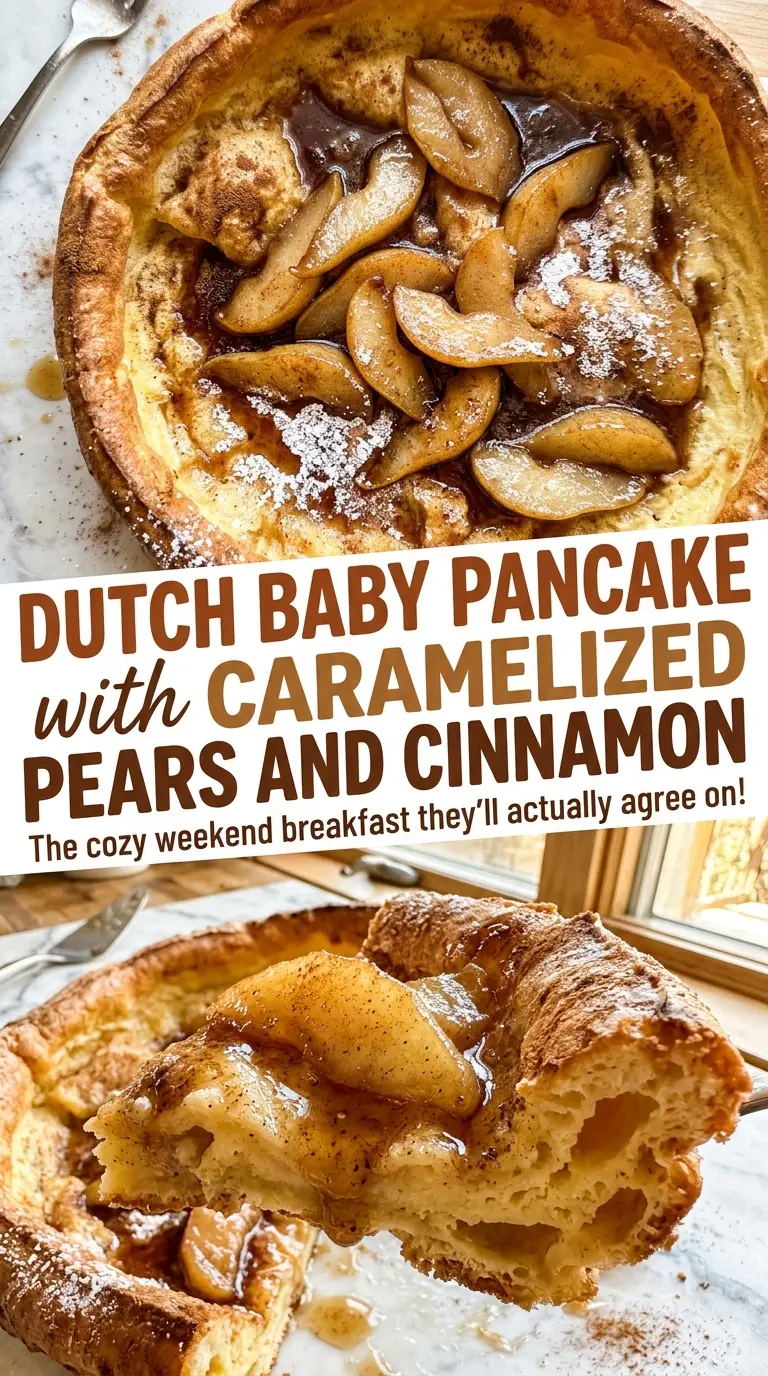
Tip: save now, cook later.When the batter hits the hot, buttered skillet, the edges start climbing before you can even get the pan back into the oven. That quick puff is the fun part of a Dutch baby, but it can be disappointing when the center stays flat or the pancake turns pale before the pears are ready. For this Dutch Baby Pancake with Caramelized Pears and Cinnamon, I cook the fruit on the stovetop while the cast-iron skillet heats, so the topping is warm and glossy when the pancake comes out.
The batter is simple, and the details that matter are easy to miss: the eggs and milk should be at room temperature, and the skillet needs a proper head start in the oven. I blend the batter until smooth, then pour it into the melted butter and let the oven do its work. The edges bake up deep golden while the center stays tender, with cinnamon-sugar pears tucked over the top.

Kitchen Note
Keep blending until the batter is completely smooth, not just until the flour disappears. A few flour pockets can leave dense little spots in the finished pancake, and they won’t smooth out in the oven.
Save this Dutch baby with caramelized pears for a brunch that deserves a warm, cinnamon-sweet topping and crisp golden edges.
Why the Skillet Has to Be Hot Before the Batter Goes In
A Dutch baby gets its lift from eggs, steam, and the sudden heat of the pan. If the skillet is still warming when the batter goes in, the butter and batter don’t get that immediate contact with a properly hot surface. The edges can set slowly instead of climbing, leaving you with a flatter pancake and less contrast between the browned rim and soft center.
That’s why I put the 10-inch cast-iron skillet in the 425°F oven for at least 10 minutes before adding the batter. Cast iron holds heat well, and preheating it gives the batter a fast start without adding baking powder or another leavener. The skillet is also hot enough to melt the butter as soon as it goes in; swirling the butter over the bottom creates a slick layer between the pan and the batter.
There’s a short window between the skillet leaving the oven and the batter going in, so have the blended batter ready before you carefully lift out the pan. Pour promptly, return the skillet to the oven, and resist opening the oven door while the pancake bakes. A steady oven temperature helps the edges rise and turn deep golden rather than dropping before they set.
What the Eggs, Milk, and Pears Bring to This Dutch Baby
- Eggs — They give the pancake its structure and characteristic rise. Room-temperature eggs blend more readily with the milk, and standard large eggs are the right size for this batter; there’s no need to buy specialty eggs.
- Whole milk — It adds richness and helps make a smooth, tender batter. Two-percent milk works if that’s what you have, though the result will be a little less rich; bring it to room temperature along with the eggs.
- All-purpose flour — This gives the pancake enough structure to hold its puff while staying tender. Regular store-brand flour is fine, and a one-to-one gluten-free baking blend is a practical swap if you need one.
- Pears — Choose fruit that’s ripe but still firm enough to hold its shape in the skillet. The slices should be a consistent quarter inch thick so they soften evenly; overly soft pears can break down before they turn glossy.
- Light brown sugar and cinnamon — Brown sugar melts around the pears and makes the topping glossy, while cinnamon adds warmth without masking the fruit. Packed light brown sugar gives the topping its intended moisture; fresh or inexpensive ground cinnamon both work.
- Unsalted butter — It coats the hot skillet and adds a buttery edge to the pancake. Use unsalted butter so the salt in the batter stays balanced, and have it ready before you take the hot skillet out of the oven.
From Glossy Pears to a Tall, Golden Dutch Baby
Heat the Cast-Iron Skillet First
Set the oven to 425°F and place the 10-inch cast-iron skillet on the center rack for at least 10 minutes. This gives the pan time to heat through, not just warm on the surface. Use that time to cook the pears and blend the batter, so the pan isn’t sitting out while you get organized. Handle the skillet carefully when it comes out; the handle will be hot.
Cook the Pears Until Tender and Glossy
Warm the canola oil in a separate 10-inch skillet over medium heat, then add the pear slices and cook for 3 minutes. Turn them, sprinkle with the packed light brown sugar and cinnamon, and cook for another 3 to 5 minutes. Watch for the slices to become tender and shiny with the melted sugar. If they start to break apart, take the skillet off the heat rather than continuing to cook them.
Blend a Smooth, Room-Temperature Batter
Blend the room-temperature eggs and milk with the flour, granulated sugar, vanilla, and kosher salt until smooth. Scrape down the sides of the blender if flour clings above the liquid, then blend again until you see no dry streaks. A smooth batter pours evenly across the pan and gives you a consistent center. Keep it ready while you handle the hot skillet.
Butter, Pour, and Bake Without Pausing
Carefully remove the preheated skillet from the oven, add the unsalted butter, and swirl to coat the bottom. Pour in the batter while the butter is melted, then return the pan to the oven. Bake for 18 to 22 minutes, until the pancake is puffed and the edges are deep golden; don’t pull it just because the center has risen. Top with the warm pears and serve immediately.
Three Easy Ways to Adapt the Pear and Cinnamon Dutch Baby
Swap the Pears for Apples
Use two medium apples, cored and sliced a quarter inch thick, in place of the pears. Cook them in the oil, then add the brown sugar and cinnamon just as you would for the pear topping; apples often need a little longer to turn tender, so follow their texture rather than rushing them. The topping will be a touch firmer and more tart, depending on the apples.
Make the Batter Dairy-Free
Replace the whole milk with the same amount of unsweetened oat milk, and use two tablespoons of plant-based butter to coat the skillet. The pancake will be a little less rich, but the oat milk and butter alternative keep the batter and pan preparation close to the original. Choose an unsweetened milk so the batter doesn’t become noticeably sweeter.
Use a Gluten-Free Flour Blend
Replace the all-purpose flour with the same amount of a one-to-one gluten-free baking blend. The pancake may have a slightly different texture, but this swap keeps the batter proportions straightforward and still lets the eggs provide structure. Blend until smooth before pouring it into the hot skillet.
Storage and Reheating
- Refrigerator: Refrigerate leftovers within 2 hours and use within 3 to 4 days. The pancake will lose its airy puff and the edges will soften.
- Freezer: Freeze cooled portions in an airtight container for up to 2 months. Thaw overnight in the refrigerator; the texture won’t be quite as light as when freshly baked.
- Reheating: Warm portions in a 350°F oven until heated through, checking that the center reaches 165°F. The microwave is quicker but tends to make the pancake soft instead of restoring any crispness to the edges.
Questions That Come Up When Making a Dutch Baby
Dutch Baby Pancake with Caramelized Pears and Cinnamon
Ingredients
Equipment
Method
- Heat the oven to 425°F.
- Place a 10-inch cast-iron skillet on the center rack to preheat for at least 10 minutes.
- While the skillet heats, warm the canola oil in a separate 10-inch skillet over medium heat.
- Add the pears and cook for 3 minutes.
- Turn the slices, sprinkle with the brown sugar and cinnamon, and cook for 3 to 5 minutes until tender and glossy.
- Blend the eggs, milk, flour, granulated sugar, vanilla, and salt until smooth.
- Carefully remove the hot cast-iron skillet from the oven, add the butter, and swirl to coat the bottom.
- Pour in the batter.
- Bake for 18 to 22 minutes until puffed and deep golden at the edges.
- Top with the warm pears and serve immediately.