
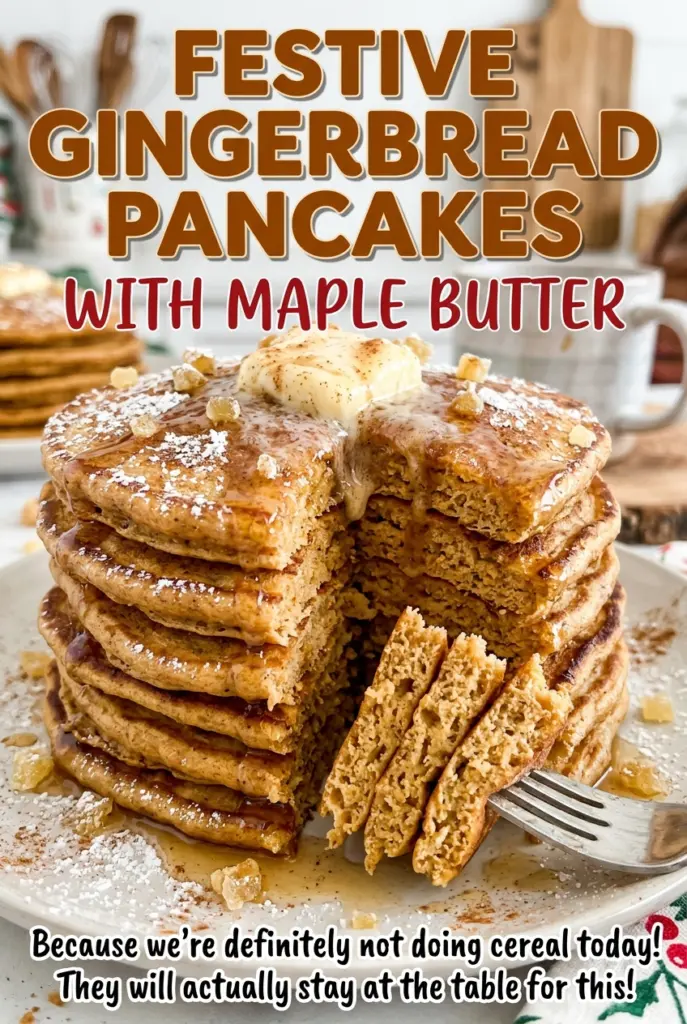
Festive Gingerbread Pancakes with Maple Butter
The batter lands in the skillet dark from molasses, with ginger and cinnamon rising in the steam before the first pancake is even ready to flip. These festive gingerbread pancakes…
Tip: save now, cook later.The batter lands in the skillet dark from molasses, with ginger and cinnamon rising in the steam before the first pancake is even ready to flip. These festive gingerbread pancakes have the warm spice of a gingerbread cookie, but the centers stay tender and light, and a spoonful of maple butter melts over the top while they’re still warm.
Buttermilk brings a little tang to balance the molasses, while the combination of baking powder and baking soda gives the batter lift. I keep the maple butter simple: softened salted butter and pure maple syrup stirred together until smooth. The result is rich but not heavy, with just enough maple sweetness against the spiced pancakes.
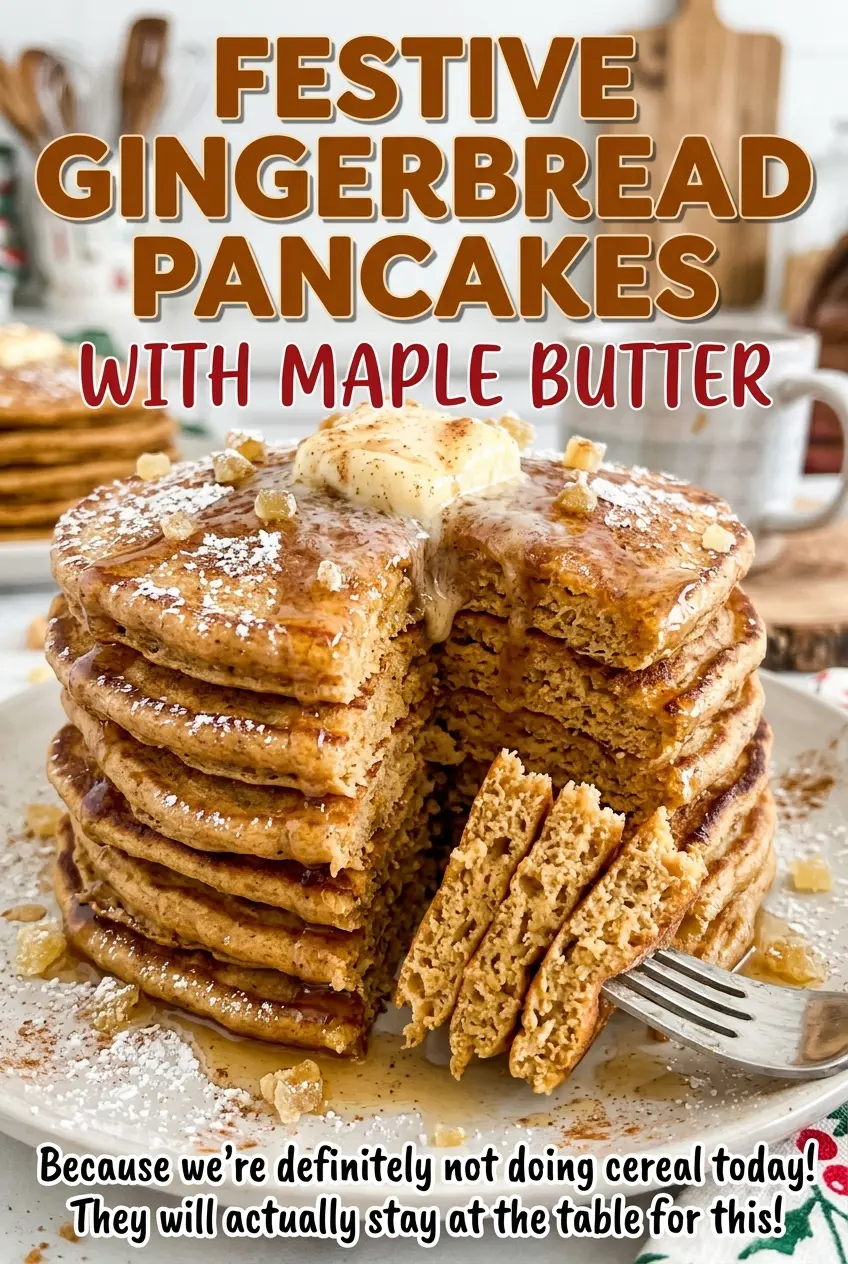
Kitchen Note
Give the mixed batter its full 5-minute rest before it hits the skillet. A few small lumps are fine; stirring until perfectly smooth can make the pancakes tougher.
Save these festive gingerbread pancakes with maple butter for a cozy breakfast: warm spice, tender centers, and a maple-sweet topping.
Why Molasses Makes the Flip Cue More Reliable Than Color
Gingerbread pancakes start out darker than plain buttermilk pancakes, and molasses deepens that color as they cook. A browned surface alone doesn’t tell you whether the middle is ready. Watch the batter instead: bubbles should form across the top, and the edges should look set before you flip. Those cues are easier to trust than color when the batter already has a deep brown shade.
Molasses also adds moisture and sweetness, so these pancakes benefit from a steady medium heat rather than a hot, fast sear. If the skillet is too hot, the outside can darken before the center cooks through. Keep the heat moderate and let each side cook for its stated window; the first side will take longer than the second. Once flipped, the pancake should feel set and look browned, not wet around the edges. That balance gives you a properly cooked middle without drying out the spiced batter.
What Buttermilk, Molasses, and the Spice Blend Each Bring
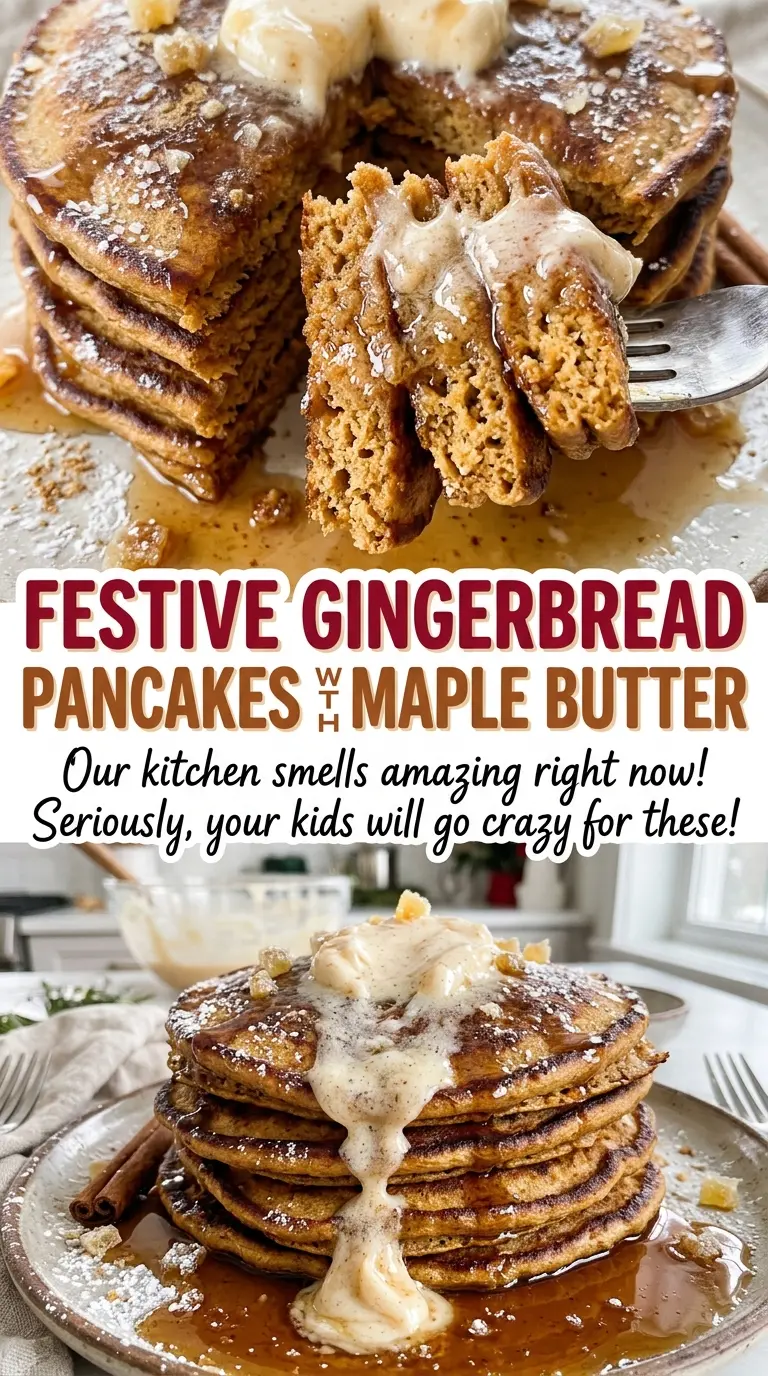
- Buttermilk and the two leaveners — Buttermilk’s acidity works with the baking soda, while baking powder provides additional lift. Keep the buttermilk rather than swapping in plain milk; there isn’t another ingredient in this batter that recreates its acidity. A fresh box of baking soda matters more here than buying a specialty brand.
- Unsulphured molasses — This gives the pancakes their characteristic deep sweetness and gingerbread color. Unsulphured molasses is the right choice for a balanced, mellow result; blackstrap is much more intense and can taste bitter in this batter. No need to seek out a premium brand, but use the unsulphured type named for this recipe.
- Ginger, cinnamon, nutmeg, and cloves — The spices work as a blend: ginger leads, cinnamon rounds it out, and the smaller amounts of nutmeg and cloves add depth. Ground spices lose their aroma over time, so fresh-smelling jars make a noticeable difference. If cloves aren’t to your taste, leaving them out gives a gentler result without needing a replacement.
- All-purpose flour — It gives the batter enough structure to hold the molasses and buttermilk without making the pancakes heavy. A standard all-purpose flour is fine; sifted or specialty flour isn’t necessary. There isn’t a direct swap among the listed ingredients that keeps the same texture.
- Salted butter and pure maple syrup — These are the whole maple butter, so the maple flavor comes through clearly and the salted butter keeps the topping from tasting one-note sweet. Use pure maple syrup for its distinctive flavor; the butter doesn’t need to be an expensive brand. The butter should be soft enough to stir smoothly, not melted.
From Smooth Maple Butter to Bubbles on the Pancake Tops
Stir the Maple Butter Until It’s Smooth
Start with softened salted butter in a small bowl, then stir in the pure maple syrup. Keep mixing until there are no streaks of syrup and the mixture looks creamy and even. If the butter is still firm, it won’t blend smoothly, so give it time to soften rather than melting it. Set the finished maple butter aside at room temperature while you make the pancakes.
Whisk the Spices Through the Dry Ingredients
In a medium bowl, whisk together the flour, baking powder, baking soda, ginger, cinnamon, nutmeg, cloves, and salt. Whisking now distributes the spices and leaveners through the flour, so you don’t end up with a concentrated pocket of cloves or baking soda in one pancake. Break up any visible clumps as you whisk. The mixture should look evenly colored and smell warmly spiced.
Combine the Wet Ingredients and Rest the Batter
In a separate large bowl, whisk the buttermilk, egg, molasses, brown sugar, and 2 tablespoons of the vegetable oil until combined. Add the dry ingredients to the wet mixture and stir just until no dry flour remains; small lumps are expected. Stop there rather than beating the batter smooth. Let it rest for 5 minutes before cooking.
Cook Until the Edges Set, Then Flip
Heat a 12-inch nonstick skillet over medium heat and lightly brush it with some of the remaining 1 tablespoon of vegetable oil. Pour 1/4 cup of batter into the skillet for each pancake, leaving space between them. Cook for 2 to 3 minutes, until bubbles form and the edges look set, then flip and cook for 1 to 2 minutes, until browned and cooked through. Repeat with the remaining batter, brushing the skillet with oil as needed.
Three Small Changes for a Different Gingerbread Pancake
Leave Out the Cloves for a Milder Spice
Omit the ground cloves and keep the other spices as they are. The pancakes will still taste distinctly gingery and cinnamon-rich, but the finish will be softer and less pungent.
Put a Little Ginger in the Maple Butter
Before mixing the pancake batter, set aside a small pinch of the ground ginger and stir it into the softened butter and maple syrup. The topping picks up a gentle ginger warmth, while the pancakes keep the same balanced spice blend.
Make Smaller Pancakes for a Brunch Spread
Use smaller portions of batter than the standard 1/4 cup to make mini pancakes. They’re easier to arrange on a platter, but their smaller size means they’ll cook faster, so watch for bubbles and set edges instead of relying on the full-size timing.
Storage and Reheating
- Refrigerator: Store leftover pancakes in an airtight container for 3 to 4 days. They’ll lose some of their just-cooked softness as they chill; keep the maple butter covered and refrigerated separately.
- Freezer: Freeze the pancakes in a single layer, then transfer them to a freezer-safe container or bag for up to 2 months. Thawing isn’t necessary before reheating.
- Reheating: Warm pancakes in a toaster, microwave, or skillet until heated through. Use short microwave bursts or gentle skillet heat; high heat can dry the edges before the centers warm.
Questions That Come Up With Gingerbread Pancakes
Festive Gingerbread Pancakes with Maple Butter
Ingredients
Equipment
Method
- Stir the softened butter and maple syrup together in a small bowl until smooth, then set aside at room temperature.
- Whisk the flour, baking powder, baking soda, ginger, cinnamon, nutmeg, cloves, and salt in a medium bowl.
- In a separate large bowl, whisk the buttermilk, egg, molasses, brown sugar, and 2 tablespoons of the vegetable oil until combined.
- Add the dry ingredients to the wet ingredients and stir just until no dry flour remains; a few small lumps are fine.
- Let the batter rest for 5 minutes.
- Heat a 12-inch nonstick skillet over medium heat and lightly brush it with some of the remaining 1 tablespoon vegetable oil.
- Pour 1/4 cup batter into the skillet for each pancake, leaving space between them.
- Cook for 2 to 3 minutes, until bubbles form and the edges look set.
- Flip and cook for 1 to 2 minutes, until browned and cooked through.
- Repeat with the remaining batter, brushing the skillet with oil as needed.
- Serve the pancakes warm with the maple butter.