
Flaky Pumpkin Cream Cheese Danish with Puff Pastry
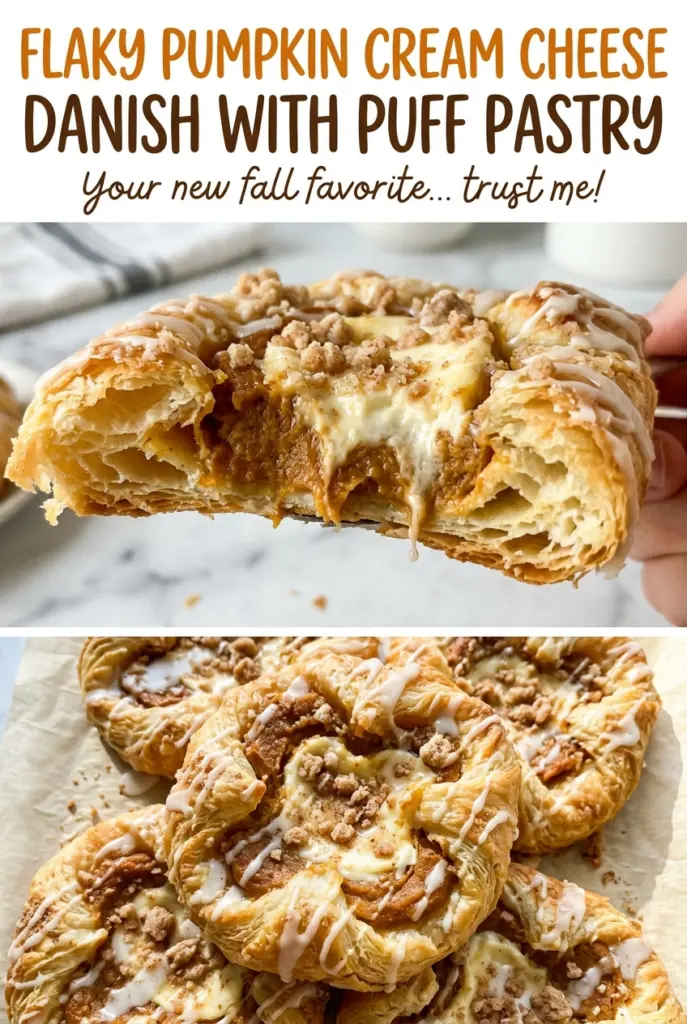
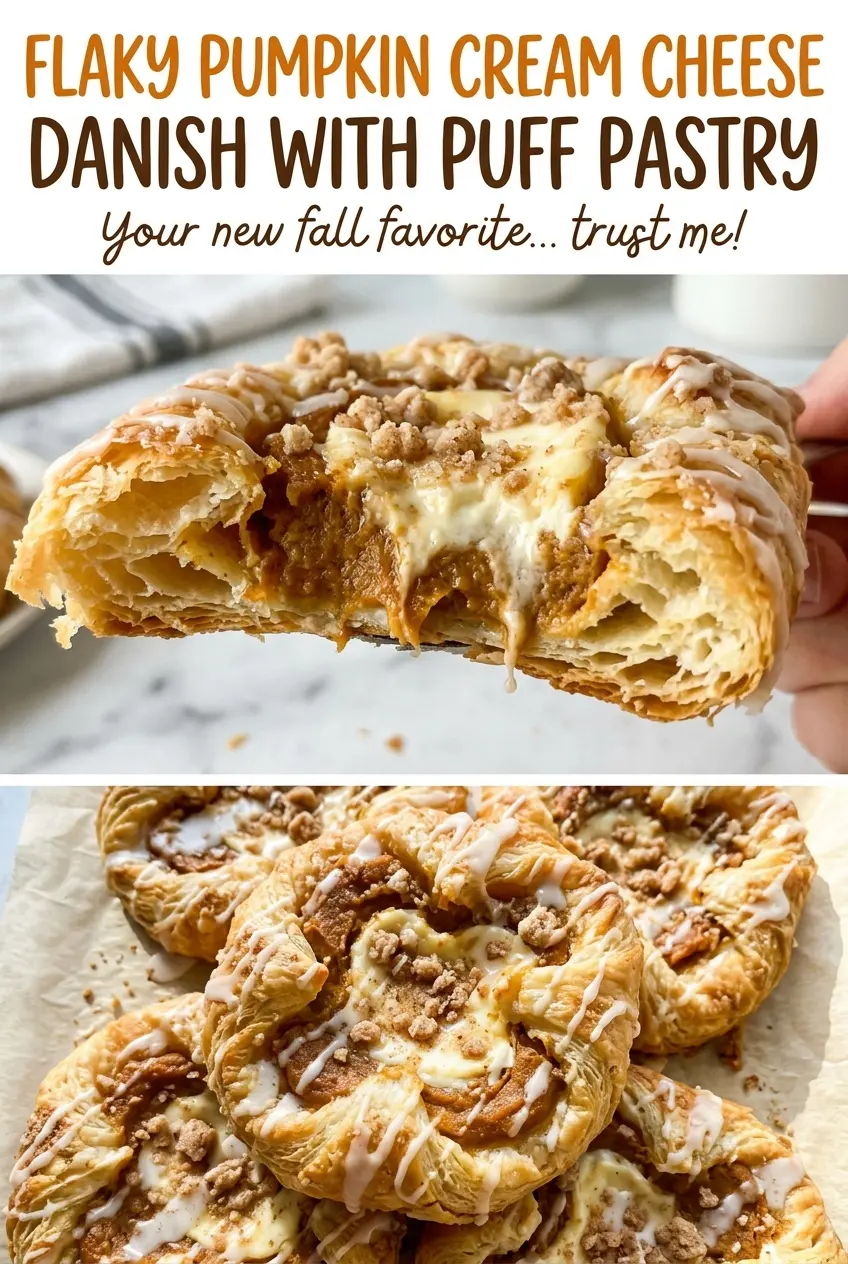
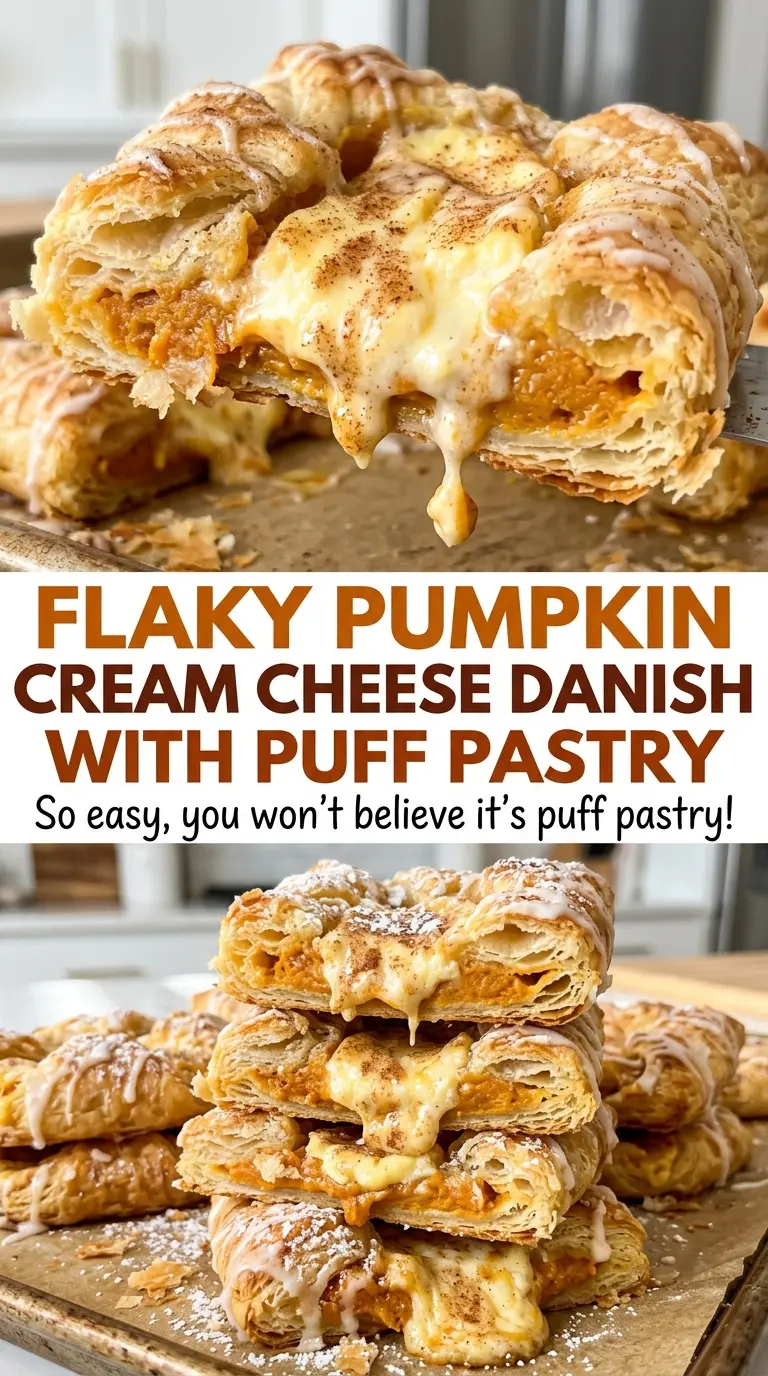
When the oven door opens, the pastry edges should be tall and deeply golden while the pumpkin filling looks settled in the middle. That contrast is what makes these flaky…
Tip: save now, cook later.When the oven door opens, the pastry edges should be tall and deeply golden while the pumpkin filling looks settled in the middle. That contrast is what makes these flaky pumpkin cream cheese danishes worth turning on the oven for: crisp, airy pastry around a smooth, gently spiced center. I cut one sheet of puff pastry into six rectangles, so each one gets its own generous patch of filling.
The cream cheese gives the pumpkin a creamy base, and a little cornstarch helps the filling hold together as it bakes. Scoring a border around each rectangle gives the edges room to rise, while fork pricks in the center keep the middle from puffing up under the filling. Once the glaze goes over the cooled pastries, you get a thin, sweet finish without hiding the flaky layers.
Kitchen Note
Wait until the pastries have cooled before drizzling the glaze; it runs off warm pastry instead of sitting in a neat ribbon. Let them rest on the baking sheet for 10 minutes first, then give them more time to cool before finishing.
Save these pumpkin cream cheese danishes for a brunch bake or a cozy afternoon treat—flaky puff pastry, spiced pumpkin filling, and a smooth vanilla glaze.
Why the Center Needs Fork Pricks Before the Pumpkin Goes In
Puff pastry rises in layers as moisture inside the dough turns to steam. If the center of each rectangle is left untouched, it can puff beneath the filling and push that filling toward the edges. A few fork pricks give steam a way out of the middle, while the scored border stays intact and rises into a raised frame.
Keep the score shallow: you want to mark a 1/2-inch border, not cut through the pastry. That uncut base is what holds each danish together as you lift it from the baking sheet. Prick the centers several times, then spoon the filling into those areas rather than over the borders. If you cut all the way through while scoring, the filling has an easy path to escape and the pastry may not rise as one tidy rectangle.
The distinction between the center and the edge is small but useful. The middle stays low enough to support the pumpkin mixture, and the border has room to puff around it. It’s a simple shaping step that gives a single sheet of pastry the look and structure of six individual danishes.
Why Canned Pumpkin and Soft Cream Cheese Matter in This Filling
- Puff pastry — Use one 8.6-ounce sheet, thawed according to its package directions. It needs to be pliable enough to unfold and cut without cracking, but puff pastry is easiest to handle when it still feels cool. A different sheet size changes how much pastry surrounds the filling.
- Cream cheese — Softened cream cheese blends smoothly with the sugar and pumpkin, so you don’t end up with little white lumps in the filling. Let it soften until it yields easily when pressed; very cold cream cheese is harder to mix evenly. The filling depends on its creamy texture, so a non-dairy cream cheese is a workable swap only if you’re making the dairy-free version below.
- Canned pumpkin puree — Choose plain pumpkin puree, not pumpkin pie filling, which is already sweetened and spiced. The canned version gives you a consistent texture for this small amount of filling. Homemade puree can work if it’s thick and spoonable rather than watery.
- Egg and cornstarch — The yolk enriches the filling, while the white is whisked with water for brushing the pastry borders. Cornstarch helps the pumpkin mixture set as it bakes. Keep the yolk and white separate so each can do its job.
- Spices and vanilla — Cinnamon, ginger, nutmeg, and vanilla make the pumpkin taste rounded without overwhelming the cream cheese. Fresh, fragrant spices are worth using here; old spices tend to taste flat in a simple filling. The small pinch of salt helps balance the sweetness.
- Powdered sugar and milk — Powdered sugar dissolves into a smooth glaze without the graininess granulated sugar would leave behind. Use milk to bring it together, whisking until there are no dry pockets of sugar.
Building Six Danishes That Puff Around the Filling
Cut and Arrange the Pastry
Heat the oven to 400°F and line a 13×18-inch rimmed baking sheet with parchment paper. Unfold the thawed puff pastry and cut it into 6 equal rectangles, then arrange them on the prepared sheet. If the pastry cracks as you unfold it, it may still be too cold to handle comfortably; follow the package thawing directions before cutting. Keep the rectangles separate so the edges have room to rise.
Mix the Pumpkin Cream Cheese Filling
In a medium bowl, mix the softened cream cheese and granulated sugar until smooth. Add the pumpkin, egg yolk, cornstarch, cinnamon, ginger, nutmeg, vanilla, and salt, mixing until the color and spices are evenly distributed. Small cream cheese lumps are easier to work out before the pumpkin goes in, so start with the softened cheese and sugar. In a small bowl, whisk the egg white with the water for brushing.
Score, Fill, and Brush the Borders
Score a 1/2-inch border around each rectangle without cutting all the way through the pastry. Prick the centers several times with a fork, then divide the filling among the centers and spread it within the scored area. Brush the borders with the egg-white mixture, keeping the filling in the middle. A light, even coat on the exposed pastry helps it brown without washing filling over the edges.
Bake Until Deep Golden, Then Glaze
Bake for 16 to 20 minutes, until the pastry is well puffed and deep golden brown and the filling looks set. Don’t pull the pastries just because the edges have risen; pale pastry hasn’t developed the same crisp, flaky finish. Let them cool on the baking sheet for 10 minutes. Whisk the powdered sugar and milk until smooth, then drizzle the glaze over the cooled pastries.
Two Simple Ways to Adapt These Pumpkin Danishes
Use Pumpkin Pie Spice Instead
Replace the cinnamon, ginger, and nutmeg with 3/4 teaspoon pumpkin pie spice. It keeps the filling warmly spiced with less measuring, though the blend may taste a little different from the separate spices used here.
Make a Dairy-Free Version
Use dairy-free cream cheese, a dairy-free puff pastry, and an unsweetened non-dairy milk in the glaze. The filling may be a little softer depending on the cream cheese brand, and the pastries still contain egg, so this adaptation is dairy-free rather than vegan.
Storage and Reheating
- Refrigerator: Store cooled pastries in an airtight container for up to 3 days. The pastry softens as it sits, and the glaze may become slightly tacky.
- Freezer: Freeze cooled, unglazed pastries in a single layer until firm, then wrap them individually and freeze for up to 1 month. Thaw in the refrigerator and glaze after reheating for the best texture.
- Reheating: Warm in a 300°F oven for about 6 to 8 minutes, just until heated through and crisp at the edges. Avoid the microwave; it warms the filling quickly but leaves the pastry soft.
Questions I Get Asked About These Pumpkin Danishes
Flaky Pumpkin Cream Cheese Danish with Puff Pastry
Ingredients
Equipment
Method
- Heat the oven to 400°F.
- Line a 13x18-inch rimmed baking sheet with parchment paper.
- Unfold the puff pastry and cut it into 6 equal rectangles.
- Arrange the rectangles on the prepared baking sheet.
- In a medium bowl, mix the cream cheese and granulated sugar until smooth.
- Mix in the pumpkin, egg yolk, cornstarch, cinnamon, ginger, nutmeg, vanilla, and salt.
- In a small bowl, whisk the egg white with the water.
- Score a 1/2-inch border around each pastry rectangle without cutting all the way through.
- Prick the centers several times with a fork.
- Divide the filling among the pastry centers.
- Brush the borders with the egg-white mixture.
- Bake for 16 to 20 minutes, until the pastry is well puffed and deep golden brown and the filling looks set.
- Let the pastries cool on the baking sheet for 10 minutes.
- Whisk the powdered sugar and milk in a small bowl until smooth.
- Drizzle the glaze over the cooled pastries.