
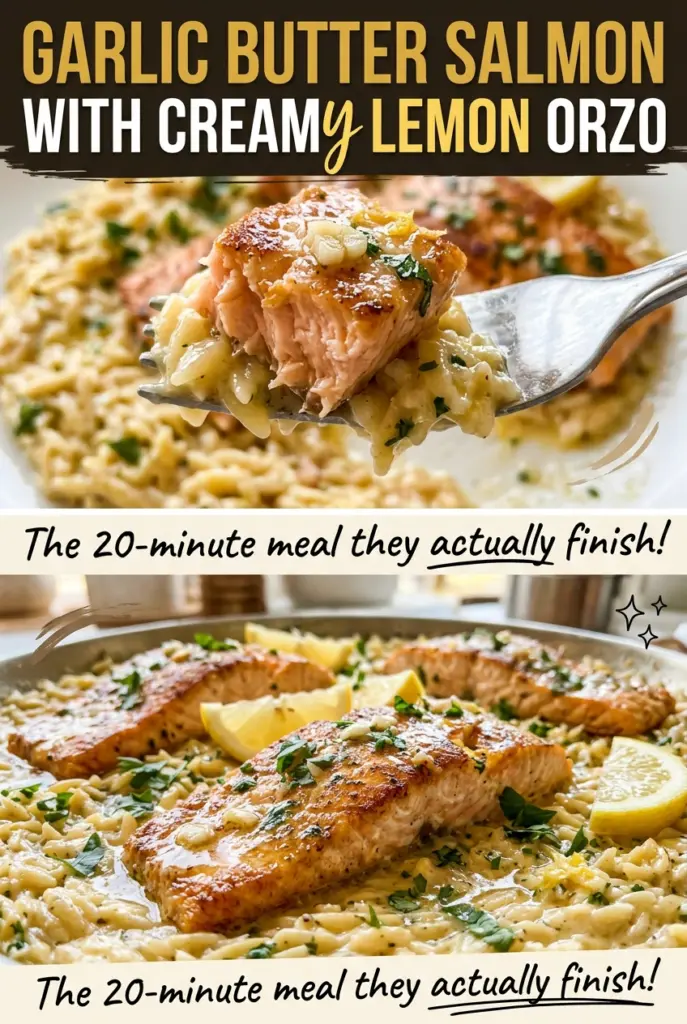
Garlic Butter Salmon with Creamy Lemon Orzo
When the salmon comes out of the oven, the garlic butter is still glossy across the top, and the skin keeps each fillet settled on the parchment. I like pairing…
Tip: save now, cook later.When the salmon comes out of the oven, the garlic butter is still glossy across the top, and the skin keeps each fillet settled on the parchment. I like pairing it with orzo that cooks right in chicken broth, then turns creamy with Parmesan and a little lemon. The two parts feel special, but the work is straightforward: the salmon bakes while the orzo simmers on the stove.
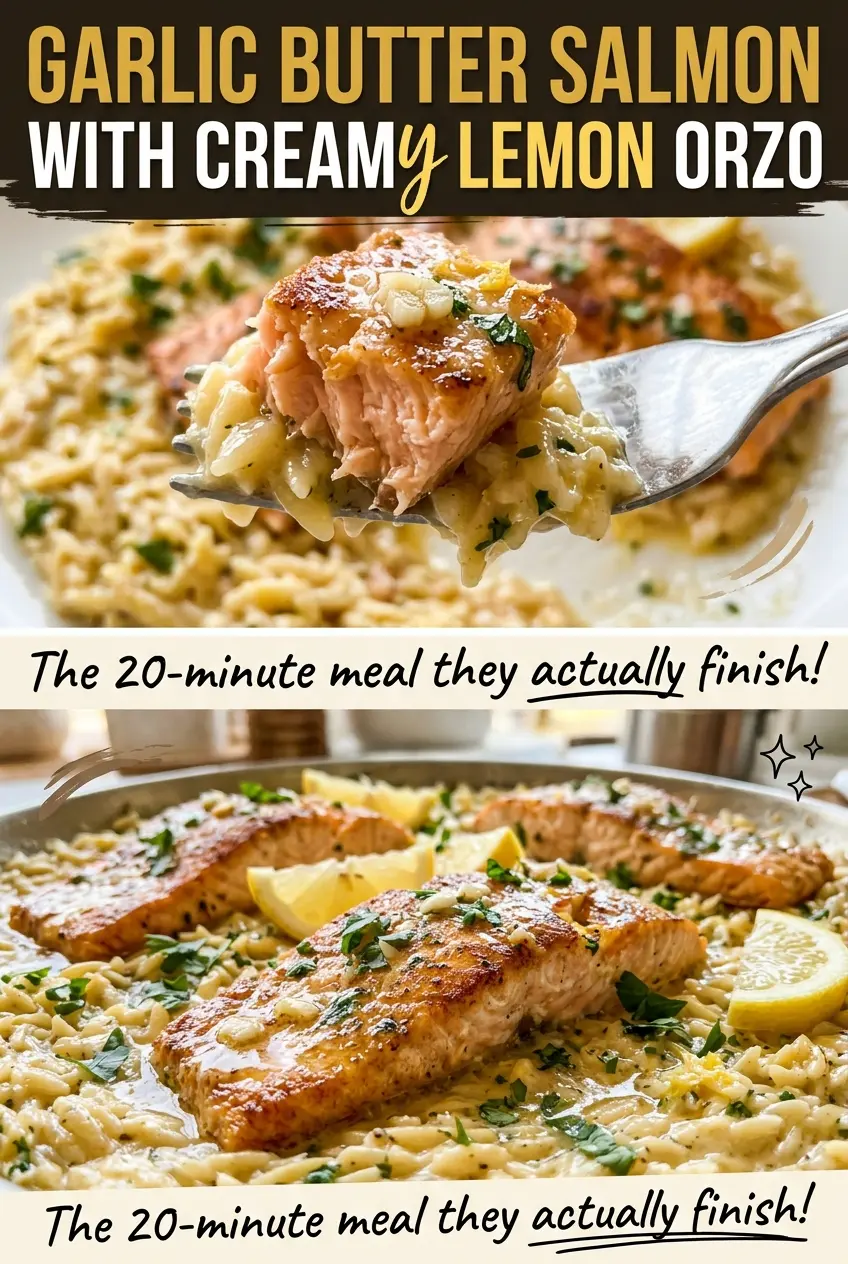
For this garlic butter salmon with creamy lemon orzo, the order of the finishing ingredients matters. The orzo needs time to turn tender and absorb most of its broth before the cream, finely grated Parmesan, lemon, and parsley go in off the heat. Stirring them in at the end gives the pasta a smooth, creamy finish instead of a heavy sauce. On the plate, you get tender salmon beside lemony orzo, with garlic butter on top.
Kitchen Note
Let the salmon rest for the full 3 minutes while you finish the orzo. It gives the fillets a brief pause before serving, so they’re easier to lift from the parchment without breaking apart.
Save this garlic butter salmon with creamy lemon orzo for a dinner with tender fish, garlicky butter, and silky Parmesan orzo.
Why the Parmesan Goes in After the Orzo Leaves the Heat
Orzo simmers in broth until it’s tender and most of the liquid has been absorbed. At that point, the pasta is ready for the ingredients that make it creamy, but the saucepan is still hot enough to warm them through. Taking it off the burner first keeps the Parmesan from being hit with direct heat as it melts into the cream.
That small change in timing also helps the lemon stay bright. The zest brings fragrant citrus, while the juice gives the finished orzo a clean, tart edge. Stirring both in with the cream and cheese distributes them through the pasta without cooking away their freshness. Add the parsley at the same time, and it stays green rather than wilting through a long simmer.
If the orzo looks a touch loose just after you stir in the finishing ingredients, give it a moment before adding anything else. It will continue to thicken as the pasta settles. The goal is a creamy coating around the orzo, not a sauce that pools heavily on the plate.
What the Broth, Cream, and Parmesan Each Bring to the Orzo

- Skin-on salmon — The skin gives the fillets a sturdy side to rest on while they bake on the parchment. Choose fillets that are similar in thickness so they cook at a similar pace; frozen salmon works best after it’s thawed.
- Unsalted butter and fresh garlic — Melted butter carries the minced garlic over the salmon, and unsalted butter leaves the seasoning easier to control. Freshly minced garlic gives the topping a clear, savory bite; dried garlic won’t have quite the same texture or flavor.
- Shallot — Finely chopping it helps it soften quickly in the olive oil and spread through the orzo. A small, tender shallot gives the base a milder taste than a larger, coarsely chopped piece.
- Orzo and low-sodium chicken broth — Orzo is small pasta, not rice, and it absorbs broth as it simmers. Low-sodium broth gives it a savory base without making the finished dish taste overly salty once Parmesan is added.
- Heavy cream and Parmesan — Cream adds richness, while finely grated Parmesan melts through the pasta and gives the sauce a savory, cheesy finish. Finely grating the cheese matters here: large shreds take longer to melt evenly.
- Lemon and parsley — Finely grated zest brings citrus aroma without extra liquid; fresh juice adds a sharper note. Fresh parsley contributes a clean herbal finish, so chop it shortly before stirring it in.
From Garlic-Butter Salmon to Creamy Lemon Orzo
Coating the Salmon with Garlic Butter
Heat the oven to 400°F and line a rimmed baking sheet with parchment paper. Set the skin-on fillets skin-side down, then season them with kosher salt and black pepper. Stir the melted butter and minced garlic together, and spoon the mixture over the fish so the tops are coated. Keeping the salmon on the parchment makes it easier to handle after baking.
Baking Until the Center Is Done
Bake the salmon for 10–14 minutes, checking the thickest part of a fillet for doneness rather than judging by the surface alone. The thickest part should reach 145°F. Fillets can vary in thickness, so use the thermometer reading as your cue within that time range. Rest the salmon for 3 minutes while you finish the orzo.
Softening the Shallot and Toasting the Orzo
Warm the olive oil in a 3-quart saucepan over medium heat. Add the finely chopped shallot and cook, stirring, for 2–3 minutes, until it’s softened. Stir in the orzo and cook it for 1 minute; this brief coating in oil helps the pasta mix evenly with the shallot. Add the chicken broth and bring it to a boil over medium-high heat.
Simmering and Finishing the Orzo
Once the broth boils, reduce the heat to low and simmer the orzo uncovered for 9–11 minutes. Stir frequently so the pasta cooks evenly and doesn’t settle in one spot at the bottom of the saucepan. Look for tender orzo with most of the broth absorbed. Take the pan off the heat, then stir in the cream, Parmesan, lemon zest, lemon juice, and parsley until creamy; divide the orzo among four plates and serve with the salmon.
Two Ways to Change the Lemon or Make the Dish Dairy-Free
Put the lemon on the salmon
For a more citrus-forward fish and a gentler orzo, use the same lemon zest in the garlic butter and drizzle the same lemon juice over the baked salmon just before serving. Leave the lemon out of the orzo; it will taste richer and less tart beside the brighter fish.
Make a dairy-free version
Replace the butter with the same amount of olive oil, and leave out the heavy cream and Parmesan. The salmon still gets a garlicky oil topping, while the orzo becomes broth-coated rather than creamy. It’s a lighter finish, without the richness and cheesy flavor of the original.
Storage and Reheating
- Refrigerator: Store the salmon and orzo in airtight containers within 2 hours, and eat within 3–4 days. The orzo will thicken as it chills.
- Freezer: Both can be frozen in airtight portions for up to 2 months. The orzo may soften and the creamy sauce may separate slightly after thawing, so the texture won’t be quite as smooth.
- Reheating: Warm gently in the microwave or in a saucepan, stirring the orzo with a small splash of broth to loosen it. Reheat leftovers to 165°F; high heat can make the salmon dry and the sauce less smooth.
Questions That Come Up When Cooking Salmon and Orzo
Garlic Butter Salmon with Creamy Lemon Orzo
Ingredients
Equipment
Method
- Heat the oven to 400°F.
- Line a rimmed baking sheet with parchment paper.
- Set the salmon skin-side down on the prepared baking sheet.
- Season the salmon with the salt and pepper.
- Stir the melted butter and garlic together.
- Spoon the mixture over the salmon.
- Bake for 10–14 minutes, until the thickest part reaches 145°F.
- Rest the salmon for 3 minutes while you make the orzo.
- Heat the olive oil in a 3-quart saucepan over medium heat.
- Add the shallot and cook for 2–3 minutes, stirring, until softened.
- Stir in the orzo and cook for 1 minute.
- Add the broth and bring to a boil over medium-high heat.
- Reduce the heat to low and simmer uncovered for 9–11 minutes, stirring frequently, until the orzo is tender and most of the broth is absorbed.
- Remove the saucepan from the heat.
- Stir in the cream, Parmesan, lemon zest, lemon juice, and parsley until creamy.
- Divide the orzo among four plates.
- Serve with the salmon.