
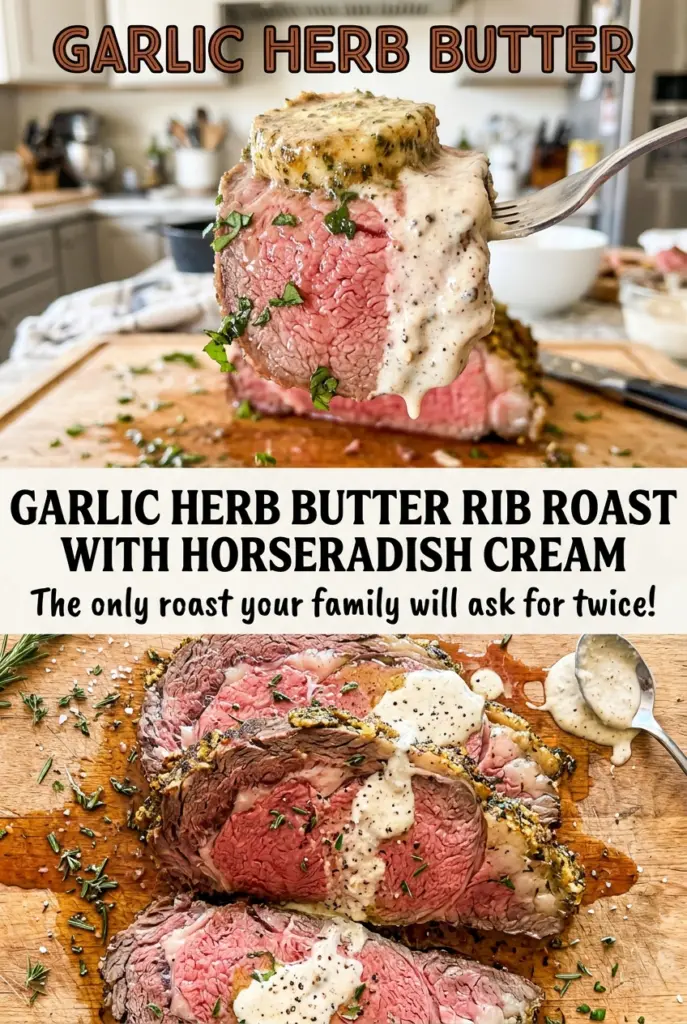
Garlic Herb Butter Rib Roast with Horseradish Cream
At the first blast of heat, the butter and herbs start to scent the kitchen before the roast has even had time to cook through. That contrast is what I…
Tip: save now, cook later.At the first blast of heat, the butter and herbs start to scent the kitchen before the roast has even had time to cook through. That contrast is what I want from a bone-in rib roast: a browned, garlicky outside and a center that stays tender. This garlic herb butter rib roast with horseradish cream is built around that balance, with a cool, sharp sauce to cut through each rich slice.
I pat the roast dry before seasoning so the butter mixture has a dry surface to cling to. Softened butter carries the garlic, rosemary, and thyme across the meat, while the two oven temperatures give the outside a head start before the center finishes more gently.
The horseradish cream takes only a few minutes to stir together, and its tang makes the beef taste even richer. Once the roast is rested and carved, the slices have a fragrant herb crust and a creamy, peppery sauce ready alongside.
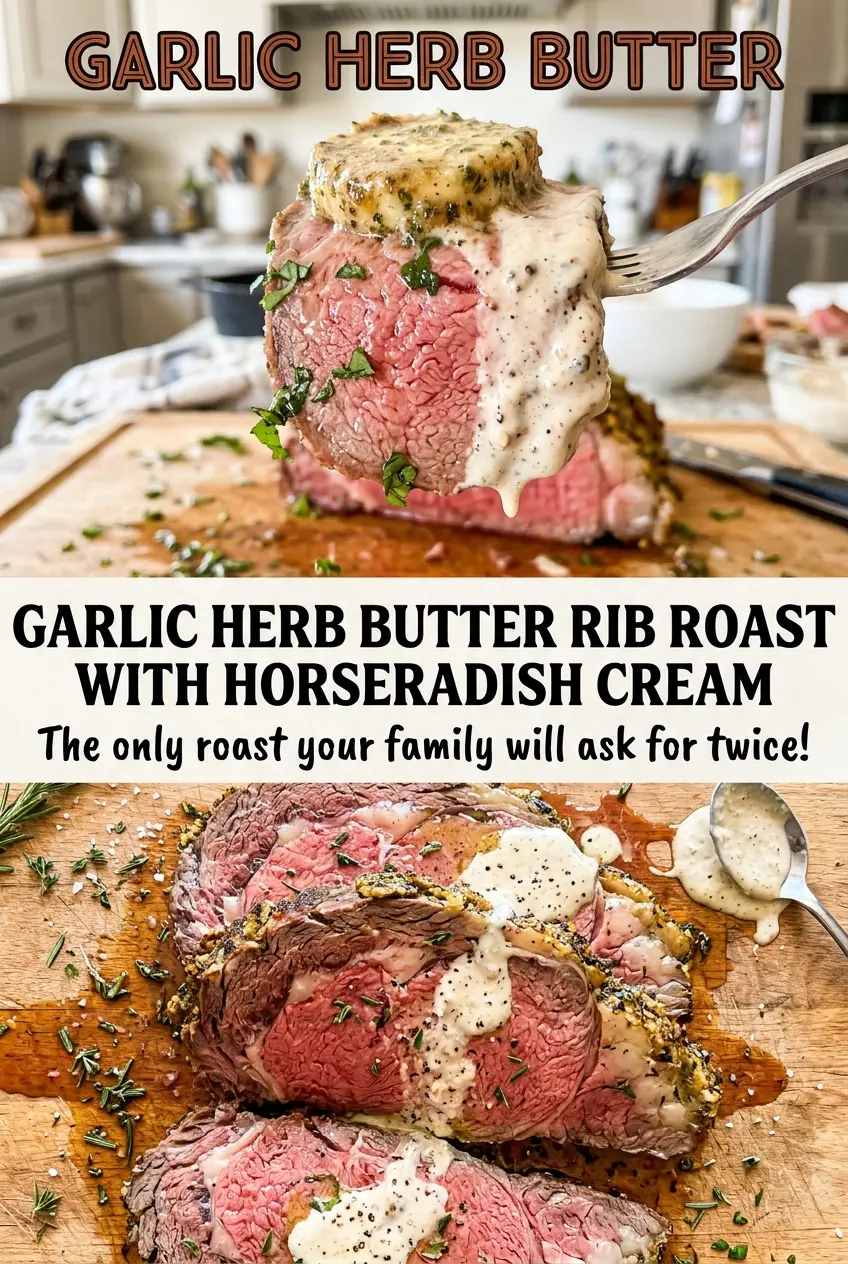
Kitchen Note
The butter should be soft enough to spread without pulling at the roast, but it shouldn’t be melted. When it’s softened, the garlic and herbs stay suspended in the coating instead of sliding away.
Save this garlic herb butter rib roast for a special dinner with its browned herb crust and cool, tangy horseradish cream.
Why This Roast Starts Hot and Finishes Gently
A rib roast is thick enough that the outside and center don’t reach their ideal textures at the same pace. A single high oven temperature can brown the outside quickly while the middle is still far from ready; a low temperature from the start gives the surface less of a chance to develop color. Starting hot, then reducing the heat, balances those two jobs. The herb butter gets time in the oven to turn fragrant and brown while the center cooks at a gentler pace.
The clock is a guide, not the final call. A roast at the larger end of the 4- to 5-pound range, or one with a different shape, can take longer than another roast of similar weight. That’s why I rely on a thermometer rather than trying to judge the center by the crust. With a bone-in roast, the reading needs to come from the thickest part of the meat, not from contact with the bone. That one distinction gives you a useful reading instead of a misleading one.
What the Butter, Herbs, and Horseradish Each Bring
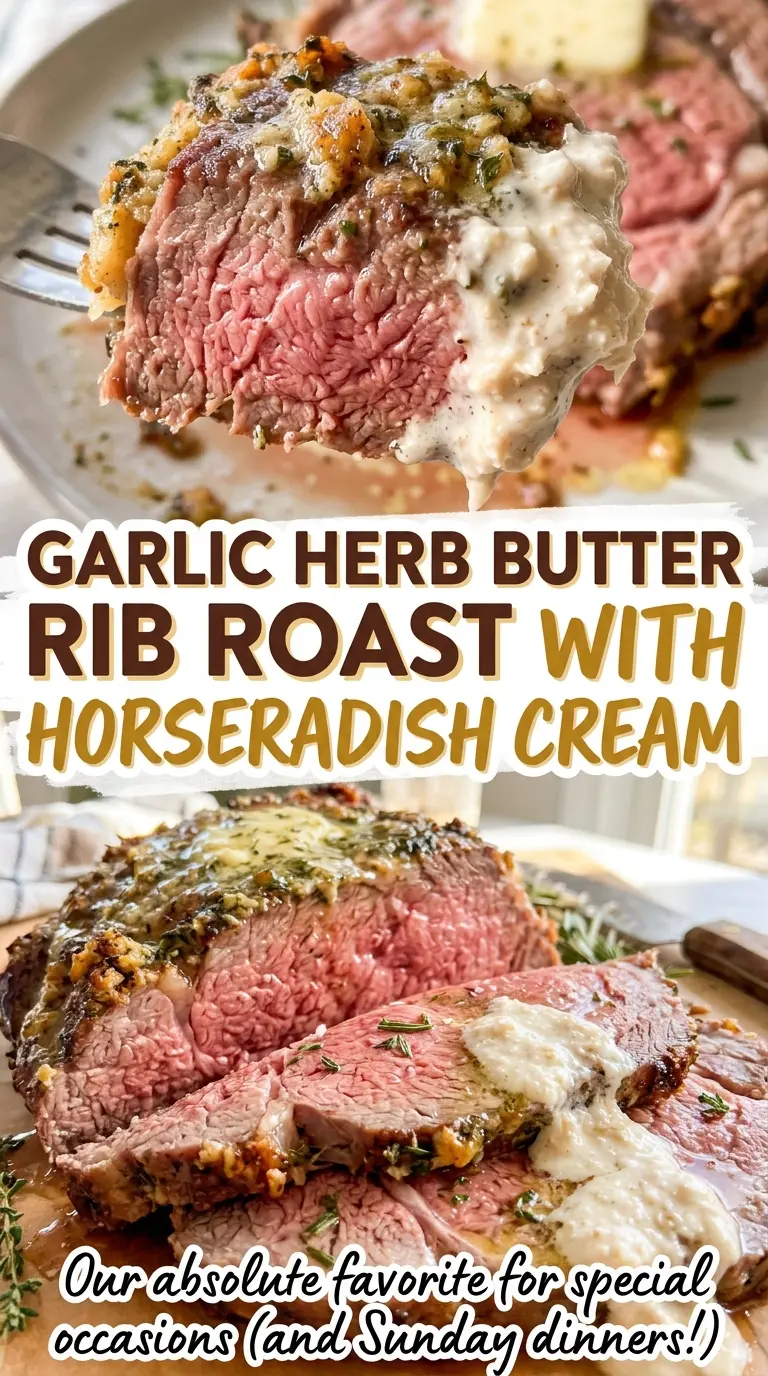
- Bone-in beef rib roast — The bone-in cut is the one this timing is designed around, and a roast of about three ribs gives you the substantial center and browned edges that make this a special-occasion centerpiece. Ask the butcher for a roast in the specified weight range so you’re not guessing at a very different size.
- Unsalted butter — Softened butter makes a spreadable base for the garlic and herbs. Unsalted butter lets the measured kosher salt season the beef without adding an unknown amount of salt from the butter itself.
- Fresh rosemary and thyme — Chopped fresh herbs bring a fragrant, savory quality to the coating. Fresh herbs also mix evenly into softened butter; dried herbs have a more concentrated texture and won’t give you the same result here.
- Garlic — Freshly minced cloves disperse through the butter and add a mellow, roasted garlic flavor as the roast cooks. Mince them finely so you don’t end up with large pieces that are more likely to darken on the surface.
- Sour cream and prepared horseradish — Sour cream gives the sauce its cool, creamy body, while prepared horseradish brings the sharp bite. Prepared horseradish is already grated and consistent, which makes it easy to stir into a smooth sauce.
- Lemon juice and Dijon mustard — These add a little brightness and tang to the creamy sauce, keeping it from tasting heavy beside the beef. Dijon blends smoothly into sour cream, so the sauce stays cohesive.
From Herb Butter to a Thermometer-Checked Center
Dry, Season, and Coat the Roast
Set a rack in the lower third of the oven and heat it to 450°F. Pat the roast dry with paper towels, then season all over with kosher salt and black pepper. Stir the softened butter with the minced garlic, rosemary, and thyme until evenly combined. Spread that mixture over the roast so the surface is coated, including the sides.
Roast in Two Stages
Set the roast bone-side down in a roasting pan and put it in the hot oven for 20 minutes. After that initial roast, reduce the oven temperature to 325°F and continue cooking. Check the thickest part with a thermometer, keeping the probe away from the bone. The roast is ready when that reading reaches 145°F; the total time at the lower temperature is about 1 1/2 to 2 1/2 hours.
Rest Before Carving
Transfer the roast to a cutting board when it reaches the target temperature. Leave it undisturbed for 20 minutes before carving so the meat has time to settle after roasting. Cutting into it immediately lets more of the juices run onto the board instead of staying with the slices.
Stir Together the Horseradish Cream
While the roast cooks, stir the sour cream, prepared horseradish, lemon juice, Dijon mustard, and kosher salt together until smooth. Cover the bowl and refrigerate the sauce until you’re ready to serve. It should be cool and creamy beside the warm beef, with a clear horseradish bite.
When You Want the Roast Without Garlic or Dairy
A Gentler, Garlic-Free Herb Crust
Leave out the minced garlic and keep the butter, rosemary, and thyme in the coating. The roast still gets its savory herb crust, but the garlic won’t be the dominant note. This is a flavor adjustment rather than a complete allergy-safety plan; anyone avoiding garlic for an allergy should also consider cross-contact.
A Dairy-Free Beef Roast
For a dairy-free plate, leave off the butter coating and skip the sour-cream horseradish sauce. Season the roast with the salt and pepper and follow the same oven temperatures and thermometer endpoint. You’ll lose the buttery herb crust and creamy sauce, so the result is a simpler beef roast rather than the full recipe.
Storage and Reheating
- Refrigerator: Refrigerate leftover beef and covered horseradish cream separately within 2 hours, and use within 3 days. The beef will firm up as it chills.
- Freezer: Wrap leftover beef tightly or store it in an airtight container for up to 2 to 3 months. Don’t freeze the horseradish cream; the sour cream can separate and turn grainy after thawing.
- Reheating: Warm sliced beef in the microwave at 50% power in short bursts, stopping when it reaches 165°F. High power for too long dries the slices; serve the horseradish cream cold rather than heating it.
Questions That Come Up Before Carving
Garlic Herb Butter Rib Roast with Horseradish Cream
Ingredients
Equipment
Method
- Set an oven rack in the lower third of the oven.
- Heat the oven to 450°F.
- Pat the roast dry with paper towels.
- Season the roast all over with the salt and black pepper.
- Stir the butter, garlic, rosemary, and thyme together.
- Spread the butter mixture over the roast.
- Place the roast bone-side down in a roasting pan.
- Roast for 20 minutes.
- Reduce the oven to 325°F and continue roasting until a thermometer in the thickest part, away from the bone, reads 145°F, about 1 1/2 to 2 1/2 hours.
- Transfer the roast to a cutting board.
- Rest for 20 minutes before carving.
- Stir together the sour cream, horseradish, lemon juice, Dijon mustard, and salt.
- Cover and refrigerate until ready to serve.