

Garlic Parmesan Potato Stacks Baked in a Muffin Tin
The potato edges turn golden before the centers do, and that contrast is exactly what makes these little stacks worth pulling out of the muffin tin. Each one gets browned…
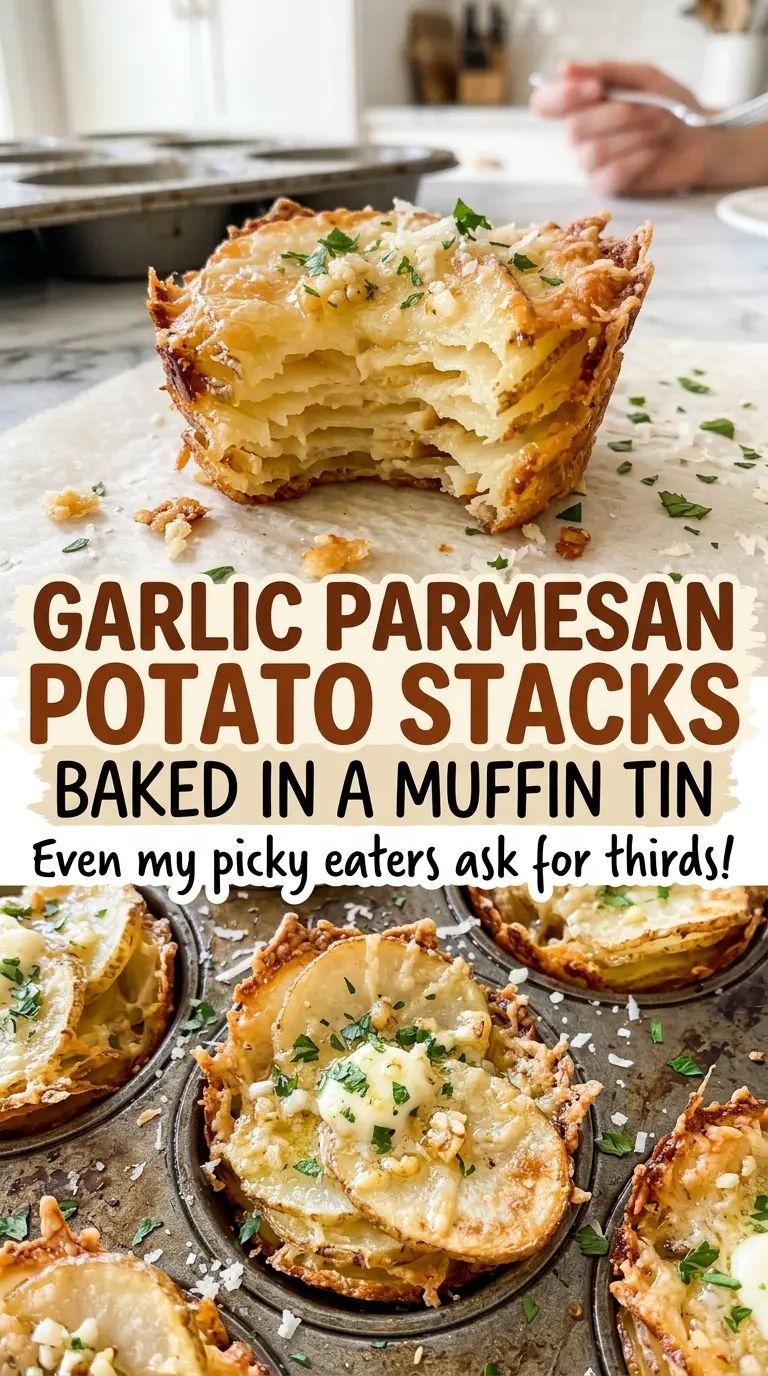
Tip: save now, cook later.The potato edges turn golden before the centers do, and that contrast is exactly what makes these little stacks worth pulling out of the muffin tin. Each one gets browned edges, a tender middle, and a savory Parmesan top without needing a casserole dish or a complicated technique. These garlic Parmesan potato stacks are an especially good way to make a side dish feel a little more special while keeping the ingredient list familiar.
I slice the Yukon Golds thin so they fit into neat, even stacks, then toss them with melted butter, grated garlic, thyme, and Parmesan. The muffin cups keep each portion together as it bakes, while the exposed edges get plenty of heat. When the tops are deeply golden and a knife slips through the centers, the stacks are ready: buttery, fragrant, and crisp around the edges.

Kitchen Note
Give the stacks their full 5-minute rest in the tin before you loosen them. That short pause helps them hold together when you lift them out, instead of leaving the bottom slices behind.
Save these garlic Parmesan potato stacks for a side dish with crisp edges, tender centers, and a golden cheese topping.
Why a Muffin Cup Gives These Stacks Golden Edges and Tender Centers
A pan of layered potatoes cooks as one large piece, so the center and the outside are working toward doneness together. In a muffin tin, each portion has its own exposed edges and a compact center. The edges brown while the middle stays tucked between the slices, giving you a mix of textures in every stack.
The individual cups also make the portions easier to divide evenly. A loose pile in one cup can bake differently from a tightly packed one beside it, so build each stack to a similar height. The thin rounds should sit together without being pressed into a solid block. That balance lets the butter and Parmesan reach the slices while keeping the stacks recognizable when they come out of the tin.
Yukon Gold potatoes suit this setup because their creamy texture works well in thin layers. The goal isn’t a tall tower; it’s a compact stack with enough space around the slices for heat to reach the edges. That’s what gives each serving a browned top and a tender center instead of one uniformly soft pile.
Why Yukon Golds, Fresh Thyme, and Finely Grated Parmesan Matter
- Yukon Gold potatoes — Their creamy texture suits the stacked layers, and the recipe depends on slicing them thin and evenly. Other waxy yellow potatoes can work, but Yukon Golds give the intended tender center. Scrub them well before slicing.
- Unsalted butter — Melted butter coats the potato rounds and carries the garlic and thyme across them. Unsalted butter lets the kosher salt stay in control; salted butter is usable, but the finished stacks will taste saltier.
- Garlic — Finely grated garlic distributes more evenly than chopped pieces, so you don’t get a large bite of garlic in one spot. Fresh cloves give the most direct flavor. Garlic powder can stand in if needed, though the aroma will be less fresh.
- Fresh thyme — The leaves add a gentle herbal note against the buttery potatoes and Parmesan. Fresh leaves give the brightest flavor; if you only have dried thyme, use less because dried herbs are more concentrated. You can also leave the thyme out for a simpler garlic-and-cheese version.
- Parmesan — Finely grated cheese clings to the buttered slices and forms a golden topping. A block grated finely at home gives an even, delicate coating; finely grated packaged Parmesan is convenient, while coarse shreds won’t distribute as smoothly.
Building Even Stacks That Bake Through
Prepare the Tin Before Slicing
Heat the oven to 400°F, then coat all 12 cups of a standard muffin tin with nonstick cooking spray. Getting the tin ready first means the sliced potatoes can go straight from the bowl into the cups. Use a sharp knife or a mandoline to cut the potatoes into 1/8-inch-thick rounds. Even slices matter more than speed here, since thick pieces will take longer to soften than their thinner neighbors.
Coat Every Round in the Garlic Butter
Put the potato slices in a large bowl. Stir together the melted butter, finely grated garlic, kosher salt, black pepper, and fresh thyme leaves, then pour the mixture over the potatoes and toss until the slices are coated. Separate rounds that have stuck together so the butter mixture reaches both sides. The bowl should smell of garlic and thyme, and the slices should look lightly glossy rather than dry.
Toss with Parmesan and Fill the Cups
Add 6 tablespoons of the finely grated Parmesan and toss again to distribute it among the potato slices. Stack the rounds evenly in the muffin cups, dividing them among all 12 wells. Keep the stacks similar in height so they bake at about the same pace. Sprinkle the remaining Parmesan over the tops, where it can turn golden in the oven.
Bake Until the Centers Give Way Easily
Bake for 45 to 55 minutes, until the tops are golden brown and a knife slides easily through the centers. A browned top on its own isn’t enough; the knife test tells you whether the thickest part of the stack is tender. Rest the tin for 5 minutes, then loosen the edges with a thin knife and lift out the stacks to serve. If a stack catches, work the knife gently around its edge rather than pulling hard on the top.
Simple Ways to Change the Flavor or Fit a Gluten-Free Table
Leave Out the Thyme for a Cleaner Garlic-Parmesan Flavor
Omit the fresh thyme and keep the rest of the ingredients and method unchanged. The stacks will have a more direct garlic-and-cheese flavor, without the herbal note.
Use Pecorino Romano for a Sharper Cheese Finish
Finely grated Pecorino Romano can replace the Parmesan in both additions. It brings a sharper, saltier taste, so the potato stacks will have a more pronounced cheese finish.
Keep the Stacks Gluten-Free
The potatoes, butter, garlic, herbs, and cheese don’t need a flour-based swap. For a gluten-free table, use nonstick cooking spray labeled gluten-free; the flavor and texture of the stacks stay the same.
Storage and Reheating
- Refrigerator: Store cooled leftovers in an airtight container for 3 to 4 days. The edges soften as they sit, but the centers remain tender.
- Freezer: These are best fresh or refrigerated. Freezing and thawing softens the edges and can make the potato texture mealy.
- Reheating: Warm them in a 400°F oven until the centers reach 165°F. The microwave heats them quickly but softens the browned edges, so use it only if crispness isn’t a priority.
Questions That Come Up When Baking Potato Stacks
Garlic Parmesan Potato Stacks Baked in a Muffin Tin
Ingredients
Equipment
Method
- Preheat the oven to 400°F.
- Coat all 12 cups of a standard muffin tin with nonstick cooking spray.
- Slice the potatoes into 1/8-inch-thick rounds.
- Place the potato slices in a large bowl.
- Stir the melted butter, garlic, salt, pepper, and thyme together.
- Pour the butter mixture over the potatoes and toss to coat.
- Add 6 tablespoons of the Parmesan and toss again.
- Stack the potato slices into the muffin cups, dividing them evenly.
- Sprinkle the remaining Parmesan over the stacks.
- Bake for 45 to 55 minutes, until the tops are golden brown and a knife slides easily through the centers.
- Rest the stacks in the tin for 5 minutes.
- Loosen the edges with a thin knife and lift the stacks out to serve.