
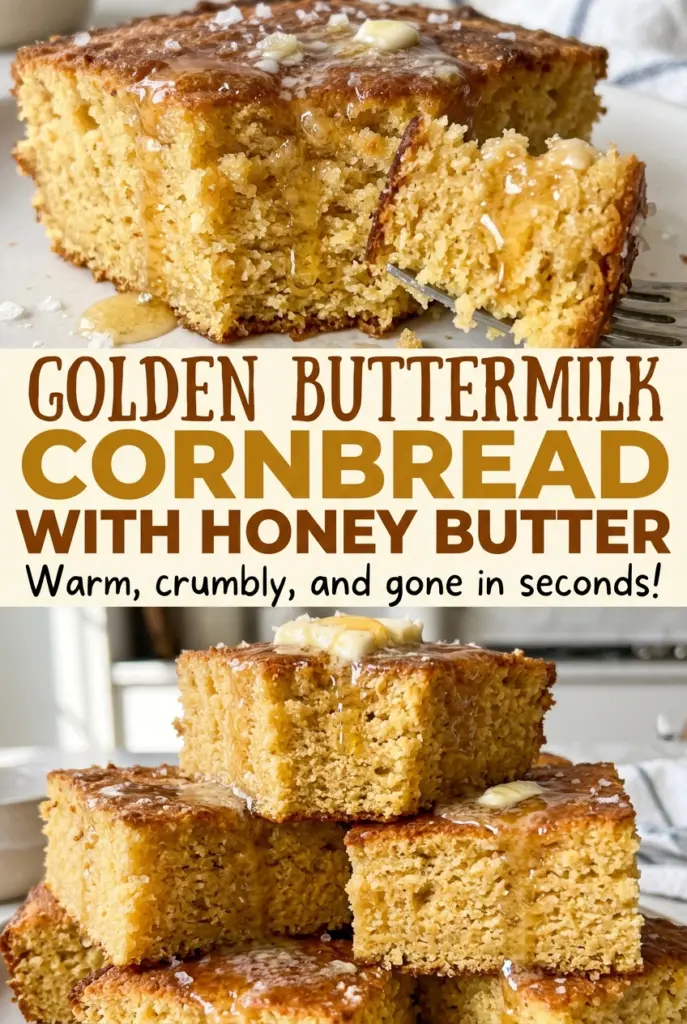
Golden Buttermilk Cornbread with Honey Butter
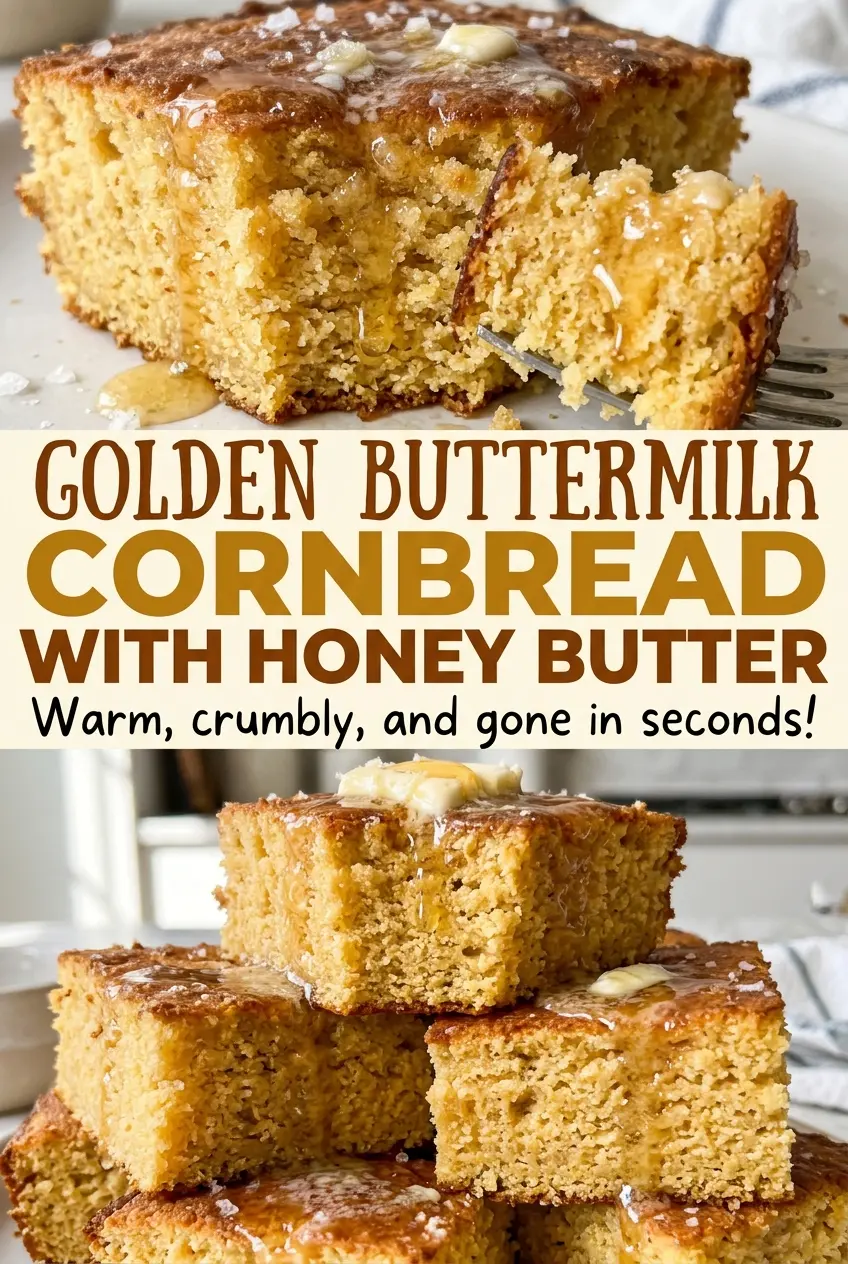
The edges of this cornbread turn golden while the middle stays tender, and that contrast is what I want from a square-pan bake. Golden Buttermilk Cornbread with Honey Butter brings…
Tip: save now, cook later.The edges of this cornbread turn golden while the middle stays tender, and that contrast is what I want from a square-pan bake. Golden Buttermilk Cornbread with Honey Butter brings together a lightly sweet crumb and a soft, creamy spread that takes just a minute to beat together.
I keep the dry ingredients in one bowl and the buttermilk, eggs, and cooled melted butter in another. That makes it easy to stir the batter only until the dry streaks disappear. A few small lumps are fine; working the batter until it looks perfectly smooth is where cornbread can turn tough.
The result is easy to cut into nine squares after a short rest in the pan. A swipe of honey butter softens over the warm crumb and gives each bite a gentle sweetness without making the cornbread itself taste like cake.
Kitchen Note
Give the cornbread its full 10-minute rest in the pan before cutting. That pause lets the crumb settle, so the squares lift out more cleanly instead of breaking apart while they’re hot.
Save this golden buttermilk cornbread for its tender crumb and quick honey butter topping—an easy square-pan bake with a warm, buttery finish.
Why Buttermilk Cornbread Uses Both Baking Powder and Baking Soda
Buttermilk brings acidity to the batter, and baking soda reacts with that acidity as the cornbread bakes. Baking powder adds a separate source of lift, which helps the crumb rise instead of turning dense under the weight of the cornmeal. They’re doing related but different jobs, so I keep both in the mix rather than swapping one for the other.
This balance also explains why I whisk the leaveners through the dry ingredients before adding any liquid. If baking soda or baking powder sits in a pocket, that spot may rise unevenly and leave a bitter patch. A thorough whisk spreads them through the flour and cornmeal before the wet ingredients go in.
Buttermilk’s tang is there to support the batter, not make the finished square taste sharply sour. The granulated sugar rounds out the corn flavor, while the honey butter adds a sweeter finish at the table. The result lands between savory skillet-style cornbread and a sweeter cake-like square, with enough structure to serve neatly once it has rested.
What Cornmeal, Buttermilk, and Butter Bring to This Batter
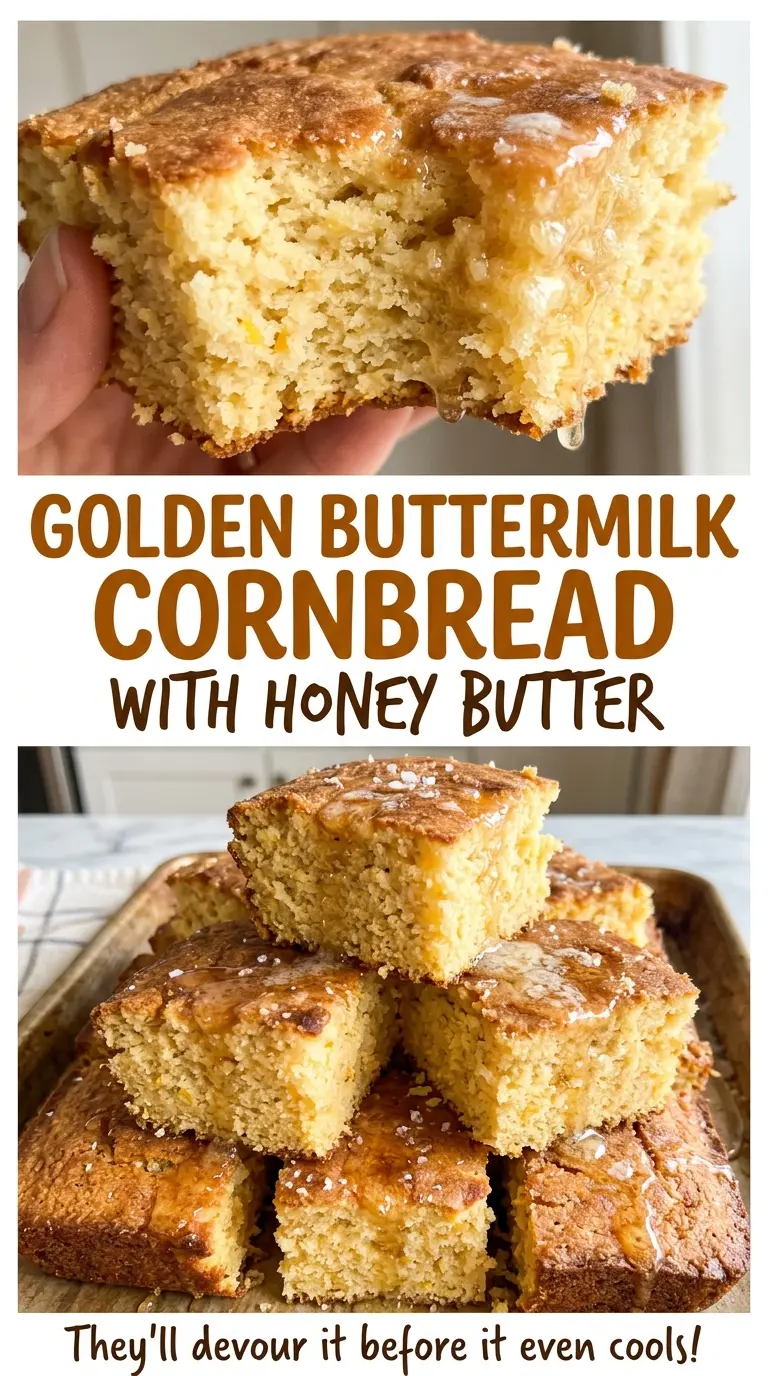
- Yellow cornmeal — This gives the cornbread its corn flavor and fine, sandy crumb. A medium grind makes a familiar tender square; a noticeably coarse grind brings a crunchier texture that can feel gritty here. White cornmeal works in the same way, though the finished bread will be paler and its corn flavor a little milder.
- All-purpose flour — Flour supplies the structure that keeps the cornmeal crumb from crumbling into loose grains. For a gluten-free version, replace it with a cup-for-cup gluten-free baking blend made to substitute for all-purpose flour; the texture will be a little more delicate.
- Buttermilk — Cultured buttermilk gives the batter tang and pairs naturally with the baking soda. If you don’t have any, stir 1 tablespoon of lemon juice or white vinegar into 1 cup of milk and let it stand for 5 minutes before using it. The flavor is a little less rich, but it works in this batter.
- Unsalted butter — Melted butter enriches the cornbread, while softened butter makes the honey butter smooth and spreadable. Unsalted butter lets the measured kosher salt control the seasoning. For the melted butter, let it cool before mixing it with the eggs so the warm fat doesn’t start cooking them.
- Large eggs — Eggs help bind the cornmeal and flour into squares that hold together. Use large eggs for the intended balance of moisture and structure; changing egg size can make the batter looser or drier.
Mixing and Baking for a Tender, Even Crumb
Whisk the Dry and Wet Bowls Separately
Heat the oven to 400°F and grease a 9-inch square baking pan with the softened butter. Whisk the cornmeal, flour, sugar, baking powder, baking soda, and kosher salt in a large bowl so the leaveners are evenly dispersed. In a medium bowl, whisk the buttermilk and eggs, then whisk in the melted, cooled butter. Keeping the bowls separate makes it easier to combine everything quickly without overworking the batter.
Stir Only Until the Dry Streaks Disappear
Pour the buttermilk mixture into the cornmeal mixture and stir just until no dry streaks remain. Don’t chase every small lump; extra stirring develops the flour and can make the finished squares firm instead of tender. Spread the batter evenly in the greased pan so it bakes at a consistent pace. The batter should look thick but easy to spread.
Bake Until Golden, Then Let the Pan Rest
Bake for 20–25 minutes, until the top is golden and a toothpick inserted in the center comes out clean. If the top looks done but the toothpick still has wet batter, give it a little more time and test again rather than pulling it early. Set the pan aside for 10 minutes before cutting. The center should feel set, and the edges should release cleanly when you cut the squares.
Beat the Honey Butter Smooth
While the cornbread bakes or rests, put the softened butter, honey, and kosher salt in a small bowl. Beat until the mixture looks creamy and evenly blended, scraping the bowl if honey is clinging to the sides. If it looks lumpy, the butter is probably still too cool; give it a little time to soften, then beat again. Spoon it onto warm pieces so it softens without turning completely runny.
Small Changes for a Different Cornbread or Honey Butter
Make the Cornbread Gluten-Free
Replace the all-purpose flour with the same amount of cup-for-cup gluten-free baking blend. Choose a blend intended to replace flour in baking, not a single-ingredient starch or nut flour. The cornbread will have a slightly more delicate crumb, so let the baked pan rest before cutting.
Dial Back the Sweetness
Use 2 tablespoons of granulated sugar in the cornbread instead of 1/4 cup. You’ll get a more savory-tasting square, with slightly less browning and a little less softness from the reduced sugar. Keep the honey butter unchanged if you still want a sweet topping.
Make the Honey Butter Less Sweet
Beat in 1 tablespoon of honey instead of 2, keeping the softened butter and salt the same. The spread stays creamy but tastes more buttery and less honey-forward, which suits anyone who wants the cornbread’s own sweetness to lead.
Storage and Reheating
- Refrigerator: Keep leftover cornbread in an airtight container for up to 4 days. Refrigeration firms the crumb, so warm a piece before serving if you prefer it soft.
- Freezer: Cool the cornbread completely, cut it into squares, and wrap the pieces individually before placing them in a freezer-safe bag. Freeze for up to 3 months; freeze the honey butter separately in a sealed container.
- Reheating: Warm pieces in a 300°F oven, loosely covered with foil, for about 8–10 minutes. The foil helps keep the edges from drying out; don’t leave the cornbread uncovered in the oven longer than needed.
Questions That Come Up With This Buttermilk Cornbread
Golden Buttermilk Cornbread with Honey Butter
Ingredients
Equipment
Method
- Preheat the oven to 400°F.
- Grease a 9-inch square baking pan with the softened butter.
- Whisk the cornmeal, flour, sugar, baking powder, baking soda, and salt in a large bowl.
- Whisk the buttermilk and eggs in a medium bowl, then whisk in the melted butter.
- Pour the buttermilk mixture into the cornmeal mixture and stir just until no dry streaks remain.
- Spread the batter in the prepared pan and bake for 20–25 minutes, until golden and a toothpick inserted in the center comes out clean.
- Let the cornbread rest in the pan for 10 minutes.
- Beat the softened butter, honey, and salt in a small bowl until smooth and creamy.