
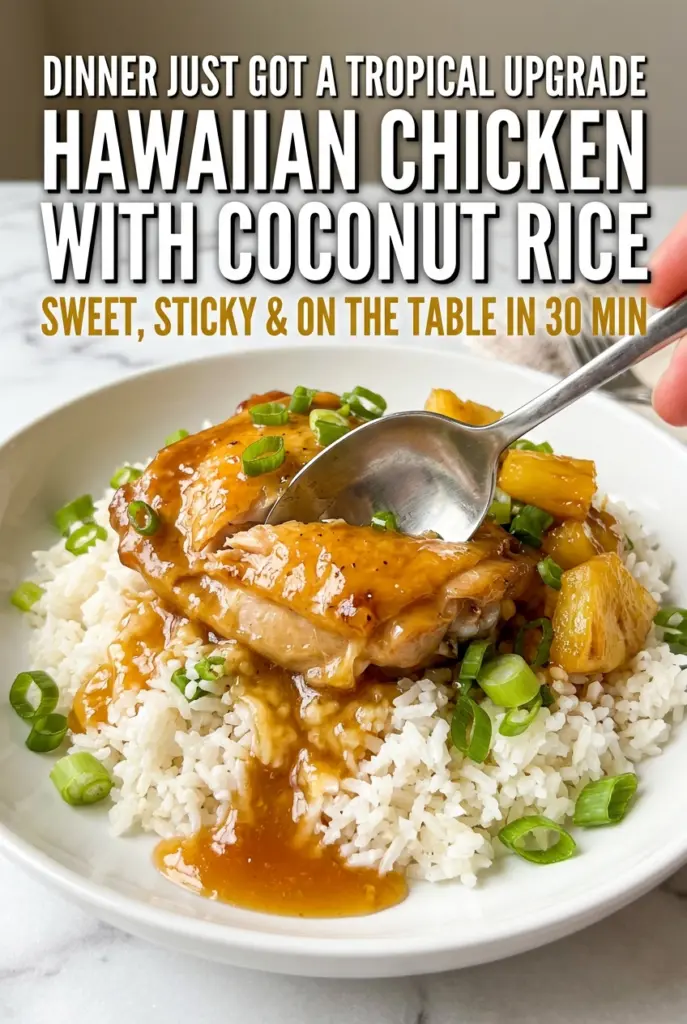
Hawaiian Chicken with Coconut Rice
Sticky pineapple glaze clinging to juicy chicken thighs is the kind of dinner that disappears fast. The sweet-savory sauce turns glossy in the pan, the edges of the pineapple caramelize,…
Tip: save now, cook later.Sticky pineapple glaze clinging to juicy chicken thighs is the kind of dinner that disappears fast. The sweet-savory sauce turns glossy in the pan, the edges of the pineapple caramelize, and the coconut rice underneath catches every bit of it. You get a plate that tastes layered and finished, not just sweet chicken with a side of rice.
What makes this version work is the balance. Pineapple juice brings the fruit and the acid, soy sauce gives the sauce its backbone, and brown sugar helps the glaze tighten instead of staying thin and sharp. The chicken thighs handle the high heat better than breasts, so you get a proper sear without drying out the meat. The coconut rice is there for more than padding — full-fat coconut milk gives it a soft, rich texture that keeps the whole dish from leaning one-note.
Below, I’ll walk through the one place people usually go wrong with glaze-based chicken, plus the small rice trick that keeps the coconut flavor from turning heavy.
The glaze thickened up exactly like you said and the chicken stayed juicy even after simmering in the sauce. My husband kept going back for the pineapple chunks and asked me to pack the leftovers for lunch.
Save this Hawaiian Chicken with Coconut Rice for the nights when you want a sticky pineapple glaze and creamy coconut rice in one pan-friendly dinner.
The Mistake That Turns Pineapple Glaze Thin and Watery
The biggest failure here is adding the cornstarch too early or boiling the sauce too hard after it thickens. Cornstarch needs a full simmer to activate, but once it turns glossy, it only needs a minute or two. Let it go much longer and the glaze can loosen again or turn pasty at the edges.
The other trap is using the marinade as a finished sauce without separating it first. Chicken that sits in raw marinade needs to be treated like raw poultry liquid, which means it can’t go straight back onto the plate. Reserve part of the sauce before the chicken goes in, then build your glaze from that clean portion so you keep the flavor and avoid the risk.
What Each Ingredient Is Actually Doing in This Dish
The ingredients here aren’t random. They each pull a specific job, and a good version of this dish depends on respecting that.
- Chicken thighs — Thighs stay juicy through searing and glazing, which matters because the sauce needs a minute on the stove. Chicken breasts can work, but they dry out faster and need a shorter cook time.
- Pineapple juice — This is the tropical note and the acid all in one. Canned juice is fine here; fresh juice is nice, but it won’t change the structure of the glaze.
- Low-sodium soy sauce — This brings salt and depth without making the glaze harsh. Regular soy sauce works, but you’ll need to ease up on any extra salt.
- Brown sugar — It helps the sauce caramelize and gives the glaze that sticky finish. White sugar won’t give the same rounded flavor.
- Full-fat coconut milk — This is what makes the rice creamy instead of just fragrant. Light coconut milk works in a pinch, but the rice will taste thinner and less rich.
- Jasmine rice — The grain stays fluffy and aromatic, which keeps the coconut rice from turning heavy. Basmati can substitute, but the fragrance shifts a bit and the texture is slightly drier.
Building the Glaze Without Overcooking the Chicken
Whisking the sauce before the pan heats up
Mix the pineapple juice, soy sauce, brown sugar, garlic, ginger, and rice vinegar until the sugar dissolves. That early whisking matters because undissolved sugar settles and burns faster in the pan. Reserve half the sauce before the chicken touches it. If you skip that step, you lose your clean glazing liquid and end up choosing between safety and flavor.
Getting a real sear on the thighs
Pat the chicken dry before it hits the oil. Wet chicken steams, and steamed chicken won’t brown well enough to stand up to the glaze. Cook it over medium-high heat until the surface is deeply golden and the meat releases without fighting the pan. If it sticks hard, give it another minute; the crust will loosen when it’s ready.
Turning the reserved sauce into a glossy glaze
Pour the reserved sauce into the skillet after the chicken comes out, then stir in the cornstarch slurry. The sauce should go from thin and bubbling to visibly thicker in about 2 to 3 minutes. Keep it at a steady simmer, not a rolling boil. Too much heat can make the glaze tighten unevenly and turn grainy instead of smooth.
Finishing with pineapple and a quick coat
Add the pineapple chunks at the end so they warm through without collapsing. You want them glossy at the edges, not cooked into mush. Return the chicken to the pan and turn it through the glaze until every side is coated. That last minute is what gives you the sticky finish people actually remember.
How to Adapt This for Different Kitchens and Different Needs
Make It Gluten-Free Without Losing the Salt-Sweet Balance
Swap the soy sauce for tamari or a certified gluten-free soy sauce. The flavor stays close, but tamari tends to taste a little rounder, so keep the rest of the seasoning as written and taste the glaze before adding extra salt.
Use Chicken Breasts When That’s What You Have
Chicken breasts work, but they need a gentler hand. Sear them until just cooked through, then glaze briefly so they don’t dry out while the sauce finishes. Slice them before serving if the pieces are thick; that helps the sauce coat the meat instead of sliding off.
Make the Rice Lighter and Less Rich
Replace half the coconut milk with water if you want a softer coconut note. The rice won’t taste as lush, but it still pairs well with the sticky chicken and gives you a less heavy plate. Don’t drop the salt; coconut rice without it tastes flat.
Add Heat Without Fighting the Pineapple
Stir a pinch of red pepper flakes or a little chili garlic sauce into the glaze. The heat should sit in the background and sharpen the sweetness, not overpower it. Add it to taste after the sauce thickens so you can control how much burn stays in the final glaze.
Storage and Reheating
- Refrigerator: Store the chicken and rice separately for up to 4 days. The sauce will thicken more in the fridge, which is normal.
- Freezer: The chicken freezes well for up to 2 months. The coconut rice can freeze, but the texture gets a little drier and less silky after thawing.
- Reheating: Reheat the chicken gently in a skillet with a splash of water to loosen the glaze. Microwave the rice covered with a spoonful of water so it steams back to life. High heat dries the chicken and makes the glaze sticky in the wrong way.
Answers to the Questions Worth Asking
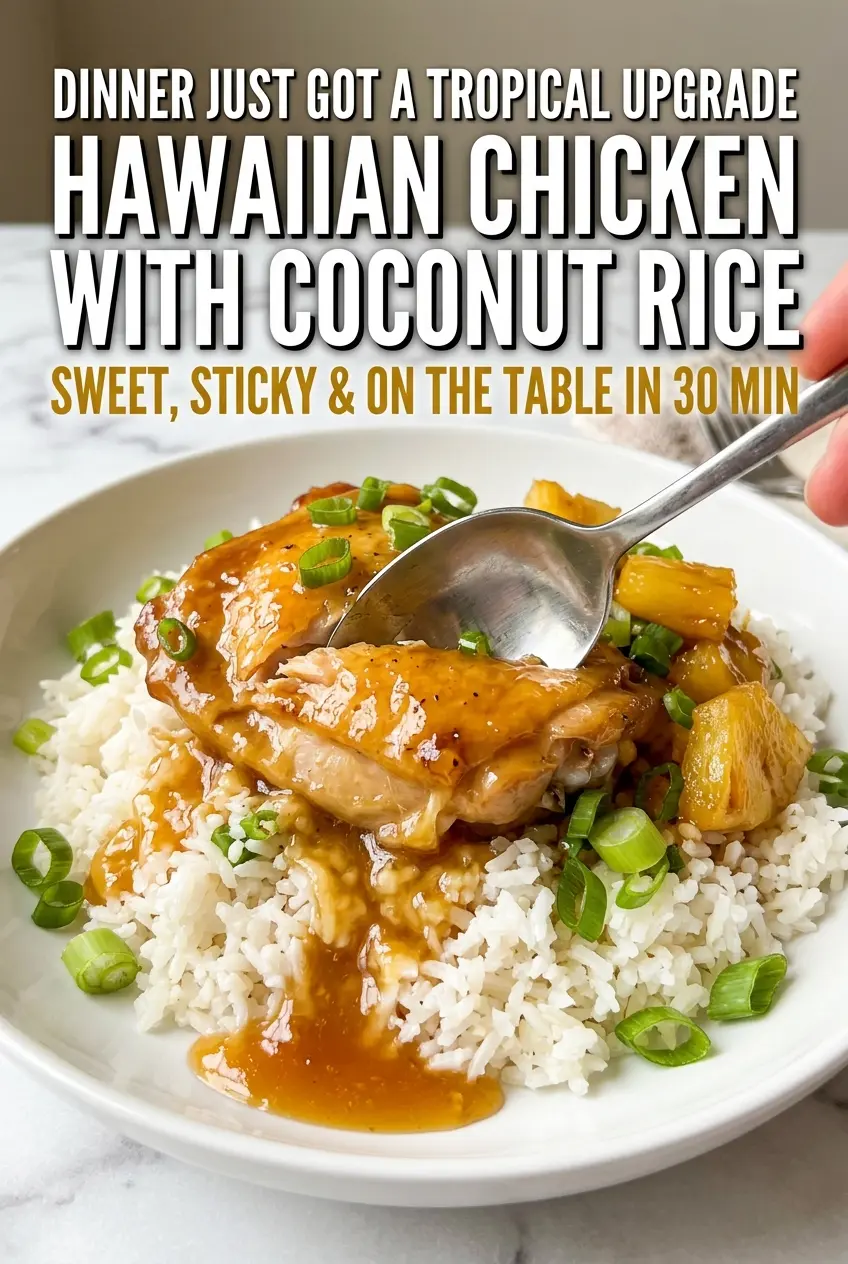
Hawaiian Chicken with Coconut Rice
Ingredients
Equipment
Method
- In a bowl, whisk together pineapple juice, soy sauce, brown sugar, garlic, ginger, and rice vinegar until the brown sugar dissolves.
- Set aside 0.5 cup of the sauce for glazing later.
- Season the chicken thighs with salt and black pepper.
- Place the chicken in a zip-lock bag or bowl and add the remaining sauce, then marinate 30 minutes (up to 4 hours in the fridge for deeper flavor).
- Rinse the jasmine rice under cold water until the water runs clear.
- In a medium saucepan, combine jasmine rice, coconut milk, water, salt, and sugar.
- Bring to a boil over medium-high heat, then reduce to low, cover, and simmer for 18 minutes.
- Remove from heat and keep covered for 5 minutes of steam time.
- Fluff the rice with a fork.
- Heat vegetable oil in a large skillet over medium-high heat until shimmering.
- Remove chicken from the marinade (discard used marinade), then sear for 4–5 minutes per side until deeply golden and cooked through (165°F internal temperature).
- Transfer the chicken to a plate and set aside.
- Add the reserved 0.5 cup sauce to the same skillet over medium heat.
- Whisk cornstarch with 2 tbsp water, then stir into the sauce.
- Simmer for 2–3 minutes, stirring, until the sauce thickens into a glossy glaze.
- Stir pineapple chunks into the glaze and warm for 1 minute, lightly caramelizing at the edges.
- Return the seared chicken to the pan and spoon glaze over each piece.
- Cook 1–2 minutes, turning to coat fully.
- Serve immediately with coconut rice, topped with extra sauce and pineapple chunks.
- Garnish with sliced green onions and sesame seeds.