
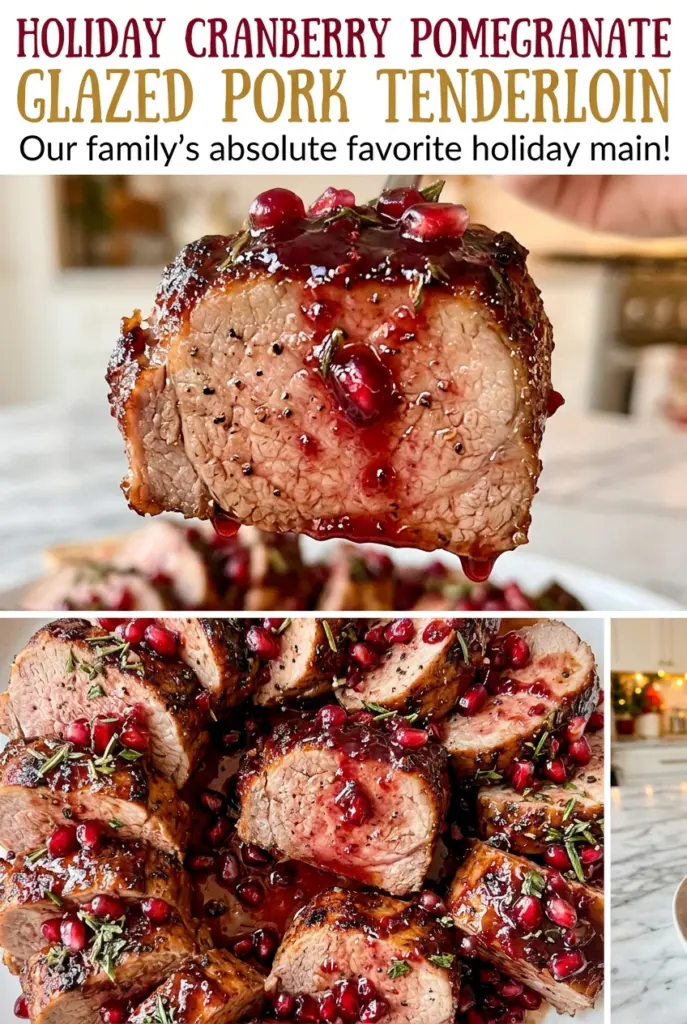
Holiday Cranberry Pomegranate Glazed Pork Tenderloin
The cranberries start popping before the glaze looks thick, and that’s the moment I used to get impatient and turn up the heat. A steady simmer does a better job:…
Tip: save now, cook later.The cranberries start popping before the glaze looks thick, and that’s the moment I used to get impatient and turn up the heat. A steady simmer does a better job: the berries soften, the juice reduces, and the glaze turns glossy enough to cling to the pork. This holiday cranberry pomegranate glazed pork tenderloin gets its bright, tart-sweet finish from that stovetop glaze, not from a long list of ingredients.
I sear the tenderloins first, then let the oven do most of the cooking. The glaze goes on after the first 10 minutes of roasting, so it has time to coat the surface without spending the entire cook in the oven. Use a thermometer in the thickest part of each tenderloin; once they reach 145°F and rest, the slices stay tender beneath that ruby cranberry coating.
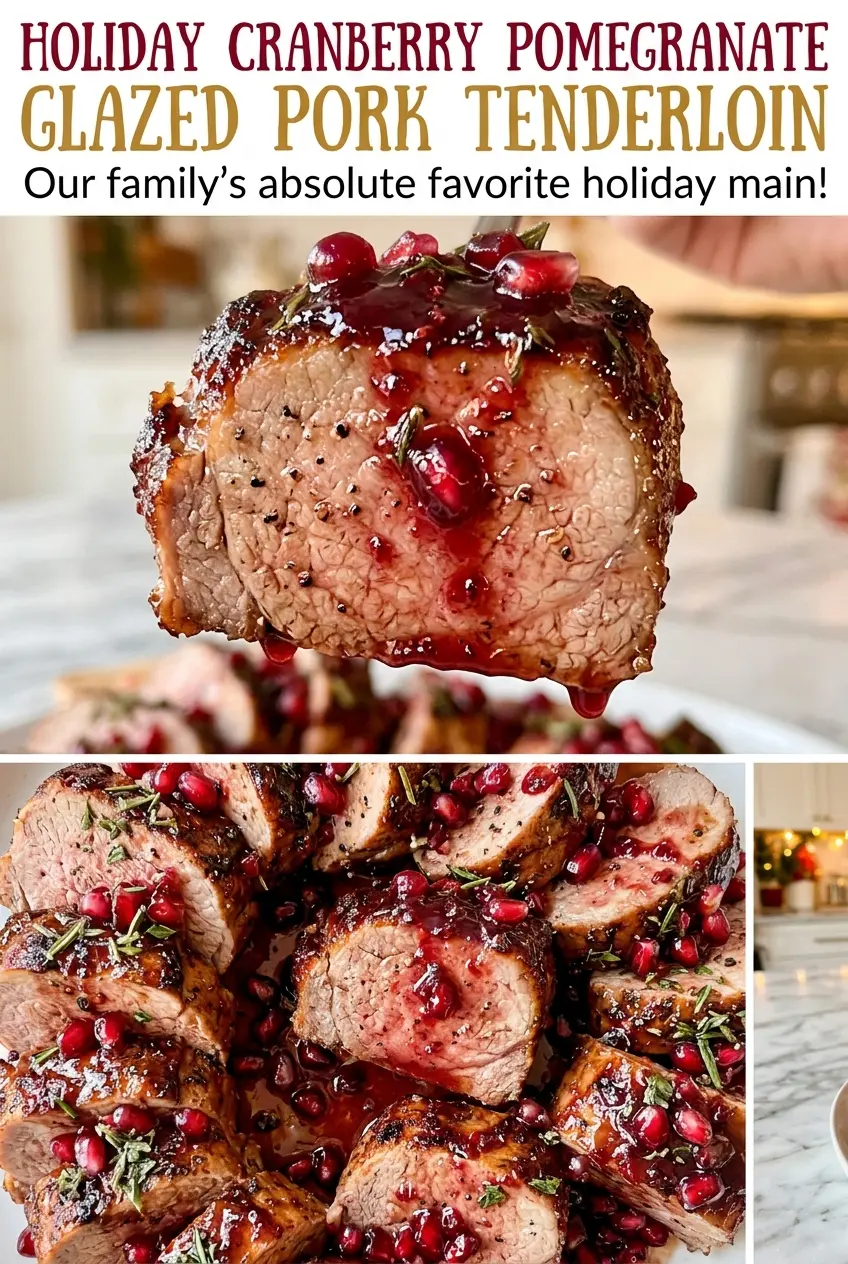
Kitchen Note
I set the brushing glaze aside in a clean bowl before the pork goes in the oven. Keeping that portion separate from the glaze for serving gives you a fresh, tidy finish at the table.
Save this cranberry pomegranate pork tenderloin for its tart-sweet glaze and simple oven finish.
The Cranberry Glaze Goes on Late for a Reason
Putting a sugary glaze on pork before it roasts can leave the outside darker than you want by the time the center is cooked. This version gives the tenderloins an initial 10 minutes in the oven without the glaze, then brushes on a measured portion for the final stretch. That timing lets the glaze cling and turn shiny while limiting how long its brown sugar and fruit sugars are exposed to the oven’s heat.
The glaze also needs to be thick enough before it reaches the pork. Cranberries release liquid as they burst, so the saucepan may look loose at first. Keep it at a gentle simmer and stir often; when most berries have popped and the mixture coats a spoon, it’s ready to use. A few lightly mashed berries help thicken the texture without turning the whole saucepan into a smooth puree.
There’s a useful balance in making one batch do two jobs. The portion reserved for brushing gives the pork a thin coating in the oven, while the rest stays available as a bright, spoonable sauce. Keeping those portions distinct means you can serve extra glaze without scraping up anything from the roasting dish.
Why 100% Pomegranate Juice Matters More Than a Sweeter Blend

- Pomegranate juice — Use 100% juice for the glaze’s clean tart fruit flavor. A sweetened juice drink would add extra sugar and change how the glaze reduces.
- Cranberries — Fresh and frozen berries both work here. Frozen cranberries can go straight into the saucepan; the goal is for most of them to burst as the mixture simmers.
- Light brown sugar — Packed brown sugar rounds out the tart fruit and helps the glaze turn glossy as it cooks. It also brings a gentle molasses note that plain white sugar wouldn’t match.
- Balsamic vinegar and Dijon mustard — Balsamic adds a deeper tang, while Dijon gives the fruit a savory edge that makes sense alongside pork. The small amount of mustard supports the glaze without making it taste like a mustard sauce.
- Fresh rosemary — Finely chopped rosemary gives the glaze a piney, savory note. Chop it finely so the leaves are dispersed instead of landing in big pieces.
- Pork tenderloins — Choose tenderloins with the silver skin trimmed, or remove the tough, shiny membrane before seasoning. Tenderloin is a lean, narrow cut, so a thermometer is more useful than judging doneness by color.
- Olive oil, kosher salt, and black pepper — The oil helps the tenderloins brown in the skillet, while salt and pepper season the meat before the glaze goes on. Patting the pork dry first helps the surface make contact with the hot pan.
Sear First, Then Let the Thermometer Call the Finish
Simmer the berries until the glaze coats a spoon
Combine the cranberries, pomegranate juice, brown sugar, balsamic vinegar, Dijon mustard, and rosemary in a 2-quart saucepan. Bring the mixture to a simmer over medium heat, stirring often, and cook for 8–12 minutes. Lightly mash a few berries as they soften; most should burst, and the liquid should look glossy and coat a spoon. Measure 1/3 cup into a clean bowl for brushing, then reserve the rest for serving.
Brown all sides in the skillet
Heat the oven to 400°F while you pat the tenderloins dry and season them all over with kosher salt and black pepper. Heat the olive oil in a 12-inch skillet over medium-high heat. Sear the tenderloins, turning to brown all sides, for about 6–8 minutes each. If the meat sticks when you try to turn it, give it another moment to brown before moving it; transfer the seared tenderloins to a 9×13-inch baking dish.
Brush after the first roast
Roast the pork for 10 minutes before brushing all over with the reserved 1/3 cup of glaze. A thin, even coating is easier to spread than a heavy layer, and you’ll still have the rest of the glaze for serving. Return the dish to the oven for 5–12 minutes more. Check the thickest part of each tenderloin with an instant-read thermometer, since the two pieces may not finish at exactly the same moment.
Rest, slice, and serve with the extra glaze
When each tenderloin reaches 145°F, transfer the pork to a cutting board and let it rest for at least 3 minutes. Resting gives the juices time to settle before you slice, so use a sharp knife and cut across the tenderloin into even pieces. If the reserved glaze needs warming, heat it over low for 1–2 minutes. Spoon it over the sliced pork or pass it at the table.
Three Small Changes That Shift the Glaze
A smoother cranberry finish
For a smooth glaze without berry skins, press the cooked mixture through a fine-mesh strainer before measuring out the brushing portion. You’ll lose the rustic berry texture, but the strained sauce will spread in a more even, glossy layer.
A more rosemary-forward glaze
Use 1 teaspoon of finely chopped fresh rosemary instead of 1/2 teaspoon. The herbal note will be more noticeable against the tart fruit, so chop the leaves finely to keep the glaze pleasant to spoon over the pork.
A sharper balsamic edge
For a tangier glaze, increase the balsamic vinegar to 1 1/2 tablespoons and leave the other ingredients unchanged. The vinegar will stand out more clearly against the cranberries and pomegranate, rather than letting the brown sugar lead.
Storage and Reheating
- Refrigerator: Store cooked pork and extra glaze in separate airtight containers for 3–4 days. The chilled glaze will thicken, and the pork may firm up slightly.
- Freezer: Freeze cooked pork in airtight portions for up to 2–3 months; freeze the glaze separately if you want to keep it. Thaw overnight in the refrigerator for more even reheating.
- Reheating: Cover the pork in a 300°F oven and heat until it reaches 165°F, adding glaze near the end so it doesn’t dry onto the dish. Reheat the glaze separately over low heat; high heat can make the sugary sauce scorch.
Questions That Come Up While the Pork Cooks
Holiday Cranberry Pomegranate Glazed Pork Tenderloin
Ingredients
Equipment
Method
- Combine the cranberries, pomegranate juice, brown sugar, balsamic vinegar, Dijon mustard, and rosemary in a 2-quart saucepan.
- Bring to a simmer over medium heat and cook, stirring often and lightly mashing a few berries, for 8-12 minutes, until most berries burst and the glaze coats a spoon.
- Measure 1/3 cup into a clean bowl for brushing and reserve the rest for serving.
- Heat the oven to 400°F.
- Pat the tenderloins dry and season all over with the salt and pepper.
- Heat the olive oil in a 12-inch skillet over medium-high heat.
- Sear the tenderloins, turning to brown all sides, about 6-8 minutes each.
- Transfer them to a 9x13-inch baking dish.
- Roast for 10 minutes.
- Brush the tenderloins all over with the 1/3 cup glaze set aside for brushing, then roast for 5-12 minutes more, until the thickest part of each tenderloin registers 145°F on an instant-read thermometer.
- Transfer the pork to a cutting board and rest for at least 3 minutes.
- Warm the reserved glaze over low heat for 1-2 minutes if needed.
- Slice the pork and serve with the glaze.