
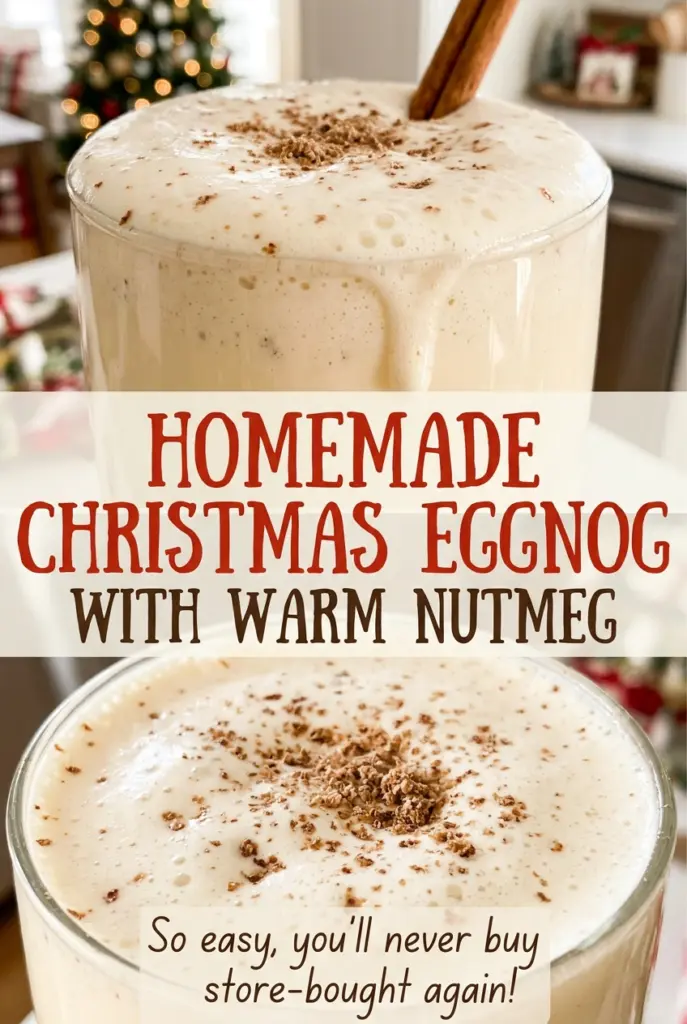
Homemade Christmas Eggnog with Warm Nutmeg
The milk gives off a thin veil of steam first; then tiny bubbles gather around the edge of the saucepan. That’s the moment to stop heating it. Letting the dairy…
Tip: save now, cook later.The milk gives off a thin veil of steam first; then tiny bubbles gather around the edge of the saucepan. That’s the moment to stop heating it. Letting the dairy boil can make the next step harder, because the warm milk needs to blend smoothly into the egg yolks. I keep the heat gentle and watch the edges rather than waiting for a rolling boil.
For this homemade Christmas eggnog with warm nutmeg, the yolks are slowly brought up to temperature before they go back into the saucepan. That gradual start helps them thicken the milk and cream into a silky, pourable custard instead of scrambling into bits. Once it reaches 160°F and lightly coats a spoon, vanilla goes in off the heat and the eggnog is ready for its finishing dusting of nutmeg. It’s rich, warm, and just thick enough to cling to the cup.
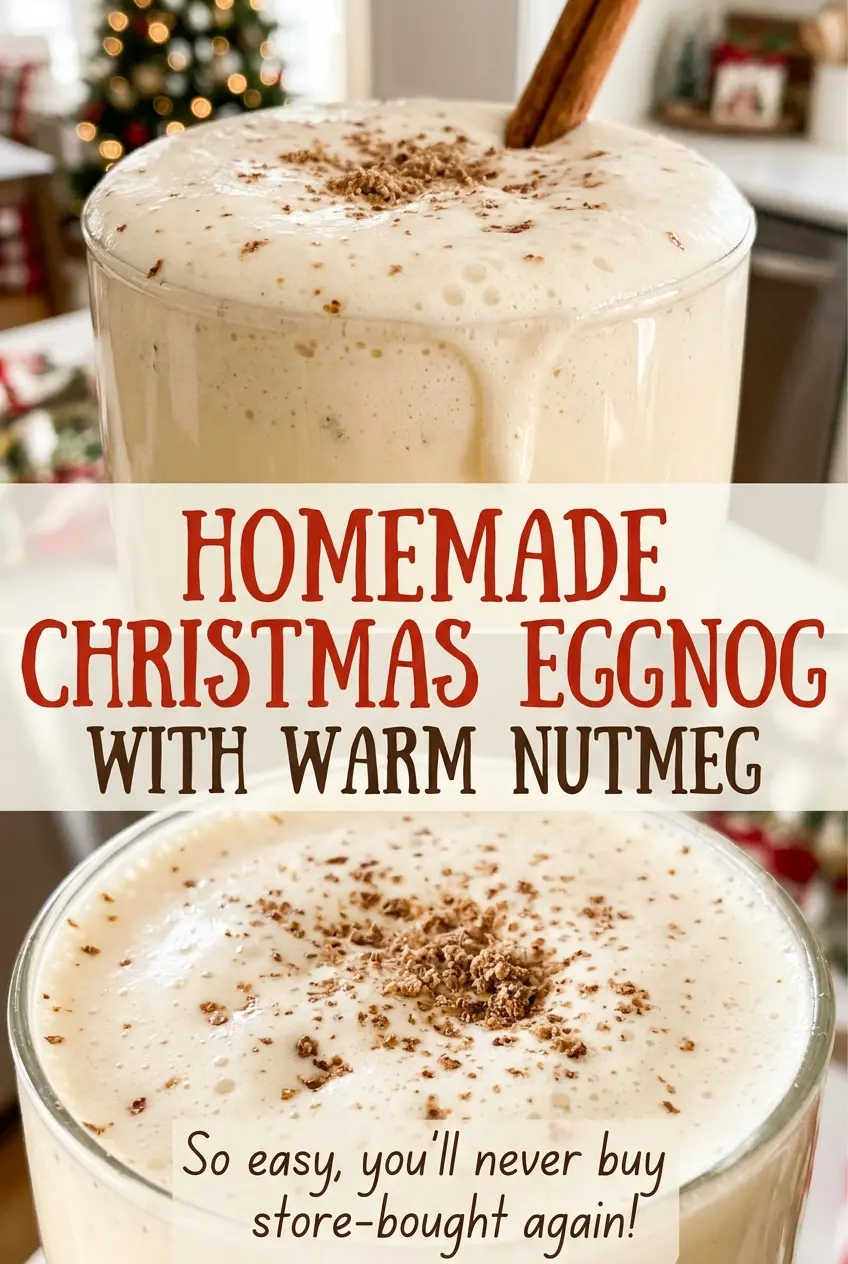
Kitchen Note
I keep the final portion of nutmeg out of the saucepan until the eggnog is in the cups. The nutmeg warmed into the dairy makes a mellow base, while the little dusting on top has a fresh, fragrant aroma.
Save this homemade Christmas eggnog with warm nutmeg for a cozy cup of silky, gently spiced custard.
Why This Eggnog Should Coat a Spoon, Not Stand Like Pudding
Homemade eggnog can look thinner than the thick cartons at the store, and that doesn’t mean the custard missed its mark. This version gets its body from egg yolks thickening milk and cream; there’s no starch or other thickener to make it set like pudding. The right finish is a smooth mixture that lightly coats the back of a spoon and still pours easily into a cup.
That distinction matters when you’re deciding whether to keep cooking. If the mixture is already at 160°F and coats the spoon, don’t leave it over the heat just because it seems loose in the saucepan. It will feel richer than plain milk, but it isn’t meant to hold a mound or turn sliceable. Pushing it toward that texture risks overcooking the yolks, which can leave little bits instead of a smooth drink.
The small temperature steps do the work here. Warm milk and cream loosen the yolks gradually, and gentle cooking thickens the mixture without boiling it. The result is a custard-style eggnog that’s smooth enough to sip warm and substantial enough to feel creamy.
What the Yolks, Cream, and Split Nutmeg Each Bring
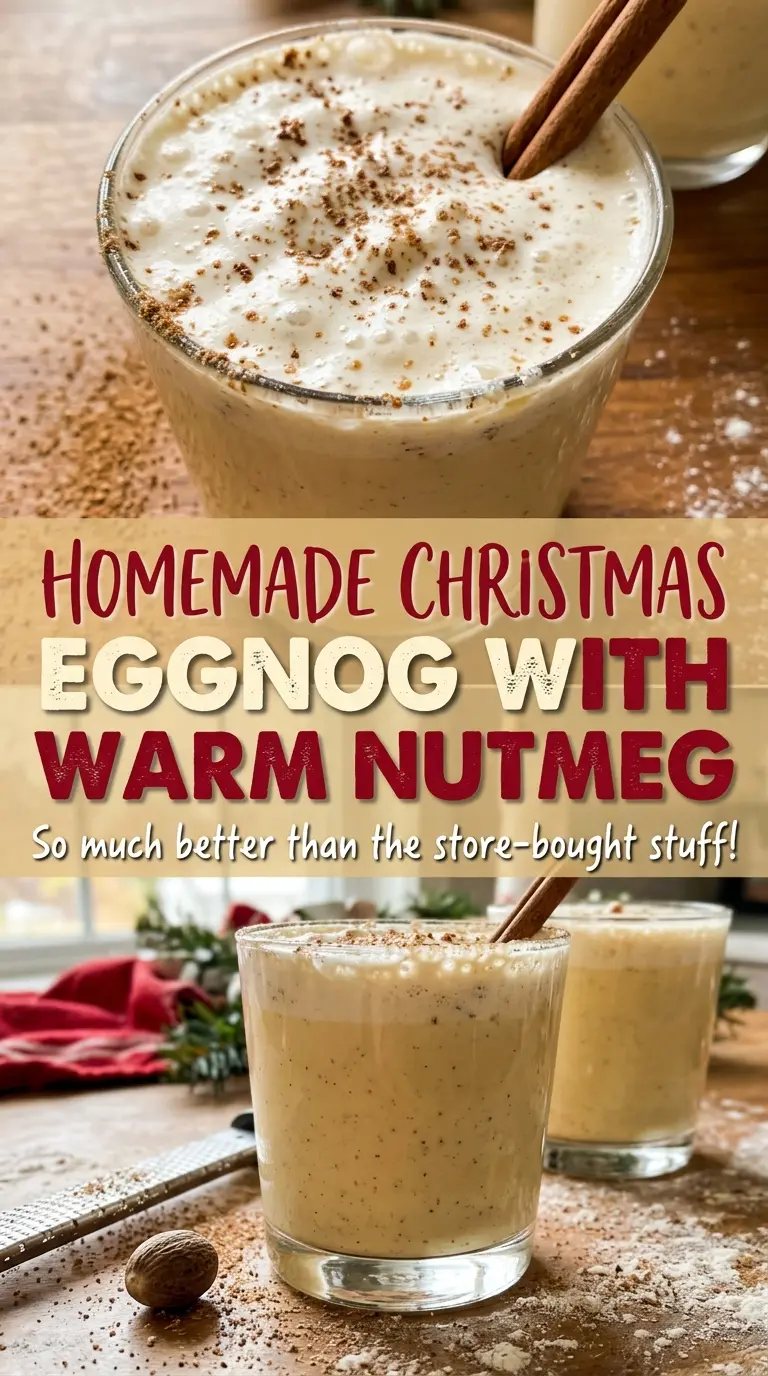
- Whole milk and heavy cream — Whole milk keeps the base drinkable, while cream gives it a fuller, rounder feel. Standard grocery-store dairy works well; there’s no need for a specialty brand. For a lactose-free version, use lactose-free whole milk and lactose-free heavy cream in the same quantities.
- Egg yolks — The yolks thicken the dairy and give the finished eggnog its custard-like body. Choose large eggs, as specified, and separate the yolks carefully so egg white doesn’t end up in the bowl. Whole eggs aren’t a like-for-like replacement: the whites change the texture and cook differently.
- Granulated sugar — Its clean sweetness supports the dairy and nutmeg without taking over. Regular granulated sugar is the right choice here; a darker sugar would bring a molasses note and change the color.
- Ground nutmeg — Dividing it gives the warm dairy a spiced foundation and leaves a little for the top of each cup. Use ground nutmeg with a clear, warm aroma; an old jar that smells faint won’t contribute as much.
- Vanilla extract — Stirring it in after the saucepan comes off the heat keeps its aroma noticeable in the finished drink. A familiar grocery-store extract is fine; choose one whose flavor you like.
How to Temper the Yolks Without Losing the Smooth Custard
Warm the Milk and Cream Slowly
Combine the milk, heavy cream, and the first portion of ground nutmeg in a 3-quart saucepan. Set it over medium-low heat and stir occasionally for 5 to 7 minutes. Look for steam and small bubbles around the edge, not a rolling boil. If the surface starts bubbling across the whole pan, lower the heat.
Whisk the Yolks and Sugar
In a medium heatproof bowl, whisk the egg yolks with the sugar and salt for about 1 minute. Keep whisking until the mixture looks thick and pale. A heatproof bowl is useful here because it will soon hold hot milk. Set it close to the saucepan so you can pour and whisk without juggling the bowl.
Temper Before Returning the Yolks to the Pan
Slowly whisk about 1 cup of the hot milk mixture into the yolks. Pour in a thin, steady stream while whisking so the yolks warm gradually rather than meeting the full pan of hot dairy all at once. Then pour the tempered yolk mixture back into the saucepan while whisking. Keep the whisk moving as the two mixtures come together.
Cook to a Light Custard, Then Finish
Turn the burner to low and stir constantly for about 3 to 5 minutes. Check with an instant-read thermometer; the eggnog should reach 160°F and lightly coat the back of a spoon. Don’t let it boil, and take the saucepan off the heat once it reaches that point. Stir in the vanilla, ladle into six cups, and sprinkle each with the remaining nutmeg to serve warm.
Ways to Adjust the Nutmeg, Dairy, or Serving Temperature
Use lactose-free dairy
Replace the whole milk and heavy cream with lactose-free versions, keeping the same amounts. The egg yolks still thicken the mixture, and the finished eggnog keeps its creamy dairy character.
Make the custard more nutmeg-forward
Add all of the recipe’s ground nutmeg to the milk and cream, rather than saving a portion for the cups. The spice will be more evenly present in each sip, but you won’t have the separate aromatic dusting on top.
Serve it chilled
After cooking and adding the vanilla, divide the eggnog among the cups and chill it before serving instead of serving it warm. Cold eggnog feels thicker on the tongue, so give each cup a gentle stir before drinking.
Storage and Reheating
- Refrigerator: Refrigerate covered within 2 hours and use within 3 days. The eggnog may thicken as it chills.
- Freezer: Freezing isn’t recommended; the dairy-and-egg custard can separate and lose its smooth texture when thawed.
- Reheating: Warm it gently in a saucepan over low heat, stirring, and take it off before it boils. High heat can overcook the yolks and make the texture grainy.
Questions That Come Up When Making Homemade Eggnog
Homemade Christmas Eggnog with Warm Nutmeg
Ingredients
Equipment
Method
- In a 3-quart saucepan, combine the milk, heavy cream, and 1/2 teaspoon nutmeg; heat over medium-low, stirring occasionally, until steaming with small bubbles around the edge, 5 to 7 minutes, without boiling.
- In a medium heatproof bowl, whisk the egg yolks, sugar, and salt until thick and pale, about 1 minute.
- Slowly whisk about 1 cup of the hot milk mixture into the yolks.
- Pour the tempered yolk mixture into the saucepan while whisking.
- Cook over low heat, stirring constantly, until the eggnog reaches 160°F on an instant-read thermometer and lightly coats the back of a spoon, about 3 to 5 minutes; do not let it boil.
- Remove the saucepan from the heat and stir in the vanilla extract.
- Ladle the eggnog into six cups.
- Sprinkle with the remaining 1/4 teaspoon nutmeg and serve warm.