
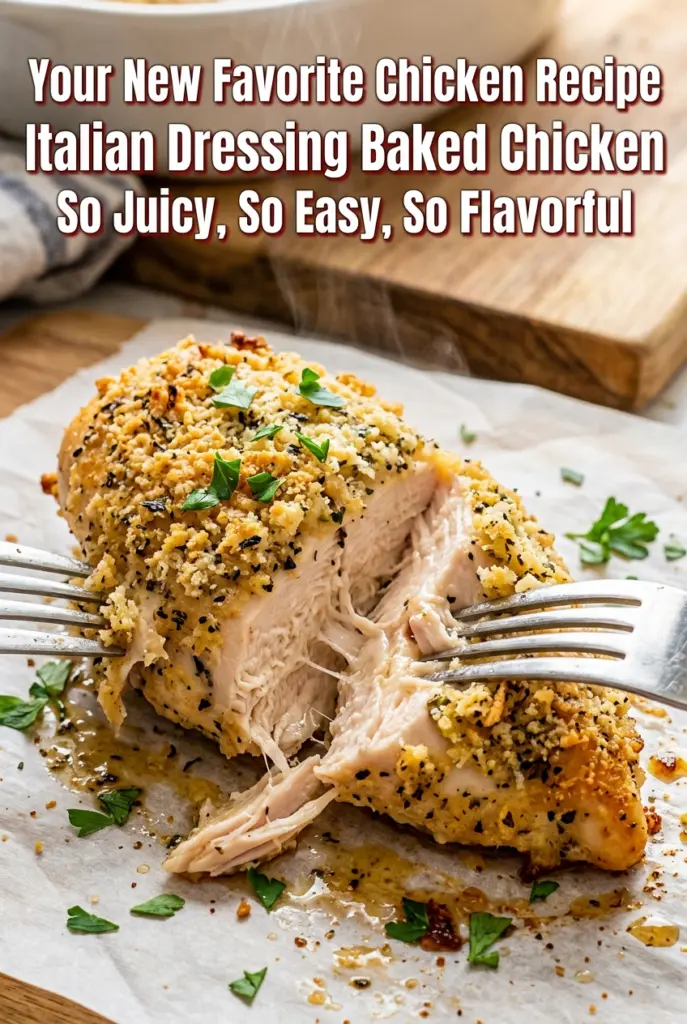
Italian Dressing Baked Chicken
Juicy chicken with a bronzed, savory crust and a tangy, garlicky finish is what makes Italian dressing baked chicken one of those dinners that never gets old. The dressing does…
Tip: save now, cook later.Juicy chicken with a bronzed, savory crust and a tangy, garlicky finish is what makes Italian dressing baked chicken one of those dinners that never gets old. The dressing does double duty here: it seasons the meat and helps keep the chicken tender while the oven turns the top into something a little glossy, a little caramelized, and deeply flavorful.
The trick is giving the marinade enough time to work without overdoing it. Italian dressing already contains acid, oil, and seasoning, so the chicken needs only a short marinate for good flavor, while an overnight soak can start to make the texture a little too soft. A hot oven and a light hand with the Parmesan help the top brown instead of steaming, which is where this recipe really earns its keep.
Below you’ll find the exact timing that keeps the chicken juicy, plus the one pan detail that helps the edges turn golden instead of pale. There are also a few smart swaps if you’re using homemade dressing or cooking for a bigger crowd.
The chicken came out juicy all the way through, and the Parmesan on top got those little browned bits that tasted almost roasted. I only marinated it for an hour and it still had plenty of flavor.
Keep this baked chicken handy for nights when you want juicy, golden chicken with almost no prep.
The Reason Italian Dressing Baked Chicken Stays Juicy Instead of Drying Out
Chicken breasts dry out when they spend too long in the oven or when they start from the wrong shape. Italian dressing helps, but the real safeguard is even thickness. If one side is much thicker than the other, the thin end will be overdone before the center has a chance to reach 165°F. A quick pound to an even thickness changes everything.
The other mistake is baking at too low a temperature. This chicken does best at 425°F because the hotter oven pushes the surface toward browning before the meat has time to lose too much moisture. The Parmesan on top also helps here, but only if the chicken isn’t drowned in marinade. Let the excess drip off so the pan and cheese can do their job.
- Chicken breasts — Boneless, skinless breasts are the easiest choice because they cook quickly and evenly once pounded to the same thickness. If yours are huge, split them horizontally or use a meat mallet to even them out.
- Italian dressing — This is the engine of the recipe. A bottled dressing works fine because it already contains oil, vinegar, herbs, and garlic; a homemade version should have enough acid and salt to season the meat properly.
- Parmesan — Freshly grated Parmesan melts and browns better than the shelf-stable stuff. Pre-grated can work in a pinch, but it won’t give you the same nutty crust.
- Lemon slices — These are for serving, not marinating. A squeeze over the finished chicken brightens the richness and makes the herbs taste cleaner.
Getting the Marinade and Oven Heat to Work Together
Coating the Chicken Without Overworking It
Put the chicken in a bag or shallow dish and pour the dressing over it until every piece is coated. The goal is a thin, even layer of marinade, not a soup bath. If the chicken sits in a deep pool of dressing, it won’t brown as well later and the texture can turn a little soft on the surface.
Add the dry seasonings right in with the dressing so they cling to the meat instead of sinking to the bottom. Massage the bag briefly, then stop. Overhandling doesn’t improve the flavor here; it just tears at the surface and makes the chicken less tidy when it bakes.
Letting the Chicken Marinate Long Enough
Thirty minutes gives you a good weeknight version with clear Italian dressing flavor. Up to 8 hours deepens the seasoning and works well if you want to prep ahead. Past that, the vinegar in the dressing starts doing too much of the work, and the chicken can lose its meaty bite.
If you’re short on time, even 20 to 30 minutes at room temperature while the oven preheats will help. Keep the chicken refrigerated for longer marinating periods, then take it out while the oven heats so it isn’t going into the pan ice-cold.
Baking Until the Tops Turn Golden
Arrange the chicken in a single layer in a lightly oiled baking dish and let the excess marinade drip off before it goes in. Sprinkle the Parmesan over the top, then bake uncovered at 425°F until the thickest part reaches 165°F. You want the edges to look lightly caramelized and the cheese to be melted with a few browned spots.
If the chicken is done but still pale, it usually means the pieces were crowded or too wet. Give them space, and don’t cover the dish. Covered chicken steams; uncovered chicken browns.
What to Change When You Need a Different Version
Dairy-Free Version
Skip the Parmesan and add an extra pinch of dried herbs over the top before baking. You lose the salty, savory crust, but the chicken still gets plenty of flavor from the dressing itself. A small drizzle of olive oil over the top helps the surface brown a little better without cheese.
Gluten-Free Check
Most Italian dressings are naturally gluten-free, but some bottled versions use additives or thickeners that aren’t. Read the label and use a dressing you trust. The rest of the recipe stays exactly the same.
Using Chicken Thighs Instead
Boneless thighs work well and stay juicy even if you go a few minutes longer. They take a bit longer to cook than breasts, so start checking near the 25-minute mark and cook until they reach 165°F in the thickest part. The flavor is a little richer and the texture stays more forgiving.
Storage and Reheating
- Refrigerator: Store leftovers in an airtight container for up to 4 days. The chicken stays tender, though the Parmesan topping softens a bit.
- Freezer: It freezes well for up to 2 months if wrapped tightly and stored without lemon garnish. Thaw overnight in the fridge before reheating.
- Reheating: Warm in a 325°F oven, covered loosely with foil, until heated through. The biggest mistake is blasting it in the microwave, which dries out the edges before the center is hot.
The Things That Trip People Up With This Dish
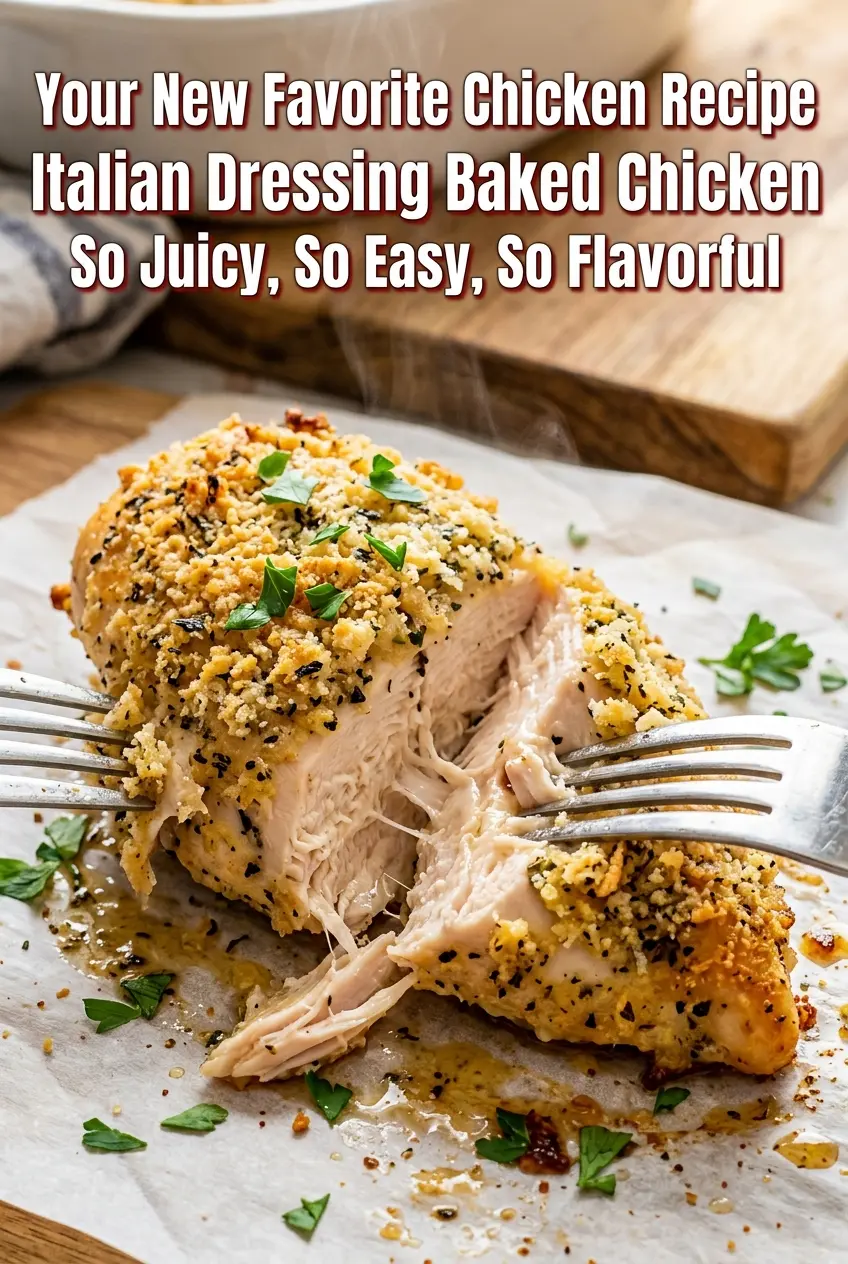
Italian Dressing Baked Chicken
Ingredients
Equipment
Method
- Place the chicken breasts in a large zip-lock bag or shallow dish and pour the Italian dressing over them, coating each piece well with visible coverage.
- Add the garlic powder, onion powder, dried Italian seasoning, salt, black pepper, and red pepper flakes if using, then seal the bag and gently turn to distribute the seasoning.
- Refrigerate the sealed chicken for at least 30 minutes, or up to 8 hours, so the flavors penetrate.
- Preheat the oven to 425°F (220°C) and lightly grease a baking dish or sheet pan with olive oil.
- Remove the chicken from the marinade and let any excess drip off, then arrange the pieces in a single layer.
- Sprinkle the grated Parmesan evenly over the top of each chicken breast so the surface is fully covered.
- Bake uncovered for 22–28 minutes at 425°F (220°C), until the chicken reaches an internal temperature of 165°F (74°C) and the tops look golden with slightly caramelized edges.
- Let the chicken rest for 5 minutes to keep the juices in, then slice or serve directly from the dish.
- Garnish with chopped fresh parsley and serve with lemon slices alongside pasta, rice, roasted vegetables, or a crisp garden salad.