
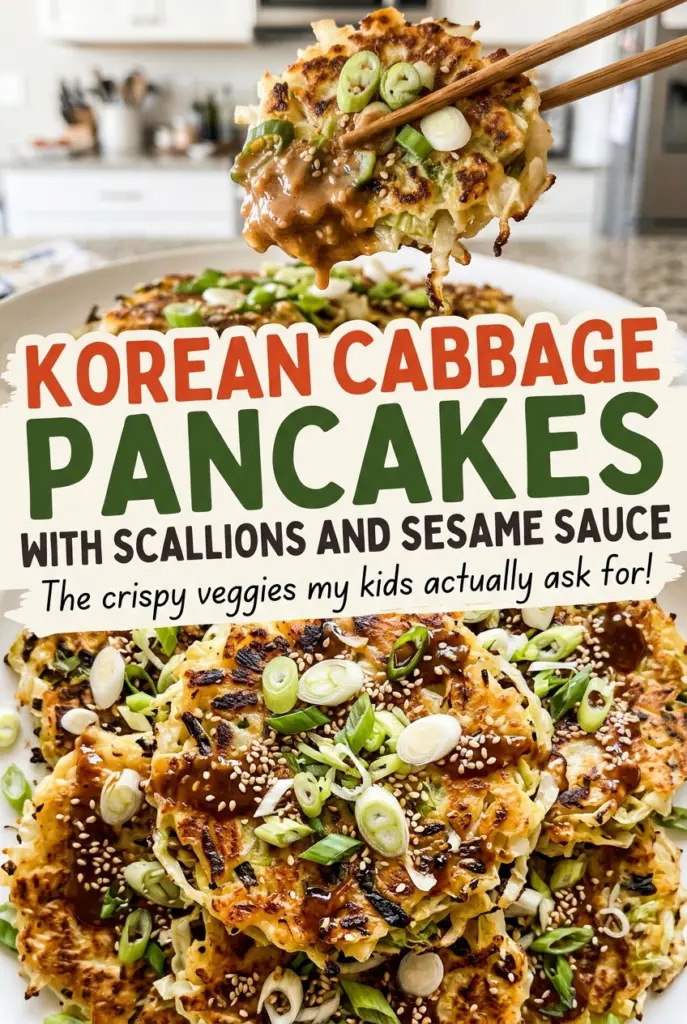
Korean Cabbage Pancakes with Scallions and Sesame Sauce
When the cabbage goes into the bowl, the batter almost disappears between all those fine shreds. That loose-looking mixture is exactly what gives these Korean cabbage pancakes their tender middles…
Tip: save now, cook later.When the cabbage goes into the bowl, the batter almost disappears between all those fine shreds. That loose-looking mixture is exactly what gives these Korean cabbage pancakes their tender middles and browned edges; it isn’t meant to look like a thick breakfast pancake batter. I cook it in two rounds, so each pancake has room in a 10-inch skillet to spread into a thin round and turn without becoming a heavy cabbage slab. Cut into wedges, the two pancakes make a satisfying meal for four.
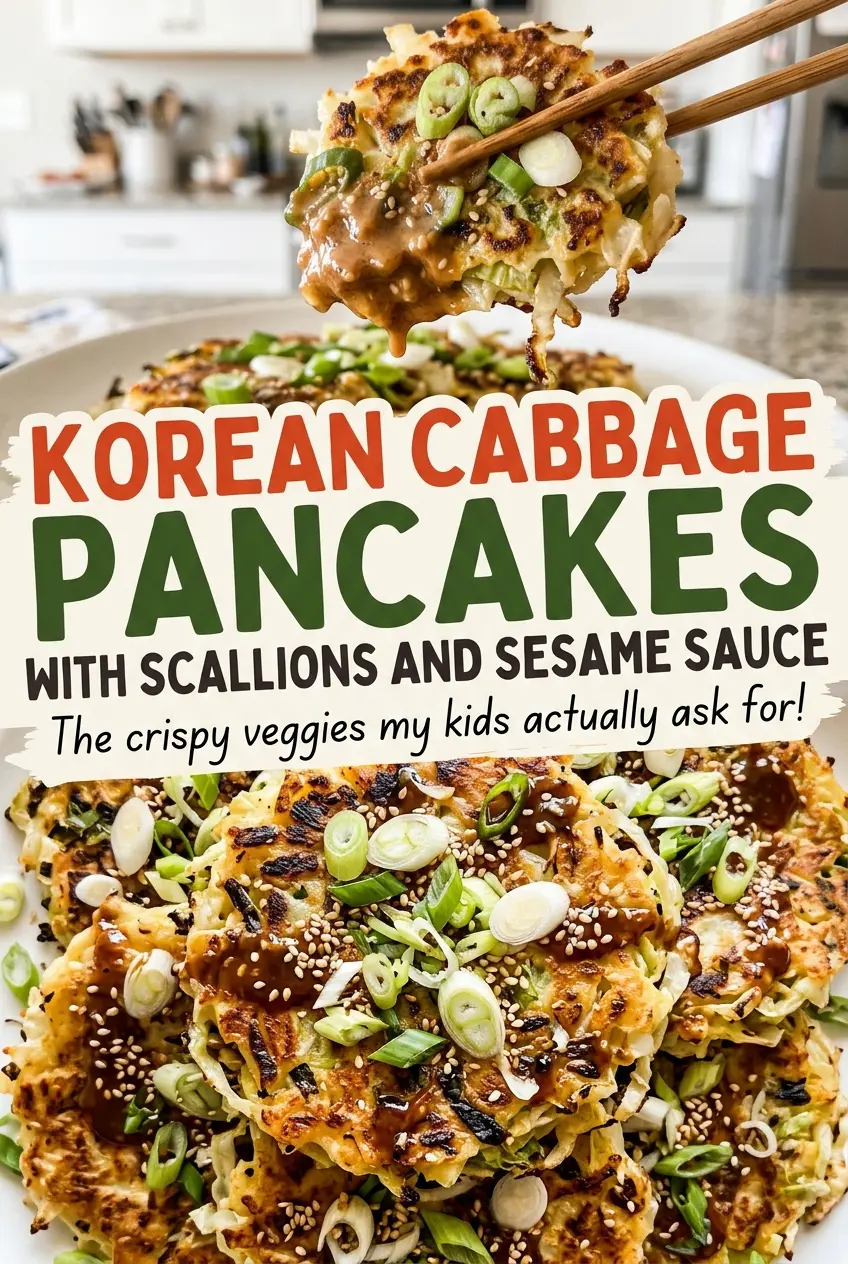
The sesame sauce takes only a minute to stir together, and its salty, tangy notes are a good match for the mild cabbage. I like the contrast of the hot pancake against the cool dipping sauce, especially when the first bite catches both a crisp edge and a soft, scallion-flecked center. Keep the wedges close to the sauce; that’s where the cabbage, toasted sesame, and vinegar come together.
Kitchen Note
I stir the sesame sauce until the sugar disappears, then leave it beside the skillet while the pancakes cook. The sesame seeds settle as it sits, so give the sauce a quick stir before dipping.
Save these Korean cabbage pancakes for their crisp edges, tender centers, and tangy sesame dipping sauce.
Why Fine Cabbage Matters More Than a Loose, Pourable Batter
It’s easy to look at a bowl crowded with cabbage and assume the batter needs more flour or water to become a smooth, pourable mix. Resist that urge. The flour-and-egg batter is there to coat the vegetables and hold them together; the cabbage is meant to remain the main texture in every bite. With finely shredded cabbage, the strands spread through the batter instead of clumping into thick, difficult-to-cook pockets.
Coarse cabbage is where this style of pancake can go wrong. Bigger pieces leave gaps in the batter and make the round less even, so one section can brown while another still feels bulky and soft. Thin shreds settle into a more even layer when you spread the mixture in the skillet. You’ll see plenty of cabbage rather than a neat pool of batter, and that’s right. The result is a pancake that holds together when cut but still has distinct, tender strands inside.
That balance also explains why I cook two pancakes instead of piling all the mixture into one skillet round. A thinner layer gives the cabbage time to cook through while the surface turns golden. You get more browned edge in each wedge, without losing the soft, vegetable-filled center.
The Ingredients That Give These Pancakes Their Crisp Edges
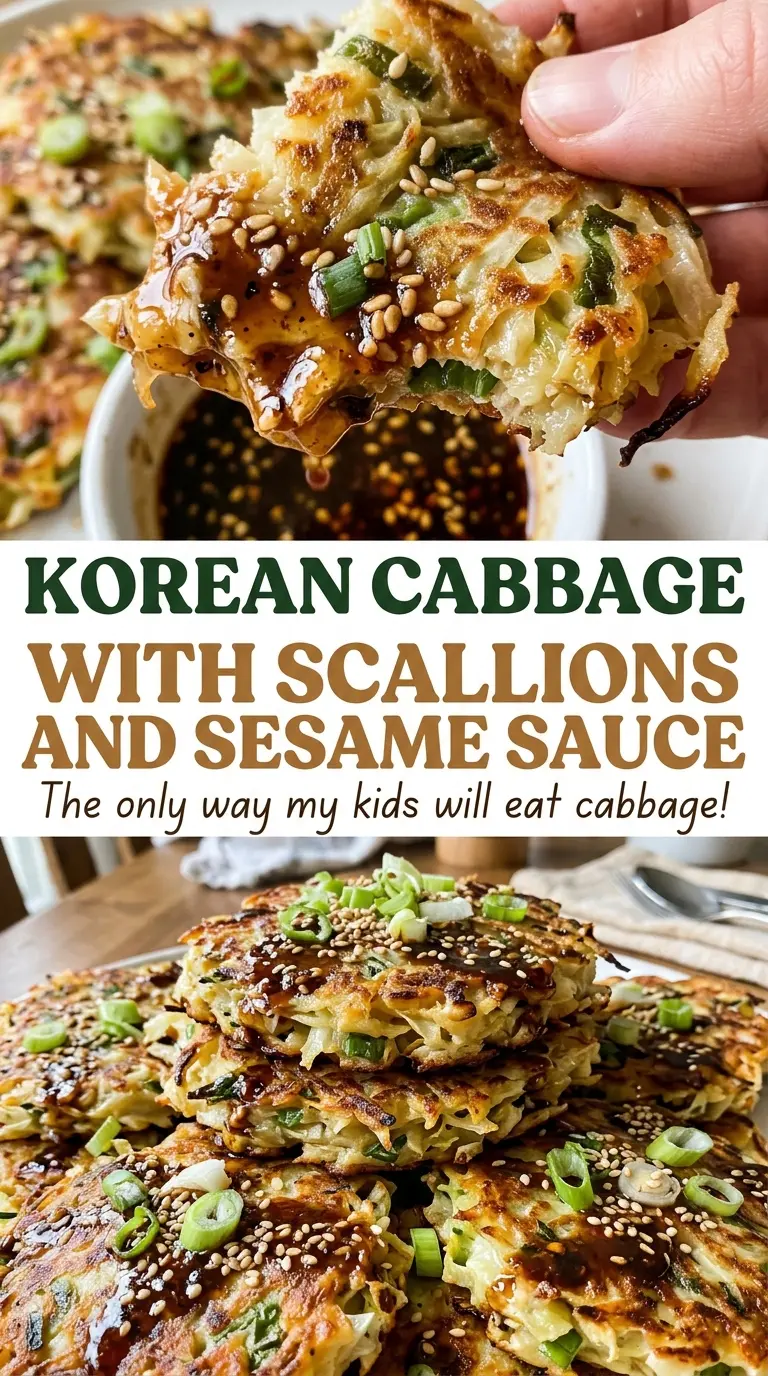
- All-purpose flour and egg — Flour gives the cabbage strands a light coating, while the egg helps bind the pancake when you flip it. A basic grocery-store flour works well; there’s no need for a specialty brand. For an egg-free version, use the flax mixture in the variations below.
- Green cabbage — Choose a firm head with crisp leaves, and trim away the dense core before shredding. The cabbage’s mild flavor lets the scallions and dipping sauce come through, so a fresh, inexpensive head is all you need.
- Scallions — Their fresh onion flavor brightens the cabbage without making the batter taste sharp. Slice them thinly so the white and green pieces distribute through the mixture. If the greens are wilted or slimy, choose a fresher bunch.
- Neutral oil — The oil helps the pancake develop a browned, crisp surface without adding a competing flavor. Canola or vegetable oil both work in place of another neutral cooking oil; strongly flavored oils will change the taste of the edges.
- Soy sauce and rice vinegar — Soy sauce brings the sauce’s savory base, while rice vinegar keeps it bright. Use plain, unseasoned rice vinegar; seasoned rice vinegar already contains added sugar and salt, which shifts the balance.
- Toasted sesame oil, sugar, and sesame seeds — Toasted sesame oil is potent, so use the toasted kind rather than plain sesame oil for the nutty aroma in the dip. The sugar softens the sharpness of the soy and vinegar, and already-toasted seeds are an easy way to add a little crunch. A fresh bottle of sesame oil matters more than an expensive one; stale oil can taste flat or bitter.
How to Cook Two Golden, Set-Through Cabbage Pancakes
Stir the Sesame Sauce Until Smooth
Combine the soy sauce, rice vinegar, toasted sesame oil, sugar, and toasted sesame seeds in a small bowl. Stir until the sugar dissolves; gritty sugar means it needs another few turns. Set the sauce near the stove so it’s ready when the pancakes come off the skillet. The seeds may settle while it waits, which is easy to fix with a quick stir before serving.
Whisk the Batter, Then Coat the Vegetables
Whisk the flour, water, egg, and fine salt in a large bowl until the batter is smooth. Fold in the finely shredded cabbage and thinly sliced scallions until the batter coats them evenly. The bowl will look vegetable-heavy rather than batter-heavy, so don’t add flour just to make it look thicker. If flour remains in dry pockets, scrape the sides and bottom of the bowl as you fold.
Brown the First Pancake Before Flipping
Heat 1 1/2 tablespoons of neutral oil in a 10-inch nonstick skillet over medium heat. Add half the cabbage mixture and spread it into an even 8-inch round. Cook for 4 to 5 minutes, until the underside is golden and crisp; flipping too early makes the soft center more likely to break. Turn it over and cook for 3 to 4 minutes, until the second side is browned and the pancake is cooked through.
Finish the Second Round and Cut into Wedges
Transfer the first pancake to a cutting board and add the remaining oil to the skillet. Cook the rest of the batter in the same way, spreading it into an even round and browning both sides. Let the cooked pancakes rest for 2 minutes before cutting; the brief pause helps them settle instead of shifting under the knife. Cut into wedges and serve with the sesame sauce for dipping.
Easy Changes That Still Let the Cabbage Shine
Make the Pancakes Gluten-Free
Replace the all-purpose flour with the same volume of a cup-for-cup gluten-free flour blend, and use tamari instead of soy sauce in the dip. Choose a blend intended to replace wheat flour in cooking; the pancakes may be a little more delicate, so turn them carefully once the underside has browned.
Use Napa Cabbage for a Softer Bite
Swap in the same volume of finely shredded napa cabbage for the green cabbage. Its leaves are more tender, so the finished pancakes have a softer texture and less of the firm, distinct cabbage bite. Dry the leaves after washing so extra water doesn’t loosen the batter.
Make an Egg-Free Batch
Replace the egg with 1 tablespoon ground flaxseed mixed with 3 tablespoons water. Let the mixture stand for 5 minutes before whisking it with the flour, water, and salt. The flax adds a mild nutty note, and the pancakes will be a little less springy, so handle them gently when turning.
Storage and Reheating
- Refrigerator: Refrigerate leftover pancakes within 2 hours and keep them covered for up to 3 days. They’ll lose some crispness as they chill.
- Freezer: Freeze cooled pancakes with parchment between them in an airtight container for up to 2 months. Thaw in the refrigerator before reheating for the most even result.
- Reheating: Warm them in a skillet over medium heat until hot throughout, turning once. Avoid high heat, which can brown the outside before the center warms.
Questions That Come Up While Cooking These Cabbage Pancakes
Korean Cabbage Pancakes with Scallions and Sesame Sauce
Ingredients
Equipment
Method
- Stir the soy sauce, rice vinegar, toasted sesame oil, sugar, and toasted sesame seeds together in a small bowl until the sugar dissolves.
- Whisk the flour, water, egg, and salt in a large bowl until smooth.
- Fold the cabbage and scallions into the batter until evenly coated.
- Heat 1 1/2 tablespoons of the oil in a 10-inch nonstick skillet over medium heat.
- Add half the batter and spread it into an even 8-inch round.
- Cook for 4 to 5 minutes, until the underside is golden and crisp.
- Flip and cook for 3 to 4 minutes, until browned and cooked through.
- Transfer the pancake to a cutting board.
- Repeat with the remaining oil and batter.
- Rest the pancakes for 2 minutes.
- Cut the pancakes into wedges and serve with the sesame sauce.