
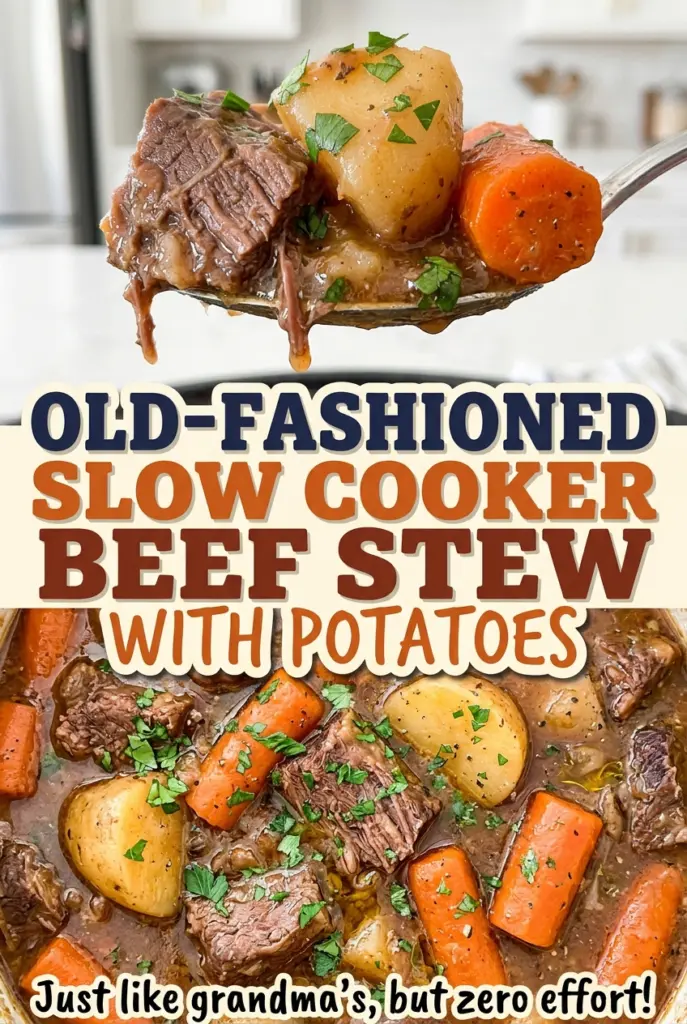
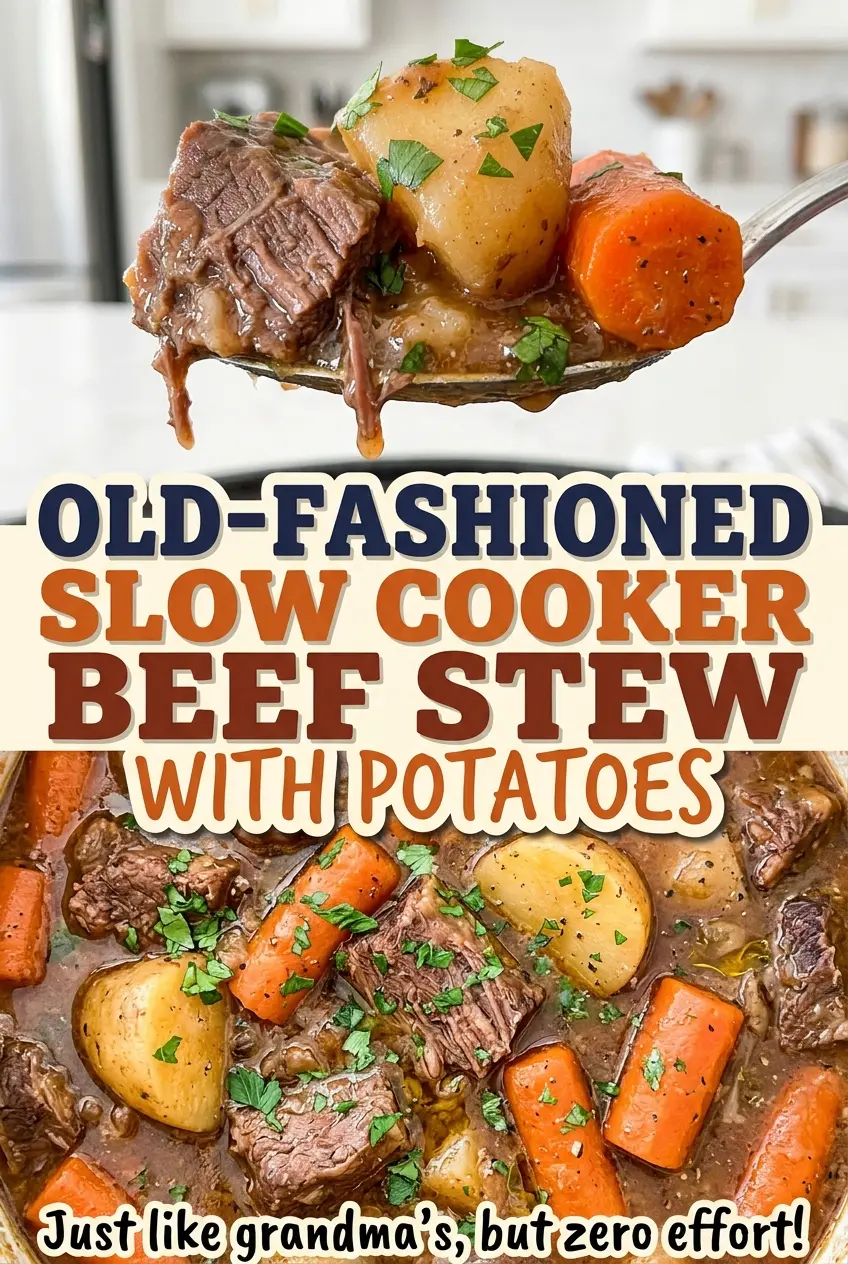
Old-Fashioned Slow Cooker Beef Stew with Potatoes
The skillet fills with the smell of browned beef before the slow cooker is even switched on. I brown the flour-coated chuck in batches, then let the cooker do the…
Tip: save now, cook later.The skillet fills with the smell of browned beef before the slow cooker is even switched on. I brown the flour-coated chuck in batches, then let the cooker do the slow work while the potatoes and carrots soften around it. That little bit of skillet time gives this Old-Fashioned Slow Cooker Beef Stew with Potatoes a deeper, richer broth than beef and vegetables cooked together from the start.
I use Yukon Gold potatoes because they hold their shape through a long cook, and the flour on the beef helps give the broth a stew-like body. There’s no separate sauce to make at the end; the beef, vegetables, tomato paste, and broth all cook together. After eight to nine hours on LOW, the beef should give easily to a fork and the potatoes should be tender without disappearing into the pot. The finished stew is hearty, savory, and full of tender chunks.
Kitchen Note
Keep the beef and potatoes in generous, even pieces. Pieces around 1 1/2 inches soften over the long cook but are less likely to turn mushy before the stew is ready.
Save this Old-Fashioned Slow Cooker Beef Stew with Potatoes for a cozy, hands-off dinner with fork-tender beef and a savory broth.
How the Flour-Coated Beef Gives This Stew Its Body
Flour does more here than cling to the beef. As the stew cooks, that coating helps the broth turn from a thin liquid into something with a little more substance. It won’t become a thick, gravy-like sauce, but it should feel fuller on the spoon than plain broth. Tossing the beef until every surface is lightly coated helps that thickening happen evenly.
The other part of the texture comes from browning the beef before it goes into the slow cooker. A slow cooker tenderizes the chuck beautifully, but it won’t brown the meat for you. The skillet builds color on the outside, and those browned surfaces give the finished stew a deeper savory taste. Keep the flour layer light and even; large clumps can stay pasty instead of blending into the broth. Together, the coating and the skillet browning make a stew that tastes slow-cooked from the first spoonful, not just boiled together.
What the Beef, Potatoes, and Broth Each Bring to the Pot
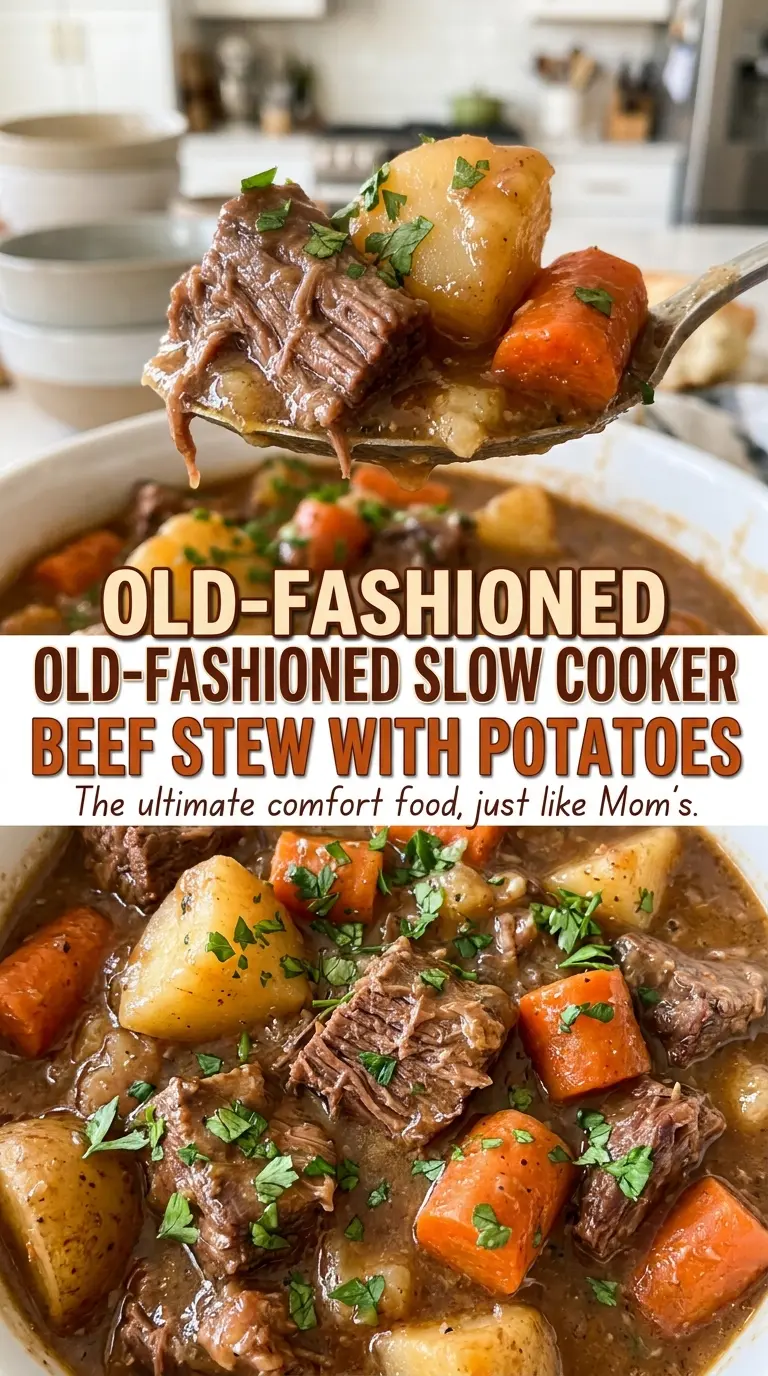
- Beef chuck — Chuck roast has enough connective tissue to become tender during the long, moist cook. Choose a piece with some marbling rather than paying extra for a very lean cut; lean beef is more likely to feel dry before it turns tender. Pre-cut stew beef is a practical stand-in, though mixed cuts may soften at different rates.
- Yukon Gold potatoes — Their creamy texture and ability to hold their shape suit a long slow-cooker meal. Russet potatoes can stand in, but they soften more and may break down around the edges, making the broth cloudier.
- All-purpose flour — The coating helps the beef brown and gives the broth body as the stew cooks. Distribute it over the meat rather than leaving a pocket of dry flour in the bowl; a clump won’t disappear as neatly.
- Beef broth, tomato paste, and Worcestershire sauce — Broth carries the savory base, while tomato paste and Worcestershire add concentrated depth. Low-sodium broth is useful here because you’re also seasoning the beef with kosher salt.
- Carrots, celery, onion, garlic, thyme, and bay leaves — These build the familiar aromatic base without needing a separate sauté. Dried thyme seasons the broth as it cooks, and whole bay leaves are easy to lift out before serving.
Build the Stew in the Skillet, Then Let the Slow Cooker Finish
Coat the Beef Evenly
Pat the thawed beef dry, then toss it with the flour, kosher salt, and black pepper until the pieces are evenly coated. Dry surfaces take the coating more cleanly than damp ones. Shake off any loose excess rather than letting a thick layer collect on the bottom of the bowl. This gives the beef a light, even coating for browning.
Brown the Chuck in Batches
Heat the vegetable oil in a 12-inch skillet over medium-high heat. Add beef in batches and brown it for 2–3 minutes per side, then transfer each batch to a 6-quart slow cooker. Leave space between pieces so their surfaces brown instead of steaming. The goal is color on the outside, not cooking the beef through in the skillet.
Add the Vegetables and Seasoned Broth
Add the Yukon Gold potatoes, carrots, celery, onion, and minced garlic to the slow cooker with the beef. Whisk the beef broth, tomato paste, Worcestershire sauce, and dried thyme together until the tomato paste is blended in. Pour the mixture over the beef and vegetables, then add the bay leaves. Pouring in a blended broth helps the tomato paste disperse instead of sitting in one thick spot.
Cook Until the Beef and Potatoes Give Easily
Cover and cook on LOW for 8–9 hours or on HIGH for 4–5 hours. The stew is ready when both the beef and potatoes are fork-tender; use that texture cue along with the cooking time. If a cube still resists the fork, it needs more time to soften. Remove and discard the bay leaves before serving.
Easy Ways to Adapt This Slow Cooker Stew
Make It Gluten-Free
Replace the all-purpose flour with a gluten-free all-purpose flour blend in the same quantity, then coat and brown the beef the same way. The finished broth may have a slightly different thickness depending on the blend, but the beef still gets a coating for browning.
Use Russet Potatoes for a Softer Stew
Swap the Yukon Gold potatoes for russets if that’s what you have. They become softer during the long cook and can break down at the edges, so the broth will look less clear and the potato pieces will be more tender and crumbly.
Leave Out the Celery
You can omit the celery if you don’t care for it. The stew will still have sweetness from the carrots and onion, though it will lose a little of the savory, vegetal note celery brings to the broth.
Storage and Reheating
- Refrigerator: Store covered for 3–4 days. The potatoes will soften a little as they sit in the broth.
- Freezer: Freeze in airtight containers for up to 2–3 months. The stew freezes well, though thawed potatoes may be softer.
- Reheating: Warm gently in a saucepan, stirring occasionally, or heat a portion in the microwave. Reheat leftovers to 165°F; avoid a hard boil, which can break the potatoes apart.
Questions That Come Up Before the Slow Cooker Starts
Old-Fashioned Slow Cooker Beef Stew with Potatoes
Ingredients
Equipment
Method
- Pat the thawed beef dry.
- Toss the beef with the flour, salt, and pepper until evenly coated.
- Heat the oil in a 12-inch skillet over medium-high heat.
- Brown the beef in batches for 2–3 minutes per side.
- Transfer the browned beef to a 6-quart slow cooker.
- Add the potatoes, carrots, celery, onion, and garlic to the slow cooker.
- Whisk the beef broth, tomato paste, Worcestershire sauce, and thyme together.
- Pour the broth mixture over the beef and vegetables.
- Add the bay leaves.
- Cover and cook on LOW for 8–9 hours or HIGH for 4–5 hours, until the beef and potatoes are fork-tender.
- Remove and discard the bay leaves.
- Serve.