
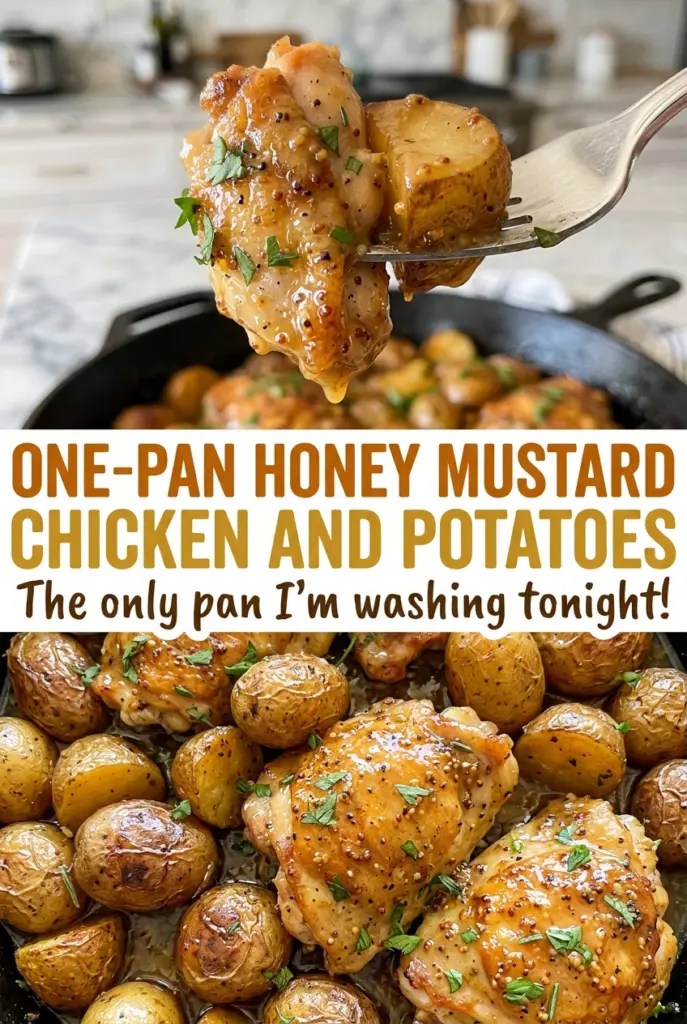
One-Pan Honey Mustard Chicken and Potatoes
The potatoes start to turn golden where their cut sides meet the hot pan, while the chicken skin slowly renders beside them. Keeping them on separate halves of the sheet…
Tip: save now, cook later.The potatoes start to turn golden where their cut sides meet the hot pan, while the chicken skin slowly renders beside them. Keeping them on separate halves of the sheet means each gets the space it needs, and you still have just one pan to wash. That’s the small bit of planning that makes this One-Pan Honey Mustard Chicken and Potatoes work so well for dinner.
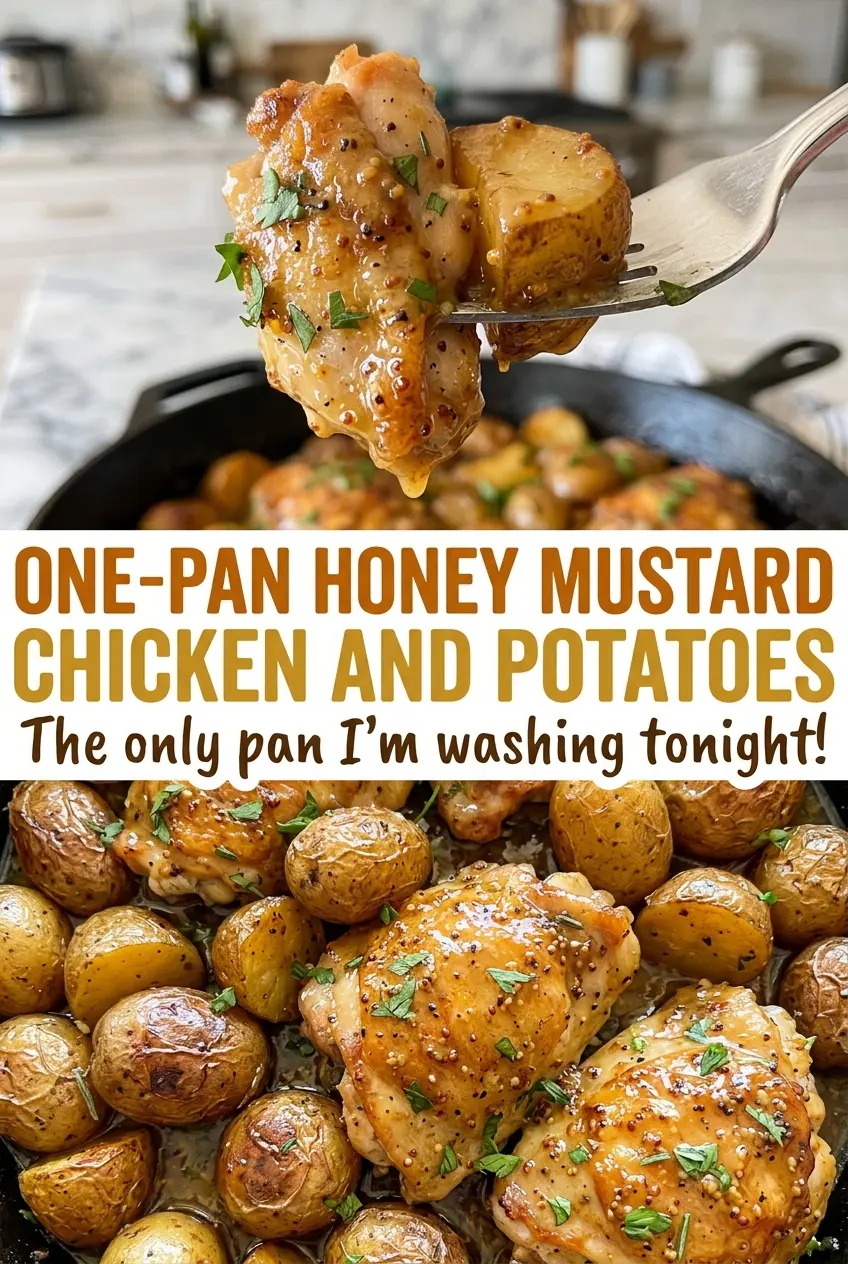
I roast the chicken and potatoes together first, then brush on the honey mustard glaze for the final stretch. Adding it later gives the thighs time to cook without leaving the honey on the chicken for the entire roast, where it could darken too much. The result is juicy chicken with a tangy, lightly sweet coating and potatoes browned on the edges, tender in the middle.
Kitchen Note
Pat the chicken skin dry before seasoning. Damp skin steams instead of browning as readily, and a few extra seconds with a paper towel are worth it.
Save this one-pan honey mustard chicken and potatoes for a dinner with crisp-edged potatoes and a sweet-tangy glaze.
Why the Honey Mustard Goes on After the First Roast
Honey brings sweetness and helps the glaze cling, but its sugars also brown quickly in a hot oven. If it goes on at the beginning, it spends the whole roast exposed to high heat. That can leave the outside darker than you want before the chicken is cooked through.
Giving the thighs an initial roast without the glaze lets their skin and the potatoes start cooking on their own terms. The mustard mixture goes on for the final portion, so it has time to coat the chicken and turn glossy without taking the full heat from the start. It also keeps the garlic and dried thyme in the glaze from sitting on the hottest parts of the pan for the entire bake.
Keep the glaze on the chicken rather than spreading it over the potatoes. The potatoes need direct contact with the baking sheet to brown, and a swipe of honey mustard would make that surface wet and sticky instead. Two jobs, two halves of the pan.
Dijon, Honey, and Skin-On Thighs: What Each Brings
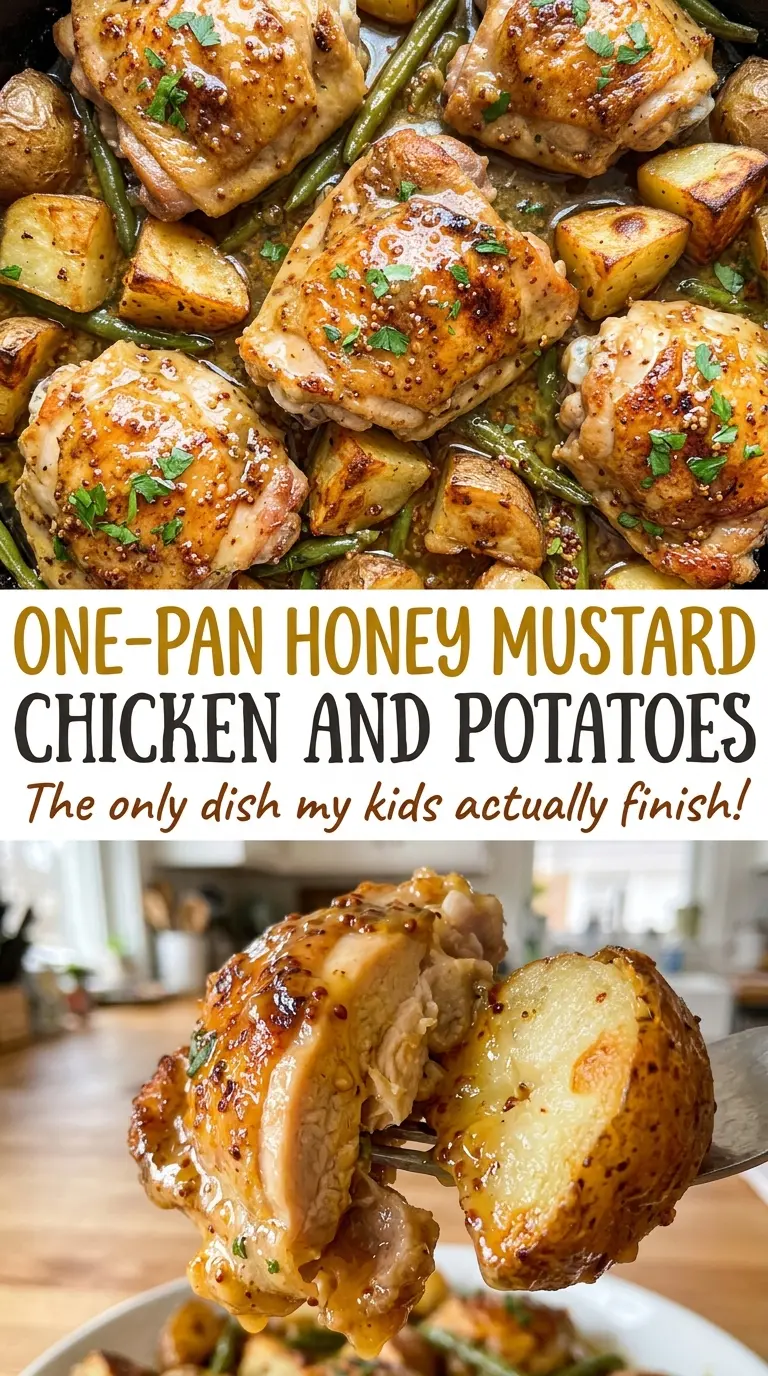
- Baby Yukon Gold potatoes — Their creamy centers and thin skins suit this quick roast, and halving them gives the cut sides a broad surface to brown. Quarter the larger ones so they finish at roughly the same pace as the smaller halves. Yukon Golds are worth choosing for their buttery texture, though another similarly sized waxy potato can work with a slightly different finish.
- Bone-in, skin-on chicken thighs — The bone helps the meat stay juicy through the roast, while the skin provides a savory counterpoint to the sweet glaze. Choose thighs that are close in size so they cook more evenly. The timing here is built around bone-in thighs; boneless pieces need a different timing, not just a quick swap.
- Dijon mustard and honey — Dijon brings the sharp, tangy backbone that keeps the glaze from tasting sugary, while honey gives it body and a mellow sweetness. A good everyday Dijon is fine; there’s no need for a specialty jar. If you replace the Dijon, choose a mustard with enough tang to balance the honey.
- Garlic and dried thyme — Minced garlic gives the glaze a savory edge, and dried thyme distributes easily through the mustard mixture. Freshly minced garlic has a livelier aroma than jarred garlic, but jarred works when that’s what you have. Stir the mixture well so the thyme and garlic aren’t left in a clump at the bottom of the bowl.
- Olive oil — A light coating helps the potatoes roast instead of drying out against the pan. A standard olive oil is suitable here; save a more expensive finishing oil for dishes where its flavor won’t be baked away.
The 25-Minute Head Start That Gets Both Sides of the Pan Done
Give the potatoes their own half of the pan
Heat the oven to 425°F, then toss the halved potatoes with olive oil and half of the salt and pepper. Arrange them cut-side down on one half of an 18×13-inch rimmed baking sheet, leaving room for the chicken on the other side. If the potatoes are touching in a tight pile, they’ll steam more than brown, so spread them into one layer. The rim helps keep the oil and chicken drippings on the sheet.
Season the thighs before the first roast
Pat the chicken dry, then season it with the remaining salt and pepper. Set the thighs skin-side up on the open half of the baking sheet, with a little space between them. Roast for 25 minutes before adding the glaze. Keeping the chicken and potatoes on separate sides makes it easier to lift the thighs out later if they finish first.
Brush on the glaze for the final stretch
While the first roast is underway, stir the Dijon, honey, minced garlic, and dried thyme together in a small bowl. After the initial 25 minutes, brush the mixture over the chicken. Coat the tops evenly rather than pouring the glaze onto the sheet, where the honey can run off and darken on the hot metal. Return the pan to the oven for another 15 to 20 minutes.
Check both parts of the pan, then rest the chicken
Check the thickest part of each thigh with a thermometer; it should reach 165°F, and the potatoes should be tender and browned. If the chicken is ready first, move it to a plate and leave the potatoes in the oven until they’re tender. Don’t judge the potatoes by color alone; a browned cut side can still have a firm center. Rest the chicken for 5 minutes before serving.
Easy Swaps for the Glaze and a Lower-Carb Pan
A seedier, more textured mustard glaze
Swap whole-grain mustard for the Dijon in the same amount. The glaze will have visible mustard seeds and a gentler, less smooth texture, but it still pairs well with the honey and chicken.
A lower-carb swap for the potatoes
Replace the potatoes with bite-size cauliflower florets for a lower-carb pan. They won’t have the same creamy, golden potato centers, and they can soften sooner, so check them as the roast progresses and take them off the pan once they’re tender and browned.
A honey-free version of the glaze
Use maple syrup in place of the honey, keeping the same amount. It makes the glaze a little thinner and brings a woodsy sweetness; brush it on for the final roast just as you would the honey mixture.
Storage and Reheating
- Refrigerator: Store leftovers in a covered container for 3 to 4 days. The potato edges soften as they sit, but the centers stay tender.
- Freezer: Freeze cooled chicken and potatoes in an airtight container for up to 2 months for the best texture. The potatoes may turn softer after thawing.
- Reheating: Reheat uncovered in a 350°F oven until hot throughout; this gives the chicken skin a better chance of staying pleasant than reheating it covered. A microwave works for a single serving, though the skin will soften.
Questions That Come Up While the Pan Is in the Oven
One-Pan Honey Mustard Chicken and Potatoes
Ingredients
Equipment
Method
- Heat the oven to 425°F.
- Toss the potatoes with the olive oil and half of the salt and pepper.
- Arrange the potatoes cut-side down on one half of an 18x13-inch rimmed baking sheet.
- Pat the chicken dry.
- Season it with the remaining salt and pepper.
- Arrange the chicken skin-side up on the other half of the baking sheet.
- Roast for 25 minutes.
- Stir the Dijon mustard, honey, garlic, and thyme together in a small bowl.
- Brush the mustard mixture over the chicken.
- Roast for 15 to 20 minutes more, until the thickest part of each thigh reaches 165°F and the potatoes are tender and browned.
- If the chicken reaches temperature before the potatoes are tender, transfer it to a plate.
- Continue roasting the potatoes.
- Rest the chicken for 5 minutes before serving.