

One-Pot Lemon Parmesan Chicken Couscous with Spinach
The chicken should sizzle as soon as it hits the skillet, then pick up just enough color to leave little browned bits behind. I keep the pieces bite-size and pull…
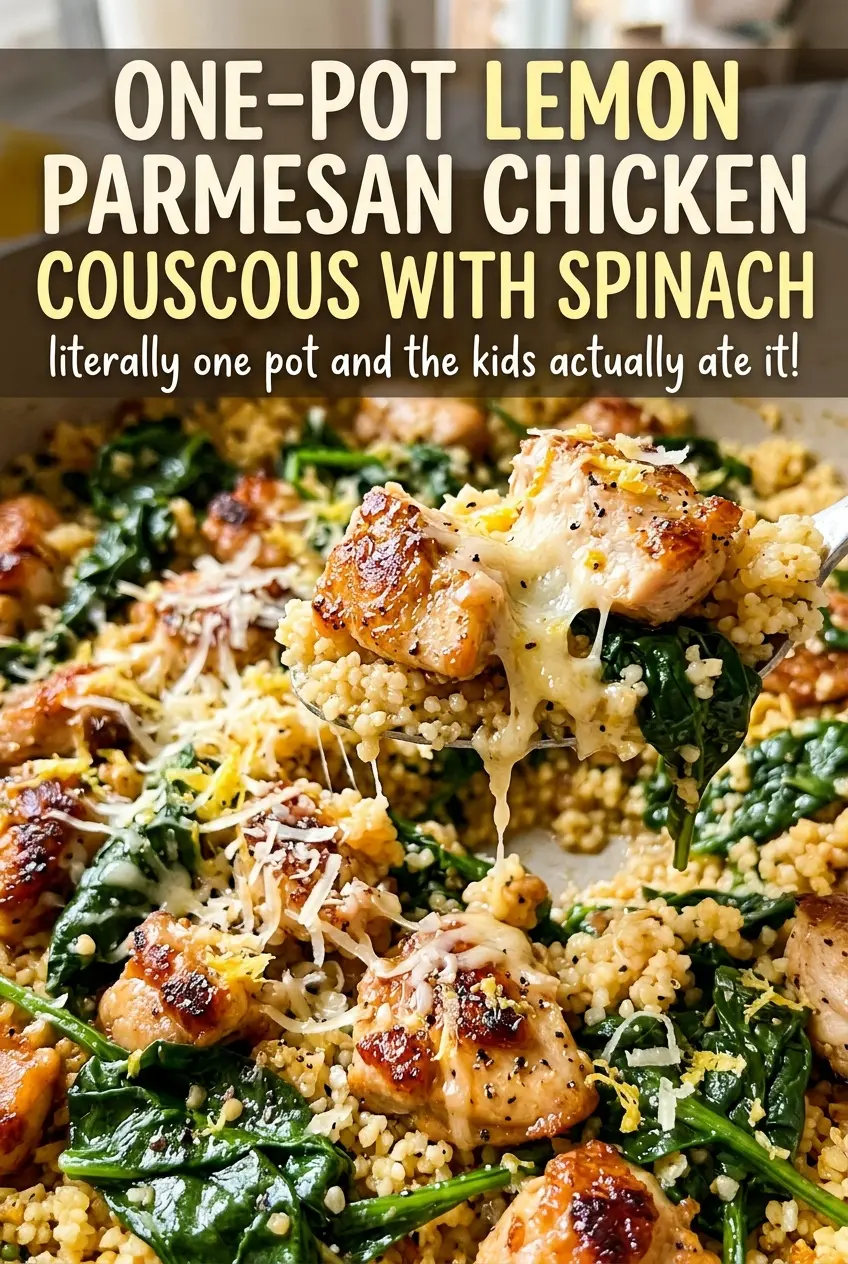
Tip: save now, cook later.The chicken should sizzle as soon as it hits the skillet, then pick up just enough color to leave little browned bits behind. I keep the pieces bite-size and pull them out before they’re cooked through; they finish gently while the pearl couscous simmers. That timing keeps the chicken from turning dry in this one-pot lemon Parmesan chicken couscous with spinach, and it gives the couscous those savory pan juices instead of plain broth.
Pearl couscous cooks right in the skillet, so there’s no separate pot to drain and no flavor left behind in cooking water. The onion and garlic soften in the same pan, and the couscous gets a quick toast before the broth goes in.
I stir in the spinach after the couscous is tender, then finish with lemon and Parmesan. The result is cozy and savory, with bright citrus and tender greens folded through the creamy pearls.
Kitchen Note
Finely grated Parmesan melts into the hot couscous much more smoothly than thick shreds. I grate it before I start cooking, then stir it in after taking the skillet off the heat so it coats the pearls instead of turning stringy.
Save this lemon Parmesan chicken couscous for a one-pan dinner with tender chicken, bright citrus, and spinach folded through every bite.
Pearl Couscous Needs Its Own Liquid Logic
Pearl couscous may look like a grain, but it’s actually a small pasta. That difference matters here: it needs to simmer in broth until tender, rather than be treated like the finer couscous that’s usually steamed and fluffed. Swap one for the other without changing the method and the liquid balance and cooking time won’t line up.
In this skillet, the couscous absorbs broth as it cooks, along with the juices released by the chicken and aromatics. That’s what gives the finished dish its savory base without a separate sauce. A deep skillet with a lid gives the pearls room to simmer evenly, while keeping the chicken and couscous together lets their flavors mingle instead of ending up in separate parts of the meal.
There’s no need to drain the couscous or cook it separately. Let the measured broth do its job in the covered skillet, and use pearl couscous when you want this particular creamy, spoonable texture.
What Each Ingredient Brings to This Lemon-Parmesan Skillet

- Chicken breasts — Their lean texture cooks quickly in small pieces and keeps the skillet from feeling heavy. Boneless, skinless chicken thighs cut into the same size are a workable swap; they’ll bring a little more richness. Pat either cut dry so it browns instead of steaming.
- Pearl couscous — This is the ingredient that gives the dish its chewy, pasta-like bite and absorbs the broth. Regular small couscous isn’t a direct substitute because it cooks differently. Store-brand pearl couscous works just as well as a pricier one.
- Low-sodium chicken broth — It seasons the couscous while leaving room for the salt in the Parmesan. Unsalted chicken broth is the closest replacement; the finished dish may need a little more seasoning at the table. Regular broth works too, but the result will taste saltier.
- Baby spinach — The tender leaves wilt into the couscous in a couple of minutes without needing their own cooking step. Thawed frozen spinach can stand in; squeeze it dry first so extra water doesn’t dilute the broth left in the skillet.
- Lemon — The zest supplies fragrant citrus oils, while the juice gives the finished dish its clean, tart lift. Use a fresh lemon when you can, since bottled juice can’t replace the aroma of the zest. A lime can replace it for a sharper, different citrus note.
- Parmesan — Finely grated Parmesan melts into the hot couscous and brings salty, savory depth. Pecorino Romano can replace it for a sharper finish, though it’s saltier. A wedge grated at home gives a smoother melt; finely grated packaged Parmesan is convenient and works well.
- Onion and garlic — They build the savory base before the couscous goes in. Yellow onion and fresh garlic are inexpensive pantry staples here; chop the onion finely so it softens in the short cooking window, and mince the garlic so it disperses without leaving large bites.
From Lightly Browned Chicken to Tender, Brothy Couscous
Brown the Chicken Without Cooking It Through
Pat the chicken dry and season it with the kosher salt and black pepper. Heat the olive oil in a 12-inch deep skillet with a lid over medium-high heat, then cook the chicken for 4–5 minutes, turning occasionally. Look for light browning on the outside; the pieces will finish cooking later. Transfer them to a plate so the skillet is ready for the onion.
Soften the Aromatics and Toast the Pearls
Reduce the heat to medium and cook the chopped onion for 3–4 minutes, stirring until softened. Stir in the minced garlic for 30 seconds; it should smell fragrant, not toasted dark. Add the pearl couscous and keep stirring for 1–2 minutes, until the pearls look lightly toasted. If the garlic starts to brown before the onion softens, lower the heat.
Simmer the Couscous with the Chicken
Pour in the chicken broth and return the chicken and any juices from the plate to the skillet. Bring the liquid to a boil, cover, then reduce the heat to medium-low and simmer for 10–12 minutes. The couscous should be tender and most of the broth absorbed, while the chicken reaches 165°F. If the skillet is boiling hard beneath the lid, lower the heat so the liquid simmers gently.
Wilt the Spinach and Finish Off the Heat
Stir in the baby spinach and cook for about 1–2 minutes, just until the leaves wilt. Remove the skillet from the heat before stirring in the lemon zest, lemon juice, and Parmesan. The residual heat will bring everything together without cooking away the fresh citrus taste. Serve while the couscous is creamy and the chicken is still juicy.
Three Easy Ways to Adapt the Skillet
Use Chicken Thighs for a Richer Bite
Swap in boneless, skinless chicken thighs cut into 1-inch pieces. Brown them in the same way and cook the skillet until the chicken is done; thighs bring a fuller, slightly richer taste than breast meat.
Make It Dairy-Free
Replace the Parmesan with a dairy-free Parmesan-style alternative, stirred in after the skillet comes off the heat. The finished dish will be less sharp and savory than the original, so taste before adding extra salt.
Add a Little Heat
Stir crushed red pepper flakes into the skillet with the garlic for a gentle warmth throughout. Adding them with the aromatics lets their heat bloom in the olive oil without covering up the lemon.
Storage and Reheating
- Refrigerator: Store in an airtight container for 3–4 days. The couscous will soften as it sits.
- Freezer: Freeze portions in airtight containers for up to 2 months for the best texture. The couscous and spinach will be softer after thawing.
- Reheating: Warm gently in a covered skillet over low heat with a splash of chicken broth, stirring until hot. For the microwave, cover the portion and heat in short bursts, stirring between them; high heat can dry out the chicken.
Questions That Come Up While Cooking This Skillet
One-Pot Lemon Parmesan Chicken Couscous with Spinach
Ingredients
Equipment
Method
- Pat the chicken dry.
- Season the chicken with the salt and pepper.
- Heat the olive oil in a 12-inch deep skillet with a lid over medium-high heat.
- Add the chicken and cook for 4–5 minutes, turning occasionally, until lightly browned.
- Transfer the chicken to a plate.
- Reduce the heat to medium and add the onion to the skillet.
- Cook for 3–4 minutes until softened.
- Stir in the garlic and cook for 30 seconds.
- Stir in the pearl couscous and cook for 1–2 minutes, stirring often, until lightly toasted.
- Pour in the chicken broth and return the chicken and any juices to the skillet.
- Bring to a boil, cover, and simmer over medium-low heat for 10–12 minutes, until the couscous is tender and the chicken reaches 165°F.
- Stir in the spinach until wilted, about 1–2 minutes.
- Remove the skillet from the heat and stir in the lemon zest, lemon juice, and Parmesan.