
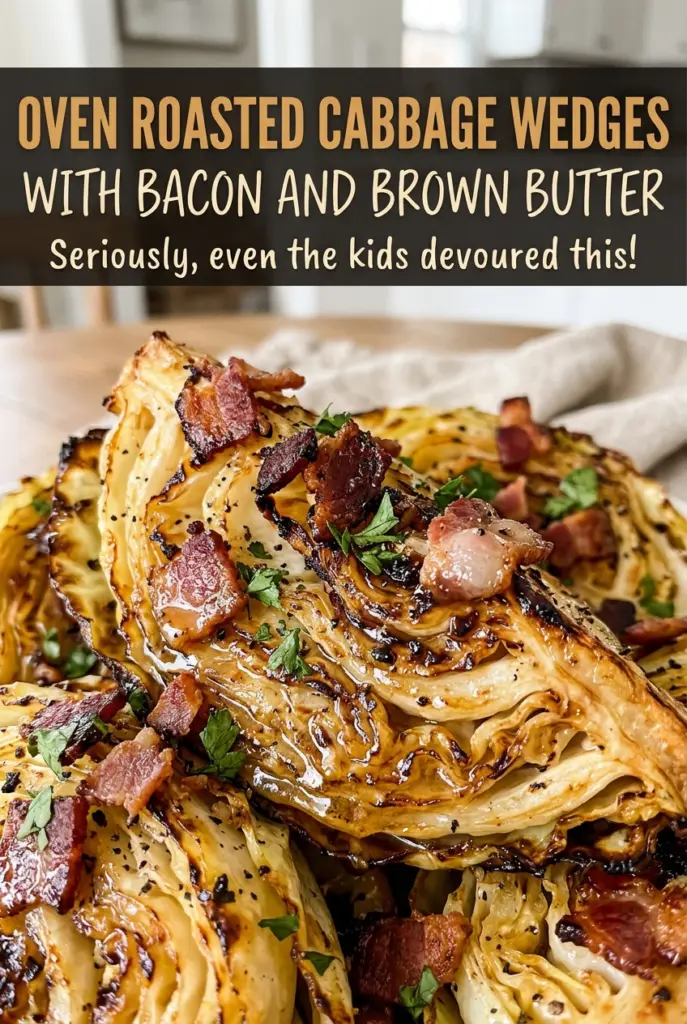
Oven Roasted Cabbage Wedges with Bacon and Brown Butter
The cabbage’s cut edges are the first thing to change in the oven: they darken and turn sweet while the centers soften. I like that contrast in these oven roasted…
Tip: save now, cook later.The cabbage’s cut edges are the first thing to change in the oven: they darken and turn sweet while the centers soften. I like that contrast in these oven roasted cabbage wedges with bacon and brown butter, especially when a side dish needs to feel substantial without asking for much attention. The wedges roast on one sheet pan, the bacon crisps in a skillet, and the butter gets its own few minutes on the stove.
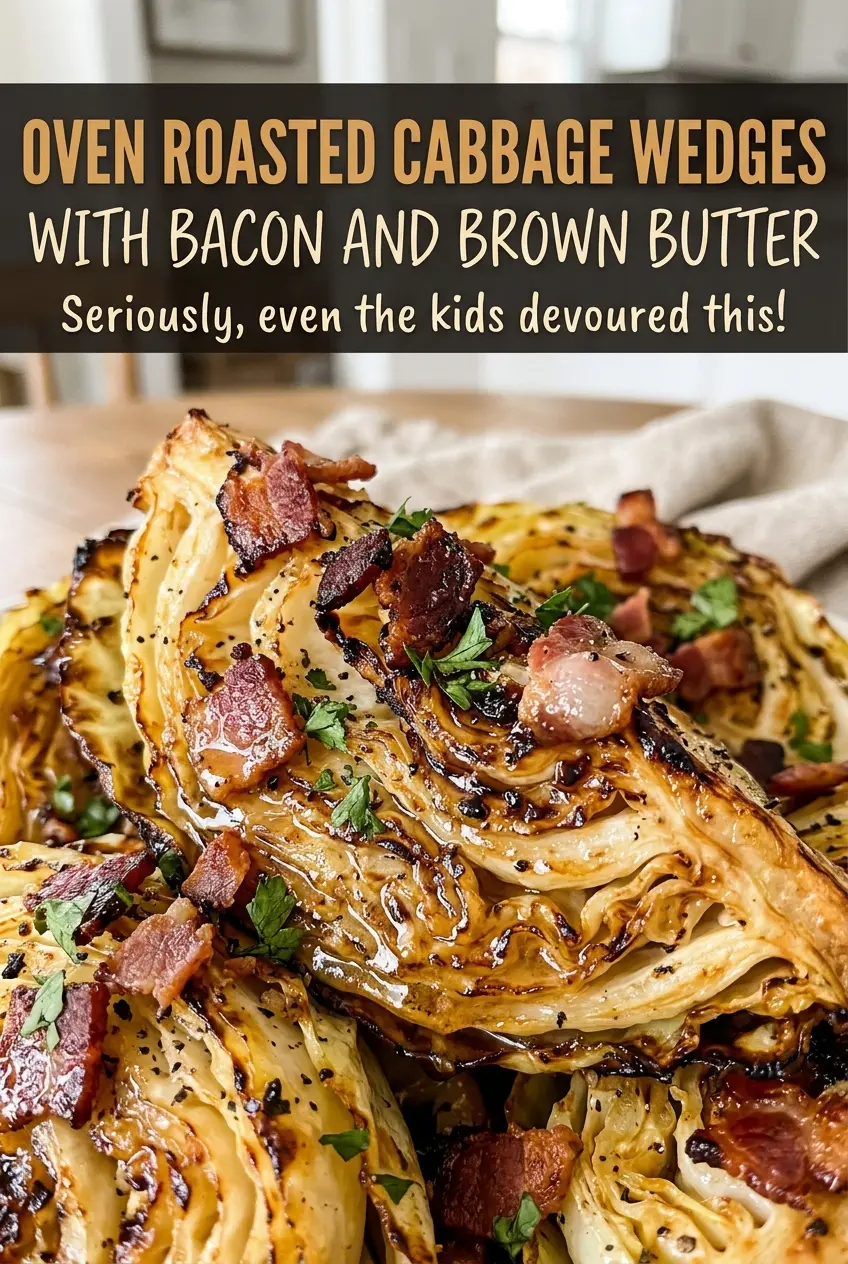
Green cabbage can go from firm to limp if it’s cut into small pieces, so I keep it in wedges and let the oven do the work. Thick-cut bacon brings a crisp, savory finish, while brown butter adds a nutty note without covering up the cabbage. Serve the wedges while the edges are browned and the middle is tender, with bacon scattered over the warm butter.
Kitchen Note
Take the butter off the heat as soon as the milk solids are golden and it smells nutty. They can darken quickly in the hot saucepan, so don’t wait for a deep brown color.
Save these oven roasted cabbage wedges with bacon and brown butter for a side dish with tender centers, browned edges, and a crisp finish.
Why Cabbage Wedges Need Their Flat Side on the Pan
Cabbage has plenty of moisture, and the way the wedges sit on the baking sheet affects whether they brown or soften in their own steam. Resting each wedge on a cut side gives a broad, flat surface direct contact with the hot pan. That’s where the deepest browning develops. Turning the wedges halfway through gives the opposite cut side its own chance to color.
Keeping the core intact is just as useful. It acts like a small anchor that holds the leaves together as the wedges roast and makes them easier to turn and move to a platter. If you cut through the core while dividing the cabbage, loose leaves can separate and roast at a different pace from the thicker pieces. These wedges aren’t meant to be shuffled around like chopped cabbage; set them down cut side first and let that contact do its job.
What Green Cabbage, Thick-Cut Bacon, and Unsalted Butter Each Bring
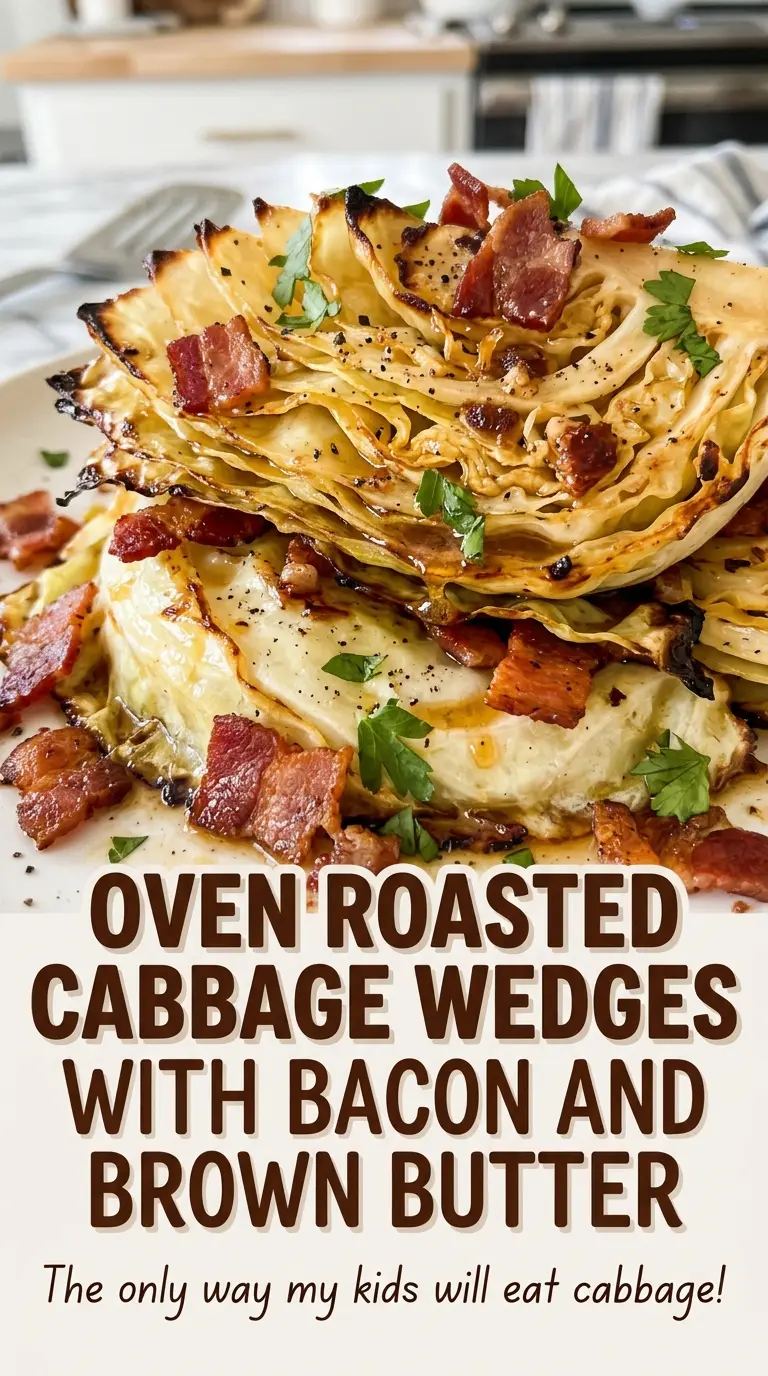
- Green cabbage — A medium head gives you sturdy leaves that hold together when cut into wedges. Look for a firm head with tightly packed leaves; a cabbage that feels heavy for its size is a good choice. Keep the core in each wedge so the leaves stay attached during roasting.
- Olive oil — Brushing it over the cut sides helps the cabbage roast evenly and encourages those surfaces to brown. Use a fresh oil you like the taste of, but there’s no need to reach for a specialty bottle here.
- Kosher salt and black pepper — These season the cabbage itself, not just the bacon topping. Sprinkle them over the oiled wedges so the seasoning reaches the broad surfaces that will touch the pan.
- Thick-cut bacon — Thicker slices give you substantial crumbles and a crisp contrast to the tender cabbage. The bacon is cooked separately in a skillet, so it stays distinct from the cabbage instead of softening on the pan.
- Unsalted butter — Browning the butter creates the warm, nutty finish. Unsalted butter keeps the final seasoning easier to control alongside the salt on the cabbage and the savory bacon.
Roast the Cabbage First, Then Finish While the Butter Is Warm
Cut the Cabbage into Stable Wedges
Heat the oven to 425°F and cut the cabbage through the core into 8 wedges. Keep the core attached to every piece; it should hold the layers together without leaving a large, uneven chunk of stem. Arrange the wedges cut side down on an 18×13-inch rimmed baking sheet, then brush with olive oil and season with kosher salt and black pepper. Starting with a flat side against the pan sets up the browning.
Give Each Cut Side Time to Brown
Roast the wedges for 20 minutes, then turn them onto the opposite cut side with a spatula or tongs. They’ll be hot and may feel firm, so support each wedge rather than squeezing the leaves. Roast for another 15 to 20 minutes, until the edges are browned and a knife pierces the thick part easily. If the center still resists the knife, use the longer end of that second roasting window.
Crisp the Bacon Separately
While the cabbage roasts, cook the thick-cut bacon in a 12-inch skillet over medium heat for 8 to 10 minutes, turning as needed. Listen for a steady sizzle and look for crisp slices with no soft, pale sections. Transfer the bacon to a paper towel-lined plate to drain. Once it’s cool enough to handle, crumble it into pieces that will cling to the warm cabbage.
Brown the Butter and Finish the Platter
Melt the butter in a 1-quart saucepan over medium heat, swirling the pan often for 3 to 5 minutes. Watch the milk solids at the bottom: they should turn golden brown, and the butter should smell nutty. Remove the pan from the heat as soon as it reaches that point. Arrange the cabbage on a serving platter, drizzle the warm butter over it, and scatter the crumbled bacon across the top.
Two Simple Ways to Adapt the Cabbage
Make It Vegetarian by Leaving Off the Bacon
Skip the bacon and serve the roasted cabbage with brown butter. The dish loses the crisp, smoky-salty topping, but the butter still brings a nutty richness; this version works for a vegetarian meal that includes dairy.
Leave Off the Butter for a Dairy-Free Plate
Omit the brown butter and finish the cabbage with the bacon alone. You’ll miss the buttery, nutty coating, but the roasted cabbage and crisp bacon still make a complete side dish without dairy.
Storage and Reheating
- Refrigerator: Store the cabbage and bacon in a covered container within 2 hours and use within 3 to 4 days. The cabbage will soften, and the bacon won’t stay crisp.
- Freezer: Freezing isn’t recommended for the finished dish; thawed cabbage turns much softer and the bacon loses its crisp texture.
- Reheating: Warm the cabbage gently in a skillet until hot throughout, and keep the bacon separate until serving. Avoid reheating everything together if you want to preserve any crispness in the bacon.
Questions That Come Up Before the Pan Goes in the Oven
Oven Roasted Cabbage Wedges with Bacon and Brown Butter
Ingredients
Equipment
Method
- Preheat the oven to 425°F.
- Cut the cabbage through the core into 8 wedges, keeping the core intact so the leaves hold together.
- Arrange the wedges cut side down on an 18x13-inch rimmed baking sheet.
- Brush the cabbage wedges with the olive oil.
- Season the wedges with the salt and pepper.
- Roast for 20 minutes.
- Turn the wedges onto the opposite cut side, and roast for 15 to 20 minutes more, until browned at the edges and tender when pierced with a knife.
- While the cabbage roasts, cook the bacon in a 12-inch skillet over medium heat for 8 to 10 minutes, turning as needed, until crisp.
- Transfer the bacon to a paper towel-lined plate.
- Crumble the bacon when cool enough to handle.
- Melt the butter in a 1-quart saucepan over medium heat, swirling often, for 3 to 5 minutes, until the milk solids turn golden brown and smell nutty.
- Remove the pan from the heat.
- Arrange the cabbage on a serving platter.
- Drizzle the cabbage with the brown butter.
- Scatter the crumbled bacon over the top.