
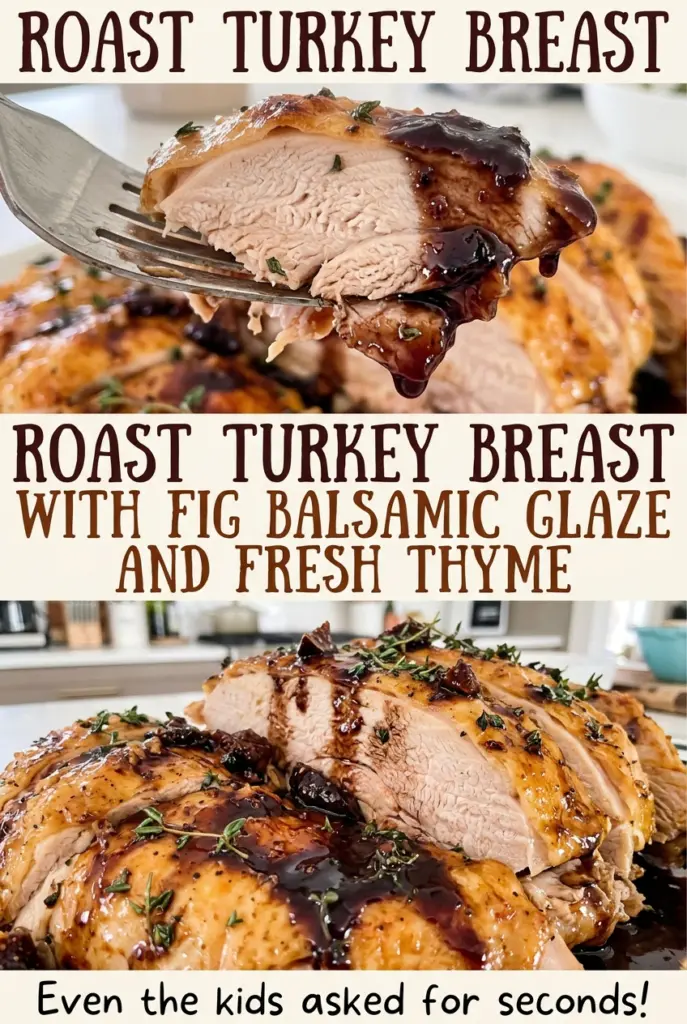
Roast Turkey Breast with Fig Balsamic Glaze and Fresh Thyme
At 350°F, a turkey breast has time to roast gently before the glaze ever touches it. That timing matters here: fig preserves are sweet, and a sugary coating would spend…
Tip: save now, cook later.At 350°F, a turkey breast has time to roast gently before the glaze ever touches it. That timing matters here: fig preserves are sweet, and a sugary coating would spend too long in the oven if it went on at the start. I wait until the breast has had its first stretch of roasting, then brush on the fig balsamic glaze in two coats.
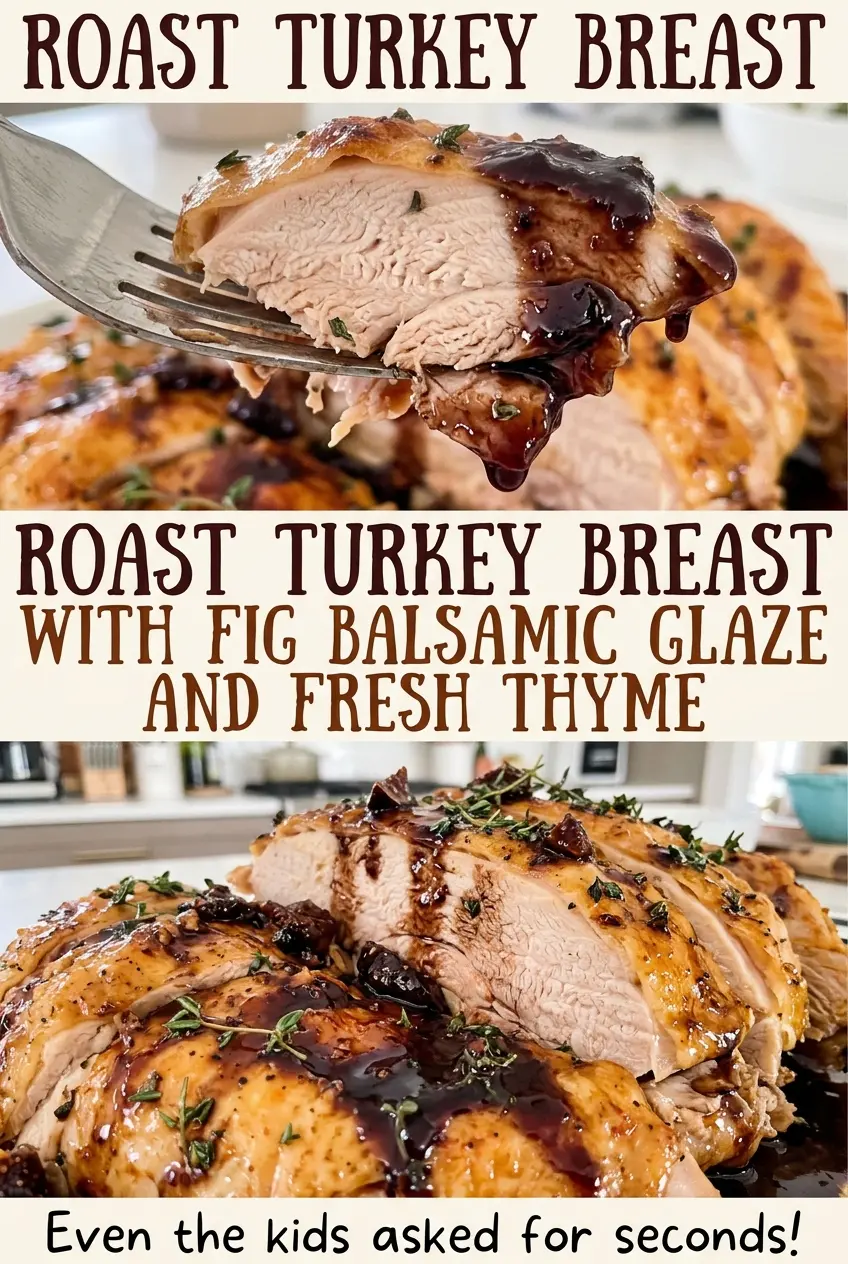
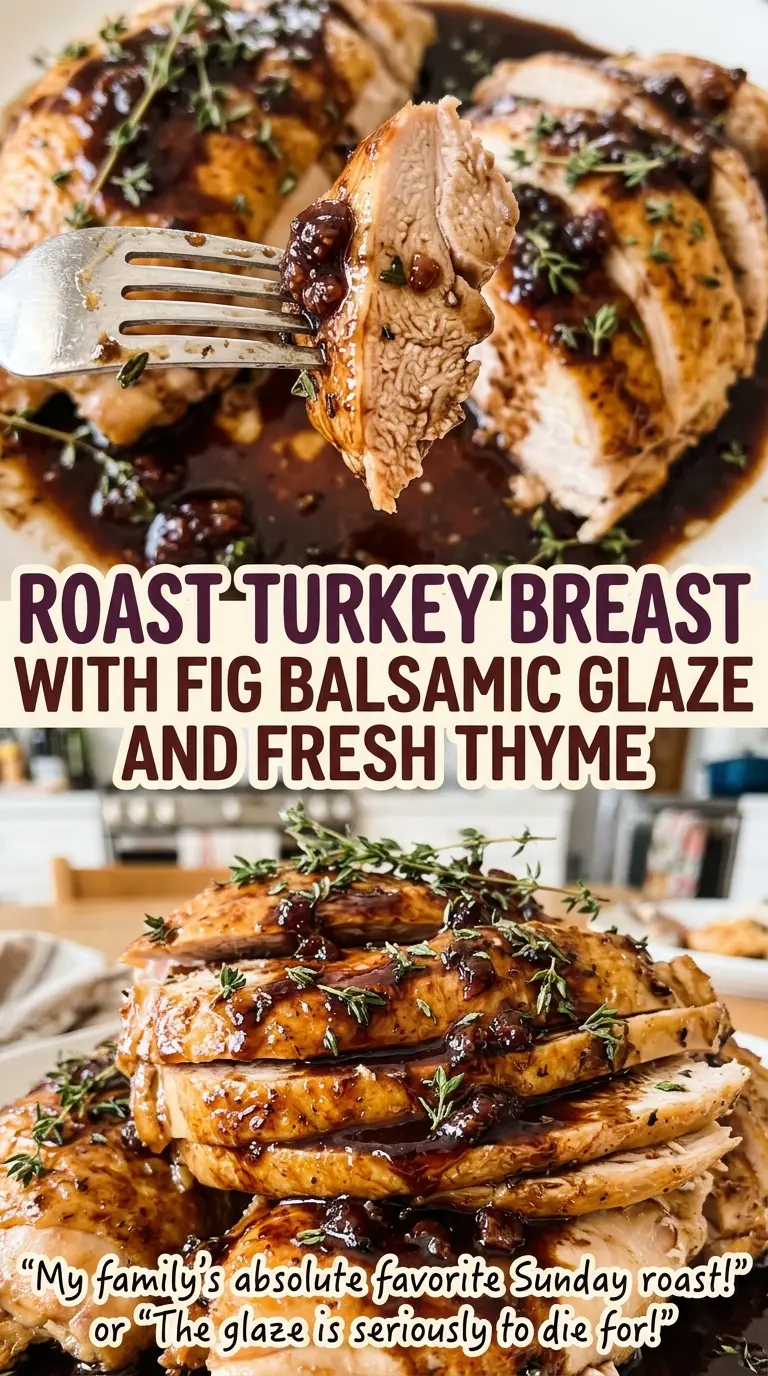
For this roast turkey breast with fig balsamic glaze and fresh thyme, the skin-on, bone-in breast gives you a generous center-of-the-table roast, while Dijon and balsamic keep the fig from tasting flat or candy-sweet. I stir the butter and thyme into the glaze after it comes off the heat; the butter melts in smoothly, and the thyme stays fresh and fragrant. By the time the breast rests, the glaze is glossy and clings to the skin, with a tart edge that cuts through the rich turkey.
Kitchen Note
Check the thickest part of the breast without letting the thermometer touch bone. A bone can give you a misleading reading, so take your temperature checks in the meat itself.
Save this fig balsamic turkey breast for a roast with glossy skin, fresh thyme, and a sweet-tart finish.
Why the Fig Glaze Goes on After the Turkey Has Started Roasting
Fig preserves bring both fruit and sugar to this glaze. That sugar is what helps it turn shiny and cling to the turkey, but it also means the glaze needs less time in the oven than the breast does. Putting it on from the beginning gives the sweet coating a long stretch of heat; brushing it on later lets it finish glossy instead of spending the entire roast darkening on the skin.
The glaze goes on in two passes for a reason. The first coat gets a short turn in the oven, which helps it settle onto the skin. The second coat adds a fresh layer near the finish, so the surface looks lacquered rather than dry. Balsamic vinegar and Dijon temper the preserves, giving the glaze a little sharpness and savory depth. That balance is especially useful on a large piece of turkey, where a very sweet coating could overwhelm the meat. Keep the oven at 350°F while the glaze sets; the thermometer, not the color of the coating, tells you when the breast is ready.
What the Fig, Balsamic, and Thyme Each Bring to This Roast
- Bone-in, skin-on turkey breast — The bone helps support the breast as it roasts, and the skin gives the glaze a surface to coat. Start with the breast fully thawed so it roasts evenly. Keep the bone-in, skin-on cut for the timing and method here.
- Fig preserves — Preserves supply the fruit and sweetness that make this glaze thick enough to brush on. Use preserves rather than trying to build the same consistency from fresh fruit; different preserves vary in texture, but a spoonable one is easiest to work with.
- Balsamic vinegar and Dijon mustard — Balsamic adds tang to balance the fig, while Dijon gives the glaze a savory note. Both are doing more than adding flavor, so I wouldn’t leave them out if you want the same sweet-tart result.
- Unsalted butter — Stirring it in off the heat softens the sharp edges of the vinegar and gives the finished glaze a smoother, richer feel. It melts into the warm preserves without needing to boil along with them.
- Fresh thyme — Finely chopped leaves bring a green, herbal note that keeps the glaze from tasting one-dimensional. If you don’t have fresh thyme, leave it out rather than guessing at a dried-thyme conversion; the finish will be fruitier and less herbal.
- Olive oil, kosher salt, and black pepper — The oil helps the seasoning coat the skin, while salt and pepper give the turkey a simple savory base beneath the glaze. Patting the skin dry first helps the oil and seasonings stay on the surface instead of sliding over damp skin.
Roast the Breast First, Then Build the Glaze in Two Coats
Dry and Season the Skin
Heat the oven to 350°F and set a rack inside a 16×13-inch roasting pan. Pat the fully thawed turkey breast dry with paper towels, then place it skin side up on the rack. Rub the skin with olive oil, kosher salt, and black pepper. If the surface is still damp, take another moment to blot it; a dry surface helps the seasoning adhere.
Simmer the Fig Balsamic Glaze
Stir the fig preserves, balsamic vinegar, and Dijon mustard together in a small saucepan. Bring the mixture to a simmer over medium heat and cook it for 2 minutes, stirring so the preserves don’t catch on the bottom. Take the pan off the heat before stirring in the butter and finely chopped thyme. Wait until the butter has melted fully into the glaze; it should look cohesive and easy to brush.
Roast Until the Breast Reaches 150°F
Set the turkey in the oven and roast at 350°F for about 1 1/4 to 1 3/4 hours. Begin checking after 1 hour 15 minutes, measuring the thickest part of the breast without touching bone. When that spot reaches 150°F, move on to the first coat of glaze. The clock gives you a window, but the thermometer gives you the cue to glaze.
Brush on Both Coats and Finish Roasting
Brush half of the glaze over the turkey and roast for 10 minutes. Brush on the remaining glaze, then continue roasting for 10 to 20 minutes more, until the thickest part reaches 165°F and the glaze looks glossy. If the surface looks shiny before the turkey reaches temperature, keep roasting; don’t use the glaze’s appearance as a doneness test. The two coats should leave the skin lacquered rather than buried under a thick layer.
Rest Before Carving
Transfer the breast to a cutting board and tent it loosely with foil. Let it rest for 20 minutes before carving, which gives the juices time to settle instead of running straight onto the board. Keep the foil loose rather than wrapping it tightly around the skin. Carve once the rest is complete and serve the slices with the glaze-coated skin.
Two Ways to Adjust the Glaze Without Losing the Turkey’s Balance
Make the Glaze Dairy-Free
Swap the unsalted butter for an equal amount of dairy-free plant butter. The glaze will still have the fig, balsamic, Dijon, and thyme, though the finish may be a little less rich than when made with dairy butter.
Keep Some Glaze for the Table
For a more concentrated fig finish, brush on the first half as the turkey roasts, then serve the remaining glaze at the table instead of brushing on the second coat. The breast still needs to roast until it reaches 165°F; the uncovered finish will have less of the glossy, fully glazed surface.
Storage and Reheating
- Refrigerator: Store leftover turkey in a covered container for 3 to 4 days. The skin softens in the refrigerator, though the slices stay flavorful.
- Freezer: Freeze sliced turkey in an airtight container for up to 2 to 3 months for best quality. Thaw it in the refrigerator before reheating.
- Reheating: Warm covered slices in a 325°F oven until they reach 165°F. Reheating uncovered can dry the meat before the center is hot.
Questions That Come Up When Roasting a Bone-In Turkey Breast
Roast Turkey Breast with Fig Balsamic Glaze and Fresh Thyme
Ingredients
Equipment
Method
- Preheat the oven to 350°F.
- Set a rack in a 16x13-inch roasting pan.
- Pat the turkey dry with paper towels.
- Place the turkey skin side up on the rack.
- Rub the turkey with the olive oil, kosher salt, and black pepper.
- Combine the fig preserves, balsamic vinegar, and Dijon mustard in a small saucepan.
- Bring to a simmer over medium heat and cook for 2 minutes, stirring.
- Remove from the heat and stir in the butter and thyme until the butter melts.
- Roast the turkey at 350°F for about 1 1/4 to 1 3/4 hours, checking the thickest part of the breast with an instant-read thermometer without touching bone; begin checking after 1 hour 15 minutes and continue until it reaches 150°F.
- Brush half the glaze over the turkey and roast for 10 minutes.
- Brush with the remaining glaze and continue roasting until the thickest part reaches 165°F and the glaze looks glossy, 10 to 20 minutes more.
- Transfer the turkey to a cutting board.
- Tent loosely with foil and rest for 20 minutes.
- Carve the turkey.