

Roasted Cornish Game Hens with Rosemary Garlic Butter
At 425°F, the kitchen starts smelling like garlic and rosemary well before the hens are ready to come out. Roasted Cornish game hens with rosemary garlic butter give you a…
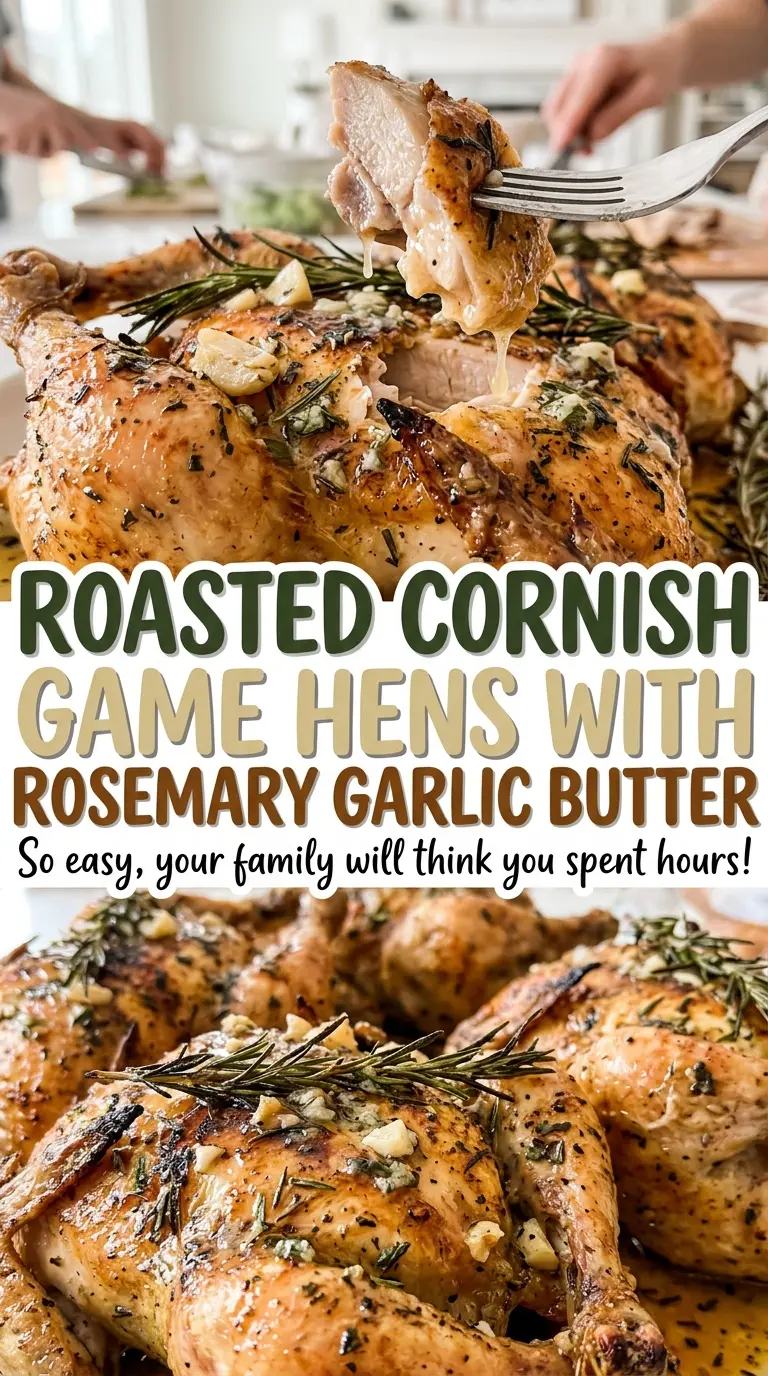
Tip: save now, cook later.At 425°F, the kitchen starts smelling like garlic and rosemary well before the hens are ready to come out. Roasted Cornish game hens with rosemary garlic butter give you a roast-poultry dinner without putting a large bird on the table: two small hens roast together in a 9×13-inch baking dish, with lemon and rosemary tucked into each cavity.
I like the way the butter carries the chopped rosemary and garlic across the skin while the lemon and whole rosemary sprigs scent the inside. Each hen is its own neat portion, and the short ingredient list keeps the flavor focused. When the thighs reach 165°F and the birds have rested, the skin is fragrant and the meat is ready to serve.

Kitchen Note
When you check the thigh, angle the instant-read thermometer into the thickest part and keep the tip off the bone. A bone-touching reading can give you the wrong idea about whether the meat is ready.
Save these roasted Cornish game hens with rosemary garlic butter for a roast dinner with lemon-scented cavities and savory herb butter under the skin.
Why the Rosemary Butter Belongs Under the Breast Skin
Butter spread only over the outside seasons the skin, but the breast meat sits beneath it. Carefully loosening the skin gives the rosemary garlic butter a place to sit against the meat, so the seasoning isn’t limited to the surface. The butter over the skin still matters: it coats the outside and carries the minced garlic and chopped rosemary across it as the hens roast.
Work gently rather than trying to open the skin wide. The goal is just enough room to spread half the butter beneath it, not to detach the skin from the breast. If the skin tears, stop pulling and spread the remaining butter over the outside instead. You’ll still get the garlic and rosemary flavor, though the breast won’t have the same layer of butter directly underneath the skin.
This small placement choice also makes the measured butter go further. Half goes where it can season the breast, and the other half stays on the skin. That gives the two hens a balanced coating without needing another sauce or a longer list of ingredients.
Fresh Rosemary, Soft Butter, and What Each One Brings
- Unsalted butter — Softened butter blends smoothly with the minced garlic and chopped rosemary, then spreads under the skin without needing to melt it first. A standard supermarket unsalted butter works well; keeping it unsalted lets the two measured additions of kosher salt do their job. If you need to avoid dairy, the variation below explains how a firm plant-based butter changes the result.
- Fresh rosemary — Finely chopping the leaves distributes their piney aroma through the butter, while the whole sprigs in the cavities add a gentler herbal scent. Choose fresh, fragrant sprigs with supple leaves. If you don’t have fresh rosemary, leave it out rather than putting dry leaves in the cavities; the hens will have a simpler garlic-butter flavor.
- Garlic — Minced cloves disperse through the softened butter, so each part of the coating gets some garlic. Fresh cloves have a brighter, more direct flavor than prepared garlic. If you want a milder result, use less or omit it; no other ingredient needs to change.
- Cornish game hens — Two thawed hens weighing 1 1/2 pounds each are the right size and format for the stated roasting time. Look for birds that are fully thawed before you begin, including inside the cavities, so you can season and fill them evenly. A larger chicken isn’t a direct stand-in because it needs a different roasting time.
- Lemon — Quartered lemon fits neatly into the cavities and gives the rosemary sprigs a bright citrus partner. Choose a fresh lemon with a clean, firm peel. If you need to leave it out, omit the quarters rather than adding bottled juice to the cavity.
From Softened Butter to Rested, Ready-to-Serve Hens
Mix the Rosemary Garlic Butter
Put the softened butter, minced garlic, finely chopped fresh rosemary, and kosher salt in a small bowl. Stir until the herbs and garlic are distributed throughout, with no large pockets of salt or garlic. If the butter is still cold and firm, it will be harder to spread smoothly under the skin. Keep it softened, not melted, so it stays where you put it.
Season and Fill Each Cavity
Heat the oven to 425°F and place a rack in the middle position. Pat the thawed hens dry, then set them breast-side up in a 9×13-inch baking dish. Season the outside and the cavities with the measured kosher salt and black pepper. Put two lemon quarters and two rosemary sprigs inside each cavity; distribute them between the birds rather than leaving all the aromatics in one hen.
Spread the Butter in Two Places
Carefully loosen the breast skin and spread half of the rosemary garlic butter beneath it. Use gentle movements so you can make space without tearing the skin. Spread the rest over the outside of the skin, covering the hens as evenly as you can. If the butter gathers in one spot, nudge it outward with your fingers rather than forcing the skin open farther.
Roast Until the Thighs Reach Temperature, Then Rest
Roast for 50 to 60 minutes, checking the thickest part of each thigh with an instant-read thermometer. The target is 165°F; check both hens because they may not finish at precisely the same moment. If a bird needs more time, return it to the oven and check again rather than relying on color alone. Rest the hens in the baking dish for 10 minutes before serving.
Three Small Changes for a Different Roast
A gentler garlic butter
Use one garlic clove instead of two, or leave the garlic out entirely. The butter will still carry the rosemary, but the finished hens will taste softer and less pungent. Keep the rest of the method the same.
Dairy-free rosemary coating
Replace the unsalted butter with an equal amount of firm, dairy-free plant butter. Avoid a soft tub spread, which can be looser when softened and harder to spread beneath the skin. The rosemary and garlic still season the hens, though the skin may brown differently from one made with dairy butter.
A lemon-free version
Leave the lemon quarters out of the cavities and keep the rosemary sprigs. This makes the bird taste more herb-forward and less citrusy, with no need to change the seasoning or roasting process.
Storage and Reheating
- Refrigerator: Store leftover cooked hen in a covered container for 3 to 4 days. The skin softens in the refrigerator, even after roasting.
- Freezer: Freeze cooked meat in an airtight freezer container for up to 4 months for best quality. Removing the meat from the bones first makes it easier to portion and thaw.
- Reheating: Warm leftovers covered in an oven-safe dish until heated through, or use a microwave in short intervals. Reheat to 165°F; uncovering for the entire reheating time can dry the meat before the center is hot.
Questions That Come Up While Roasting Cornish Hens
Roasted Cornish Game Hens with Rosemary Garlic Butter
Ingredients
Equipment
Method
- Mix the softened butter, minced garlic, finely chopped rosemary, and 1/4 teaspoon kosher salt in a small bowl until well combined.
- Heat the oven to 425°F and set a rack in the middle position.
- Pat the hens dry and place them breast-side up in a 9x13-inch baking dish.
- Season the outside and cavities with 1/2 teaspoon kosher salt and the black pepper.
- Put 2 lemon quarters and 2 rosemary sprigs inside each cavity.
- Carefully loosen the breast skin and spread half the butter underneath and the rest over the skin.
- Roast for 50 to 60 minutes, until the thickest part of each thigh reaches 165°F on an instant-read thermometer without touching bone.
- Rest the hens in the baking dish for 10 minutes before serving.