
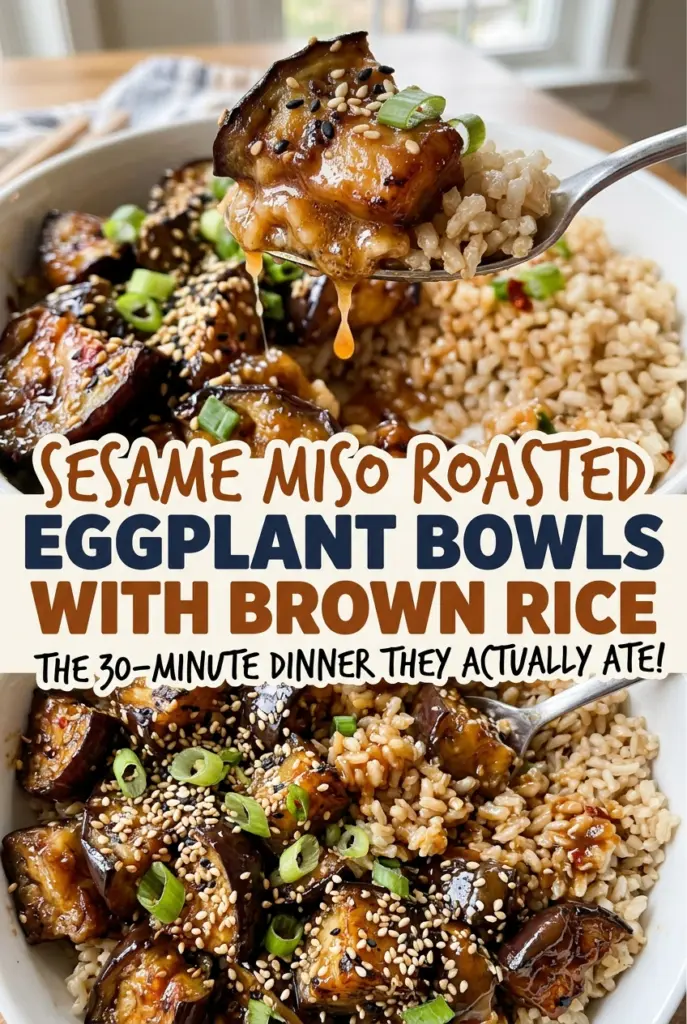
Sesame Miso Roasted Eggplant Bowls with Brown Rice
At 425°F, eggplant cubes go from pale and spongy to browned at the corners, then turn silky inside while the edges keep a little bite. I like roasting them before…
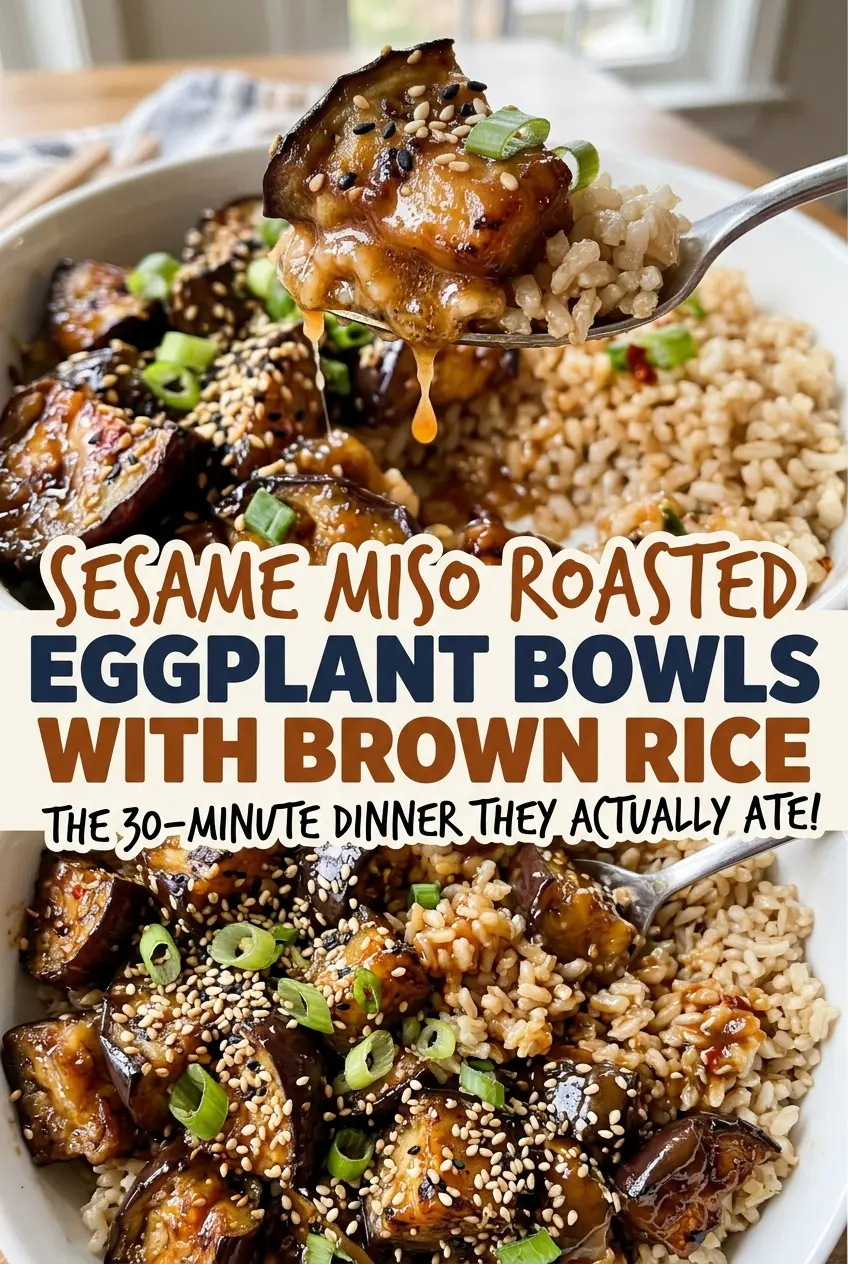
Tip: save now, cook later.At 425°F, eggplant cubes go from pale and spongy to browned at the corners, then turn silky inside while the edges keep a little bite. I like roasting them before adding the miso glaze, so they get that color first instead of steaming under a coating. In these sesame miso roasted eggplant bowls with brown rice, the glaze finishes in the oven and clings to each piece without hiding the eggplant.
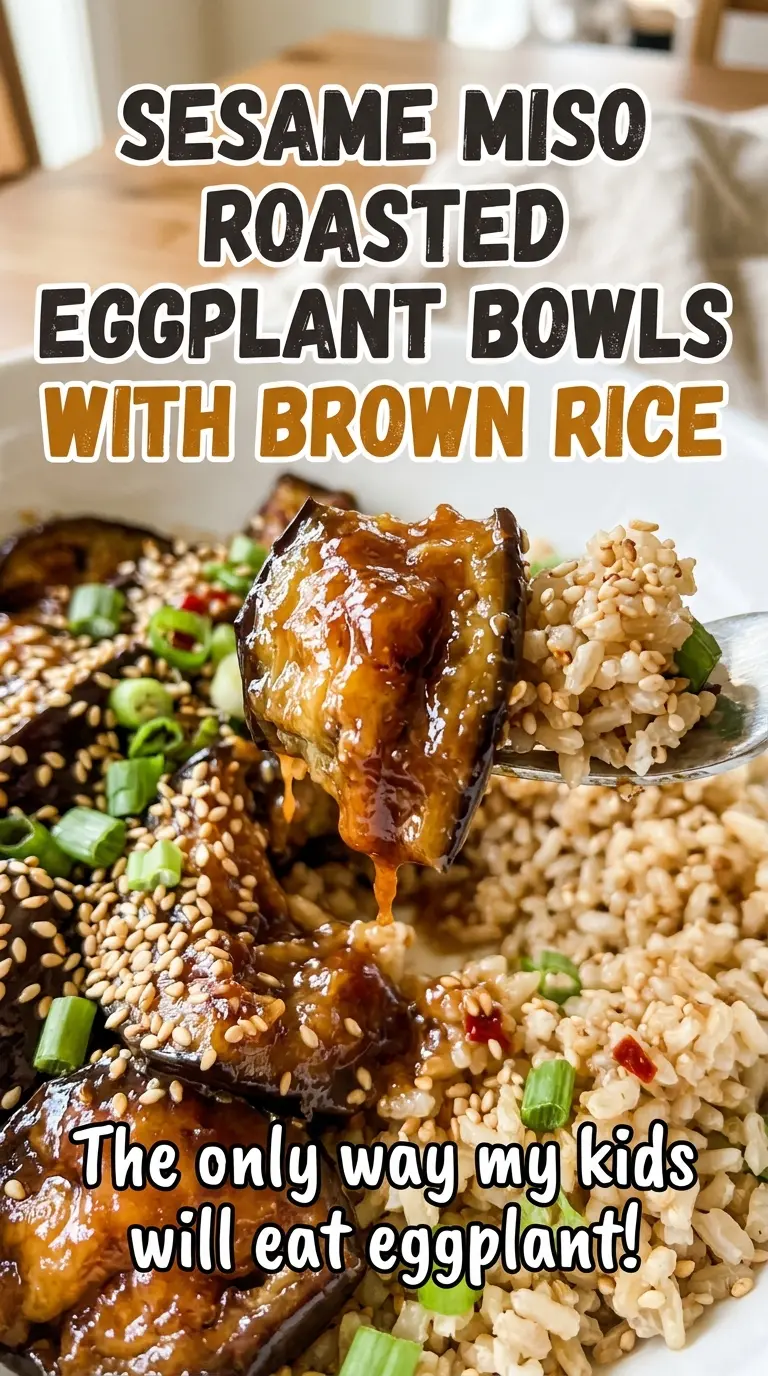
The rice cooks on the stovetop while the eggplant roasts, so the timing works neatly without rushing either part. White miso brings a mellow savory depth, and toasted sesame oil gives the glaze its unmistakable nutty aroma. A little honey softens the salty edges, while fresh ginger and garlic keep the sauce lively. Spoon everything over warm brown rice, then finish with scallions and sesame seeds for a bowl with tender grains, browned eggplant, and a glossy, lightly sticky coating.
Kitchen Note
Cut the eggplant into pieces close to 1 inch so they soften at the same pace. Smaller cubes can turn mushy before the glaze finishes, while oversized ones may still be firm in the center.
Save these sesame miso roasted eggplant bowls for a weeknight meal with browned eggplant, a sticky savory glaze, and warm brown rice.
Why the Miso Glaze Goes on After the Eggplant Browns
Miso, soy sauce, and honey make a concentrated glaze, but honey also means the coating can darken quickly in a hot oven. If it goes onto raw eggplant at the start, the glaze has to stay in the oven for the entire time the centers soften. That leaves less room for the eggplant to brown without the sweet, savory coating getting too dark.
Roasting the eggplant first gives the pieces time to brown and begin softening on their own. The glaze goes on only for the final stretch, just long enough to turn lightly sticky and coat the tender pieces. You get the contrast that makes this bowl work: browned edges under a savory-sweet sheen, rather than eggplant that’s pale beneath a scorched sauce. Watch for the finish cue, not a deeply caramelized crust; the glaze should cling, but it shouldn’t look dry or burnt.
White Miso and Toasted Sesame Oil Set This Bowl Apart
- Long-grain brown rice — It stays pleasantly chewy beneath the soft eggplant and gives the bowl a sturdy base. Rinsing it under cool water and draining it well removes loose surface starch; regular long-grain brown rice is the right choice here, since quick-cooking rice won’t match the water and simmer time.
- Eggplant — Choose firm eggplant with smooth, unbroken skin; it should feel substantial for its size. Fresh pieces roast to browned edges and a tender center, while older or damaged eggplant is more likely to soften unevenly. Cut the pieces evenly before tossing them with oil.
- White miso — White miso gives the glaze a mellow, gently sweet savory base. A regular tub from the refrigerated section works well; there’s no need for a specialty brand. Red miso is a stronger, saltier swap, so it changes the balance more noticeably.
- Low-sodium soy sauce — It seasons the glaze without crowding out the miso. Standard soy sauce will make the finished coating saltier, so the low-sodium version is the better choice if you want the eggplant and sesame notes to stay clear.
- Unseasoned rice vinegar and honey — The vinegar keeps the glaze from tasting heavy, while honey rounds out its savory saltiness. Use unseasoned vinegar rather than seasoned rice vinegar, which can bring extra sweetness and salt.
- Toasted sesame oil — This is where much of the bowl’s nutty aroma comes from. Use toasted sesame oil, not plain sesame oil; the toasted version has a deeper fragrance that stands up to the miso.
- Fresh ginger and garlic — Finely grated ginger and freshly minced garlic disperse evenly through the glaze. Fresh roots and cloves give the sauce a brighter, more fragrant finish than dried seasonings.
- Scallions and sesame seeds — These go on at the end, so their fresh onion bite and toasted crunch remain distinct against the soft rice and eggplant.
Roast First, Glaze Second, and Stop at Fork-Tender
Get the Brown Rice Simmering
Rinse the brown rice in a fine-mesh strainer under cool running water, then drain it well. Combine it with the water and kosher salt in a 2-quart saucepan and bring the pot to a boil over high heat. Cover, lower the heat, and simmer for 40–45 minutes, until the rice is tender and the water has been absorbed. Take the pan off the heat and let it stand covered for 10 minutes before fluffing with a fork.
Brown the Eggplant on a Wide Pan
While the rice cooks, heat the oven to 425°F and line an 18×13-inch rimmed baking sheet with parchment paper. Toss the eggplant with the neutral oil and kosher salt, then spread the pieces in an even layer. Roast for 20–25 minutes, turning them halfway through. Look for browned spots and pieces that are beginning to soften; if they’re still pale, give them the remaining roasting time before glazing.
Whisk the Glaze Until Smooth
While the eggplant roasts, whisk the white miso, low-sodium soy sauce, unseasoned rice vinegar, honey, toasted sesame oil, ginger, garlic, and water in a small bowl. Keep whisking until no thick streaks of miso remain. A smooth glaze coats the eggplant more evenly than a mixture with stubborn miso clumps. It doesn’t need to be reduced on the stove.
Coat, Finish Roasting, and Build the Bowls
Toss the browned eggplant with the glaze right on the baking sheet. Return it to the oven for 8–10 minutes, until a fork slides into the pieces easily and the coating looks lightly sticky. If the pan has a little glaze around the eggplant, toss the pieces once more before serving so they pick it up. Fluff the rice, divide it among four bowls, and top with the glazed eggplant, sliced scallions, and toasted sesame seeds.
Three Simple Ways to Adapt These Eggplant Bowls
Make the Glaze Gluten-Free
Replace the soy sauce with the same amount of gluten-free tamari, and choose a gluten-free white miso made without barley. The glaze stays savory and balanced, though tamari can taste a little more robust than low-sodium soy sauce.
Use Maple Syrup in Place of Honey
Swap in an equal amount of maple syrup for the honey. The glaze will still turn lightly sticky, with a slightly more woodsy sweetness; use this option if you want the bowl to be fully plant-based.
Leave Out the Sesame
For a sesame-free version, replace the toasted sesame oil in the glaze with the same amount of neutral oil and omit the sesame seed topping. You’ll lose the nutty aroma and crunch, but the miso, ginger, and garlic still make a savory coating.
Storage and Reheating
- Refrigerator: Refrigerate leftovers in airtight containers within 2 hours and use them within 3–4 days. The eggplant softens as it sits, but the glaze remains flavorful.
- Freezer: Freeze the rice and eggplant in separate airtight portions for up to 2 months. The rice holds up well; the eggplant will be softer after thawing.
- Reheating: Microwave a portion covered, stirring partway through, until steaming hot. Add a small splash of water to the rice if it has dried out, and avoid reheating the entire batch more than once.
Questions That Come Up While Cooking These Eggplant Bowls
Sesame Miso Roasted Eggplant Bowls with Brown Rice
Ingredients
Equipment
Method
- Rinse the brown rice in a fine-mesh strainer under cool running water and drain well.
- Combine the rice, water, and salt in a 2-quart saucepan and bring to a boil over high heat.
- Cover, reduce the heat to low, and simmer for 40–45 minutes, until the rice is tender and the water is absorbed.
- While the rice cooks, prepare the eggplant and glaze.
- Let the rice stand covered off the heat for 10 minutes.
- While the rice cooks, heat the oven to 425°F and line an 18x13-inch rimmed baking sheet with parchment paper.
- Toss the eggplant with the neutral oil and salt, then spread it in an even layer on the prepared baking sheet.
- Roast for 20–25 minutes, turning the pieces halfway through, until browned and beginning to soften.
- While the eggplant roasts, whisk the miso, soy sauce, rice vinegar, honey, sesame oil, ginger, garlic, and water in a small bowl until smooth.
- Toss the roasted eggplant with the glaze on the baking sheet and roast for 8–10 minutes, until fork-tender and the glaze is lightly sticky.
- Fluff the rice with a fork and divide it among four bowls; top with the glazed eggplant, scallions, and sesame seeds.