
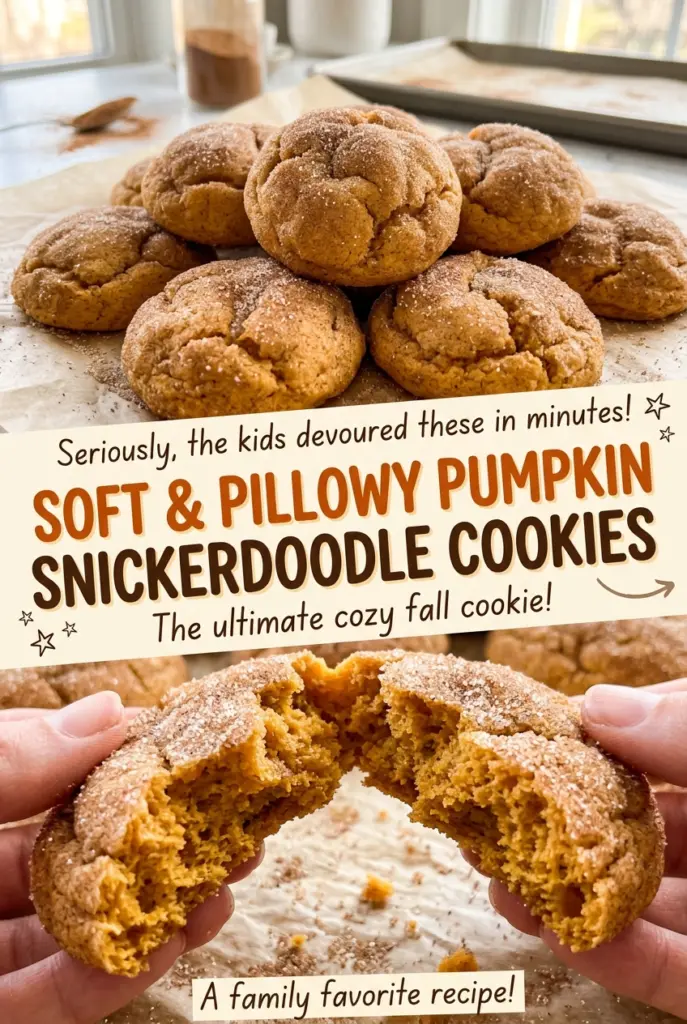
Soft & Pillowy Pumpkin Snickerdoodle Cookies
As the first tray bakes, the cookies puff up under their cinnamon-sugar coating, and the edges begin to look set while the centers stay a little soft. That’s the moment…
Tip: save now, cook later.As the first tray bakes, the cookies puff up under their cinnamon-sugar coating, and the edges begin to look set while the centers stay a little soft. That’s the moment I watch for with these pumpkin snickerdoodles; waiting for the middle to look completely firm can take them past pillowy and into dry.
Pumpkin puree brings moisture and a mellow pumpkin flavor, so I use an egg yolk rather than a whole egg. The yolk adds richness without the extra white, keeping the dough tender without pushing it toward a cakey texture. Plain pumpkin puree matters here, too: pumpkin pie filling is already sweetened and spiced, which would throw off the balance.
A short, gentle mix after the flour goes in keeps the dough soft, and the cinnamon-sugar finish gives every bite that familiar snickerdoodle warmth. The cookies come out puffy, tender, and warmly spiced.

Kitchen Note
Give the dough its full hour in the refrigerator, covered. Pumpkin makes it soft, and that chill firms it enough to scoop and roll without the dough smearing across your hands.
Save these Soft & Pillowy Pumpkin Snickerdoodle Cookies for a baking day when you want tender pumpkin cookies with a cinnamon-sugar finish.
Why the Cream of Tartar Makes These Snickerdoodles More Than Pumpkin Sugar Cookies
Pumpkin and cinnamon would make a good soft cookie on their own, but cream of tartar gives this dough its snickerdoodle character. It brings a gentle tang that balances the sweetness and keeps the spice from tasting one-note. Without it, the cookies would still bake, but they’d lose some of the signature contrast that makes a snickerdoodle taste like a snickerdoodle.
Here, cream of tartar works alongside baking soda in the dough. That pairing helps the cookies puff as they bake, while the cinnamon-sugar coating supplies the familiar crisp, fragrant outside. The pumpkin pie spice stays in the dough, where it flavors the cookie itself; the separate cinnamon coating gives the surface a clearer cinnamon hit.
That distinction matters because pumpkin flavor can easily get buried under sugar and spice. Keeping the dough spices measured and letting the coating do its own job gives you a cookie that tastes of pumpkin first, then cinnamon, with a faint tang underneath. It’s a small ingredient choice, but it’s what keeps this batch in snickerdoodle territory.
Which Ingredients Give These Pumpkin Snickerdoodles Their Soft Center and Spiced Edges
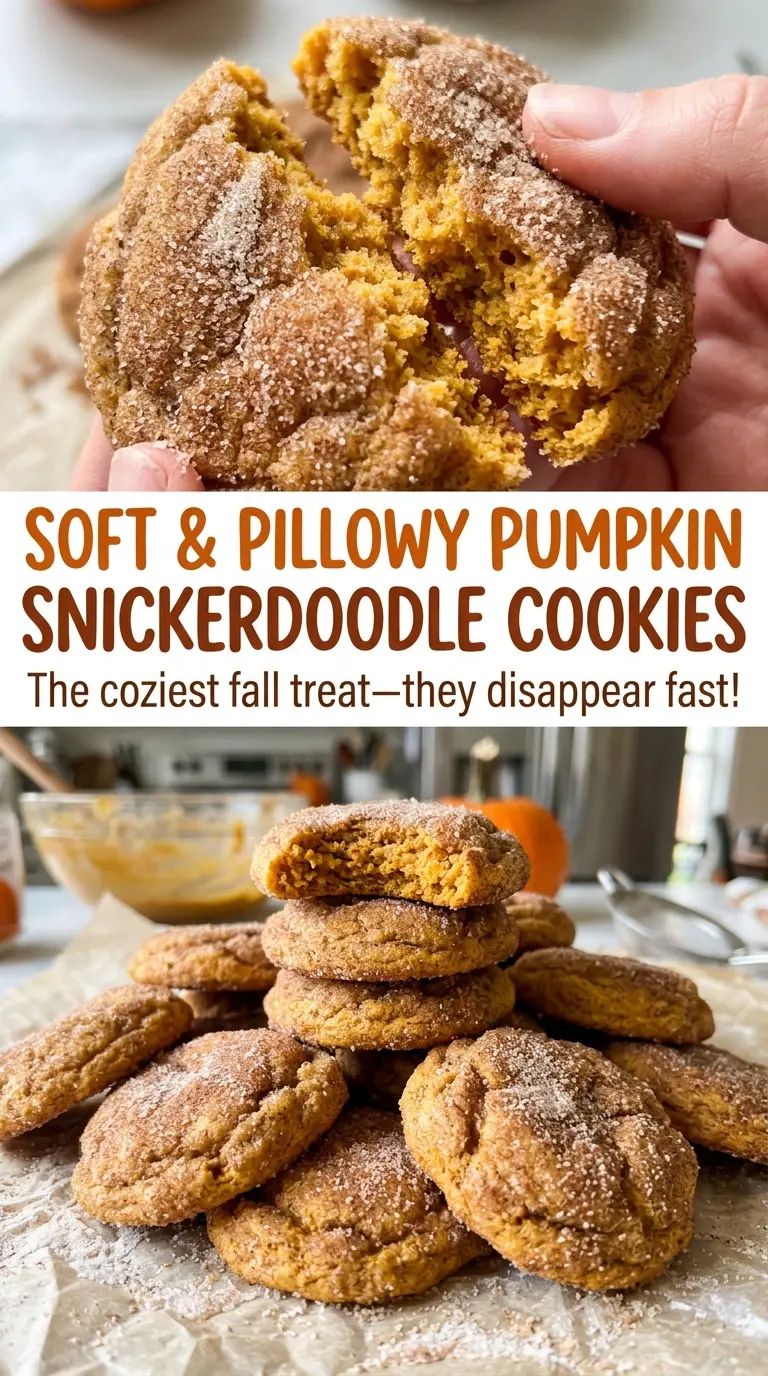
- All-purpose flour — It gives the dough enough structure to hold its shape while staying tender. Spoon it into the measuring cup and level the top rather than packing it down; too much flour can make the cookies dense.
- Pumpkin puree — Choose plain pumpkin puree, not pumpkin pie filling, which already contains sweeteners and spices. The puree brings moisture and pumpkin flavor, so keep it to the amount in the dough rather than adding extra for a stronger pumpkin taste.
- Unsalted butter and the two sugars — Softened butter creams smoothly with the granulated and brown sugars. The granulated sugar contributes sweetness, while packed light brown sugar adds a deeper note and helps keep the centers tender. Butter should give slightly when pressed but shouldn’t look melted or oily.
- Egg yolk — The yolk enriches the dough and helps bind it without adding the extra moisture of an egg white. Separate the egg carefully; if a little white clings to the yolk, lift it off before mixing.
- Pumpkin pie spice and vanilla — The spice blends into the dough rather than sitting only on the outside, and vanilla rounds out the pumpkin and brown sugar. Use a fresh, fragrant spice blend; an old jar can taste flat.
- Cinnamon-sugar coating — Ground cinnamon and granulated sugar create the classic snickerdoodle finish. Stir them together thoroughly in a shallow bowl so the cinnamon is spread evenly and each dough ball gets a consistent coating.
Mixing and Baking the Dough Without Losing Its Pillowy Texture
Whisk the dry ingredients evenly
Whisk the flour, cream of tartar, baking soda, pumpkin pie spice, and table salt together in a medium bowl. Work the whisk through the full bowl so the baking soda and spice aren’t concentrated in one spot. Set the mixture aside while you cream the butter and sugars.
Cream the butter, then add the pumpkin
Beat the softened butter with both sugars in a large bowl using an electric mixer on medium speed for 2 to 3 minutes. The mixture should look lighter and creamy, not greasy or separated. Beat in the egg yolk, pumpkin puree, and vanilla until combined, scraping the bowl if anything clings to the sides.
Stop mixing when the flour disappears
Add the flour mixture on low speed and mix just until no dry streaks remain. Don’t keep beating once the dough comes together; extra mixing can make the cookies less tender. Cover the bowl and chill the dough for 1 hour before shaping.
Coat and bake one sheet at a time
Stir the coating sugar and cinnamon together in a shallow bowl, then preheat the oven to 350°F and line two baking sheets with parchment paper. Scoop the dough into 2-tablespoon portions, roll each into a ball, coat it in cinnamon-sugar, and arrange the balls 2 inches apart. Bake one sheet at a time on the center rack for 10 to 12 minutes, until the cookies are puffed, the edges are set, and the centers still look slightly soft. Let them cool on the baking sheets for 5 minutes before moving them to a wire rack.
Three Practical Ways to Adapt These Pumpkin Snickerdoodles
Gluten-free with a cup-for-cup baking blend
Replace the all-purpose flour with the same amount of a gluten-free cup-for-cup blend made for baking. Choose one that includes xanthan gum for better structure. The cookies keep their pumpkin-and-cinnamon flavor, though the crumb may be a little more delicate than the wheat-flour version.
Dairy-free with baking sticks
Use an equal amount of dairy-free butter sticks in place of the unsalted butter, choosing sticks intended for baking rather than soft tub spread. The cookies will still be tender, though they’ll have a slightly different, less buttery flavor. Soften the sticks before creaming them with the sugars.
A more pumpkin-spiced coating
Swap the ground cinnamon in the coating for pumpkin pie spice. The outside will echo the spice in the dough more strongly, with less of the focused cinnamon flavor of the classic coating.
Storage and Reheating
- Refrigerator: Store the cooled cookies in an airtight container for up to 1 week. They’ll firm up when cold, so let them come to room temperature before eating.
- Freezer: Freeze completely cooled cookies in an airtight container, separating layers with parchment, for up to 2 months. Thaw at room temperature.
- Reheating: Warm a cookie briefly in the microwave if you’d like a softer, just-warmed center. Stop as soon as it softens; prolonged heating can dry out the edges.
Questions That Come Up When Baking Pumpkin Snickerdoodles
Soft & Pillowy Pumpkin Snickerdoodle Cookies
Ingredients
Equipment
Method
- Whisk the flour, cream of tartar, baking soda, pumpkin pie spice, and salt together in a medium bowl.
- Beat the butter, granulated sugar, and brown sugar in a large bowl with an electric mixer on medium speed until light and creamy, 2-3 minutes.
- Beat in the egg yolk, pumpkin puree, and vanilla until combined.
- Mix in the flour mixture on low speed just until no dry streaks remain.
- Cover and chill the dough for 1 hour.
- Stir the sugar and cinnamon together in a shallow bowl.
- Preheat the oven to 350°F.
- Line two baking sheets with parchment paper.
- Scoop the dough into 2-tablespoon portions.
- Roll each portion into a ball and coat in the cinnamon-sugar.
- Arrange the dough balls 2 inches apart on the prepared sheets.
- Bake one sheet at a time on the center rack for 10-12 minutes, until the cookies are puffed, the edges are set, and the centers still look slightly soft.
- Cool the cookies on the baking sheets for 5 minutes.
- Transfer the cookies to a wire rack to cool.