
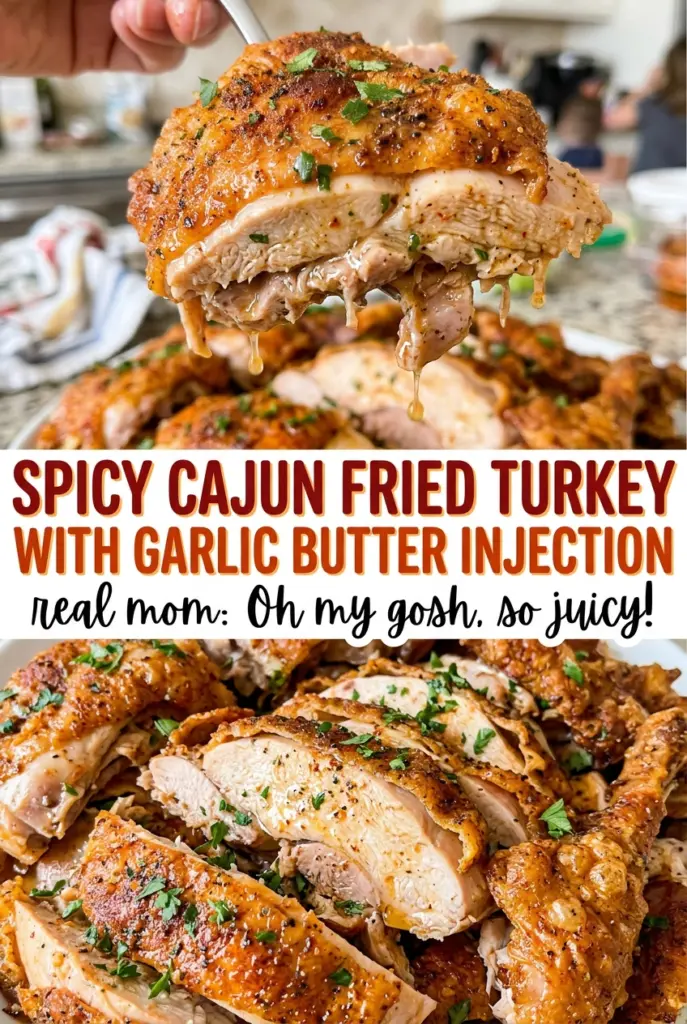
Spicy Cajun Fried Turkey with Garlic Butter Injection
The oil climbs the sides of the pot as soon as the turkey goes in, so guessing the fill line isn’t a shortcut I’d take. A water test lets you…
Tip: save now, cook later.The oil climbs the sides of the pot as soon as the turkey goes in, so guessing the fill line isn’t a shortcut I’d take. A water test lets you see exactly where the oil will sit before the burner is ever lit. It’s the first step that made this spicy Cajun fried turkey feel controlled instead of nerve-racking.
After the turkey dries uncovered in the refrigerator, I inject the breasts and thighs with warm garlic butter, then rub Cajun seasoning and cayenne over the skin and inside the cavity. That combination gives you seasoned meat beneath the skin and a spicy, savory exterior. Lower the bird slowly into the hot oil with the burner off, and the turkey comes out with crisp skin and juicy meat, ready to carve after a short rest.
Kitchen Note
Keep the butter-broth mixture warm while you fill the injector and work. When the butter cools and starts to firm, it’s harder to distribute evenly through the breasts and thighs.
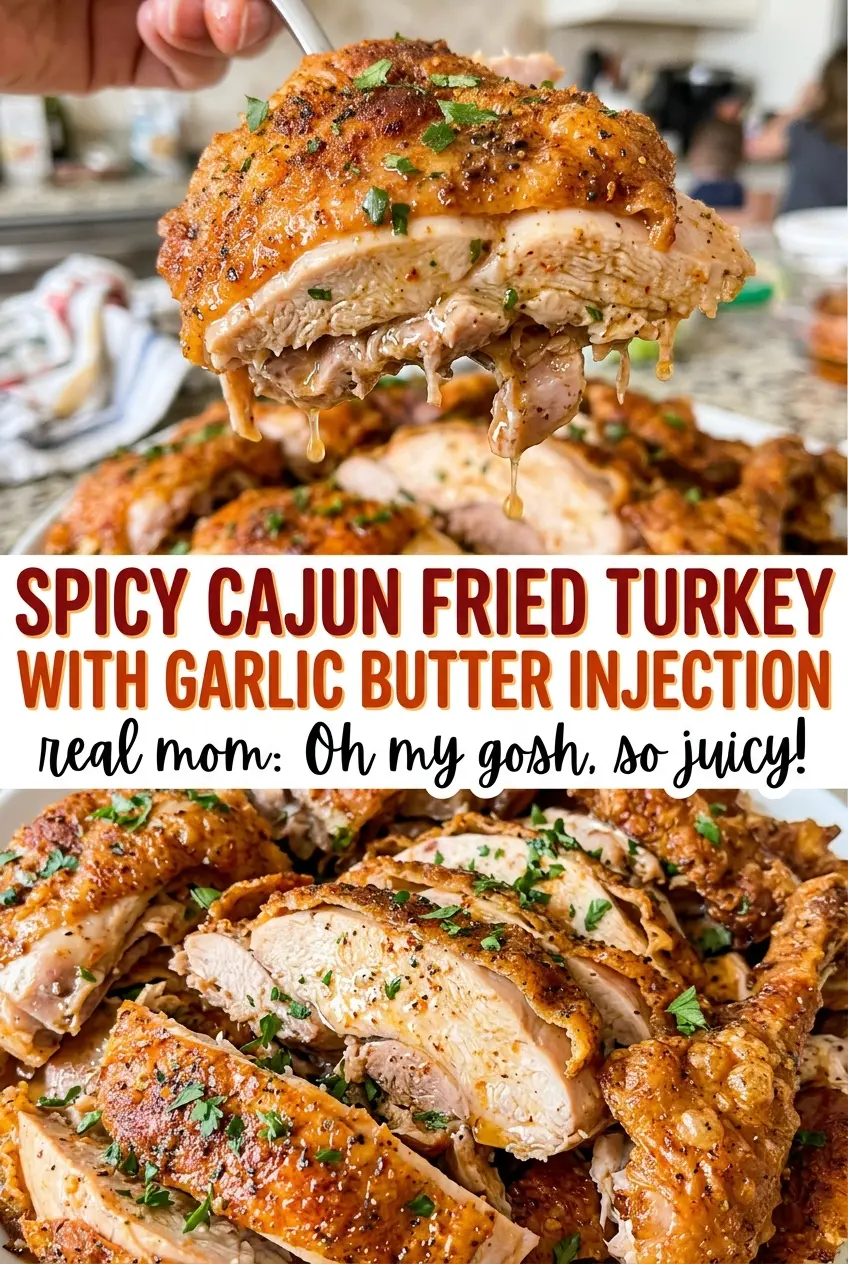
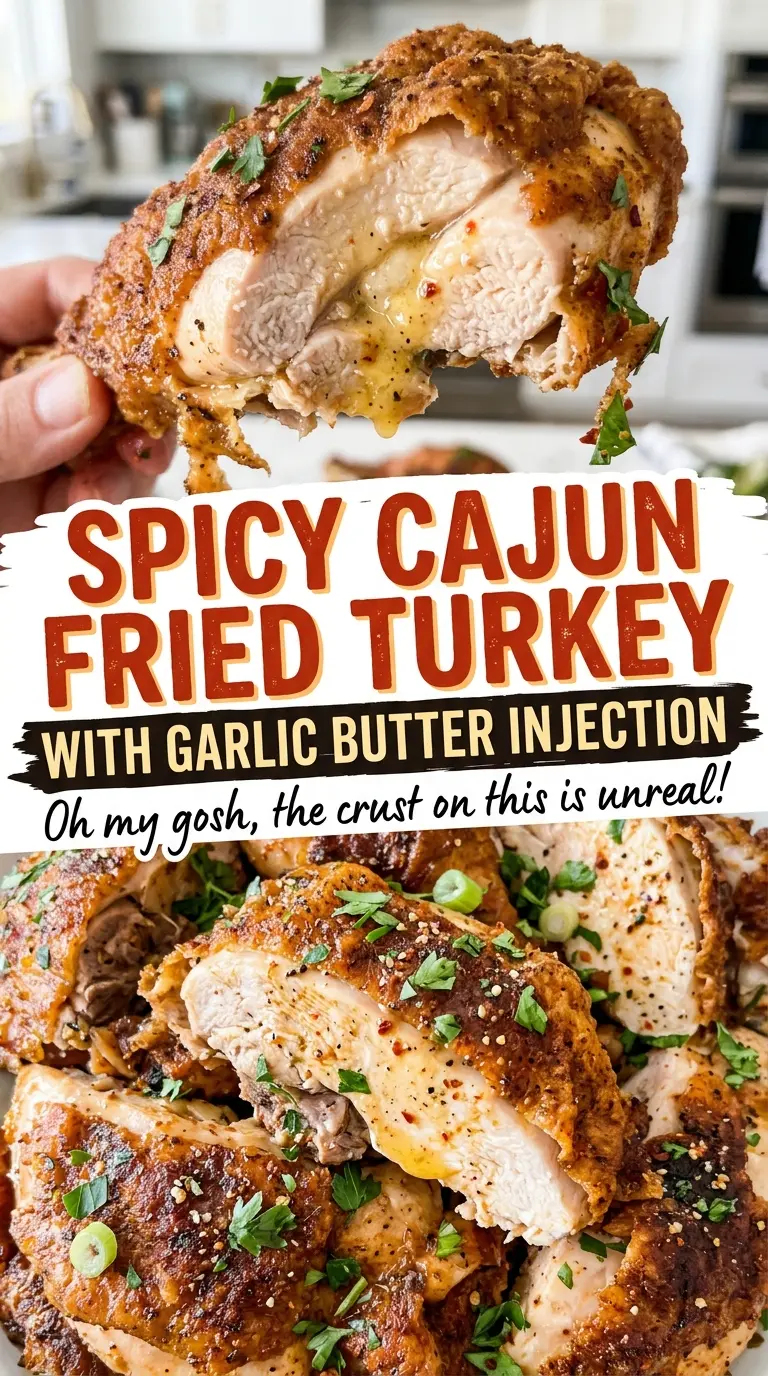
Save this spicy Cajun fried turkey for a centerpiece with garlic butter tucked into every slice and a peppery crust.
Why the Water Test Is the Safest Way to Set the Fryer Fill Line
A turkey displaces a surprising amount of oil. If you fill the pot based on its empty capacity, the oil can rise too high when the bird goes in and spill over the rim. That’s a dangerous situation around an open flame, and it’s avoidable before you ever heat the oil.
Use the actual turkey and basket to find the right level. Add water until it sits one inch above the bird, but stop if that level would cross the fryer’s maximum fill line. If it does, the pot is too small for this turkey; use a larger fryer or a smaller bird. Mark the water line, then drain and dry the pot and basket completely before adding oil. Water left in the equipment can splatter when it meets hot oil, so don’t rush the drying.
Set the 30-quart propane fryer on level bare ground outdoors, well away from buildings, decks, and overhangs. This isn’t a job for an indoor kitchen or a deck. The marked line gives you a useful, measured limit, but it never replaces the fryer’s own maximum fill line.
Which Ingredients Matter Most Once the Turkey Hits the Oil
- Whole turkey — A fully thawed bird in the 12- to 14-pound range suits this fryer method. Fresh or previously frozen both work; the important part is that it’s fully thawed, with the giblets and neck removed, before you begin.
- Chicken broth and unsalted butter — The broth loosens the melted butter into an injectable mixture, while unsalted butter adds richness without bringing extra salt along. Turkey broth works in place of chicken broth if that’s what you have; it gives the injection a slightly deeper turkey flavor.
- Garlic powder and cayenne — Powdered garlic disperses through the butter mixture, while cayenne brings direct heat to both the injection and the rub. Keep the powder fine and dry, rather than reaching for a chunky seasoning that won’t blend as smoothly.
- Cajun seasoning — A standard store-bought blend is convenient and works well. Blend salt levels vary, so check the label if you’re comparing brands; another Cajun blend can replace it in the same quantity without changing the method.
- Peanut oil — Its high smoke point suits deep frying, and a basic, fresh cooking oil is all you need here. For a peanut-free fryer oil, use refined canola oil; the variation below covers the practical details.
Dry Skin, Warm Injection, and a Controlled Lowering
Set the Oil Line, Then Dry the Turkey
Put the turkey in the fryer basket and lower it into the pot before adding water for the level test. Once you’ve marked the safe level, drain and dry the pot and basket completely. Pat the turkey dry inside and out, then set it on a rack over a rimmed baking sheet and refrigerate it uncovered for 8 to 24 hours. The exposed surface gives the skin time to dry rather than carrying moisture into the fryer.
Mix and Inject the Garlic Butter
Warm the chicken broth and butter in a small saucepan over low heat, just until the butter melts. Whisk in the garlic powder and cayenne, then fill a meat injector while the mixture is still warm. Inject the thick parts of the breasts and thighs at several sites, slowly withdrawing the needle as you press the plunger. Spread the mixture around the bird instead of putting it all in one spot.
Season the Skin and Cavity
Stir the Cajun seasoning and cayenne together until evenly mixed. Rub the blend over the turkey’s exterior and inside the cavity so the seasoning isn’t concentrated only on top. Take care to coat the whole surface, including the area around the legs and wings.
Fry at a Controlled Temperature
Pour peanut oil into the completely dry pot up to the marked level, never past the fryer’s maximum line. Bring it to 350°F, checking with a fryer thermometer. Turn off the burner, slowly lower the turkey into the oil with your face and body clear, and wait for the bubbling to subside before relighting the burner and regulating the oil at 325°F. Fry for 3 to 3 1/2 minutes per pound, about 36 to 49 minutes for this turkey; check the thickest part of the breast and the innermost part of the thigh, away from bone, for 165°F. If it needs more time, continue in 5-minute increments, then lift the basket to drain over the pot and transfer the turkey to a clean platter to rest for 20 minutes before carving.
How to Adjust the Heat Without Losing the Cajun Character
Make the Cajun Heat Milder
Use half the cayenne in both the injection and the Cajun rub. You’ll keep the garlic-butter richness and the seasoning blend’s savory character, with a gentler peppery finish.
Choose Refined Canola Oil
Refined canola oil is a practical replacement for peanut oil for frying, with a neutral taste that won’t compete with the Cajun seasoning. Use enough to reach the measured line, while staying below the fryer’s maximum fill line. If you’re avoiding peanut oil because of an allergy, also account for possible cross-contact from the fryer, basket, and utensils.
Use Turkey Broth in the Injection
Turkey broth can replace the chicken broth in the butter mixture. It leans into the bird’s savory flavor without changing the injection method.
Storage and Reheating
- Refrigerator: Refrigerate leftover turkey within 2 hours and keep it for 3 to 4 days. The skin softens in storage, though the meat stays good for sandwiches and meals.
- Freezer: Freeze carved portions in airtight, freezer-safe packaging for 2 to 6 months. Smaller portions thaw and reheat more evenly than a large wrapped piece.
- Reheating: Warm slices in a covered oven-safe dish with a splash of broth until steaming hot throughout. Avoid reheating uncovered for a long stretch; the lean breast meat dries out before the skin can crisp again.
Questions That Come Up Before Frying a Whole Turkey
Spicy Cajun Fried Turkey with Garlic Butter Injection
Ingredients
Equipment
Method
- Set a 30-quart propane turkey fryer on level bare ground outdoors, well away from buildings, decks, and overhangs, with the burner off; never fry indoors or on a deck.
- Place the turkey in the fryer basket and lower it into the pot.
- Add water until it reaches 1 inch above the turkey while staying below the fryer’s maximum fill line.
- Lift out the turkey and basket and mark the water level; if the level exceeds the maximum fill line, use a larger fryer or smaller turkey.
- Drain and dry the pot and basket completely.
- Pat the turkey dry inside and out, then set it on a rack over a rimmed baking sheet.
- Refrigerate the turkey uncovered for 8 to 24 hours.
- Warm the chicken broth and butter in a small saucepan over low heat just until the butter melts.
- Whisk in the garlic powder and cayenne.
- Fill a meat injector while the mixture is warm.
- Inject the mixture into the thick parts of the breasts and thighs at several sites, slowly withdrawing the needle as you depress the plunger; distribute all the mixture evenly.
- Mix the Cajun seasoning and cayenne.
- Rub the mixture over the turkey’s exterior and inside the cavity.
- Pour peanut oil into the dry pot up to the marked level, without exceeding the fryer’s maximum fill line.
- Heat the oil to 350°F using a fryer thermometer.
- Turn off the burner and slowly lower the turkey into the hot oil, keeping your face and body clear.
- When the bubbling subsides, relight the burner and regulate the oil at 325°F.
- Fry for 3 to 3 1/2 minutes per pound, about 36 to 49 minutes, until a thermometer reads 165°F in the thickest part of the breast and the innermost part of the thigh, away from bone; if needed, continue frying in 5-minute increments.
- Lift the basket and let the turkey drain over the pot.
- Transfer the turkey to a clean platter and rest for 20 minutes before carving.