
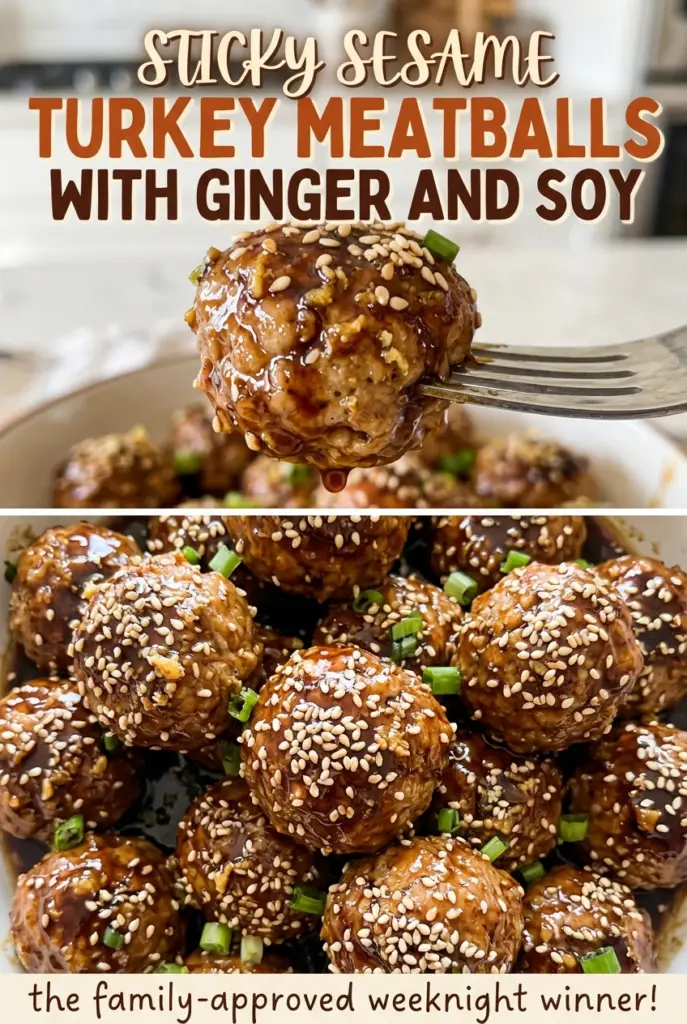
Sticky Sesame Turkey Meatballs with Ginger and Soy
At 425°F, these turkey meatballs bake through without needing a pan sear, which leaves me free to get the ginger-soy sauce glossy on the stove. The first time I made…
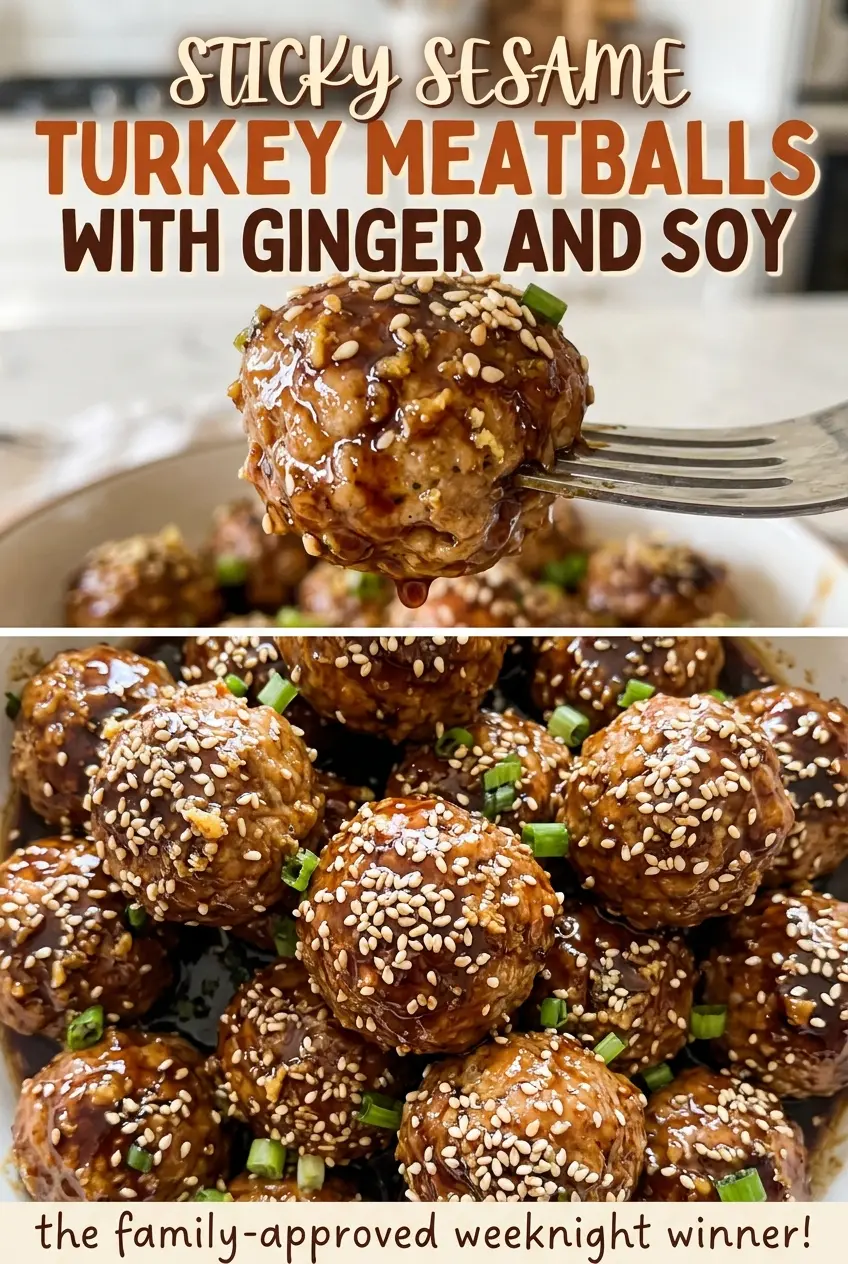
Tip: save now, cook later.At 425°F, these turkey meatballs bake through without needing a pan sear, which leaves me free to get the ginger-soy sauce glossy on the stove. The first time I made Sticky Sesame Turkey Meatballs with Ginger and Soy, I appreciated how the separate steps kept the sauce from disappearing into the meatballs before they were cooked. Once they come out of the oven, a quick toss coats each one in a sticky, savory-sweet glaze.
The meatball mixture is intentionally simple: turkey, panko, egg, scallions, and garlic. I mix it only until it holds together, then shape the meatballs evenly so they bake at the same pace. Meanwhile, honey dissolves into the soy sauce and vinegar, and a cornstarch slurry gives the glaze its shine. Sesame oil goes in off the heat, where its toasted aroma stays clear against the fresh ginger.
Kitchen Note
Turkey mixture gets dense if you keep mixing after everything is combined. Stop as soon as the scallions and garlic are evenly distributed, then shape the meatballs without compressing them hard.
Save these sticky sesame turkey meatballs for a night when you want ginger-soy glaze clinging to every tender bite.
Why This Ginger-Soy Glaze Thickens After the Meatballs Bake
The glaze and the meatballs have different jobs, so I cook them separately. The meatballs bake on their own sheet while the soy sauce, honey, rice vinegar, and ginger simmer together. That keeps the sauce from soaking into the turkey during its longer cook and lets me control the glaze’s final texture right in the saucepan.
Cornstarch needs to be mixed with cold water before it goes into the simmering sauce. Whisking it into a slurry first disperses the starch, so it thickens evenly instead of leaving little gummy pockets. It doesn’t take a long reduction: after a minute or two, the sauce turns glossy and clings to a spoon. Take the pan off the heat before stirring in the sesame oil; it’s a finishing touch, not something that needs to simmer.
That order also makes the final toss count. The meatballs are already cooked when they meet the sauce, so they need only enough mixing to get a complete coating. The result is a distinct ginger-and-soy glaze on the outside rather than a pan of diluted sauce.
What Keeps the Turkey Tender and the Sauce Balanced
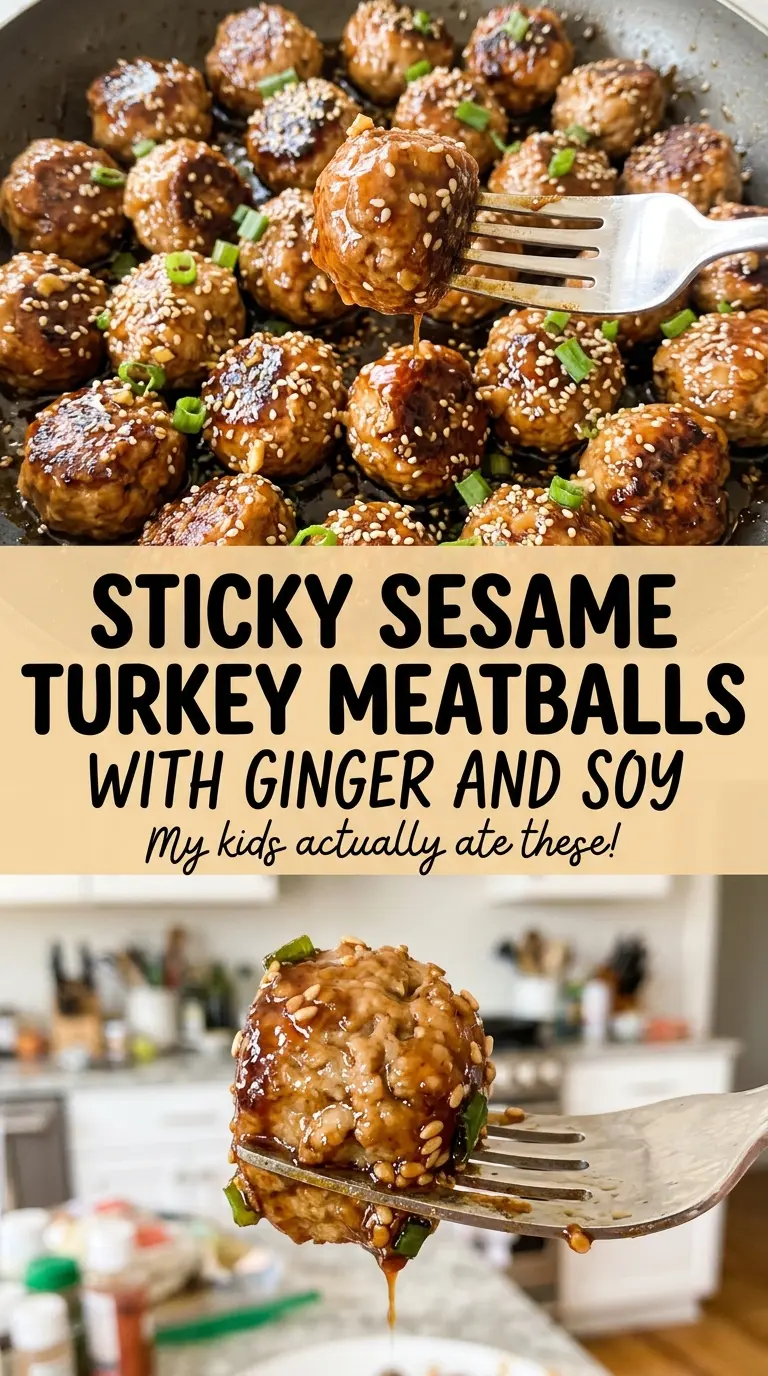
- Ground turkey — It makes a mild, tender base that takes on the ginger and soy without competing with them. A standard grocery-store pack works well here; the bigger difference comes from mixing gently and shaping the portions evenly.
- Panko and egg — Panko gives the meatballs a lighter texture than fine breadcrumbs, while the egg helps hold the turkey mixture together. If you replace panko with plain breadcrumbs, use the same volume; expect a slightly denser bite. Keep the egg in the mixture because it does important binding work.
- Scallions and garlic — Thinly sliced scallions bring a mild onion note through the meatballs, and minced garlic adds savory depth. Fresh scallions should look crisp, but there’s no need to seek out a special variety. Mince the garlic finely so larger pieces don’t interrupt the soft texture.
- Low-sodium soy sauce and honey — Soy sauce supplies the salty, savory base, while honey rounds it out and gives the glaze its sticky quality. The low-sodium kind helps keep the finished sauce from tasting too salty. Honey dissolves readily as the sauce simmers, so a basic grocery-store variety is fine.
- Rice vinegar and fresh ginger — Rice vinegar brings a gentle tart edge that keeps the honey from taking over. Freshly grated ginger gives the sauce a bright, warm bite; grate it finely so it blends into the glaze instead of leaving fibrous pieces.
- Cornstarch, sesame oil, and sesame seeds — Cornstarch thickens the sauce, toasted sesame oil adds aroma at the finish, and sesame seeds give the coated meatballs a light crunch. The oil’s toasted character is worth keeping, but the seeds can be omitted if needed without changing how the glaze thickens.
From Soft Turkey Mixture to Glossy Sesame Coating
Mix and Shape Even Portions
Heat the oven to 425°F and line a rimmed baking sheet with parchment paper. Combine the ground turkey, panko, egg, scallions, garlic, salt, and pepper in a large bowl just until evenly mixed. Shape about 20 meatballs, each roughly 1 1/2 inches wide, and arrange them on the sheet with a little space between them. Similar sizing helps them finish baking at about the same time.
Bake Until the Centers Are Cooked Through
Bake the meatballs for 16–20 minutes, checking the center of a meatball with an instant-read thermometer. They’re ready when the center reaches 165°F. Start checking near the shorter end of the range, since meatball size and oven differences affect how quickly they cook. Don’t judge doneness by color alone; the center temperature is the useful cue.
Simmer and Thicken the Ginger-Soy Sauce
While the meatballs bake, combine the soy sauce, honey, rice vinegar, and grated ginger in a small saucepan. Bring it to a simmer over medium heat, stirring until the honey dissolves. In a small bowl, whisk the cornstarch with the water until smooth, then whisk that slurry into the simmering sauce. Cook for 1–2 minutes, until the sauce looks glossy and thickened, then remove the pan from the heat and stir in the sesame oil.
Toss While the Glaze Is Glossy
Transfer the cooked meatballs to a bowl and toss them with the sauce until each one is coated. If the glaze looks thick in the saucepan, keep tossing; the warm meatballs help spread it over the surface. Sprinkle with sesame seeds once the coating is even. Serve while the glaze is still shiny and clings to the meatballs.
Three Easy Swaps That Change These Sesame Meatballs
Swap Turkey for Ground Chicken
Use ground chicken in place of the ground turkey in the same quantity. The flavor will be a little milder, while the scallion, garlic, and ginger-soy glaze still give the meatballs their defining character.
Make Them Gluten-Free
Replace the panko with gluten-free panko in the same amount, and use gluten-free tamari in place of the low-sodium soy sauce. The meatballs may have a slightly different crumb, but the ginger-honey glaze will still coat them well.
Use Maple Syrup for a Different Sweetness
Replace the honey with the same amount of maple syrup. The sauce will have a woodier sweetness and a little less of honey’s rounded flavor; the cornstarch still provides the thick, glossy finish.
Storage and Reheating
- Refrigerator: Store cooked meatballs and sauce in an airtight container for 3–4 days. The chilled glaze will firm up and look thicker.
- Freezer: Freeze the cooled meatballs with their sauce in an airtight freezer-safe container for up to 3 months for best quality. Thaw overnight in the refrigerator.
- Reheating: Warm covered in the microwave in short bursts, stirring or turning the meatballs between bursts, until hot throughout. Gentle reheating keeps the honey glaze from scorching; avoid leaving the sauce uncovered over high heat.
Questions That Come Up When Making These Turkey Meatballs
Sticky Sesame Turkey Meatballs with Ginger and Soy
Ingredients
Equipment
Method
- Heat the oven to 425°F.
- Line a rimmed baking sheet with parchment paper.
- Combine the turkey, panko, egg, scallions, garlic, salt, and pepper in a large bowl, mixing just until evenly combined.
- Shape the mixture into about 20 meatballs, each about 1 1/2 inches wide, and arrange them on the baking sheet.
- Bake for 16–20 minutes, until cooked through to 165°F in the center.
- Combine the soy sauce, honey, rice vinegar, and ginger in a small saucepan and bring to a simmer over medium heat, stirring until the honey dissolves.
- Whisk the cornstarch and water together in a small bowl, then whisk the slurry into the simmering sauce and cook for 1–2 minutes, until glossy and thickened.
- Remove from the heat and stir in the sesame oil.
- Toss the cooked meatballs with the sauce until coated, then sprinkle with the sesame seeds.