
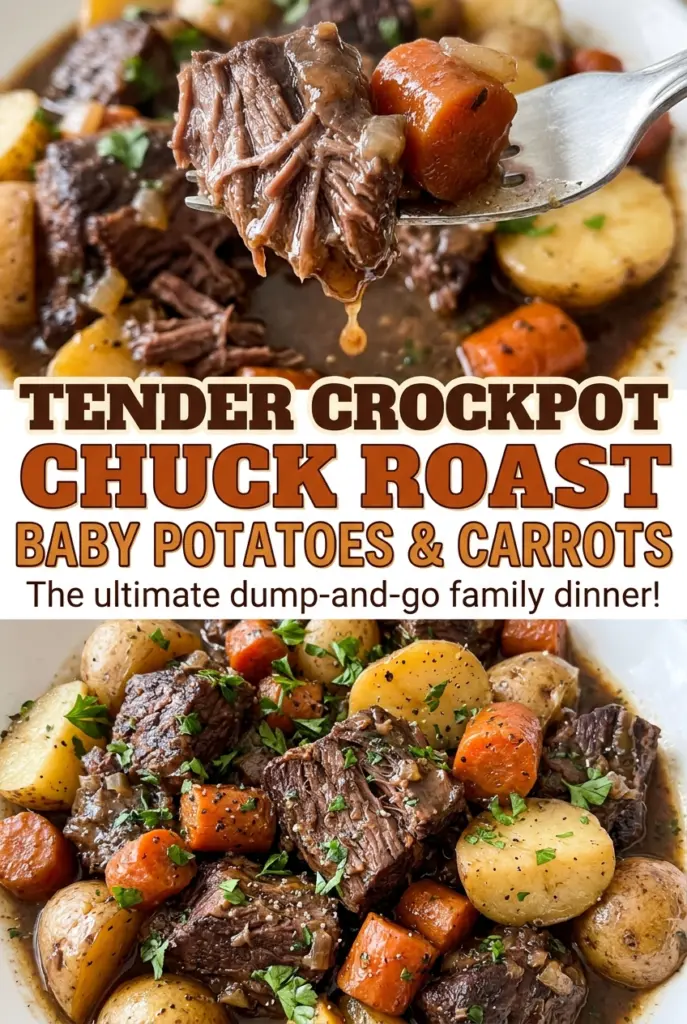
Tender Crockpot Chuck Roast with Baby Potatoes and Carrots
The oil should shimmer before the chuck roast goes into the skillet; that hot start is what gives the meat a deep brown crust instead of a gray surface. I…
Tip: save now, cook later.The oil should shimmer before the chuck roast goes into the skillet; that hot start is what gives the meat a deep brown crust instead of a gray surface. I sear it on every side, then let the slow cooker do the patient work. This Tender Crockpot Chuck Roast with Baby Potatoes and Carrots is built around a forgiving cut of beef, with the vegetables tucked underneath to cook in the savory liquid.
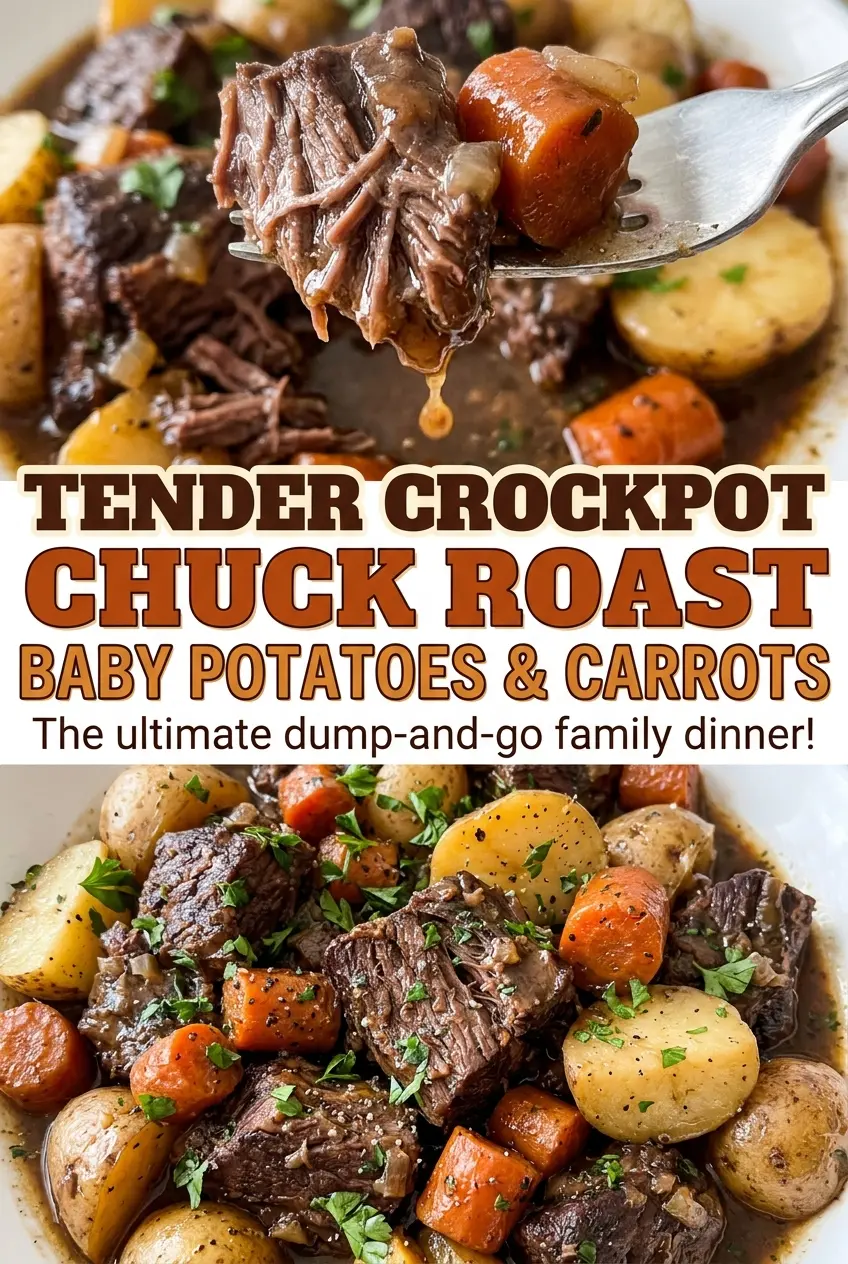
Chuck roast has enough connective tissue to turn tender during a long, gentle cook, but it won’t get there just because the clock says it’s time. I look for meat that gives easily when I test it with a fork, then let it rest before slicing or pulling it apart. The potatoes stay whole, and the carrots are cut into generous pieces, so they hold their shape beside the tender beef.
Kitchen Note
Don’t let the cook time alone decide when the roast is ready. The useful cue is that it pulls apart easily with a fork; if it still feels resistant, give it more time in the slow cooker.
Save this tender crockpot chuck roast for a cozy dinner with fork-soft beef, whole baby potatoes, and carrots cooked right alongside it.
Why the Sear Matters Before the Chuck Goes Into the Slow Cooker
A slow cooker makes the roast tender, but it won’t create the browned flavor that comes from a hot skillet. Searing gives the outside of the beef a rich, savory crust, and the browned bits left in the pan are part of the payoff. This isn’t about sealing juices inside the meat; the roast will release juices as it cooks. The sear is there to add another layer of flavor before the long cook begins.
Give the skillet time to heat and let the oil shimmer before adding the roast. If the pan is too cool, the meat tends to sit and steam instead of browning. Work with the broad sides first, then turn the roast onto its edges so the surface gets color all around. Don’t rush the turn: a good crust develops when the meat has contact with the hot pan rather than being moved every few seconds. Those browned surfaces bring more depth to the broth and vegetables later.
What the Chuck, Whole Potatoes, and Broth Bring to the Pot
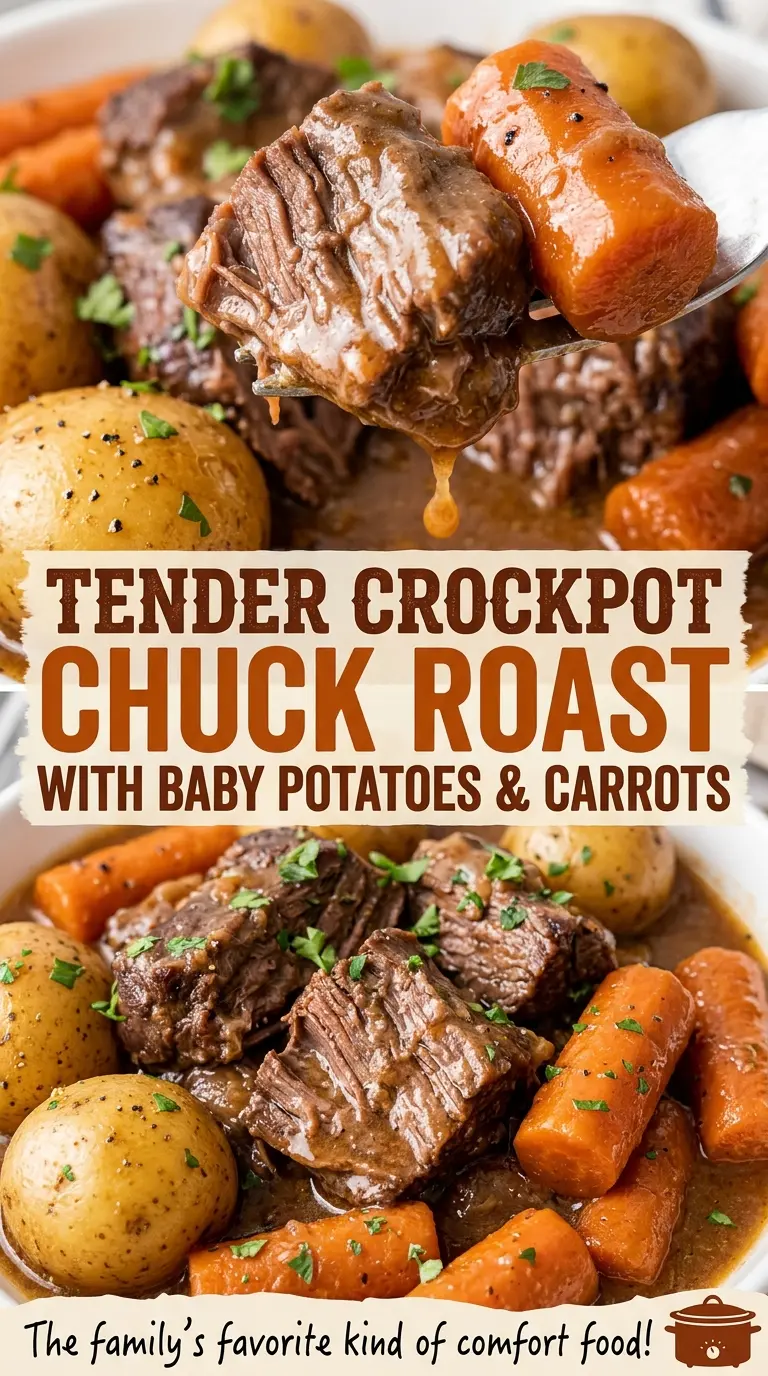
- Boneless chuck roast — Chuck’s marbling and connective tissue are what make it a strong fit for a long slow cook. Choose a roast that is thawed and fits comfortably over the vegetables in the slow cooker; a lean, quick-cooking cut won’t give the same tender, pull-apart result.
- Baby potatoes — Leaving them whole helps them keep their shape while the beef cooks. Baby potatoes are convenient here, and there isn’t a special premium variety needed; if you use larger potatoes instead, cut them into pieces similar in size so they cook more evenly.
- Carrots — Peeling them and cutting them into 1 1/2-inch pieces gives them enough size to soften without turning to mush during the long cook. Ordinary whole carrots are a good choice; baby carrots are less useful because their size makes the finished texture less predictable.
- Beef broth and Worcestershire sauce — Together they make the cooking liquid savory and rounded, rather than watery. A standard beef broth works well, and a gluten-free version of both the broth and Worcestershire sauce is the most useful swap when you need a gluten-free pot.
- Yellow onion, garlic, thyme, and bay leaf — These aromatics season the cooking liquid as the roast softens. Keep the onion in wedges and smash the garlic cloves so they can flavor the pot without needing to become a smooth sauce; dried thyme is already well suited to the long cook.
- Vegetable oil — Use it to get the roast browned in the skillet. A neutral oil that tolerates medium-high heat can stand in without changing the taste of the finished dish.
The Order That Builds Flavor Before the Slow Cook
Season and Brown Every Side
Pat the thawed chuck roast dry with paper towels, then season all over with kosher salt and black pepper. Heat the vegetable oil in a 12-inch skillet over medium-high heat until it shimmers. Sear the broad sides for 3 to 4 minutes each, then brown the edges for 1 to 2 minutes. If the roast sticks, give the surface a little longer before trying to turn it; the meat releases more readily once a crust has formed.
Make a Vegetable Bed
Arrange the onion wedges, smashed garlic, whole baby potatoes, and carrot pieces across the bottom of a 6-quart slow cooker. Spread them into a fairly even layer so the roast can sit on top rather than settling directly against the cooker. Keep the potatoes whole and the carrots in their generous pieces. This gives the vegetables space around the meat as everything cooks.
Add the Liquid Around the Roast
Set the browned roast over the vegetables. Pour the beef broth and Worcestershire sauce around the roast, then add the dried thyme and bay leaf. Pouring the liquid around the meat keeps the browned top from being washed off before cooking starts. Check that the bay leaf is in the pot so you can remove it before serving.
Cook Until the Beef Gives Easily
Cover and cook on LOW for 8 to 9 hours or on HIGH for 5 to 6 hours. The roast is ready when it pulls apart easily with a fork and the vegetables are tender. If the beef still resists when tested, it needs more time; don’t try to solve that by slicing it while it’s still tough. Slow-cooked chuck becomes tender as it continues cooking.
Rest, Then Slice or Pull
Remove and discard the bay leaf when cooking is finished. Let the roast rest for 10 minutes before slicing or pulling it apart, then serve it with the potatoes and carrots. Slicing gives you substantial pieces of beef, while pulling separates the tender meat into smaller portions. Either way, bring some of the vegetables along with each serving.
Two Smart Changes for Different Tables
Make the Pot Gluten-Free
Use gluten-free beef broth and gluten-free Worcestershire sauce, keeping the rest of the ingredients the same. The broth still supplies the savory base, while the Worcestershire brings its tangy depth; check that both replacements are specifically labeled gluten-free.
Leave Out the Potatoes for a Lower-Carb Plate
Skip the baby potatoes and keep the roast, carrots, onion, garlic, and cooking liquid. You’ll have a less starchy meal, though the carrots still contribute carbohydrates and the pot will have less vegetable bulk. The beef and carrots can cook together using the same slow-cooker timing and tenderness cues.
Storage and Reheating
- Refrigerator: Store the beef and vegetables with some cooking liquid in a covered container for 3 to 4 days. The potatoes will soften further as they sit.
- Freezer: Freeze the cooled roast and vegetables with cooking liquid in an airtight container for up to 3 months. The potatoes may be softer after thawing, but the beef freezes well.
- Reheating: Warm covered in a saucepan over low heat with some of the cooking liquid, or microwave a portion in a covered dish, until it reaches 165°F. Avoid high heat, which can dry the beef before the center is hot.
Questions That Come Up With Crockpot Chuck Roast
Tender Crockpot Chuck Roast with Baby Potatoes and Carrots
Ingredients
Equipment
Method
- Pat the chuck roast dry with paper towels and season all over with the salt and pepper.
- Heat the oil in a 12-inch skillet over medium-high heat until shimmering, then sear the roast for 3 to 4 minutes per broad side and 1 to 2 minutes on the edges.
- Arrange the onion, garlic, potatoes, and carrots in the bottom of a 6-quart slow cooker.
- Set the seared roast on top of the vegetables, then pour the broth and Worcestershire sauce around it and add the thyme and bay leaf.
- Cover and cook on LOW for 8 to 9 hours or HIGH for 5 to 6 hours, until the roast pulls apart easily with a fork and the vegetables are tender.
- Remove and discard the bay leaf.
- Let the roast rest for 10 minutes before slicing or pulling it apart and serving with the vegetables.