
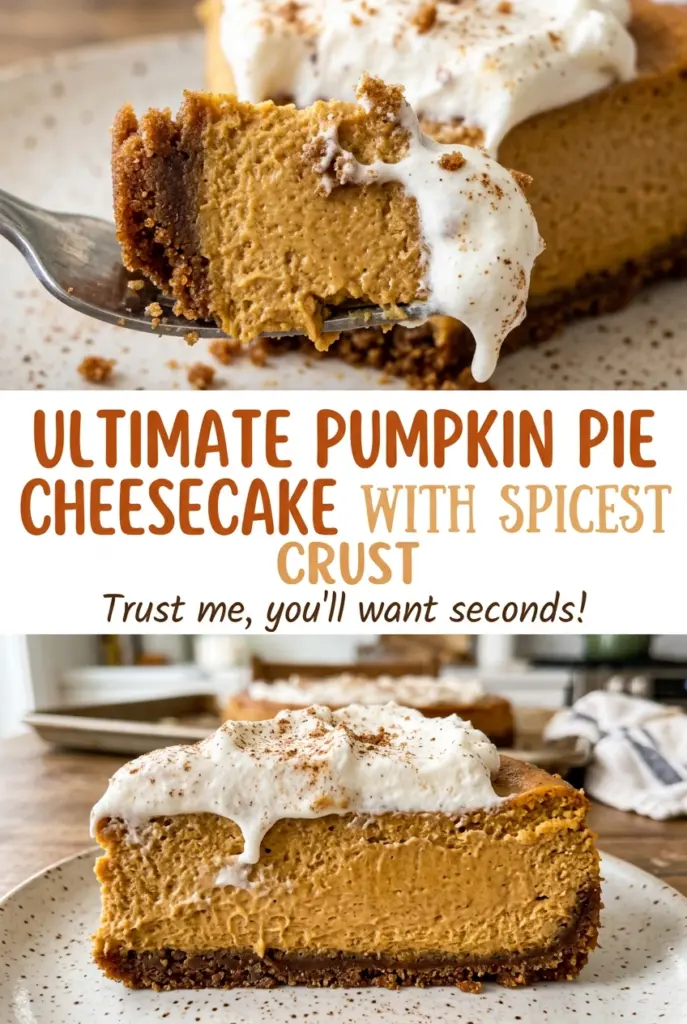
Ultimate Pumpkin Pie Cheesecake with Spiced Crust
The edge of a cheesecake can look ready while the middle still has a soft wobble, and that’s the moment I used to leave it in the oven too long.…
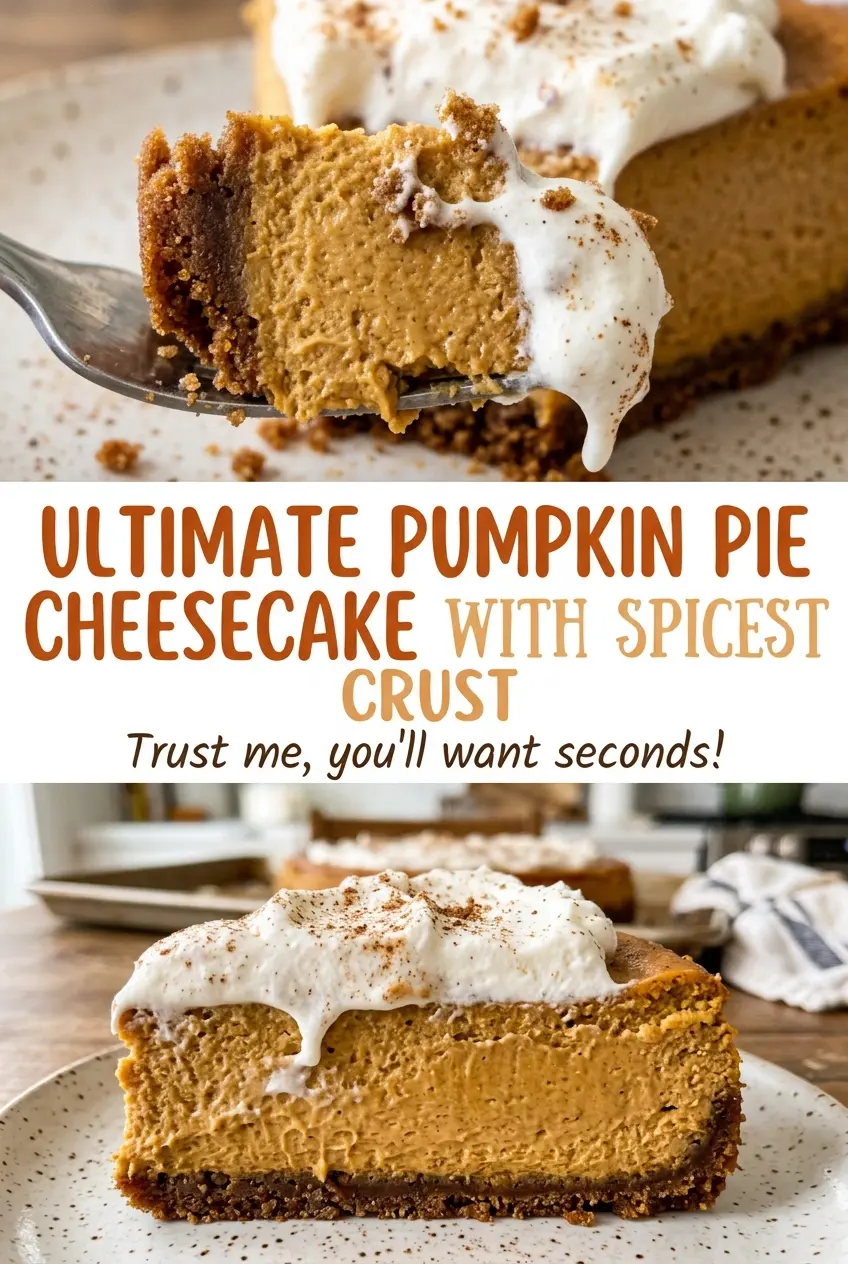
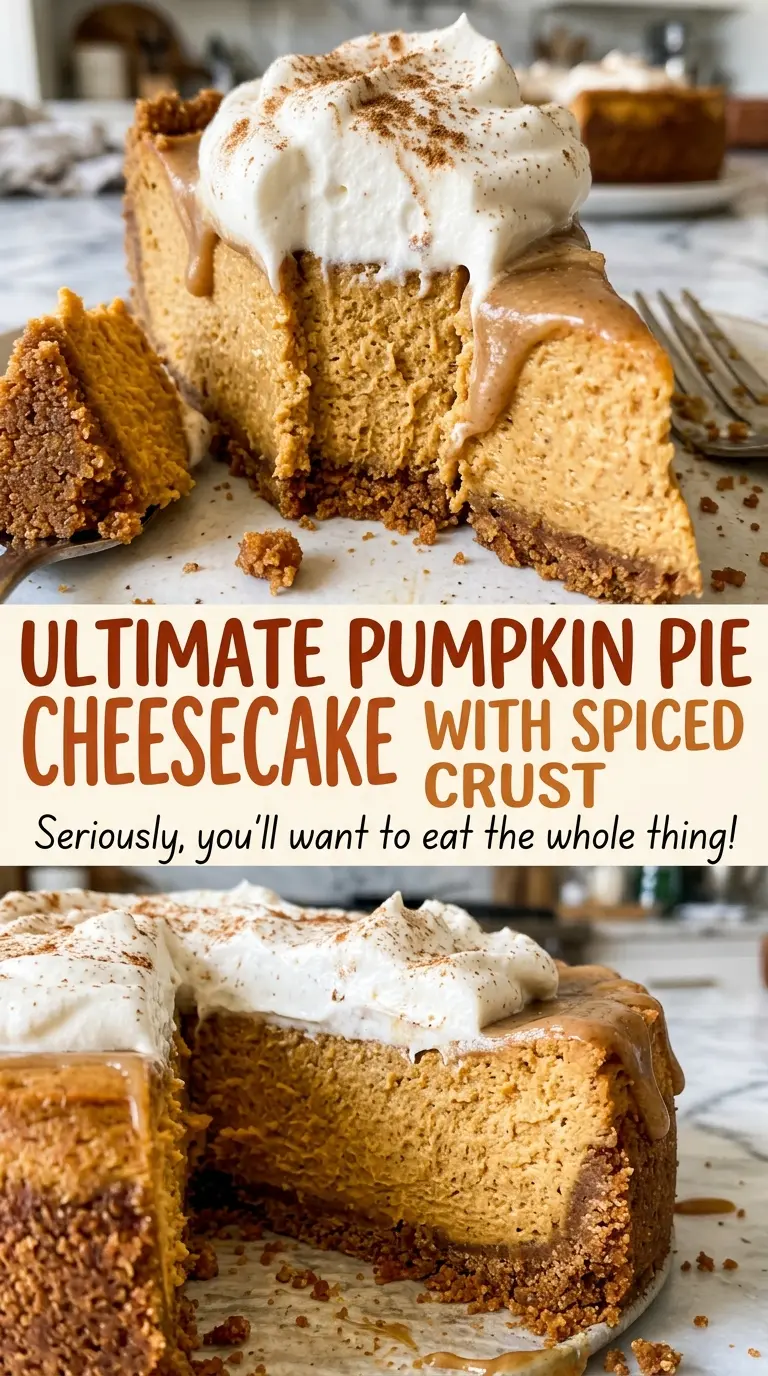
Tip: save now, cook later.The edge of a cheesecake can look ready while the middle still has a soft wobble, and that’s the moment I used to leave it in the oven too long. This pumpkin pie cheesecake is meant to come out with the center still moving slightly; it firms as it cools and chills. The spiced crust gives each slice a little crunch, while the filling stays creamy with pumpkin flavor balanced by the familiar tang of cheesecake.
I like that this dessert lands between pumpkin pie and a classic cheesecake without making either one disappear. A little cinnamon and nutmeg in the crust make the first bite warm and fragrant, and the smooth pumpkin filling keeps the slice rich without feeling dense. The slow cooling and long chill take patience, but they’re what give the cheesecake its neat slices and soft, velvety center.
Kitchen Note
Once the eggs go into the bowl, keep the mixer on low and stop as soon as each one disappears into the filling. Beating longer adds air, which can leave the cheesecake puffed in the oven and more likely to sink as it cools.
Save this pumpkin pie cheesecake with its spiced crust for a dessert that needs time to chill but slices beautifully ahead of serving.
Why the Water Bath Matters More Than Baking Longer
A thick pumpkin cheesecake needs time for heat to travel from the edges into the center. Without a water bath, the outer ring can set and dry out while the middle is still catching up. The hot water surrounding the springform pan softens that temperature difference, helping the filling bake more evenly instead of forcing you to leave it in the oven until the center looks completely firm.
The foil around the springform pan has a separate job: it keeps water from seeping through the removable base and turning the crust damp. Wrap the outside bottom and sides with two large sheets of heavy-duty foil before the pan goes near the roasting pan. Keep the water level about halfway up the springform sides, and handle the filled roasting pan carefully as you move it. A little movement in the center at the end is expected; baking until the whole top is rigid trades a creamy center for a drier one.
The Pumpkin and Cream Cheese Need Different Treatment
- Graham cracker crumbs — Fine, even crumbs press into a compact crust that holds together when sliced. If you’re starting with whole crackers, crush them until there are no large pieces; coarse crumbs leave weak spots. Gingersnap crumbs make a good change of pace, with a stronger ginger note in the crust.
- Cream cheese — It gives the filling its characteristic rich, tangy body. Let it soften before beating so it blends smoothly with the sugar; cold lumps are hard to work out once the other ingredients are in. Brick-style cream cheese is a better choice than whipped cream cheese, which has a lighter texture and can change how the filling sets.
- Canned pumpkin puree — Choose plain pumpkin puree, not pumpkin pie filling, which already contains sweeteners and spices and would throw off the balance. A smooth, consistent puree is useful here because the filling needs to set cleanly around the pumpkin. There isn’t a direct swap for pumpkin pie filling in this formula.
- Eggs and sour cream — Room-temperature eggs and sour cream blend into the softened cream cheese more evenly than cold ingredients. The eggs help the filling set, while sour cream adds a gentle tang. Full-fat plain Greek yogurt can replace the sour cream in the same amount; the filling will taste a little tangier and less rich.
- Flour and pumpkin pie spice — The flour gives the pumpkin filling a little extra structure, and the spice brings its familiar warm flavor without needing separate spice measurements. Whisk them with the salt before adding them so they disperse through the filling instead of forming little pockets.
- Butter and brown sugar — Melted butter binds the crust crumbs, and packed light brown sugar adds a mellow caramel note beneath the spices. Unsalted butter keeps the crust’s salt level predictable; mix until the crumbs look evenly moistened rather than leaving dry patches at the bottom of the bowl.
Build the Cheesecake in Stages for a Smooth Set
Press and bake the spiced crust
Set the oven rack in the center and preheat to 325°F. Coat the inside of a 9-inch springform pan with nonstick cooking spray, then wrap its outside bottom and sides in two large sheets of heavy-duty foil. Stir the crumbs with brown sugar, cinnamon, and nutmeg, then mix in the melted butter until evenly moistened. Press the mixture firmly over the bottom and about 1 inch up the sides, bake for 10 minutes, and cool the crust on a wire rack.
Mix the filling without whipping it
Beat the softened cream cheese and granulated sugar on medium speed until smooth, about 2 minutes, scraping down the bowl as needed. Add the room-temperature eggs one at a time on low speed, mixing only until each is incorporated. Mix in the pumpkin puree, sour cream, and vanilla on low until smooth. Whisk the flour, pumpkin pie spice, and salt separately, then mix them into the filling just until combined before pouring it over the cooled crust.
Set up the bath and bake to the right cues
Place the springform pan inside a 12×16-inch roasting pan. Carefully pour 8 cups of boiling water into the roasting pan until it reaches halfway up the springform sides. Bake for 70 to 90 minutes, watching for set edges and a center that still jiggles slightly. Check the middle with an instant-read thermometer; it should read 160°F, and the center shouldn’t look completely firm.
Cool it gradually in the oven
Turn off the oven and prop the door open about 1 inch. Leave the cheesecake in its water bath for 1 hour so it doesn’t go from hot oven to cool room too quickly. Carefully lift the springform pan out of the bath and remove the foil. Set the pan on a wire rack and let the cheesecake cool to room temperature, about 2 hours.
Chill before releasing the sides
Cover the pan and refrigerate the cheesecake for at least 6 hours; cutting it before the filling is cold makes the center much softer and the slices harder to lift. Once chilled, run a thin knife around the edge before releasing the springform sides. Keep the knife close to the pan wall so it loosens the edge without cutting into the filling. The fully chilled cheesecake is ready to slice and serve.
Two Easy Changes for a Different Crust or a Gluten-Free Slice
Use a gingersnap crust
Replace the graham cracker crumbs with finely crushed gingersnaps, and leave out the brown sugar, cinnamon, and nutmeg in the crust. Keep the melted butter amount the same and press the crumbs into the pan as usual. The crust will taste sweeter and more ginger-forward, which gives the pumpkin filling a bolder contrast.
Make the cheesecake gluten-free
Use gluten-free graham cracker crumbs in place of the regular crumbs, and replace the all-purpose flour with the same amount of a 1-to-1 gluten-free baking flour. Keep the other crust ingredients and filling proportions unchanged. The texture stays close to the original; use products labeled gluten-free if you’re avoiding gluten completely.
Make-Ahead and Storage
- Refrigerator: Keep the covered cheesecake refrigerated for up to 4 days. The crust gradually softens as it sits, but the filling stays creamy.
- Freezer: It freezes well. Chill it completely, wrap the whole cheesecake or individual slices tightly, and freeze for up to 1 month; thaw in the refrigerator before serving.
- Serving: Serve it cold or let a slice sit briefly at room temperature to take off the chill. Reheating isn’t needed and can soften the filling too much.
Questions That Come Up While Baking This Pumpkin Cheesecake
Ultimate Pumpkin Pie Cheesecake with Spiced Crust
Ingredients
Equipment
Method
- Preheat the oven to 325°F with a rack in the center position.
- Lightly coat the inside of a 9-inch springform pan with nonstick cooking spray.
- Wrap the outside bottom and sides of the pan with two large sheets of heavy-duty foil.
- Stir together the graham cracker crumbs, packed light brown sugar, ground cinnamon, and ground nutmeg in a medium bowl.
- Mix in the melted unsalted butter until evenly moistened.
- Press the crumb mixture firmly over the bottom and about 1 inch up the sides of the pan.
- Bake for 10 minutes, then cool on a wire rack.
- Beat the softened cream cheese and granulated sugar in a large bowl with an electric mixer on medium speed until smooth, about 2 minutes, scraping down the bowl as needed.
- Add the eggs one at a time, mixing on low speed just until each is incorporated.
- Mix in the pumpkin puree, sour cream, and vanilla extract on low speed until smooth.
- Whisk the all-purpose flour, pumpkin pie spice, and fine salt in a small bowl.
- Mix the flour mixture into the filling on low speed just until combined.
- Pour the filling over the cooled crust.
- Set the springform pan in a 12x16-inch roasting pan.
- Carefully pour the boiling water into the roasting pan until it reaches halfway up the sides of the springform pan.
- Bake for 70 to 90 minutes, until the edges are set, the center jiggles slightly, and an instant-read thermometer inserted in the center reads 160°F.
- Turn off the oven, prop the door open about 1 inch, and leave the cheesecake in the water bath for 1 hour.
- Carefully lift the springform pan out of the water bath and remove the foil.
- Cool the cheesecake on a wire rack until it reaches room temperature, about 2 hours.
- Cover the pan and refrigerate the cheesecake for at least 6 hours.
- Run a thin knife around the edge of the cheesecake and release the springform sides.
- Slice to serve.