
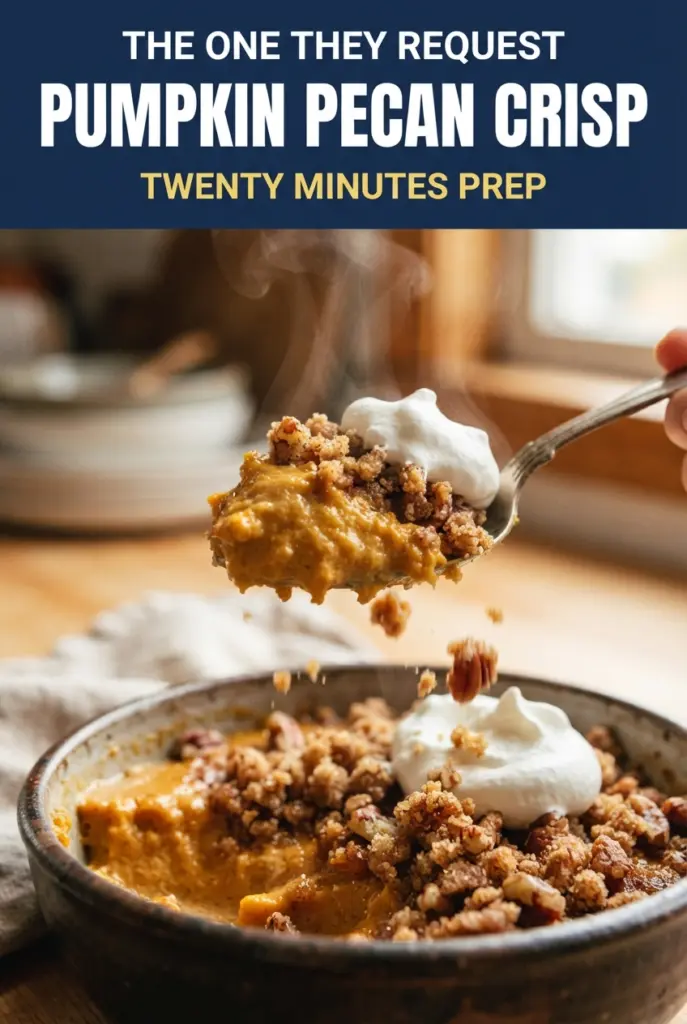
Warm Maple Pumpkin Crisp with Brown Sugar Pecan Topping
Warm maple pumpkin crisp lands somewhere between pumpkin pie and pecan pie, but it skips the crust and gives you a better texture contrast. The filling bakes up silky and…
Tip: save now, cook later.Warm maple pumpkin crisp lands somewhere between pumpkin pie and pecan pie, but it skips the crust and gives you a better texture contrast. The filling bakes up silky and softly set, then the brown sugar pecan topping turns crisp and craggy on top, with buttery crumbs that break against the spoon. Served warm, it’s the kind of dessert people keep circling back to for “just one more bite.”
What makes this version work is the balance. Pumpkin puree brings body, heavy cream keeps the custard rich without turning it dense, and maple syrup rounds out the brown sugar so the filling tastes deep rather than flat. The topping starts with cold butter rubbed into the dry ingredients, which matters more than most people think. Those cold bits steam as they bake, and that’s what gives you clumps instead of sandy crumbs.
Below, I’ve laid out the cue that tells you the custard is ready for the topping, plus a few ways to change the finish without losing that warm, spoonable texture. If you’ve ever had pumpkin desserts turn watery or pecan toppings sink into the filling, the notes here will help.
The custard set up beautifully and the pecan topping stayed crisp even after we served it warm. I was worried it would be too sweet, but the maple flavor came through clean and balanced.
Save this maple pumpkin crisp for the night you want pumpkin pie flavor, pecan pie crunch, and a dessert that goes straight from oven to spoon.

The Secret to Keeping the Custard Silky Under a Crunchy Topping
The biggest risk with a pumpkin bake like this is rushing the topping onto a filling that hasn’t started to set. If the custard goes into the oven and the streusel goes on too early, the topping can sink and absorb moisture instead of staying crisp. That first bake gives the pumpkin mixture enough structure to support the crumbs.
The other mistake is overbaking until the center looks fully firm. Pumpkin custard should still have a slight wobble in the middle when it comes out; it finishes setting as it rests. If you wait for it to look dry and rigid in the oven, it will go dense by the time it cools.
- Eggs — They give the custard structure. Three eggs are enough to set the filling without turning it into pie filling from a can. If you cut back, the center stays loose; if you add more, it starts to feel bouncy instead of creamy.
- Heavy cream — This is what keeps the filling lush. Half-and-half works in a pinch, but the result is less velvety and a little lighter. Milk alone makes the custard taste thinner and more likely to curdle around the edges.
- Pure maple syrup — Use real maple syrup here, not pancake syrup. You want the deep, woodsy sweetness that plays well with pumpkin and pecans. It also softens the brown sugar so the filling tastes rounded instead of one-note.
- Cold butter for the topping — Cold butter is what gives the crumb its texture. Warm butter melts into a paste and you lose those crunchy clusters. Cube it first, then rub it in until you see clumps the size of small peas and wet sand mixed together.
- Pecans — Chop them fairly small so they distribute through the topping, but don’t grind them fine. You want visible nuts and actual crunch, not a dusty streusel.
Building the Crisp in Two Separate Layers
Mixing the pumpkin base until it’s fully smooth
Whisk the pumpkin, cream, eggs, brown sugar, maple syrup, spice, vanilla, and salt until the mixture looks uniform and glossy. Any streaks of egg white will show up later as little custardy pockets, so keep going until the color is even. Pour it into the buttered dish and stop there. Don’t add the topping yet; the first bake is what gives the filling enough backbone to carry it.
Starting the set before the streusel goes on
Bake the custard for about 20 minutes, until the edges begin to look set and the center still trembles when you nudge the pan. That partial bake matters because it keeps the crumb from disappearing into the filling. If the custard still looks completely liquid on top, give it a few more minutes before adding the topping. You’re aiming for a surface that can support crumbs but still looks soft beneath.
Making clumpy pecan streusel
Mix the flour, brown sugar, cinnamon, and salt, then work in the cold butter with your fingertips until the mixture forms big, uneven crumbs. Those clumps are what bake into the crunchy top. Stir in the pecans at the end so they stay in visible pieces instead of getting smashed into the butter. If the mixture looks sandy, the butter warmed too much; chill it for 10 minutes and break it up again.
Baking until the center still has a little movement
Scatter the topping evenly over the partly set custard and bake until the top is deep golden and the filling only barely jiggles in the middle. That final wobble is your cue. The crusted topping should look dry and crisp, not pale or wet. Let the dish rest for 15 minutes before serving so the custard finishes setting and the spoonfuls hold together instead of running across the bowl.
How to Adapt It Without Losing the Texture
Gluten-free with a crispier topping
Swap the all-purpose flour for a 1:1 gluten-free baking blend. The topping will still clump and bake up crisp, though it may brown a little faster, so keep an eye on the last 10 minutes. Don’t use almond flour here; it turns greasy instead of streusel-like.
Dairy-free version that still tastes rich
Use full-fat coconut cream in place of the heavy cream and a plant-based butter that stays solid when cold. The custard will taste a little more coconut-forward, but the texture still lands creamy and spoonable. Pick a plant butter with a high fat content, or the topping will soften instead of crisping.
Swapping the pecans for another nut
Walnuts work well if that’s what you have, though they read a little earthier and less sweet than pecans. Almonds give more bite and less of that classic pie-bar flavor. Keep the amount the same and chop them to a similar size so the topping still bakes evenly.
Making it ahead for a holiday table
You can bake it earlier in the day and hold it at room temperature for a couple of hours, covered loosely once it cools. The topping stays crispest when it’s served the same day. If you want the warm-from-the-oven texture later, reheat individual portions instead of the whole pan.
Storage and Reheating
- Refrigerator: Cover and refrigerate for up to 4 days. The topping softens a bit, but the custard stays smooth.
- Freezer: Freeze in individual portions if needed, tightly wrapped. The topping loses some crunch after thawing, but the filling freezes well.
- Reheating: Warm in a 300°F oven until heated through, or microwave single servings in short bursts. The oven keeps the topping in better shape; the microwave is faster but softens the crumble.
Answers to the Questions Worth Asking
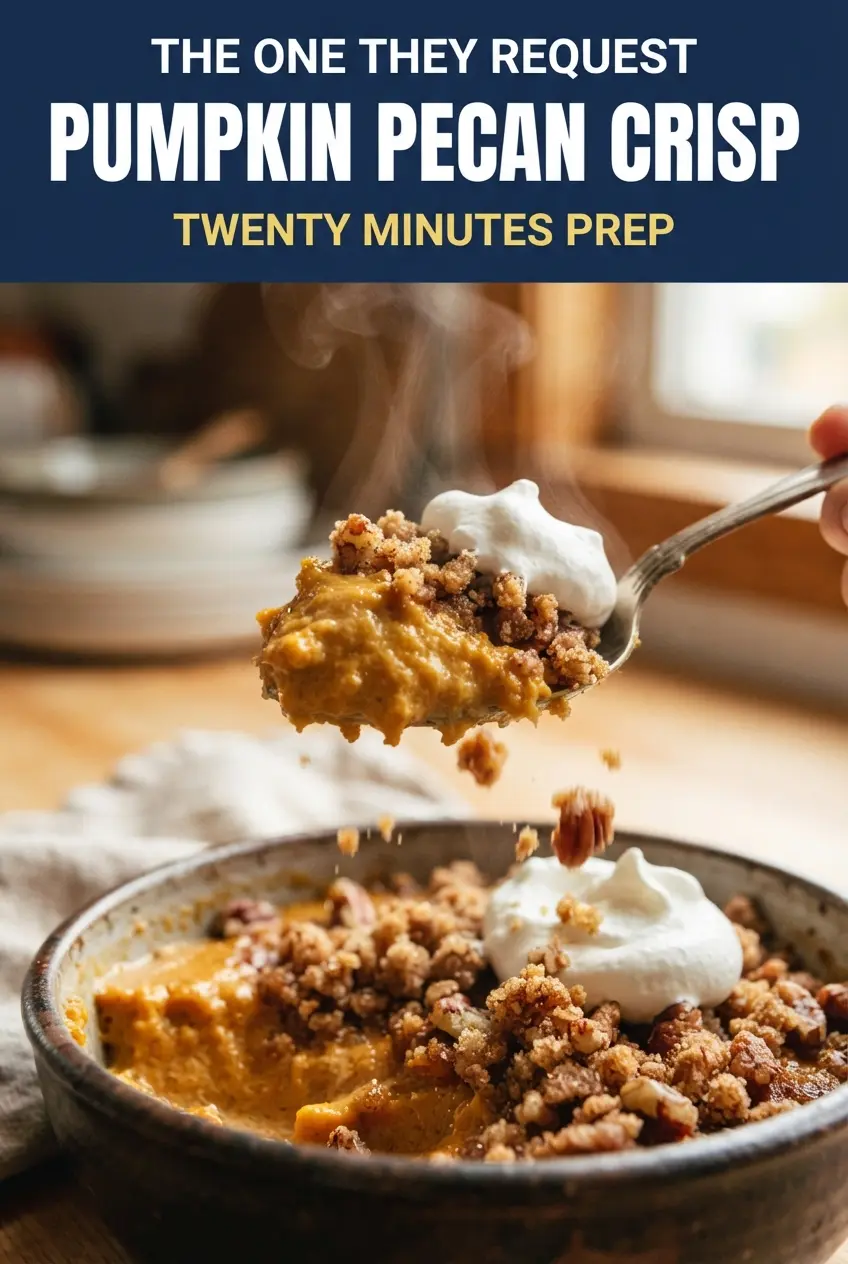
Warm Maple Pumpkin Crisp with Brown Sugar Pecan Topping
Ingredients
Equipment
Method
- Preheat the oven to 350°F and butter an 8x8-inch (2-quart) baking dish.
- Whisk the pumpkin puree, heavy cream, eggs, brown sugar, maple syrup, pumpkin pie spice, vanilla extract, and salt until smooth, then pour into the dish.
- Bake for 20 minutes, until the edges just begin to set, with a light jiggle still in the center.
- In a mixing bowl, combine the flour, brown sugar, ground cinnamon, and salt for the topping.
- Rub in the cold butter until large clumpy crumbs form, then stir in the chopped pecans until evenly coated.
- Scatter the pecan topping evenly over the partly set custard.
- Bake for 35–40 minutes more at 350°F, until the topping is deep golden and the center only slightly jiggles.
- Rest for 15 minutes so the custard firms up slightly before serving.
- Scoop into bowls and serve warm with vanilla ice cream or whipped cream.
- Drizzle with pure maple syrup right before eating.