

Bacon-Wrapped Water Chestnuts with Brown Sugar Glaze
The bacon starts to sizzle around the edges while the water chestnuts stay tucked inside, crisp and firm. That contrast is what makes these bites disappear from the appetizer plate:…
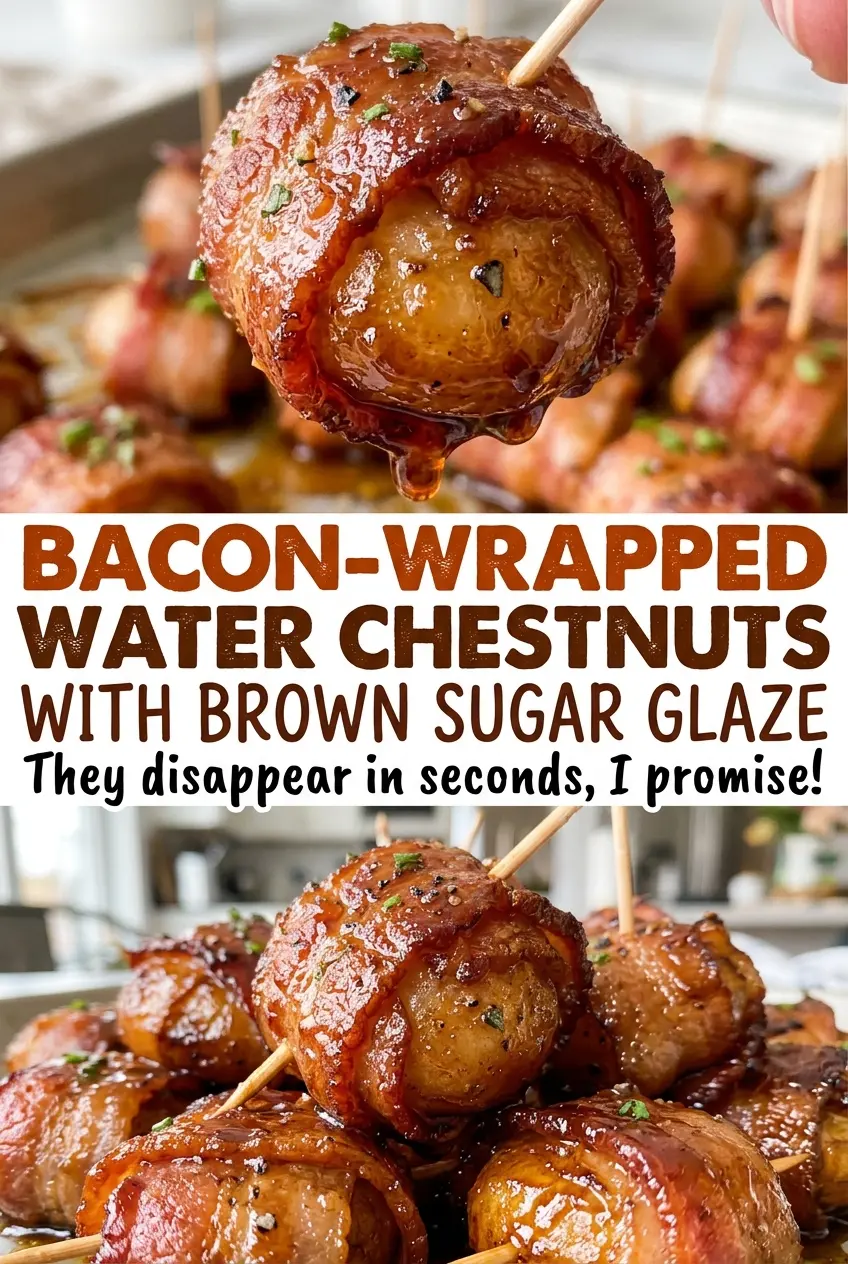
Tip: save now, cook later.The bacon starts to sizzle around the edges while the water chestnuts stay tucked inside, crisp and firm. That contrast is what makes these bites disappear from the appetizer plate: salty bacon outside, a cool crunch within, and a sweet-tangy brown sugar glaze that turns sticky in the oven.
I like that the glaze goes on near the end, after the bacon has had time to brown. Sugar can darken quickly in a hot oven, so holding it back gives the bacon its own time to render before the coating gets glossy and tacky. The brief soy sauce marinade seasons the water chestnuts all the way through rather than leaving the flavor only on the surface.
These bacon-wrapped water chestnuts with brown sugar glaze are easy to portion and serve warm, with toothpicks already in place. The best bite has a crisp edge of bacon, a shiny coating, and that unmistakable water-chestnut crunch in the middle.
Kitchen Note
After the soy sauce marinade, dry each water chestnut thoroughly before wrapping. A wet surface makes the bacon harder to keep snug against the chestnut, and the finished bites won’t have the same crisp outside.
Save these bacon-wrapped water chestnuts for a party appetizer with crisp bacon, crunchy centers, and a glossy brown sugar glaze.
Why the Brown Sugar Glaze Goes on After the Bacon Browns
A sweet glaze needs less oven time than the bacon does. If the brown sugar mixture coats the bites from the start, it spends the entire bake exposed to high heat; the sugars can darken before the bacon has rendered and crisped. Applying the glaze near the end gives both parts the time they need, without asking one coating to do two jobs at once.
The ketchup matters here, too. It gives the glaze body, so it clings to the curved bites instead of running straight onto the pan, and its tang keeps the brown sugar from tasting flat. Apple cider vinegar brightens that sweet-and-savory balance. When the finished coating bubbles and looks tacky rather than watery, it’s ready to set as the bites rest.
That short final bake is also why it helps to divide the glaze evenly and brush all sides. A thin, even coat turns glossy; a thick puddle is more likely to stay soft. You’re looking for a lacquer-like shine on the bacon, not a pool of sauce beneath the bites.
What Each Ingredient Brings to These Sweet-Salty Bites

- Whole water chestnuts — Canned whole chestnuts keep their crisp, juicy texture through the bake and give the bacon a firm center to wrap around. Choose whole ones rather than sliced; their rounded shape is what makes these neat, one-bite parcels possible. Drain them well before marinating.
- Soy sauce — This is the savory seasoning for the chestnuts, not just a salty coating for the bacon. Its umami keeps the sweet glaze in check. For a gluten-free version, use tamari in the same amount; it seasons the chestnuts in much the same way.
- Regular-cut bacon — It bends around the chestnuts without bulky overlap and has time to brown during the two-part bake. Thick-cut bacon cooks at a different pace, so stick with regular-cut for the timing here. There’s no need to seek out an expensive specialty brand.
- Light brown sugar, ketchup, and apple cider vinegar — Brown sugar brings the caramel-like sweetness, ketchup supplies a smooth base that adheres, and vinegar adds a little lift. Use packed brown sugar so the amount stays consistent. Ordinary ketchup works well; a premium bottle won’t change the result as much as an evenly mixed glaze will.
The Two-Stage Bake That Gets Bacon Crisp Without Scorching the Glaze
Set Up the Pan and Mix the Glaze
Heat the oven to 400°F and line an 18×13-inch rimmed baking sheet with foil. The rim keeps bacon drippings contained, while the foil makes cleanup easier. In a small bowl, whisk the brown sugar, ketchup, and apple cider vinegar until the mixture is smooth, with no dry sugar pockets. Set the glaze aside while you prepare the chestnuts.
Season the Chestnuts Before Wrapping
Toss the drained whole water chestnuts with the soy sauce in a medium bowl, cover, and refrigerate for 30 minutes. Drain them well, then pat each one thoroughly dry; if they’re slick with marinade, the bacon can slide as you wrap. Cut the bacon crosswise into thirds and wrap one piece around each chestnut. Secure the overlap with a toothpick so the seam stays closed.
Brown the Bacon Before Adding the Glaze
Arrange the bites seam-side down in a single layer on the prepared baking sheet. Bake for 20 minutes, then turn each one with tongs and return the pan to the oven for 10 more minutes. At this point, the bacon should be browned and nearly crisp, not pale and floppy. Turning them helps the bacon color more evenly around the chestnuts.
Brush, Finish, and Let the Coating Set
Brush the bites all over with the glaze, dividing it evenly among them. Bake for 8 to 12 minutes, until the glaze is bubbling and tacky and the bacon is crisp. Keep an eye on the coating near the end, since its sugars can darken quickly once bubbling. Let the bites stand for 5 minutes before serving; the glaze firms up as it cools slightly.
Two Ingredient Swaps That Keep the Bites in Balance
Use Tamari for a Gluten-Free Appetizer
Replace the soy sauce with the same amount of tamari for a gluten-free adaptation. It keeps the savory seasoning on the water chestnuts, though its taste may be a little rounder and less sharp than your usual soy sauce. The sweet glaze and crisp center still make sense together.
Choose Dark Brown Sugar for a Deeper Glaze
Swap dark brown sugar for light brown sugar one-for-one. The added molasses gives the glaze a deeper, more caramel-forward taste, while the ketchup and vinegar keep it from becoming one-note. The texture stays suitable for brushing over the bites.
Storage and Reheating
- Refrigerator: Store cooled leftovers in an airtight container for up to 3 days. The bacon softens in the refrigerator, and the water chestnuts lose a little of their original crunch.
- Freezer: Freeze the cooked bites in a single layer until firm, then transfer them to a freezer-safe container for up to 2 months. The chestnuts may be softer after thawing, but the bites are still convenient to reheat.
- Reheating: Warm them on a foil-lined baking sheet at 350°F until the centers reach 165°F. The microwave is quicker but tends to soften the bacon further, so avoid it if you want the crispest finish.
Questions That Come Up Before Making Bacon-Wrapped Water Chestnuts
Bacon-Wrapped Water Chestnuts with Brown Sugar Glaze
Ingredients
Equipment
Method
- Heat the oven to 400°F.
- Line an 18x13-inch rimmed baking sheet with foil.
- Whisk the brown sugar, ketchup, and vinegar in a small bowl until smooth.
- Toss the water chestnuts with the soy sauce in a medium bowl, cover, and refrigerate for 30 minutes.
- Drain and thoroughly pat dry the water chestnuts.
- Wrap each water chestnut in a piece of bacon and secure with a toothpick.
- Arrange the wrapped water chestnuts seam-side down in a single layer on the baking sheet.
- Bake for 20 minutes.
- Turn each piece with tongs.
- Bake for 10 more minutes, until the bacon is browned and nearly crisp.
- Brush the bites all over with the glaze, dividing it evenly among them.
- Bake for 8-12 minutes, until the glaze is bubbling and tacky and the bacon is crisp.
- Let stand for 5 minutes before serving so the glaze can set.