
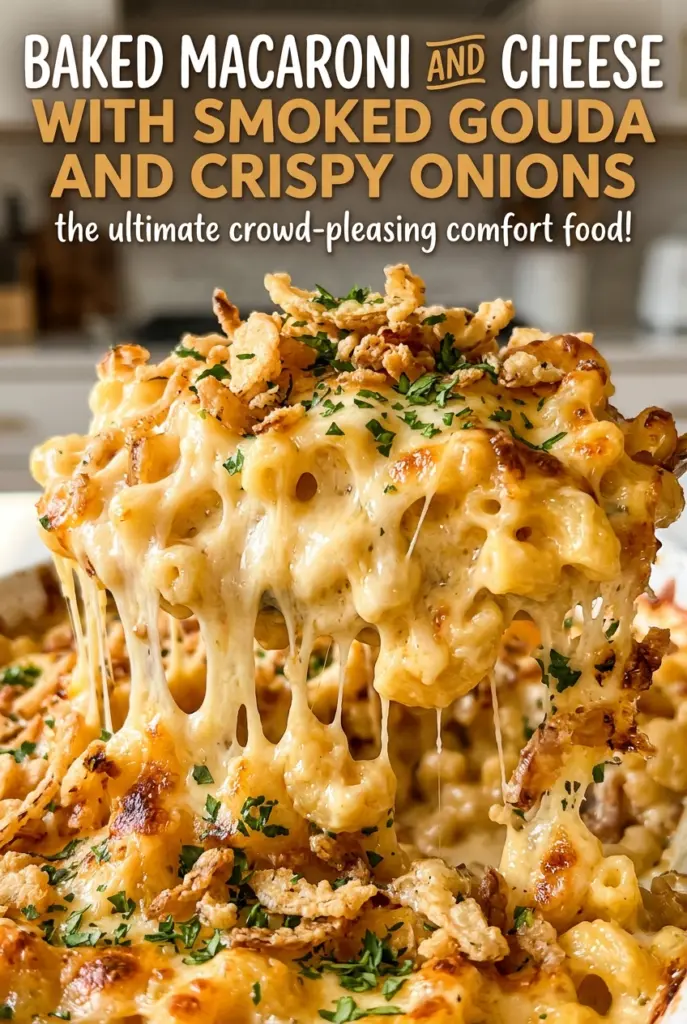
Baked Macaroni and Cheese with Smoked Gouda and Crispy Onions
When the cheese sauce starts bubbling around the edges of the baking dish, the center is still soft and creamy, and the top is waiting for its turn in the…
Tip: save now, cook later.When the cheese sauce starts bubbling around the edges of the baking dish, the center is still soft and creamy, and the top is waiting for its turn in the oven. That’s the moment I watch for with this baked macaroni and cheese with smoked Gouda and crispy onions. It’s a cozy, scoopable casserole, but the crunchy onion topping gives each serving a little contrast instead of another layer of cheese.
I cook the elbows just shy of al dente before they go into the dish. They finish softening in the sauce as the casserole bakes, so starting with fully tender pasta can leave you with noodles that are too soft by the time dinner is ready. A smooth milk sauce helps, too: I let it thicken before adding the cheese, then take the pan off the heat so the Gouda and cheddar melt without cooking hard.
The Gouda brings a gentle smoky note, while sharp cheddar keeps the familiar mac-and-cheese flavor front and center. Crispy fried onions go on near the end, when they have just enough oven time to turn golden. After a short rest, the sauce settles around the elbows and the top stays crisp.
Kitchen Note
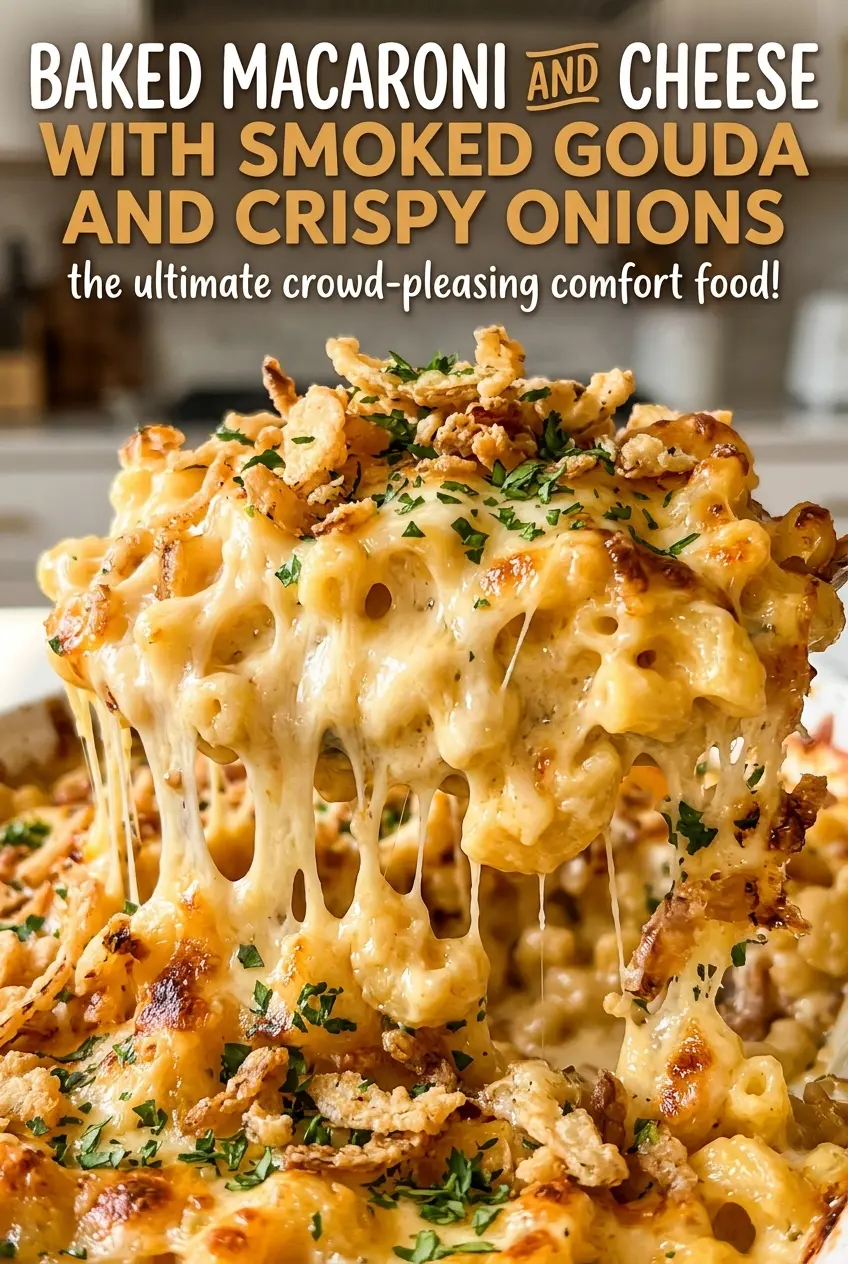
I add the crispy onions after the casserole has baked on its own. They need only a few minutes to turn golden, and putting them on at the start can leave them too dark before the sauce is bubbling.
Save this smoked Gouda macaroni and cheese for a bubbling, creamy casserole with a golden crispy-onion top.
Why the Pasta Needs to Stop One Minute Before Al Dente
The elbows have two chances to cook: first in the boiling water, then in the cheese sauce while the casserole bakes. Pulling them one minute before the package’s al dente time gives them room to soften in the oven without turning mushy. It’s a small adjustment, but it makes a noticeable difference in a baked pasta dish.
Drain the macaroni once it reaches that slightly firm stage, then stir it into the finished sauce and move it to the baking dish. The sauce should coat the back of a spoon before the pasta goes in; it needs enough body to cling, but it also has to surround the noodles as they finish cooking. Baking uncovered lets the edges bubble and gives excess moisture a way to escape, rather than trapping steam beneath a lid. If the pasta is already soft before baking, it won’t have much texture left after its time in the oven.
This timing also helps the casserole hold together after baking. Give it the full 10-minute rest before serving, and the sauce has a chance to settle around the macaroni instead of running straight across the plate.
Smoked Gouda Brings the Smoke; Sharp Cheddar Keeps It Familiar
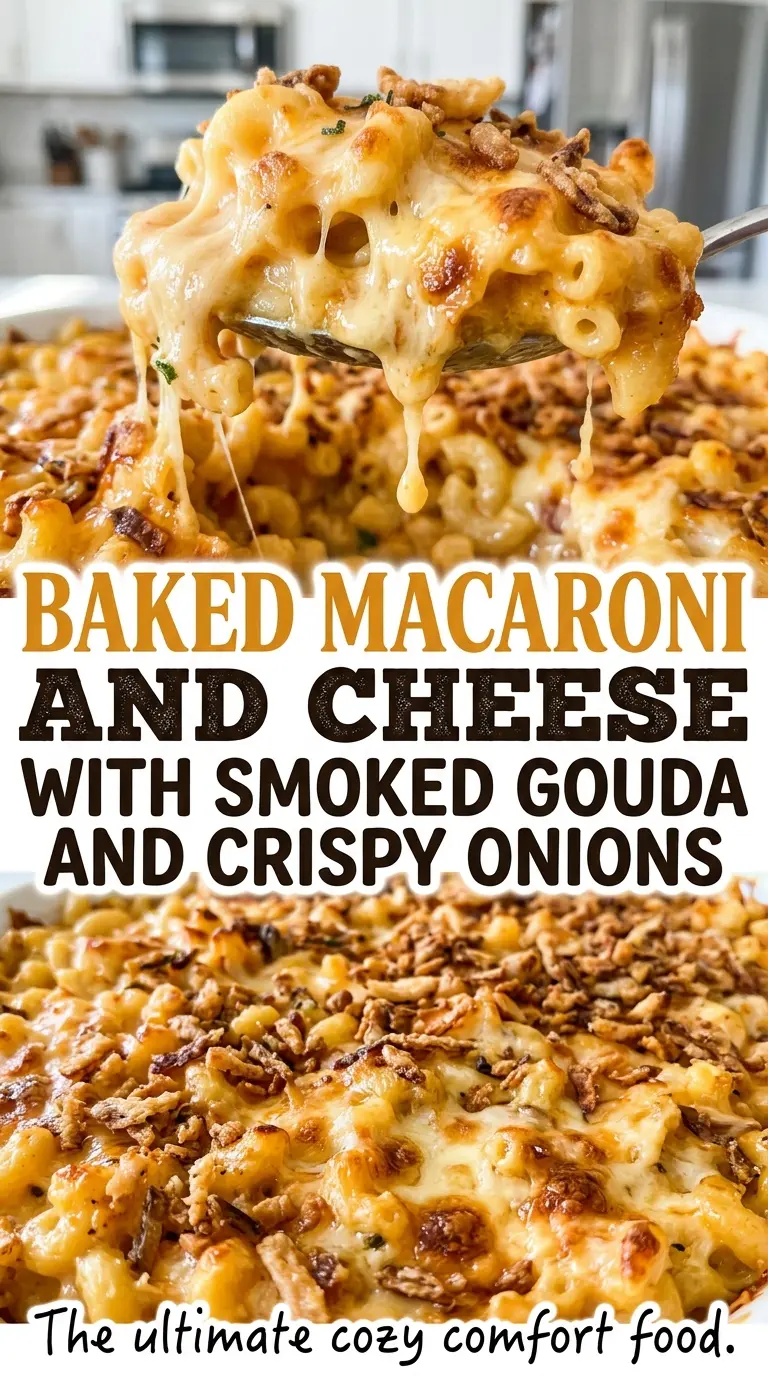
- Smoked Gouda — This is where the casserole gets its smoky character and creamy melt. Buy a piece and shred it yourself if you can; it melts smoothly into the sauce. Smoked cheddar works as a direct swap if Gouda isn’t available, though the result tastes more cheddar-forward.
- Sharp cheddar — Its tang balances the mellow Gouda and gives the sauce a recognizable mac-and-cheese flavor. A sharp block is a good choice here; mild cheddar makes the finished sauce less assertive. Shred it before you start the sauce so it’s ready to stir in off the heat.
- Whole milk and flour — Together, these form the creamy base and give the sauce enough body to cling to the elbows. Whole milk makes a fuller sauce than a lower-fat option, while ordinary all-purpose flour works well for the roux. For a gluten-free version, use a one-to-one gluten-free flour blend and gluten-free elbow pasta.
- Dry mustard — It adds a quiet savory sharpness that keeps the cheese from tasting flat; it shouldn’t make the sauce taste like mustard. Keep it in the sauce rather than replacing it with prepared mustard, which adds liquid and can change the seasoning.
- Crispy fried onions — These bring the browned, crunchy finish that contrasts with the soft pasta. For a gluten-free casserole, choose gluten-free crispy fried onions as well as gluten-free pasta and flour; changing only the noodles won’t make the whole dish gluten-free.
Building a Smooth Cheese Sauce Before the Casserole Goes In
Boil the Elbows Just Short of Tender
Heat the oven to 375°F and coat a 9×13-inch baking dish with nonstick cooking spray. Bring the water to a boil, add 2 teaspoons of the kosher salt and the elbow macaroni, then cook the pasta one minute less than the package’s al dente time. Drain it; the noodles should feel a little firm in the middle because they’ll continue cooking in the oven.
Thicken the Milk Before Adding Cheese
Melt the butter in a 4-quart saucepan over medium heat, whisk in the flour and cook the mixture for 1 minute. Gradually whisk in the whole milk, dry mustard, black pepper and remaining 1 teaspoon of kosher salt. Bring the sauce to a gentle simmer and cook, whisking, for 4–6 minutes. It’s ready when it thickly coats the back of a spoon; if it still looks watery, keep whisking at a gentle simmer until it reaches that cue.
Melt the Cheese Away from the Burner
Take the saucepan off the heat before stirring in the smoked Gouda and sharp cheddar. The residual heat is enough to melt the shredded cheese into the thickened milk sauce. Stir until the sauce looks smooth, with no visible shreds remaining. Add the drained macaroni and fold until the elbows are coated, then transfer everything to the prepared baking dish.
Finish the Casserole with a Separate Onion Bake
Bake the dish uncovered at 375°F for 15–20 minutes, until the sauce bubbles around the edges. Scatter the crispy fried onions evenly over the top and return the dish to the oven for 5–7 minutes, until they’re golden. If they’re already deeply browned, take the dish out rather than waiting for a darker color. Rest the casserole for 10 minutes before serving so the sauce can settle.
Two Useful Swaps for Smoked Gouda Mac and Cheese
Make the Whole Casserole Gluten-Free
Use gluten-free elbow macaroni, a one-to-one gluten-free flour blend in the roux, and gluten-free crispy fried onions. The sauce may be a touch less silky depending on the flour blend, but it still thickens into a creamy coating for the pasta. Cook the gluten-free elbows to just shy of tender, checking the package timing closely because brands vary.
Turn Up the Smoke with Smoked Cheddar
Replace the smoked Gouda with the same amount of smoked cheddar and keep the sharp cheddar in the sauce. The casserole will taste bolder and more cheddar-forward, with a stronger smoky edge. Shred the cheese before making the sauce so it’s ready to melt in after the pan comes off the heat.
Storage and Reheating
- Refrigerator: Store leftovers covered for 3–4 days. The pasta will absorb some sauce as it sits, and the onion topping will soften.
- Freezer: Freeze airtight portions for up to 2 months. Thaw overnight in the refrigerator; the sauce may be less smooth and the pasta softer after freezing.
- Reheating: Reheat portions covered in the microwave, stirring once, until the center reaches 165°F. A small splash of milk helps loosen the sauce if it has thickened; uncovered reheating can dry out the pasta.
Questions That Come Up When the Sauce Meets the Oven
Baked Macaroni and Cheese with Smoked Gouda and Crispy Onions
Ingredients
Equipment
Method
- Heat the oven to 375°F.
- Coat a 9x13-inch baking dish with nonstick cooking spray.
- Bring the water to a boil in a large pot.
- Add 2 teaspoons salt and the macaroni, and cook 1 minute less than the package’s al dente time; drain.
- Melt the butter in a 4-quart saucepan over medium heat.
- Whisk in the flour and cook for 1 minute.
- Gradually whisk in the milk, dry mustard, black pepper, and remaining 1 teaspoon salt.
- Bring the mixture to a gentle simmer.
- Cook, whisking, for 4–6 minutes, until thick enough to coat the back of a spoon.
- Remove the saucepan from the heat.
- Stir in the Gouda and cheddar until melted.
- Stir the drained macaroni into the cheese sauce.
- Transfer the mixture to the prepared baking dish.
- Bake uncovered at 375°F for 15–20 minutes, until the sauce is bubbling around the edges.
- Scatter the crispy fried onions evenly over the macaroni.
- Bake for 5–7 minutes, until the onions are golden.
- Let the casserole rest for 10 minutes before serving.