

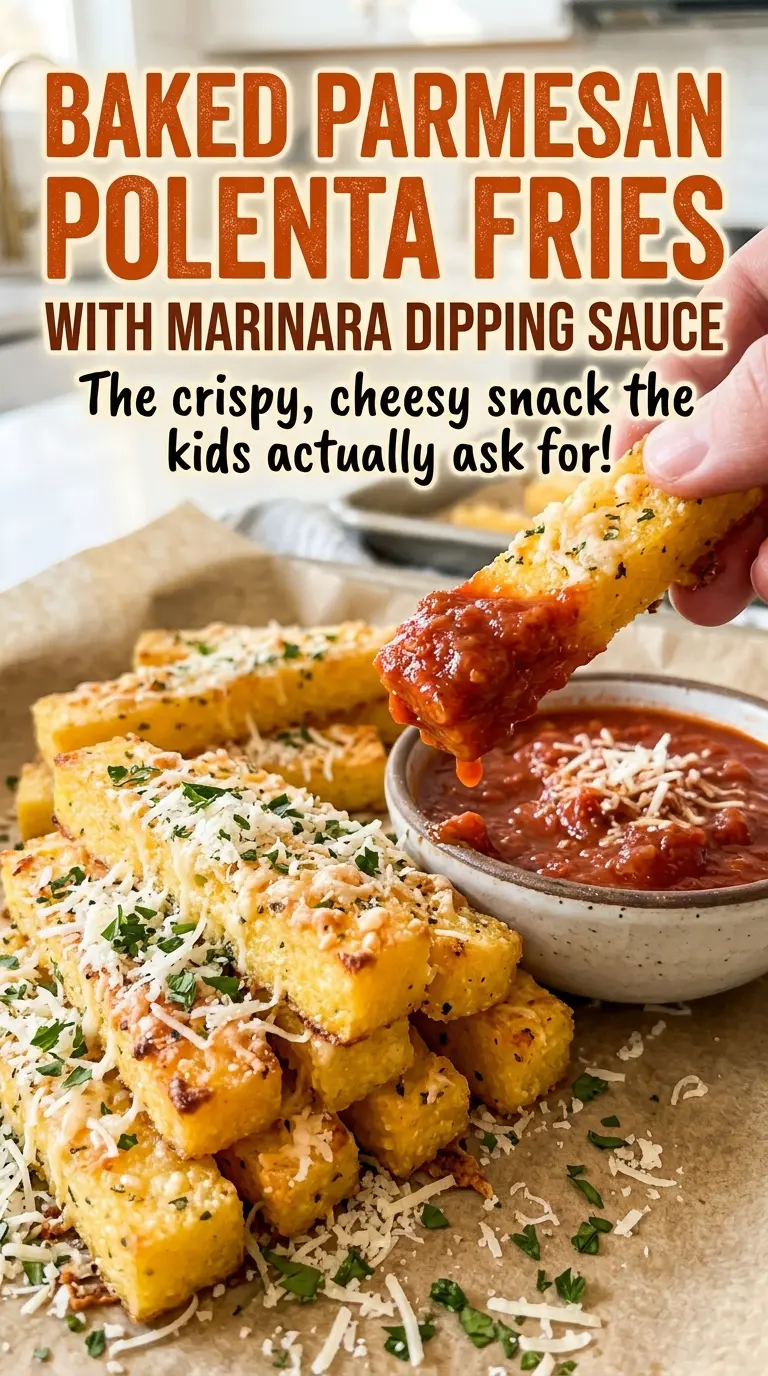
Baked Parmesan Polenta Fries with Marinara Dipping Sauce
Soft polenta doesn’t look much like a batch of fries when it first comes off the stove. It’s creamy and loose, and trying to cut it right then would leave…
Tip: save now, cook later.Soft polenta doesn’t look much like a batch of fries when it first comes off the stove. It’s creamy and loose, and trying to cut it right then would leave you with a sticky mess. After a long chill, though, it turns into a firm slab that slices neatly and bakes into golden-edged Baked Parmesan Polenta Fries with a tender middle.
I like that these go from stovetop to oven without a pot of frying oil. Parmesan and butter are stirred into the polenta while it’s hot, so every fry has a savory, cheesy base before it even reaches the baking sheet. A little marinara on the side makes each crisp edge easy to scoop up, and the warm sauce takes only a few minutes to prepare.

Kitchen Note
Turn the fries halfway through baking and look for golden, crisp edges before you pull them out. The center stays tender, so don’t wait for every side to look deeply browned.
Save these Baked Parmesan Polenta Fries for a crisp-edged snack with a tender center and warm marinara for dipping.
Why These Fries Need a Chill Before They Ever See the Oven
Polenta firms as it cools, which is what lets a soft stovetop mixture hold a clean fry shape. Skip that resting time and you’ll be trying to handle a warm mixture that smears instead of cutting into tidy strips. Refrigerating the slab gives the cornmeal time to set all the way through, so you can lift it from the dish and slice it without losing the edges.
That firm starting point also matters because these are baked, not deep-fried. The oven browns the exposed surfaces while the middle stays soft; it won’t create the same all-over hard shell you’d get from a fryer. Keeping the pieces close in size helps them cook at the same pace, and the oil on their surfaces encourages the edges to turn golden. Think of them as sturdy polenta sticks with browned edges, not as a copy of fast-food fries.
Coarse Cornmeal, Milk, and Parmesan Set the Texture
- Coarse-ground yellow cornmeal — This is the structure of the fries, and its texture gives the finished polenta a pleasant grain rather than a completely smooth, pudding-like feel. Medium-ground cornmeal can work, but it cooks more quickly and makes a smoother slab, so follow the visual cue of thick polenta pulling away from the pan rather than relying only on the clock.
- Whole milk — Milk brings richness to the cornmeal as it cooks. Two-percent milk is a workable swap, though the polenta will taste a little less full-bodied; avoid sweetened plant milk, which would bring an unwanted flavor to the savory fries.
- Butter and Parmesan — Butter softens the cornmeal’s texture, while finely grated Parmesan melts into the hot polenta and adds a salty, savory note. Pecorino Romano can stand in for Parmesan in the same amount, but it tastes sharper and saltier. Grating the cheese finely helps it disperse instead of leaving larger pockets.
- Olive oil — Brushing the fries on all sides helps the oven brown their surfaces. A neutral cooking oil works if that’s what you have, but you’ll lose the faint fruity note olive oil brings.
- Marinara sauce — A smooth, familiar marinara makes an easy dip and lets the Parmesan polenta stay front and center. A chunky sauce is fine, too; just choose one you like warm, since its flavor is concentrated in each bite alongside the fries.
From Loose Polenta to Fries with Crisp Edges
Cook the Polenta Until It Pulls from the Pan
Line a 9×13-inch baking dish with parchment paper before you start at the stove. Bring the water, whole milk, and kosher salt to a boil in a large saucepan over medium-high heat, then whisk in the coarse-ground cornmeal gradually so it doesn’t clump. Reduce the heat to low and cook, stirring often, for 20 to 25 minutes. It’s ready when it’s thick and pulls away from the sides; stir in the butter and finely grated Parmesan.
Spread It Evenly and Chill Until Firm
Scrape the hot polenta into the prepared dish and spread it into an even layer. An even slab gives you fries with a similar thickness, rather than some thin pieces that dry out while thicker ones stay soft. Let it cool briefly, then cover and refrigerate for at least 2 hours, until firm. If the center still feels soft when you press it gently, give it more time to chill before cutting.
Cut and Oil the Fries
Heat the oven to 425°F and line a rimmed baking sheet with parchment paper. Lift the chilled polenta from its dish and cut it into fries about 1/2 inch wide and 4 inches long. Set them on the baking sheet with space around the pieces, then brush all sides with olive oil. Handle the strips gently as you turn them; chilled polenta is firm, but narrow pieces can still crack if you press too hard.
Bake and Warm the Marinara
Bake the fries for 25 to 30 minutes, turning them halfway through, until they’re golden and crisp at the edges. The color at the edges is more useful than expecting the whole fry to brown evenly. While they bake, warm the marinara in a small saucepan over medium-low heat for 3 to 5 minutes, stirring occasionally, until hot. Serve the sauce with the fries while both are warm.
Easy Ways to Change the Shape or Flavor
Make a dairy-free batch
Replace the whole milk with unsweetened plain soy milk, the butter with vegan butter, and the Parmesan with finely grated dairy-free Parmesan, using the same amounts. The cornmeal still sets into a sliceable slab, though the fries will have a less buttery, less traditionally cheesy taste.
Cut polenta squares instead of fries
For a smaller, easy-to-pick-up format, cut the chilled slab into bite-size squares rather than long strips. Keep the pieces similar in thickness so they brown at roughly the same rate, and use their golden edges as your cue since smaller shapes may finish sooner.
Give the dip a little heat
Use an arrabbiata-style marinara in place of regular marinara for a spicier dip without changing the polenta. The sauce’s chili heat cuts through the Parmesan’s salty richness, so this is a good choice when you want the fries to feel more like a bold appetizer.
Storage and Reheating
- Refrigerator: Store cooled fries and marinara separately in airtight containers for 3 to 4 days. The fries soften in the refrigerator, but the oven brings back some crispness.
- Freezer: Freeze cooled fries in a single layer until firm, then transfer them to an airtight freezer container for up to 2 months. The texture is best after reheating in the oven rather than thawing and serving cold.
- Reheating: Arrange fries on a baking sheet and warm them in a 425°F oven until hot and crisp at the edges. Warm the marinara separately over medium-low heat; microwaving the fries can leave them soft instead of restoring their edges.
Questions That Come Up When Making Polenta Fries
Baked Parmesan Polenta Fries with Marinara Dipping Sauce
Ingredients
Equipment
Method
- Line a 9x13-inch baking dish with parchment paper.
- Bring the water, milk, and salt to a boil in a large saucepan over medium-high heat.
- Gradually whisk in the cornmeal.
- Reduce the heat to low and cook, stirring often, for 20 to 25 minutes, until the polenta is thick and pulls away from the sides of the pan.
- Stir in the butter and Parmesan.
- Spread the polenta evenly in the prepared dish.
- Cool briefly, then cover and refrigerate for at least 2 hours, until firm.
- Heat the oven to 425°F and line a rimmed baking sheet with parchment paper.
- Lift the chilled polenta from the dish.
- Cut it into fries about 1/2 inch wide and 4 inches long.
- Arrange the fries on the baking sheet.
- Brush them on all sides with the olive oil.
- Bake for 25 to 30 minutes, turning halfway, until golden and crisp at the edges.
- Warm the marinara sauce in a small saucepan over medium-low heat for 3 to 5 minutes, stirring occasionally, until hot.
- Serve the sauce with the fries.