

Garlic Butter Shrimp and White Bean Skillet with Lemon
When shrimp hit a hot skillet, they cook fast—then the beans still need a few minutes in the pan. Keeping those steps separate is what saves the shrimp from turning…
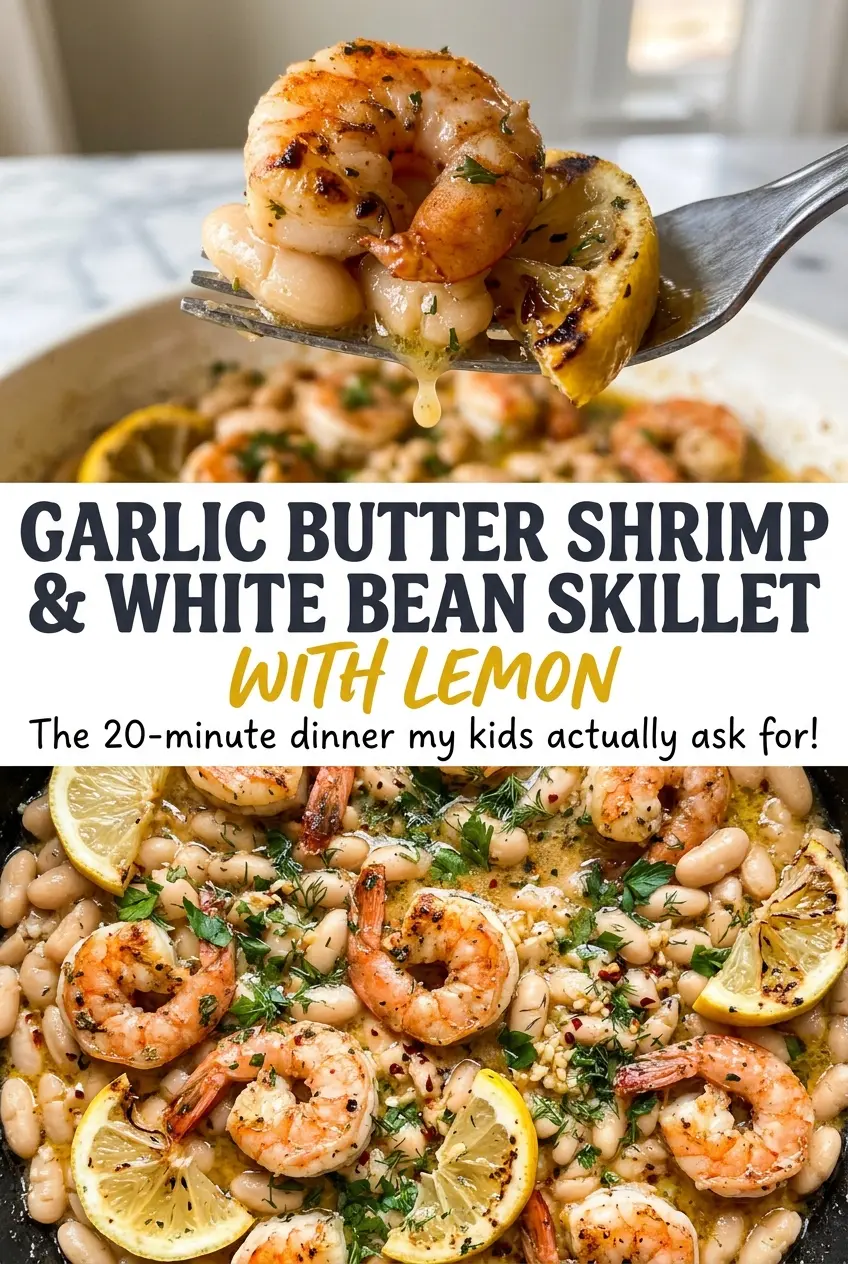
Tip: save now, cook later.When shrimp hit a hot skillet, they cook fast—then the beans still need a few minutes in the pan. Keeping those steps separate is what saves the shrimp from turning rubbery while the broth reduces into a garlicky sauce. I make this garlic butter shrimp and white bean skillet with lemon when I want a complete dinner from one skillet, but don’t want the beans and seafood competing for the same cooking time.
The cannellini beans go into the buttery garlic broth first, where they warm through and pick up the lemon-ready pan flavors. The shrimp return only at the end, along with their juices, lemon zest, lemon juice, and parsley. You get tender shrimp, creamy beans, and a bright sauce that’s good down to the last spoonful.
Kitchen Note
Have the lemon zested and juiced and the parsley chopped before the shrimp goes back in. That last minute moves quickly, and you don’t want the shrimp waiting in hot butter while you’re still getting the lemon ready.
Save this garlic butter shrimp and white bean skillet for a quick dinner with tender shrimp, creamy beans, and a bright lemon finish.
Why the Shrimp and Beans Need Different Turns in the Skillet
Shrimp need just a short, hot cook; the beans need a little more time in the broth to heat through and let it reduce. If you leave the shrimp in the skillet while the beans simmer, they’ll keep cooking long after they’ve reached the right texture. Cooking the two separately isn’t extra fuss—it gives each one the time it actually needs.
The order also lets the beans take on the garlic butter before the lemon goes in. Once the broth has reduced slightly, the shrimp and their accumulated juices return for a brief finish with the lemon and parsley. That final addition keeps the seafood from sitting through the bean-warming stage, and the lemon brightens the rich butter without requiring a separate sauce.
How the Shrimp, Beans, and Lemon Shape the Skillet
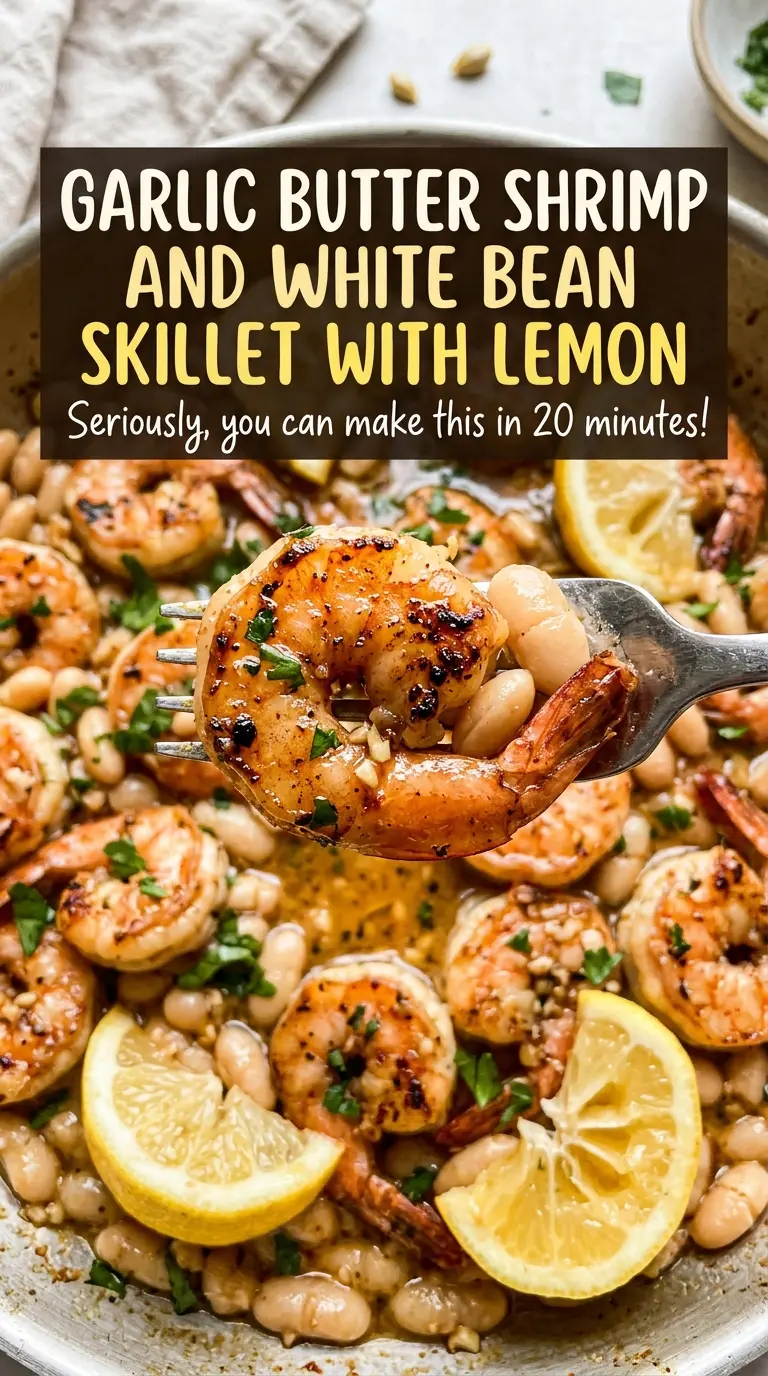
- Large shrimp — Their size gives you a little more room to sear the outside without overcooking the center. Use peeled and deveined shrimp, and thaw frozen shrimp before they go into the skillet. Fresh or frozen both work; what matters most is starting with thawed shrimp so they cook evenly.
- Cannellini beans — These white beans are creamy but sturdy enough to hold their shape while you stir them into the broth. Great Northern beans are a close substitute with a similar mild flavor and texture. Drain and rinse canned beans so their packing liquid doesn’t muddy the sauce.
- Unsalted butter and garlic — Butter gives the broth a round, rich base, while minced garlic releases its aroma quickly in the warm fat. Unsalted butter lets you control the seasoning alongside the salted shrimp. Fresh garlic has a brighter, sharper aroma than jarred minced garlic, though jarred garlic works if that’s what you have on hand.
- Chicken broth — Low-sodium broth adds savory depth without making the skillet overly salty as it reduces. Vegetable broth can stand in, though the sauce will have a lighter, less chicken-forward taste.
- Fresh lemon and parsley — Zest brings fragrant citrus oils, while the juice gives the buttery broth its sharp, fresh finish. A whole lemon is worth using here; bottled juice won’t replace the aroma of fresh zest. Fresh parsley adds a clean herbal note at the end.
Cook the Shrimp First, Then Build the Garlic Butter Beans
Get a quick sear on the shrimp
Heat the olive oil in a 12-inch skillet over medium-high heat, then season the shrimp with kosher salt and black pepper. Cook them in a single layer, working in batches so they have space instead of crowding together. Give each side 1 to 2 minutes, and take the shrimp out when they’re opaque and register 145°F. Transfer them to a plate rather than leaving them in the skillet while the beans cook.
Let the garlic turn fragrant, not brown
Reduce the heat to medium and melt the butter in the same skillet. Stir in the minced garlic and red pepper flakes for about 30 seconds, just until the garlic smells fragrant. Keep it moving so it doesn’t catch on the hot pan; browned garlic can turn bitter and dominate the mild beans. Move on as soon as the aroma blooms.
Warm the beans in the broth
Stir in the drained, rinsed cannellini beans and chicken broth. Let the mixture simmer for 3 to 4 minutes, stirring occasionally, until the beans are hot and the broth has reduced slightly. You’re looking for a light, buttery coating around the beans, not a dry pan. If the broth is still quite loose, give it the full simmering time before adding the shrimp back.
Finish with lemon and parsley
Return the shrimp and any juices on the plate to the skillet. Stir in the lemon zest, lemon juice, and chopped parsley, then cook for about 1 minute, until the shrimp are hot. Keep the motion gentle so the beans stay mostly whole. Serve while the sauce is glossy and the lemon still tastes fresh.
Easy Ways to Change the Garlic Butter Shrimp Skillet
Make it dairy-free with olive oil
Replace the butter with 3 tablespoons olive oil. The skillet will lose some of butter’s rounded richness, but the garlic, broth, and lemon still make a savory sauce that coats the beans and shrimp.
Turn up the peppery heat
Increase the red pepper flakes to suit your heat preference. Their bite blooms in the butter with the garlic, so the finished sauce will taste warmer throughout rather than delivering heat only in one bite.
Swap in Great Northern beans
Use drained and rinsed Great Northern beans instead of cannellini beans. They’re a little smaller but similarly mild and creamy, so the skillet keeps its tender-bean texture and the same lemon-garlic character.
Storage and Reheating
- Refrigerator: Refrigerate leftovers within 2 hours in a covered container and eat within 3 to 4 days. The beans may thicken the sauce as it chills.
- Freezer: The skillet can be frozen in an airtight container for up to 2 months, though the shrimp may be firmer after thawing. Thaw it in the refrigerator before reheating.
- Reheating: Warm leftovers gently in a skillet over low heat, stirring carefully until steaming hot; a small splash of broth loosens the sauce if needed. Avoid high heat or a long reheat, which can make the shrimp tough.
Questions That Come Up While Making This Skillet
Garlic Butter Shrimp and White Bean Skillet with Lemon
Ingredients
Equipment
Method
- Heat the olive oil in a 12-inch skillet over medium-high heat.
- Season the shrimp with the salt and black pepper, then cook in batches in a single layer for 1 to 2 minutes per side, until opaque and 145°F; transfer to a plate.
- Reduce the heat to medium and melt the butter in the skillet.
- Add the garlic and red pepper flakes and cook for about 30 seconds, stirring, until fragrant.
- Stir in the cannellini beans and chicken broth, and simmer for 3 to 4 minutes, stirring occasionally, until the beans are hot and the broth has reduced slightly.
- Return the shrimp and any accumulated juices to the skillet, then stir in the lemon zest, lemon juice, and parsley.
- Cook for about 1 minute, until the shrimp are hot, and serve.