
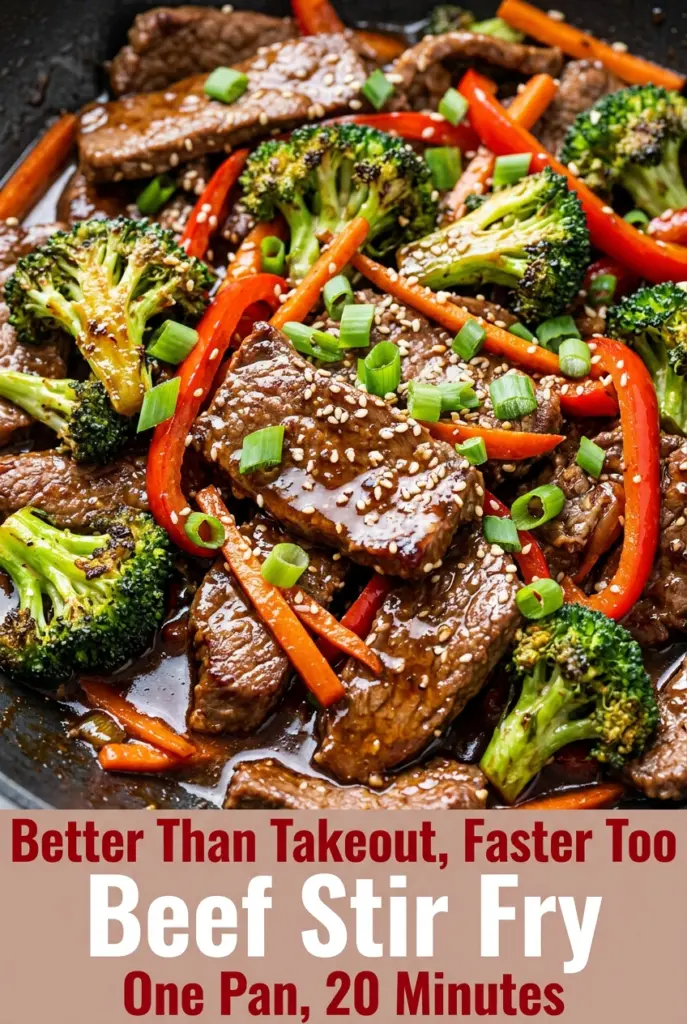
Beef Stir Fry
Thin-sliced beef seared hard in a hot pan turns out with crisp edges, juicy centers, and the kind of caramelized bite that makes takeout feel unnecessary. The vegetables stay bright…
Tip: save now, cook later.Thin-sliced beef seared hard in a hot pan turns out with crisp edges, juicy centers, and the kind of caramelized bite that makes takeout feel unnecessary. The vegetables stay bright and crisp-tender, and the sauce pulls everything together with a glossy coating that clings instead of pooling at the bottom of the skillet.
What makes this version work is the quick cornstarch marinade on the beef and the sauce that’s mixed before the pan gets hot. That little bit of starch protects the meat and helps the sauce thicken fast once it hits the skillet. High heat matters here, but so does timing: the beef gets removed before the vegetables go in, which keeps it from overcooking while you build the rest of the stir fry.
Below, I’ve included the small details that matter most, from slicing the steak against the grain to getting the vegetables crisp instead of soggy. If stir fry has ever turned watery or bland for you, this one fixes both problems.
The beef stayed tender and the sauce thickened just enough to coat everything without getting sticky. I’ve made a lot of stir fries, and this was the first one where the broccoli and peppers still had a little bite at the end.
Save this beef stir fry for the nights when you want glossy sauce, tender steak, and crisp vegetables in one fast skillet dinner.
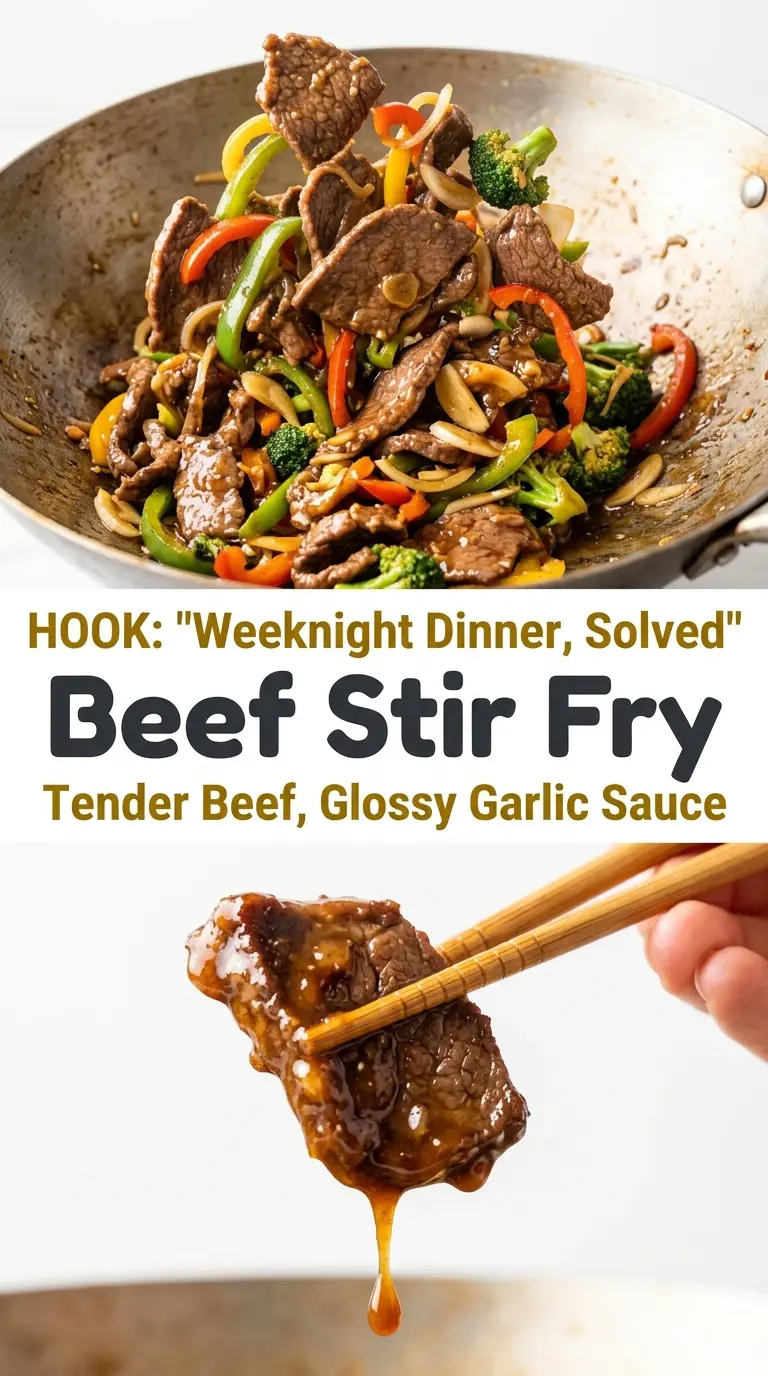
The Trick to Tender Beef and Crisp Vegetables in the Same Pan
The part that ruins most stir fries is crowding the pan. If the beef and vegetables go in all at once, the skillet cools down and everything steams. That’s how you end up with gray meat and limp vegetables instead of the sharp, caramelized edges you want.
The other mistake is moving too slowly once the sauce is ready. Stir fry doesn’t give you time to think. The sauce has cornstarch, which means it thickens fast as soon as it hits heat, so the pan needs to be hot, the ingredients ready, and the beef already cooked enough to come back for just a final toss.
- Flank steak — This cut gives you thin, tender slices as long as you cut against the grain. If you slice with the grain, the beef stays stringy no matter how good the marinade is.
- Cornstarch — It does two jobs here: it lightly coats the beef so it sears better, and it helps the sauce turn glossy instead of thin. Arrowroot can work in the sauce, but cornstarch gives the most reliable finish.
- Oyster sauce — This is the ingredient that adds depth and body. If you skip it, the sauce tastes flatter and more like straight soy sauce. If you need a substitute, use hoisin in a smaller amount and expect a sweeter result.
- Toasted sesame oil — A little goes a long way. It’s there for aroma, not for frying, so keep it in the marinade and don’t use it as your cooking oil or it’ll taste bitter.
- Beef broth — This loosens the sauce just enough to coat the vegetables without turning the pan soupy. Water will work in a pinch, but the broth gives the sauce a fuller, meatier base.
How to Keep the Beef Searing Instead of Steaming
Marinating the steak briefly
Toss the sliced flank steak with soy sauce, cornstarch, and sesame oil, then let it sit for about 10 minutes while you prep the vegetables. That short rest helps the beef pick up flavor and gives the starch time to cling to the surface. If the pieces look wet and loose going into the skillet, they’ll steam instead of sear, so keep the coating light and even.
Mixing the sauce before the pan heats up
Whisk the soy sauce, oyster sauce, brown sugar, rice vinegar, beef broth, and cornstarch together in a small bowl before you cook anything. Once the pan is hot, you won’t have time to measure or stir. The cornstarch will settle if it sits too long, so give the sauce one last whisk right before pouring it in.
Searing the beef in a hot, empty skillet
Heat the oil until it shimmers, then add the beef in a single layer and leave it alone long enough to brown. If you stir it constantly, it never gets that deep color that gives stir fry its backbone. Cook just until the edges pick up a crust, then pull it out immediately; it will finish cooking when you return it to the sauce.
Stir-frying the vegetables to crisp-tender
Add the peppers, broccoli, and carrots to the same pan and keep them moving so they soften at the edges without losing their structure. The broccoli should turn bright green and the carrots should lose their raw snap, but neither should go floppy. If the pan starts to dry out or the vegetables threaten to stick, the heat is too low to stir fry properly.
Finishing with aromatics and sauce
Push the vegetables aside, add the garlic and ginger to the empty spot, and cook them for about 30 seconds until fragrant. That quick blast wakes them up without burning the garlic, which would make the whole dish taste harsh. Pour in the sauce, return the beef, and toss until everything turns glossy and the sauce clings in a thin layer instead of collecting at the bottom.
What to Change Without Breaking the Stir Fry
Gluten-Free Version
Use tamari in place of soy sauce and check that your oyster sauce is gluten-free, or swap in a gluten-free mushroom stir fry sauce. The flavor stays savory and deep, but you may need a touch more salt at the end depending on the brand.
No Oyster Sauce
Hoisin works as the closest pantry swap, but it brings more sweetness and a slightly thicker finish. Use a little less brown sugar in the sauce so the balance doesn’t drift too sweet.
Vegetable Swaps
Snap peas, mushrooms, baby corn, or sliced onion all fit naturally here. Keep the total amount about the same so the pan doesn’t overcrowd, and add harder vegetables first so everything finishes at the same time.
Make It a Little Lighter
You can cut the brown sugar in half and still get a balanced sauce, especially if your vegetables are naturally sweet. The result leans more savory and less glossy, but it still coats the beef well.
Storage and Reheating
- Refrigerator: Store leftovers in an airtight container for up to 4 days. The vegetables soften a bit, but the flavor holds up well.
- Freezer: It freezes, but the vegetables lose their crisp texture. If you plan to freeze it, undercook the vegetables slightly so they don’t turn mushy when reheated.
- Reheating: Reheat in a skillet over medium heat with a splash of broth or water. The common mistake is microwaving it too long, which dries out the beef and turns the sauce sticky.
Questions I Get Asked About This Recipe
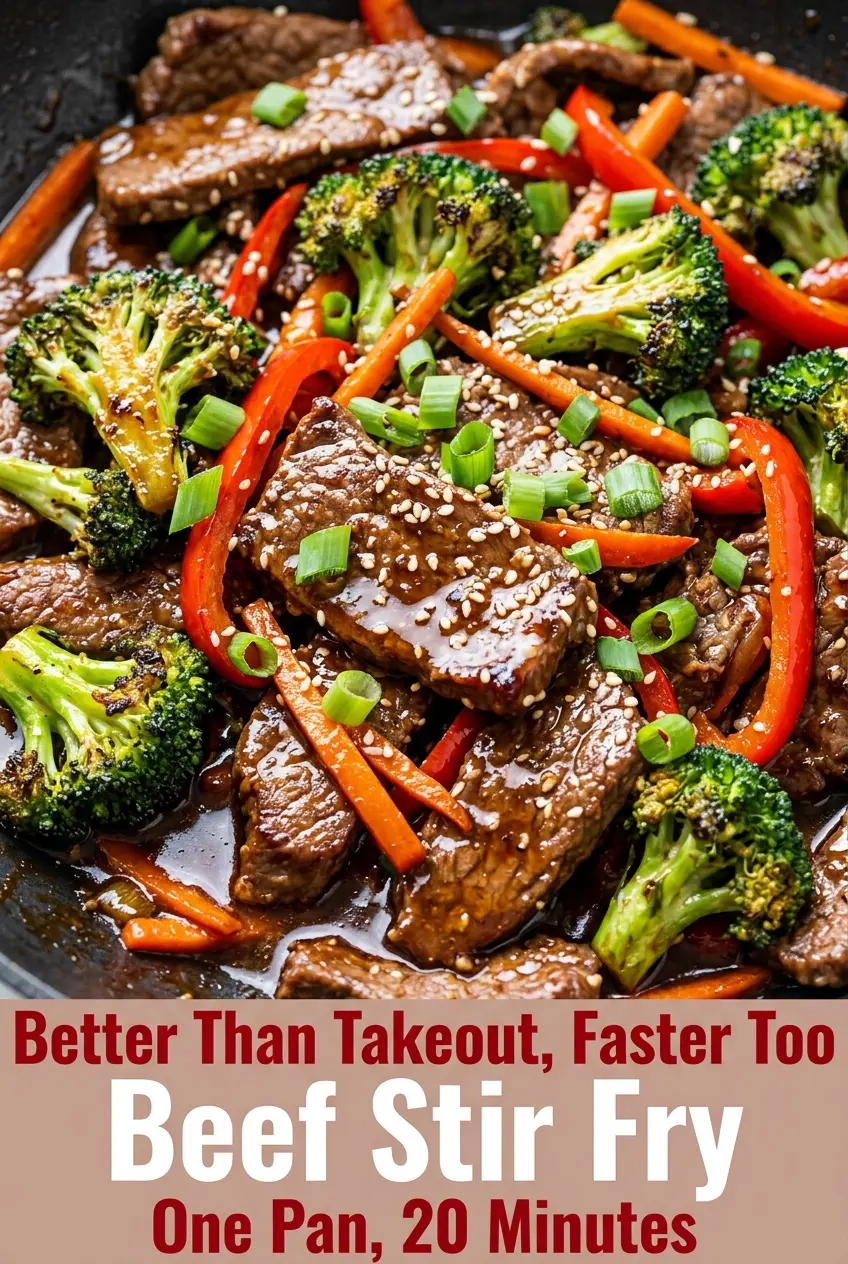
Beef Stir Fry
Ingredients
Equipment
Method
- In a bowl, toss the flank steak with soy sauce, cornstarch, and toasted sesame oil until evenly coated. Let sit 10 minutes at room temperature.
- In a small bowl, whisk together soy sauce, oyster sauce, brown sugar, rice vinegar, beef broth, and cornstarch until smooth. Set aside.
- Heat 1 tbsp vegetable oil in a large skillet or wok over high heat until shimmering. Add the flank steak in a single layer and sear 1–2 minutes per side until deeply browned, then remove and set aside.
- Add the remaining vegetable oil to the pan and heat until it looks fluid and glossy. Add the red bell pepper, broccoli florets, and carrot and stir-fry 3–4 minutes until crisp-tender and lightly charred at the edges.
- Push the vegetables to the side, add the garlic and ginger to the cleared space, and cook 30 seconds until fragrant. Stir lightly to combine.
- Return the beef to the pan and pour in the sauce, tossing to coat every piece. Cook 1–2 minutes until the sauce thickens and glosses over the beef and vegetables.
- Remove from the heat and sprinkle with green onions and toasted sesame seeds. Serve immediately over rice.