
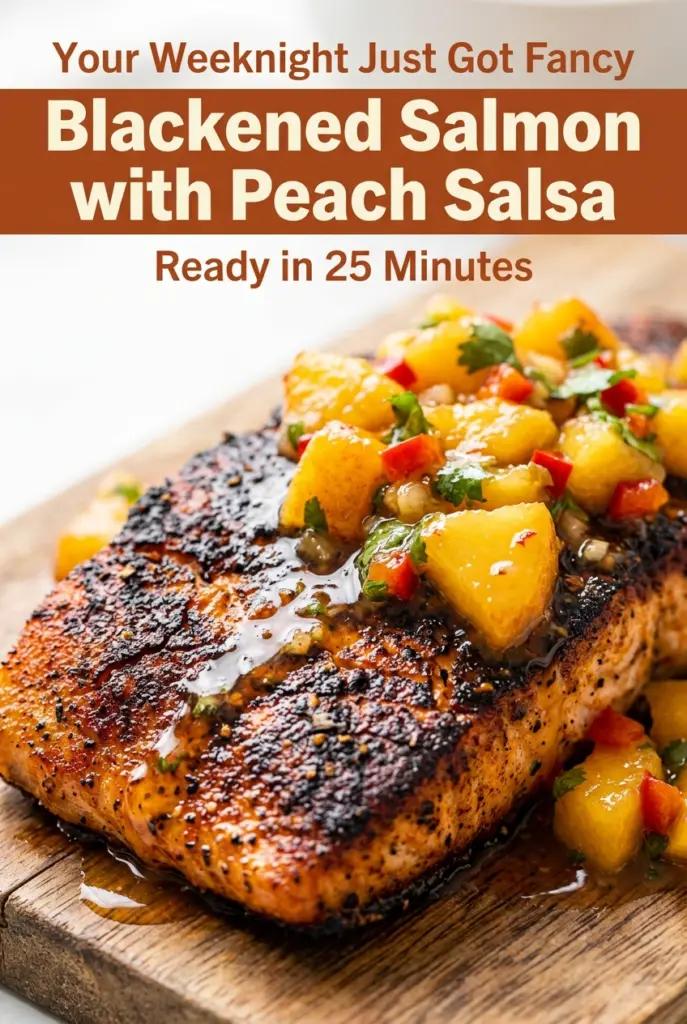
Blackened Salmon with Peach Salsa
Blackened salmon gets its best texture when the spice crust hits a hot pan and stays there long enough to darken without burning. The edges turn crisp and fragrant, the…
Tip: save now, cook later.Blackened salmon gets its best texture when the spice crust hits a hot pan and stays there long enough to darken without burning. The edges turn crisp and fragrant, the center stays tender and juicy, and the peach salsa on top keeps every bite bright instead of heavy. That contrast is what makes this dish worth repeating.
The trick is using a dry surface, a hot cast-iron skillet, and a spice mix that can handle heat. Smoked paprika gives the crust its deep color and backbone, while cayenne brings the bite. The salsa matters just as much: ripe peaches, lime, jalapeño, and a little honey give you sweetness, acid, heat, and freshness in one spoonful.
Below, I’ll walk through the small details that keep the salmon from sticking, how to get that blackened crust without overcooking the fish, and the easiest swaps if your peaches aren’t at their peak.
The salmon got that dark crust without drying out, and the peach salsa was the perfect sweet-tangy balance. I used pretty ripe peaches and the whole thing came together in under 30 minutes exactly like promised.
Save this blackened salmon with peach salsa for the nights when you want smoky heat, juicy fruit, and a 30-minute dinner that feels special.
The Blackening Trick That Keeps Salmon Crisp Instead of Dry
Blackened salmon fails when the pan isn’t hot enough or the fish is still damp. In that case, the spices steam, the surface loosens, and you get a gray crust instead of that deep, savory char. Patting the fillets dry and coating them lightly with oil gives the seasoning a chance to fry against the pan instead of just sitting there.
Skin-on fillets help here because the skin shields the flesh during the first side of the sear. Start skin-side up so the spice crust sets on the flesh first, then flip once and finish fast. If you keep the salmon in the pan too long after the flip, the center goes from flaky to chalky in a hurry.
What Each Ingredient Is Doing in the Pan and in the Salsa
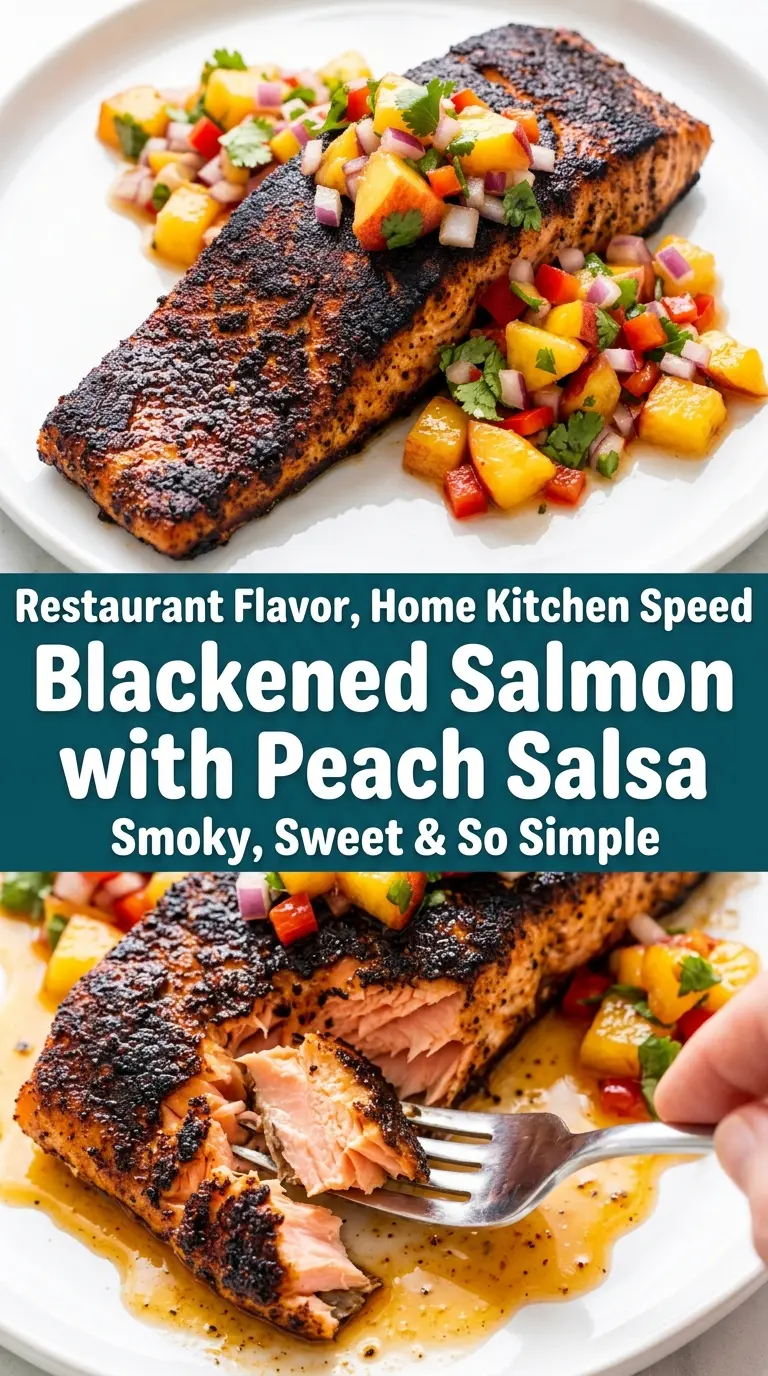
- Salmon fillets — Skin-on fillets hold together better under high heat and stay juicier during the sear. Sockeye will cook a little faster and taste firmer; farmed Atlantic salmon is richer and more forgiving. Either works, but don’t use thin tail pieces if you want an even blackened crust.
- Smoked paprika — This does more than add color. It gives the crust that deep, campfire note that regular paprika won’t replicate. If you only have sweet paprika, the salmon will still work, but it loses some of the blackened character.
- Cayenne — This is the heat source, and it matters because blackened salmon should taste bold, not just smoky. If you need it milder, cut it back to 1/4 teaspoon instead of removing it completely.
- Peaches — Use ripe peaches that give slightly when pressed. Hard peaches stay bland and dry, and the salsa won’t have enough juice to coat the fish. If your peaches are a little firm, dice them small and let the salsa sit longer with the lime and honey.
- Lime juice and honey — Lime wakes up the salsa and keeps the peaches from tasting flat; honey rounds out the acidity. If your peaches are very sweet, use just 1/2 tablespoon of honey. If they’re under-ripe, the full tablespoon helps bridge the gap.
- Jalapeño and red onion — The jalapeño brings a clean heat that doesn’t fight the salmon, and the onion gives sharpness so the salsa doesn’t read as dessert. Finely dice both so you get flavor in every bite without big raw chunks.
How to Build the Crust and Finish the Fish Without Overcooking It
Make the salsa first
Mix the diced peaches, red onion, bell pepper, jalapeño, cilantro, lime juice, honey, and salt in a bowl, then let it sit while you cook. That short rest softens the onion edge and pulls juice from the peaches, which gives you a spoonable salsa instead of a dry chop. If the fruit is underripe, give it the full cooking time so the lime and honey can work on it.
Press the spice rub onto dry salmon
Pat the salmon dry on both sides before adding oil. Moisture is the enemy of a good crust, and wet fish steams before it can blacken. Rub the seasoning in with your fingers so it actually sticks; a loose dusting falls off in the pan and leaves the fillet patchy.
Get the skillet hot enough to sear on contact
Heat a cast-iron skillet over medium-high until it’s hot enough that the salmon sizzles the second it lands. Add the fillets skin-side up first, and leave them alone for 3 to 4 minutes. If you try to move them too early, the crust tears and you lose that clean dark coating.
Flip once and stop at 130 to 135°F
Turn the salmon carefully and cook just until the flesh flakes and the center is still juicy. Pull it from the pan at 130 to 135°F, then let it rest for 2 minutes so the temperature settles without drying out. That short rest is what keeps the juices in the fish instead of running onto the plate.
Mild Peach Salsa
Cut the cayenne down to 1/2 teaspoon and remove the jalapeño seeds for a softer heat. The salmon still gets plenty of spice from the paprika and black pepper, but the finish lands gentler and more balanced.
No-Heat Version for Sensitive Palates
Skip the cayenne entirely and use just a small pinch of black pepper. You’ll lose the burn, but the smoked paprika still gives the crust depth, and the peach salsa keeps the dish lively.
Gluten-Free and Dairy-Free as Written
This recipe already works for both diets without changes. Just confirm your spice blends are pure and not cut with anti-caking additives or hidden fillers if you’re cooking for someone with sensitivities.
Storage and Reheating
- Refrigerator: Store the salmon and salsa separately for up to 2 days. The fish stays good, but the crust softens as it sits.
- Freezer: Freeze the salmon without the salsa for up to 2 months. The peach salsa doesn’t freeze well because the fruit turns soft and watery after thawing.
- Reheating: Warm the salmon gently in a 275°F oven, covered loosely with foil, until just heated through. High heat dries it out fast, and the crust won’t recover once it’s been chilled.
Questions I Get Asked About This Recipe
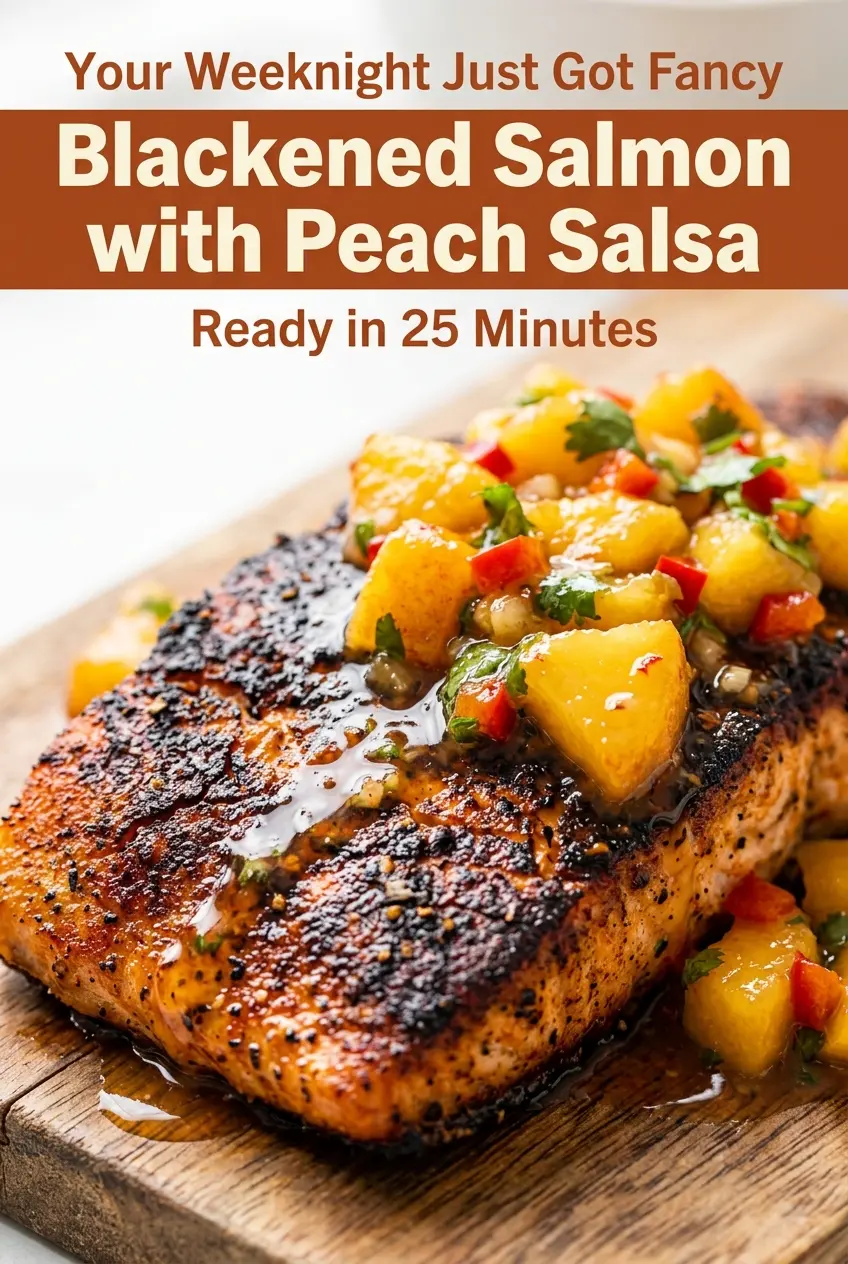
Blackened Salmon with Peach Salsa
Ingredients
Equipment
Method
- In a medium bowl, combine peaches, red onion, bell pepper, jalapeño, cilantro, lime juice, honey, and kosher salt. Toss gently, then set aside to marinate while you cook the salmon.
- In a small bowl, stir together smoked paprika, cayenne, garlic powder, onion powder, dried thyme, dried oregano, kosher salt, and black pepper. Mix until the spice rub is evenly combined.
- Pat the salmon fillets dry with paper towels, then rub olive oil over both sides. Coat generously with the spice mixture, pressing it into the flesh.
- Heat a cast-iron skillet over medium-high heat until very hot, about 2 minutes. Keep the skillet hot so the crust can form quickly.
- Add the salmon skin-side up and sear for 3–4 minutes until a dark, blackened crust forms. If it’s smoking heavily, keep the heat steady rather than lowering it too soon.
- Flip the salmon and cook 3–4 minutes more, until the internal temperature reaches 130–135°F and the flesh flakes easily with a fork. Watch for doneness before the crust over-darkens.
- Let the salmon rest for 2 minutes off heat. Top each fillet generously with peach salsa and serve immediately.