
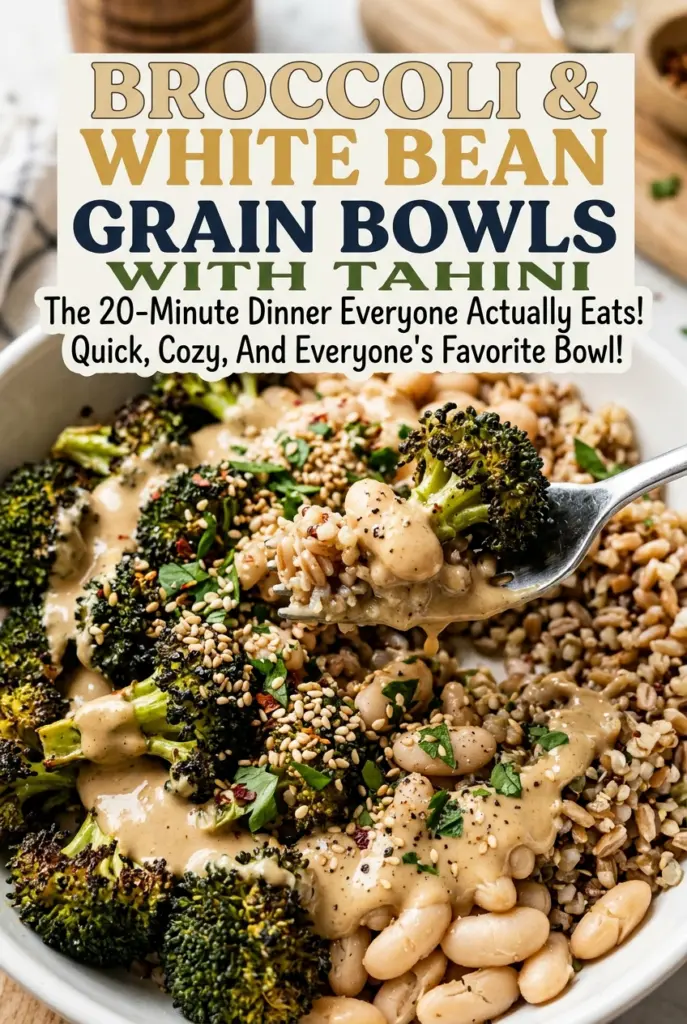
Broccoli and White Bean Grain Bowls with Tahini
The broccoli tells you when these bowls are ready: the edges turn brown and crisp while the florets stay tender inside. The cannellini beans won’t look the same; they warm…
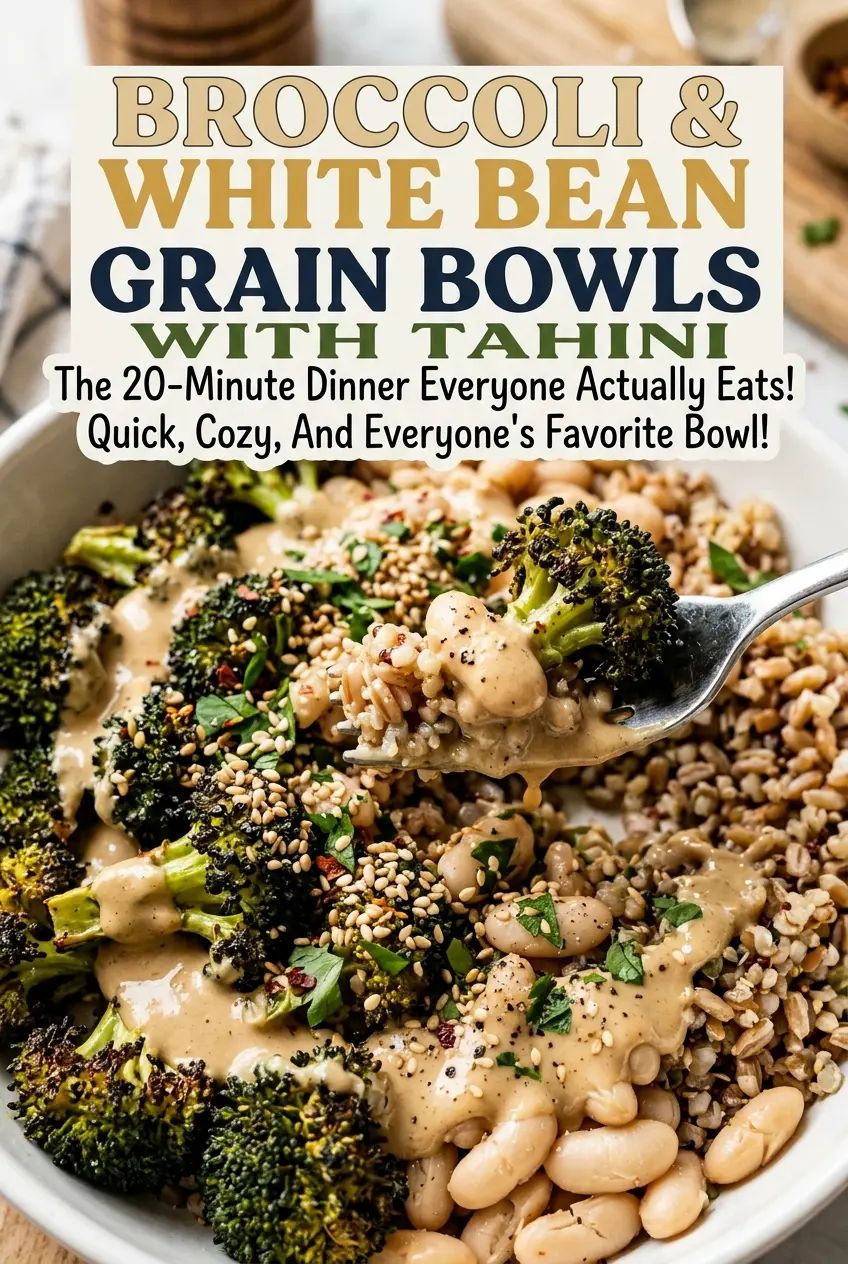
Tip: save now, cook later.The broccoli tells you when these bowls are ready: the edges turn brown and crisp while the florets stay tender inside. The cannellini beans won’t look the same; they warm through and stay creamy, which is exactly what I want beside the roasted vegetables. These broccoli and white bean grain bowls with tahini make a filling meal without asking you to juggle several pans on the stove.
I cook the quinoa while the oven handles the broccoli and beans, then stir together a lemony tahini sauce as everything finishes. The sauce starts thick, so I add warm water gradually and stop when it falls easily from a spoon. That contrast—the nutty dressing against the browned broccoli and fluffy quinoa—is what makes each bowl feel complete. The leftovers are easy to keep in separate parts, too, so the roasted edges don’t soften before you’re ready to eat.
Kitchen Note
Give the quinoa its full covered rest after the water has absorbed. It can look a little damp when it first comes off the heat, but those extra 5 minutes help the grains finish and separate when you fluff them.
Save these broccoli and white bean grain bowls with tahini for a hearty, plant-based meal with browned broccoli and a creamy lemon dressing.
Why the Beans Stay Creamy While the Broccoli Gets Browned Edges
It’s easy to expect every ingredient on a sheet pan to brown at the same rate. Here, the broccoli is the visual cue to watch: it should be tender with browned edges. The beans only need to be hot. Their soft centers give the bowl a creamy bite, while the broccoli supplies the roasted, slightly crisp contrast.
That difference matters when you judge whether the pans need more time. Waiting for the cannellini beans to look as browned as the broccoli can leave the florets overcooked. The finished bowl works because the quinoa is mild, the beans are soft, and the broccoli brings the deeper roasted flavor. A drizzle of tahini sauce pulls those textures together without turning the whole bowl into a heavy, coated dish.
What the Quinoa, Cannellini Beans, and Tahini Each Bring
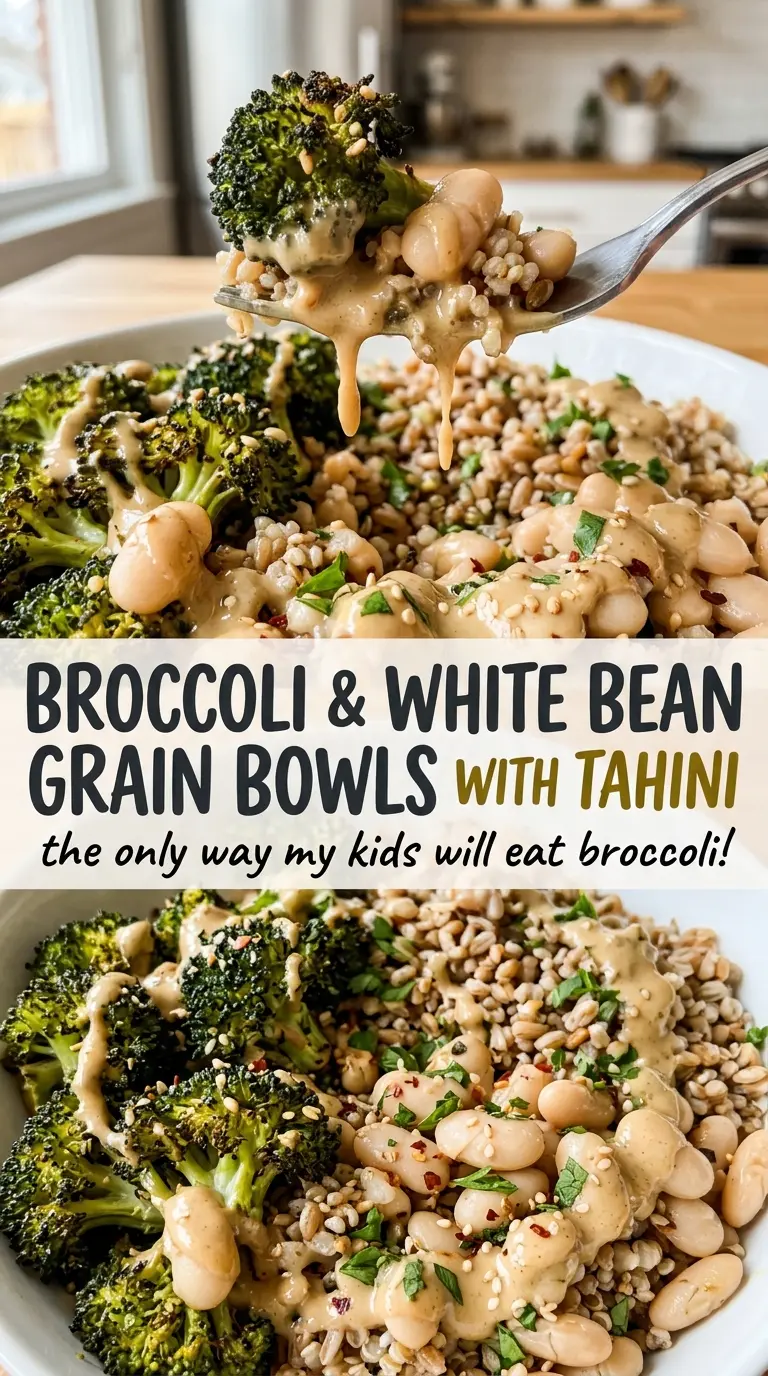
- Quinoa — Rinsing it under cool water helps wash away its naturally bitter coating, and it gives the bowls a light, fluffy base. There isn’t a like-for-like replacement among the other ingredients; leaving it out makes a grain-free bowl that’s less substantial.
- Cannellini beans — Their mild flavor and tender texture balance the roasted broccoli. Patting them dry before they go on the pans reduces surface moisture, which helps the vegetables roast instead of sitting in a wet layer. If you need a bean-free bowl, leave them out and divide the remaining components among the bowls; the result will be less filling.
- Broccoli — Fresh florets are what develop the browned edges that give the bowl its roasted character. Keep the florets in manageable, similar-sized pieces so they cook at a similar pace. Frozen broccoli releases more moisture and won’t give you the same result.
- Tahini — This ground sesame paste makes the sauce creamy and nutty in a way olive oil alone can’t. Stir it well before measuring if oil has separated in the jar. There’s no direct substitute among the other ingredients; you can leave the sauce off, but the bowls will be less creamy and tangy.
- Lemon juice and garlic — Lemon keeps the tahini from tasting too heavy, and finely grated garlic spreads through the sauce without leaving large, sharp pieces. Garlic powder seasons the vegetables more evenly than fresh garlic would during roasting. The recipe uses both forms for different jobs.
How to Roast the Broccoli and Beans Without Losing Their Contrast
Rinse and Simmer the Quinoa
Rinse the quinoa in a fine-mesh strainer under cool water, then put it in a medium saucepan with the water and salt. Bring it to a boil, cover the pan, and reduce the heat to low. Simmer for 15 minutes, until the water has been absorbed, then take the pan off the heat and leave it covered for 5 minutes. Fluff with a fork before serving; stirring it vigorously can break up the light grains.
Give the Vegetables Room on Two Pans
Heat the oven to 425°F and line two rimmed baking sheets with parchment paper. Divide the broccoli and patted-dry beans between the pans, then drizzle with olive oil and sprinkle with garlic powder, salt, and pepper. Toss until everything is coated, and spread it into an even layer. If the pieces are piled on top of each other, they’ll steam rather than roast evenly.
Roast Until the Broccoli Edges Brown
Roast for 20 to 25 minutes, tossing once halfway through. Look for tender broccoli with browned edges, and check that the beans are hot. Don’t judge the beans by the broccoli’s color; they’re ready when heated through. Pull the pans when the broccoli is tender so it doesn’t lose its texture while you finish the sauce.
Whisk the Tahini Until It Pours
Whisk the tahini, lemon juice, finely grated garlic, and salt in a small bowl. Whisk in 3 tablespoons of warm water, then add more 1 tablespoon at a time until the sauce is smooth and pourable. Tahini often tightens when liquid first hits it, so keep whisking rather than deciding it has failed. Divide the quinoa, broccoli, and beans among four bowls and drizzle the sauce over them.
Three Simple Ways to Adapt These Grain Bowls
Make the Bowls Grain-Free
Leave out the quinoa and divide the roasted broccoli and beans among the four bowls, then finish with tahini sauce. It’s a grain-free, plant-based variation, though it won’t be as filling as the quinoa version.
Soften the Garlic in the Sauce
Omit the grated garlic clove from the tahini sauce and keep the garlic powder on the vegetables. The dressing will taste milder and less sharp, while the roasted broccoli and beans still have their savory seasoning.
Make the Dressing More Lemon-Forward
When loosening the tahini, replace some of the warm water with lemon juice. The sauce will taste brighter and more tart; add the liquid gradually so it stays smooth and pourable.
Storage and Reheating
- Refrigerator: Store the quinoa, vegetables, beans, and tahini sauce separately in airtight containers for up to 4 days. The broccoli softens as it sits.
- Freezer: Freeze the quinoa and roasted broccoli and beans in separate airtight containers for up to 2 months. Thaw overnight in the refrigerator; keep the tahini sauce out of the freezer.
- Reheating: Warm the quinoa and vegetables in the microwave until steaming, then add the tahini sauce. Heating the sauce along with the bowl can make it too thick, so keep it separate until serving.
Questions That Come Up When Making These Bowls
Broccoli and White Bean Grain Bowls with Tahini
Ingredients
Equipment
Method
- Rinse the quinoa in a fine-mesh strainer under cool water.
- Combine the quinoa with the water and salt in a medium saucepan.
- Bring to a boil, cover, and reduce the heat to low.
- Simmer for 15 minutes, until the water is absorbed.
- Remove from the heat and let stand covered for 5 minutes.
- Fluff with a fork.
- Heat the oven to 425°F.
- Line two rimmed baking sheets with parchment paper.
- Divide the broccoli and beans between the baking sheets.
- Drizzle with the olive oil, and sprinkle with the garlic powder, salt, and pepper.
- Toss to coat and spread into an even layer.
- Roast for 20 to 25 minutes, tossing once halfway through, until the broccoli is tender with browned edges and the beans are hot.
- Whisk the tahini, lemon juice, garlic, and salt in a small bowl.
- Whisk in 3 tablespoons of warm water.
- Add more water, 1 tablespoon at a time, until the sauce is smooth and pourable.
- Divide the quinoa, roasted broccoli, and beans among four bowls.
- Drizzle with the tahini sauce.