
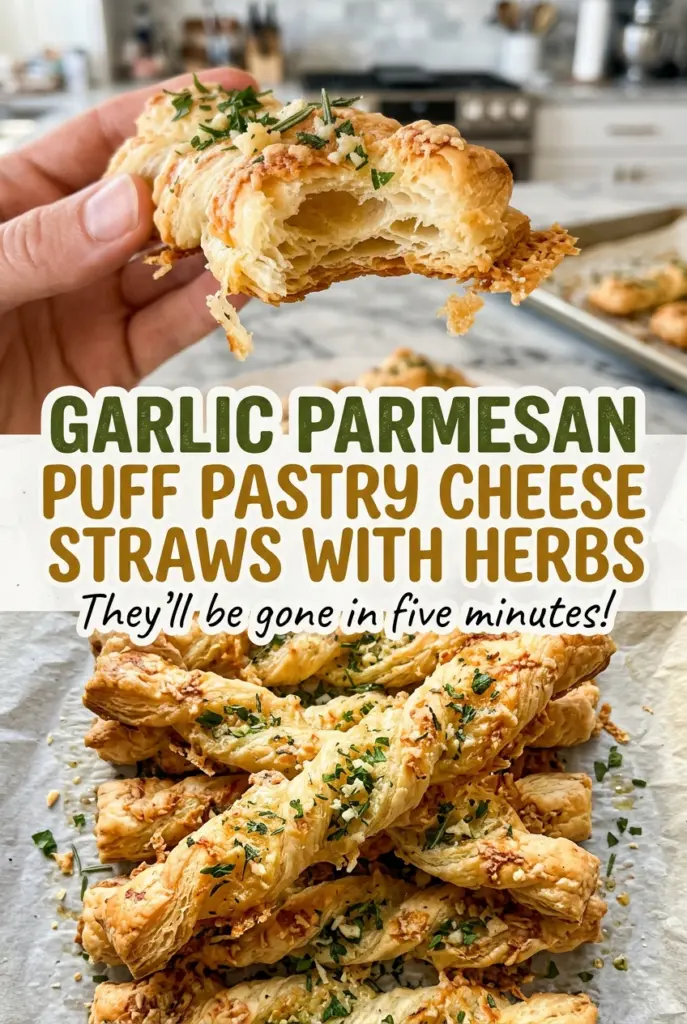
Garlic Parmesan Puff Pastry Cheese Straws with Herbs
The pastry is easiest to handle when it bends without cracking but still feels cold under your fingertips. That small window matters with these garlic Parmesan puff pastry cheese straws:…
Tip: save now, cook later.The pastry is easiest to handle when it bends without cracking but still feels cold under your fingertips. That small window matters with these garlic Parmesan puff pastry cheese straws: warm dough gets floppy, and the cheese can smear instead of staying in an even layer. I keep the pastry on parchment from the first roll to the oven, so the shaped twists are easy to transfer without pulling them out of shape.
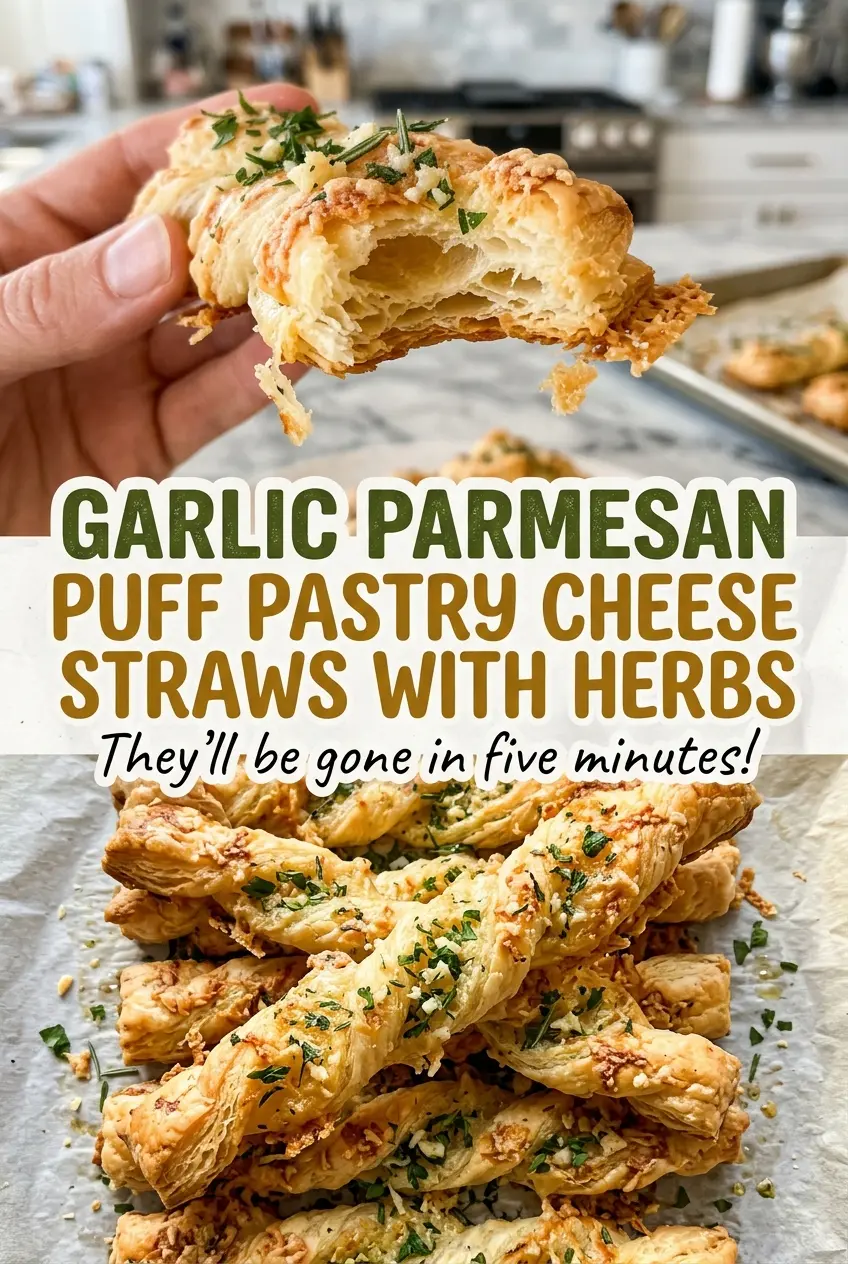
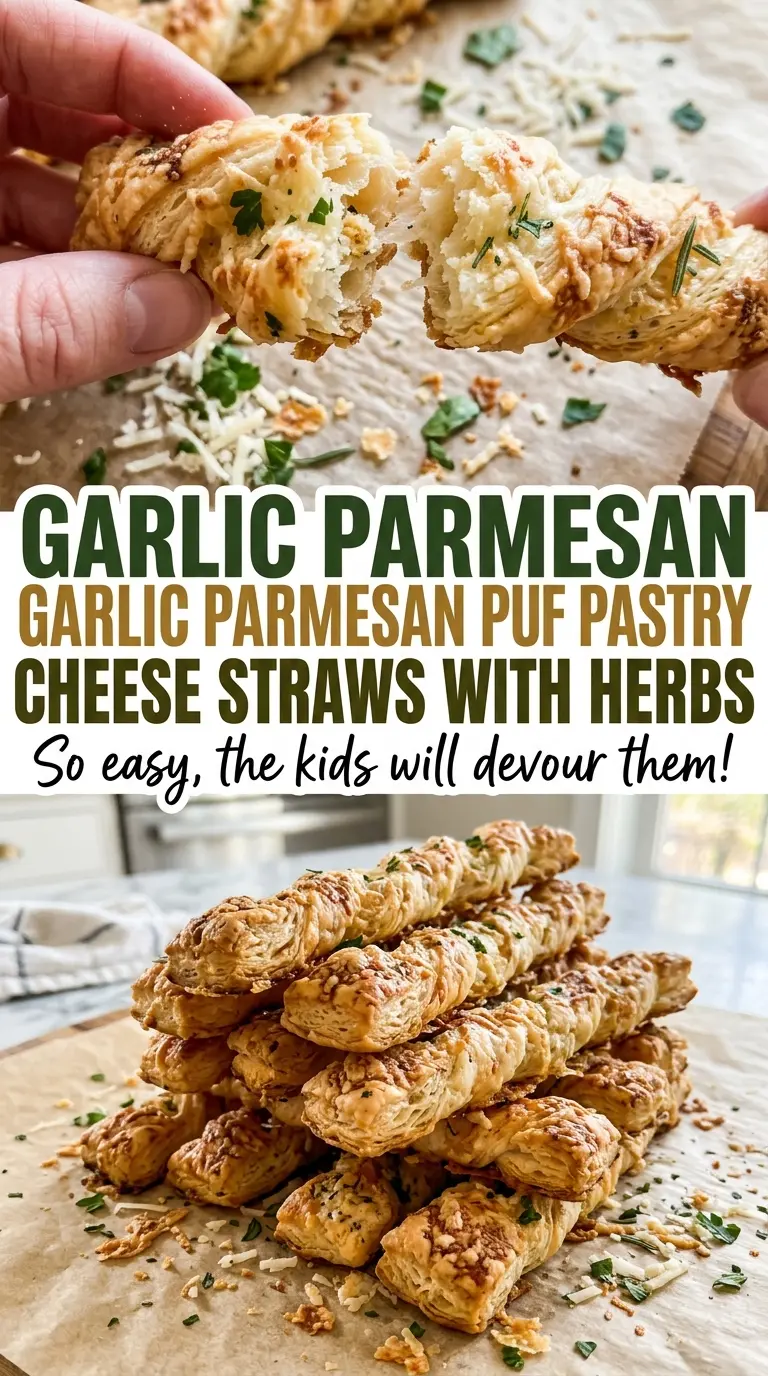
The cheese goes between two layers of pastry, not just on top, which gives every bite a savory center and leaves the outside free to puff and turn golden. A few gentle twists show off the flaky layers without compressing them. Once baked, the straws are crisp at the edges, tender through the middle, and ready to serve after a brief rest on the pan.
Kitchen Note
A few turns are enough to give each straw its twist. Cranking the strips into tight ropes compresses the pastry layers, so keep the turns relaxed and let the oven do the puffing.
Save these garlic Parmesan puff pastry cheese straws for a savory snack with flaky layers and a garlicky herb center.
Why the Parmesan Belongs Between Two Layers of Pastry
Putting the cheese mixture inside the fold changes how these straws bake. Parmesan scattered across the whole pastry is exposed directly to the oven, where it can brown quickly and slip away from the surface. Here, the first brush of egg helps the cheese mixture settle against the pastry, and the folded sheet holds most of it in place as the layers puff.
The outside still gets its own light egg wash, so the straws brown without needing a coating of cheese on top. Press the folded pastry gently to help the layers adhere; pushing hard can squeeze the seasoning toward the edges, leaving some twists with more filling than others. Spread the cheese mixture evenly before folding, especially near the corners. That even distribution gives the cut strips a similar amount of Parmesan and seasoning from end to end.
This inside-out approach also makes the twists easier to handle. The filling is enclosed before the pastry is cut into narrow strips, so you can twist each piece without trying to keep a loose layer of cheese balanced on the surface.
What the Pastry, Parmesan, and Egg Wash Each Bring
- Puff pastry — One sheet from a 17.3-ounce package gives the intended size and number of strips. It needs to be thawed but cold: pliable enough to roll, not soft or sticky. There isn’t a simple replacement that gives the same layered, flaky result, so keep the puff pastry for this version.
- Parmesan — Finely grated cheese spreads in a thin layer and folds neatly inside the pastry. A finely grated Parmesan gives the most even coverage; large shreds are more likely to bunch up when the pastry is folded. There isn’t a like-for-like swap among the other ingredients here, since the cheese provides the savory filling as well as its salty, nutty taste.
- Egg and water — Whisking them together makes a brushable wash that works both beneath the filling and on the outside. Use the large egg as listed; the water loosens it so it can cover the pastry in a thin coat. Skipping the egg changes both the adhesion inside the fold and the golden finish on top.
- Dried Italian seasoning — The dried herbs distribute evenly through the grated cheese and stay in place when the pastry is folded. Use the dried blend for this method; fresh herbs would bring extra moisture and won’t behave the same way in the thin filling.
- Garlic powder and black pepper — Both are finely textured, so a small amount seasons the cheese throughout rather than leaving large pieces in individual bites. Garlic powder is the useful choice here for an even garlic note; the black pepper adds a mild, warm bite. If you don’t want pepper, leave it out rather than replacing it with another ingredient.
Rolling and Twisting the Pastry Without Losing the Layers
Get the Oven and Pastry Ready
Heat the oven to 400°F and set out an 18×13-inch rimmed baking sheet. Whisk the egg with the water in a small bowl, then stir the Parmesan, Italian seasoning, garlic powder, and black pepper together in a separate bowl. Keeping the two mixtures separate makes it easy to brush the pastry first and distribute the cheese mixture afterward. Lay the pastry on parchment before rolling so the cut twists can stay on the same sheet for baking.
Roll the First Rectangle and Add the Filling
Roll the pastry into a 10×12-inch rectangle on the parchment. Brush about half of the egg mixture over the surface, then scatter the Parmesan mixture evenly across it. Fold the pastry in half to cover the cheese and press gently to adhere. If the cheese is piled in spots, redistribute it before folding so the filling isn’t concentrated in just a few straws.
Roll, Wash, and Cut Even Strips
Roll the folded pastry into a 10×6-inch rectangle, then brush the top with the remaining egg mixture. Cut across the 10-inch side into twenty strips, each 1/2 inch wide and about 6 inches long. Keeping the strips close in width helps them bake at a similar pace. If the cut edges look uneven, trim them into consistent strips before twisting rather than trying to correct the shape afterward.
Twist and Bake Until Golden
Twist each strip a few times and arrange the twists about 1/2 inch apart on the parchment. Slide the parchment onto the baking sheet, then bake for 14 to 18 minutes, rotating the sheet halfway through. Look for pastry that has puffed and turned golden brown; pale, flat-looking sections need more time within that range. Cool the straws on the baking sheet for 5 minutes before serving so the hot pastry has a chance to settle.
Two Small Changes for a Different Batch
A gentler, pepper-free version
Leave out the black pepper and keep the Parmesan, Italian seasoning, and garlic powder. The straws will still have a savory, herby filling, with less of the pepper’s warm bite.
More pronounced spiral ridges
After cutting the strips, give each one a few closer turns before setting it on the parchment. The tighter-looking spiral makes the herbs and cheese peek through the twists, while the pastry still puffs into distinct layers.
Storage and Reheating
- Refrigerator: Store cooled straws in an airtight container for up to 3 days. The pastry will lose some crispness in the refrigerator.
- Freezer: Freeze the cooled straws in a single layer, then transfer them to an airtight freezer container for up to 1 month. Thaw before reheating for the most even crisping.
- Reheating: Warm them on a baking sheet at 350°F for about 5 minutes, until crisp. Avoid the microwave, which softens the pastry layers.
Questions I Get Asked About These Cheese Straws
Garlic Parmesan Puff Pastry Cheese Straws with Herbs
Ingredients
Equipment
Method
- Heat the oven to 400°F and set out an 18x13-inch rimmed baking sheet.
- Whisk the egg and water together in a small bowl.
- Stir the Parmesan, Italian seasoning, garlic powder, and black pepper together in a separate bowl.
- Place the pastry on a sheet of parchment paper and roll it into a 10x12-inch rectangle.
- Brush the pastry with about half of the egg mixture.
- Scatter the Parmesan mixture evenly over the pastry.
- Fold the pastry in half to cover the cheese and press gently to adhere.
- Roll the folded pastry into a 10x6-inch rectangle.
- Brush the top with the remaining egg mixture.
- Cut across the 10-inch side into twenty 1/2-inch-wide strips, each about 6 inches long.
- Twist each strip a few times.
- Arrange the strips about 1/2 inch apart on the parchment and slide the parchment onto the baking sheet.
- Bake for 14 to 18 minutes, rotating the sheet halfway through, until the straws are puffed and golden brown.
- Cool the straws on the baking sheet for 5 minutes before serving.