
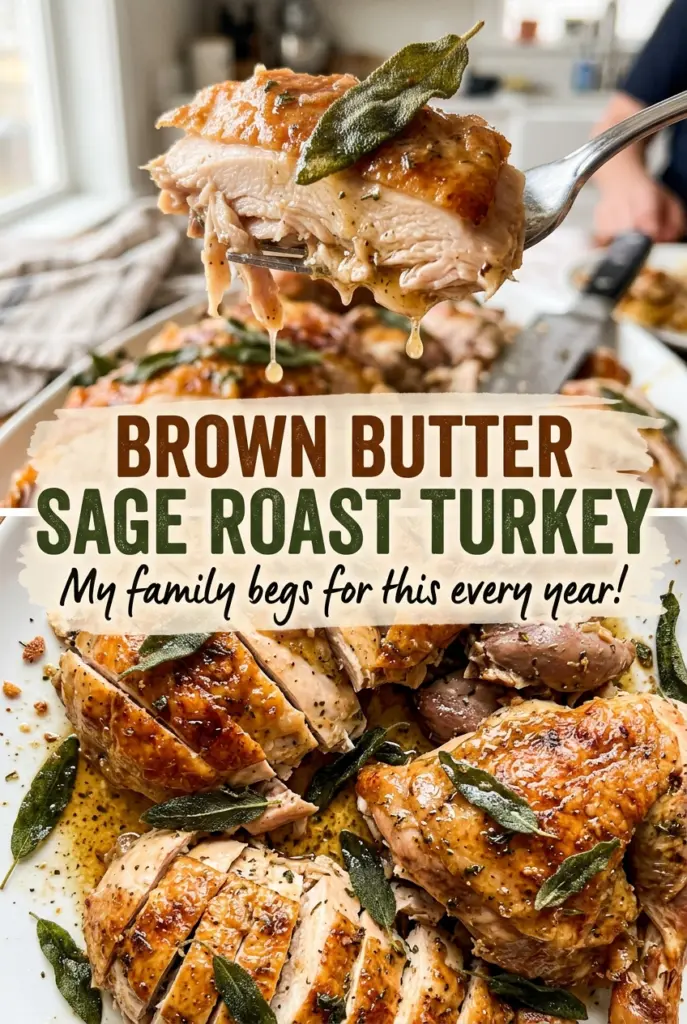
Brown Butter Sage Roast Turkey
As the butter melts, the kitchen starts to smell nutty, and then the milk solids turn golden almost all at once. That short window is what gives this Brown Butter…
Tip: save now, cook later.As the butter melts, the kitchen starts to smell nutty, and then the milk solids turn golden almost all at once. That short window is what gives this Brown Butter Sage Roast Turkey its warm, toasted flavor instead of tasting like plain butter with herbs stirred in.
I let the butter cool until it’s thick enough to spread, then work it under the breast and thigh skin as well as over the outside. The onion, lemon, and celery go in the cavity, while a little water in the pan catches the drippings. The result is turkey with sage tucked close to the meat and golden skin on the outside.
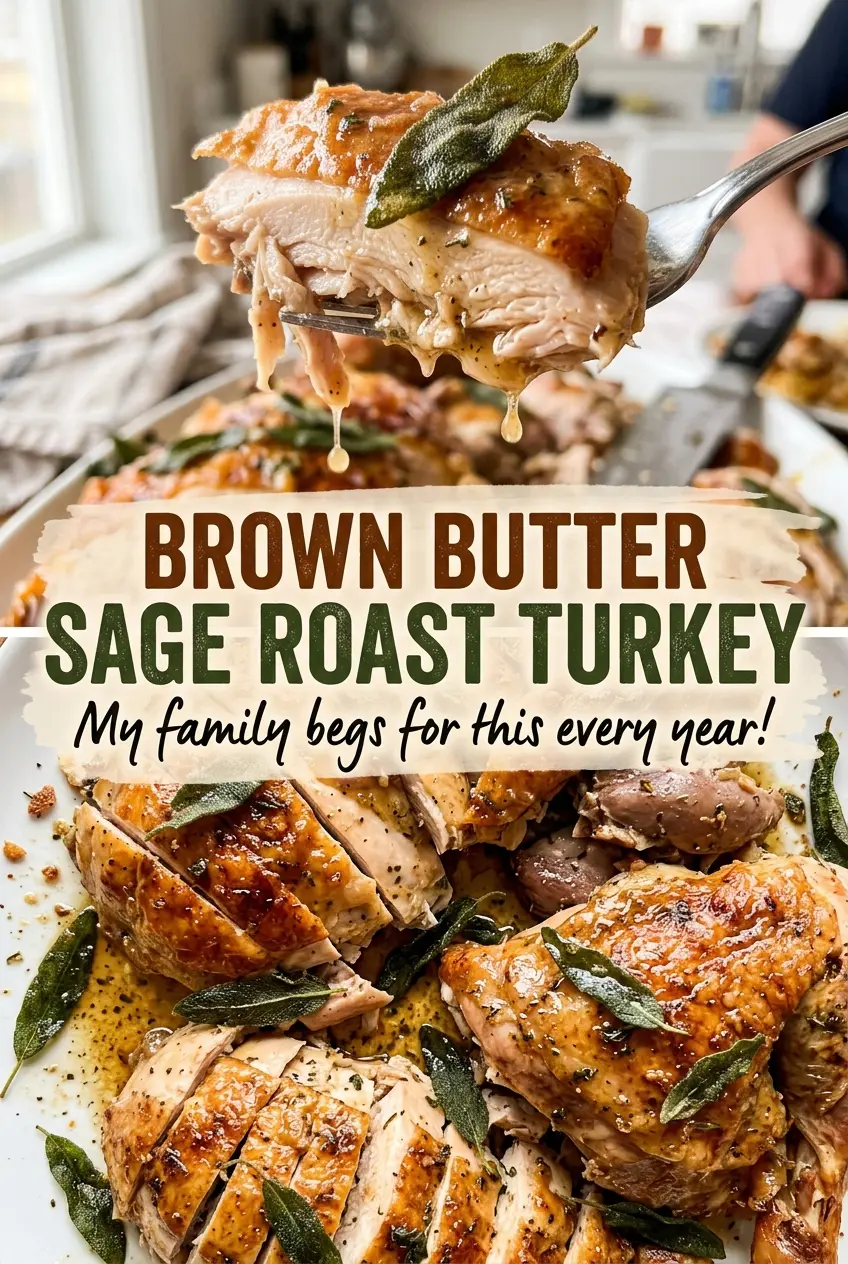
Kitchen Note
Stir the sage through the butter now and then as it cools. That keeps the herbs distributed instead of letting them settle while the butter thickens.
Save this Brown Butter Sage Roast Turkey for a crisp-skinned centerpiece with nutty butter and fresh sage worked under the skin.
Why the Sage Butter Goes Under the Skin, Not Just On Top
Rubbing herb butter over a turkey flavors the skin, but the skin is still between that butter and the meat. Loosening it over the breast and thighs gives the sage butter a place to sit directly against the turkey, while the butter on the outside helps the skin take on color. Both applications have a job; one doesn’t replace the other.
Brown butter adds a toasted, nutty note before the fresh sage goes in. It’s a small change from plain melted butter, but the flavor carries through the meat and into the skin. Don’t expect the butter to act like a seal or shorten the roasting time. This is still a whole bird, and the breast and innermost thigh need to reach the right temperature independently. The useful part of spreading the butter in two places is that the sage flavor isn’t limited to the very outside of each slice.
What the Butter, Sage, and Cavity Aromatics Bring to the Turkey
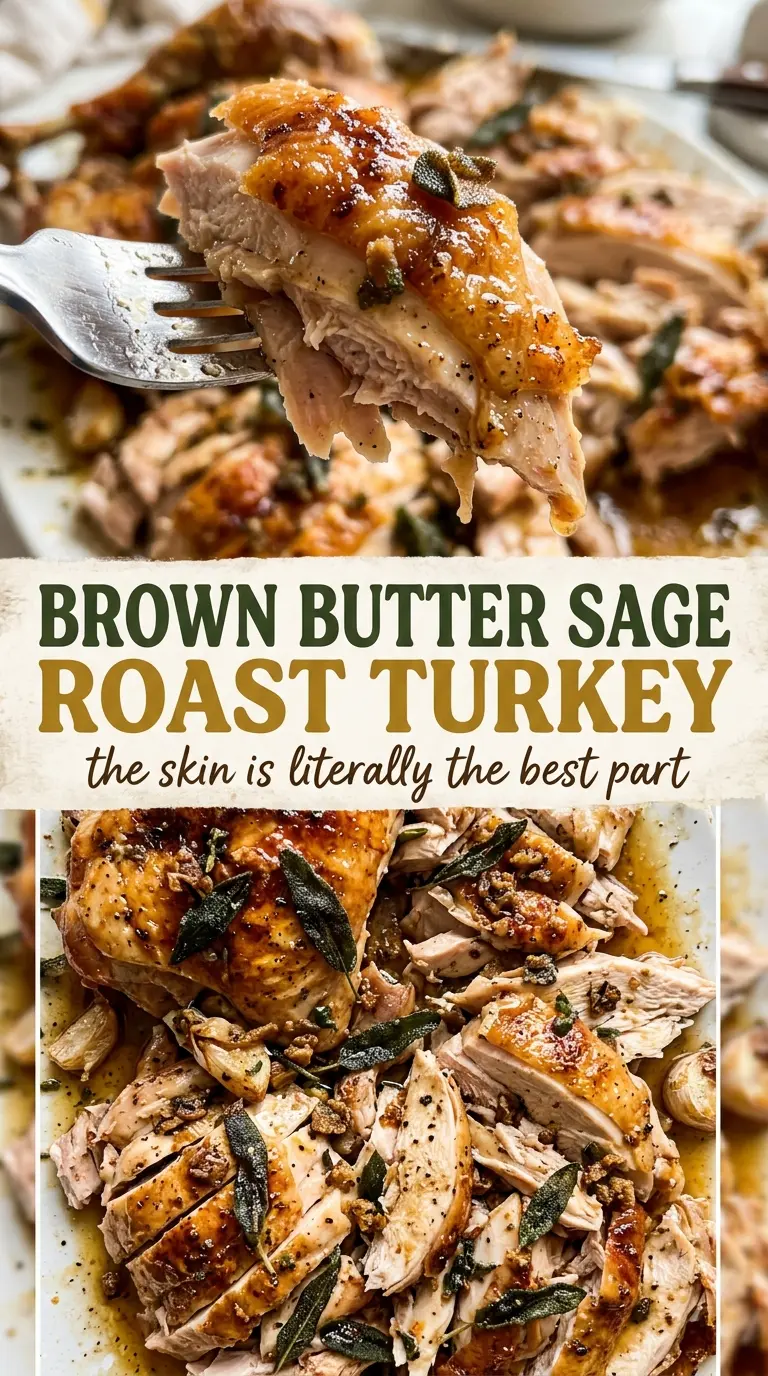
- Unsalted butter — Butter browns because its milk solids toast, bringing a nutty flavor that oil won’t reproduce. A regular store-brand butter works well here; the important part is watching for golden solids rather than choosing a premium brand. Olive oil is the practical dairy-free alternative, but it won’t brown like butter.
- Fresh sage — Finely chopped leaves distribute through the butter and give it an earthy, savory aroma. Fresh sage is worth seeking out for this preparation; dried sage has a different texture and is more concentrated. Fresh rosemary can stand in for the sage, with a sharper, pine-like result.
- Whole turkey — Choose a fully thawed bird in the specified size range, with the neck and giblets removed. A smaller or larger bird changes the roasting time, so there isn’t a reliable one-for-one swap that keeps the same timing.
- Onion, lemon, and celery — These aromatics sit in the cavity as the turkey roasts, adding gentle savory and citrus notes. Use a fresh lemon with an intact rind; there’s no need for a specialty variety. An orange can replace the lemon for a rounder, sweeter citrus aroma.
- Water in the roasting pan — It gives the drippings some liquid in the pan as the turkey roasts. Use plain water; the onion, lemon, celery, and sage already provide the aromatics in this version.
Brown the Butter First, Then Roast the Turkey Undisturbed
Toast the Butter Until the Solids Turn Golden
Melt the butter in a small saucepan over medium heat, swirling often for 5 to 7 minutes. It will foam as it cooks, and the milk solids will settle and turn golden brown. Take it off the heat when it smells nutty and the solids are golden, before they turn dark. Pour it into a heatproof bowl and stir in the finely chopped sage.
Give the Sage Butter Time to Thicken
Cool the butter for 25 to 40 minutes, stirring occasionally. It should be thick but spreadable, not hot and runny; liquid butter slides away when you try to work it under the skin. While it cools, heat the oven to 325°F and set a rack in the lower-middle position. Place a rack inside a 16×13-inch roasting pan.
Season and Butter Beneath the Skin
Pat the fully thawed turkey dry, tuck the wing tips under, then season the outside and cavity with kosher salt and black pepper. Gently loosen the skin over the breast and thighs with your fingers. Spread the sage butter under the skin and over the outside, easing it into place rather than pulling hard enough to tear the skin. Put the quartered onion and lemon and the celery pieces in the cavity, set the turkey breast-side up on the rack, and pour the water into the pan.
Roast to Temperature, Then Rest Before Carving
Roast for 3 to 3 3/4 hours. If the skin gets too dark before the turkey is done, tent it loosely with foil. Check the thickest part of the breast and the innermost thigh with a thermometer, keeping it away from bone; both spots should read 165°F. Transfer the turkey to a carving board and let it rest for 30 minutes before carving.
Three Flavor Changes That Still Work With a Whole Roast Turkey
Use rosemary instead of sage
Replace the finely chopped fresh sage with the same amount of finely chopped fresh rosemary in the butter. The turkey keeps its herb-butter coating, but the aroma turns brighter and more piney, with less of sage’s earthy character.
Swap the lemon for an orange
Put one quartered orange in the cavity in place of the quartered lemon. Its aroma is sweeter and less sharp, so the sage and browned butter come through more prominently.
Make the herb coating dairy-free
Replace the butter with the same amount of olive oil, stir in the chopped sage, and skip the browning and cooling steps. Rub the mixture under the loosened skin and over the turkey as you would the butter. You’ll lose the toasted milk-solid flavor, but keep the fresh sage and a savory herb coating.
Storage and Reheating
- Refrigerator: Refrigerate carved leftovers within 2 hours and eat within 3 to 4 days. The skin softens in storage, but the meat stays good for sandwiches and reheated meals.
- Freezer: Remove the meat from the bones, pack it airtight, and freeze for 3 to 4 months for best quality. Thaw it in the refrigerator before reheating.
- Reheating: Cover the turkey in an oven-safe dish and warm it in a 325°F oven with a splash of water until it reaches 165°F. Leaving the meat uncovered can dry it out before the center is hot.
Questions That Come Up When Roasting This Turkey
Brown Butter Sage Roast Turkey
Ingredients
Equipment
Method
- Melt the butter in a small saucepan over medium heat, swirling often, for 5 to 7 minutes until the milk solids are golden brown and smell nutty.
- Pour the brown butter into a heatproof bowl and stir in the sage.
- Cool for 25 to 40 minutes, stirring occasionally, until thick but spreadable.
- Heat the oven to 325°F and set a rack in the lower-middle position.
- Place a rack inside a 16x13-inch roasting pan.
- Pat the turkey dry and tuck the wing tips under.
- Season the turkey all over and inside the cavity with the salt and pepper.
- Gently loosen the skin over the breast and thighs.
- Spread the sage butter under the skin and over the outside of the turkey.
- Put the onion, lemon, and celery in the cavity.
- Set the turkey breast-side up on the roasting rack.
- Pour the water into the pan.
- Roast for 3 to 3 3/4 hours, tenting loosely with foil if the skin gets too dark, until a thermometer inserted into the thickest part of the breast and the innermost thigh reads 165°F without touching bone.
- Transfer the turkey to a carving board and let it rest for 30 minutes before carving.