
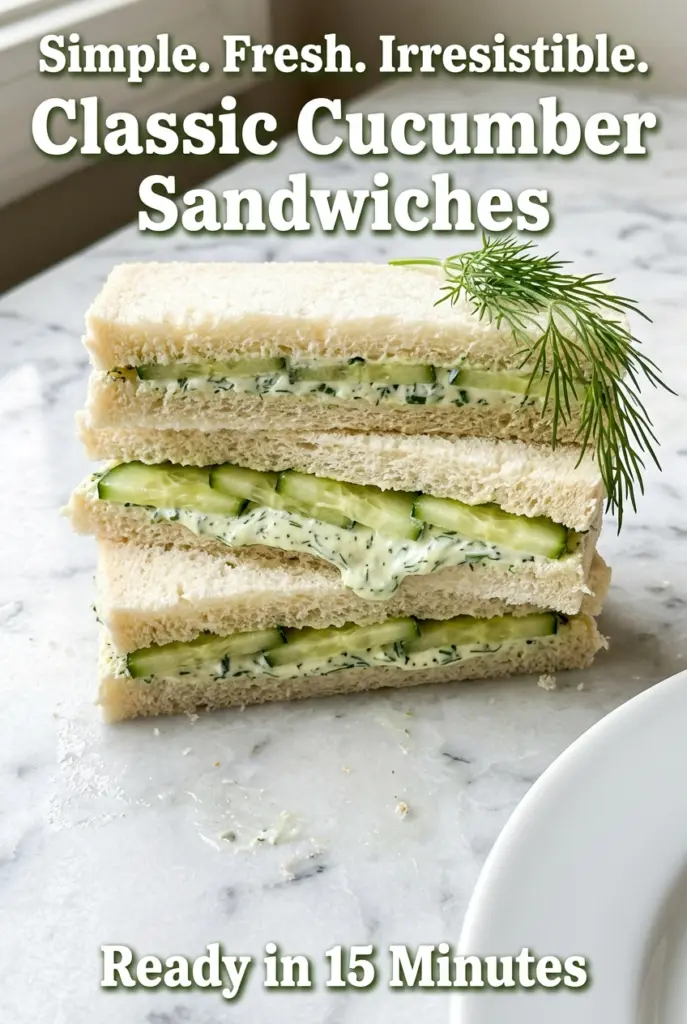
Classic Cucumber Sandwich
Cool cucumber sandwiches earn their place because they disappear fast. The best ones are soft, creamy, and neatly chilled, with thin cucumber slices that still taste crisp instead of watery.…
Tip: save now, cook later.Cool cucumber sandwiches earn their place because they disappear fast. The best ones are soft, creamy, and neatly chilled, with thin cucumber slices that still taste crisp instead of watery. This version keeps that balance by using a sturdy herbed cream cheese spread that hugs the bread and seasons every bite without drowning out the cucumber.
The trick is in the prep. English cucumber brings the cleanest crunch and the fewest seeds, and patting the slices dry keeps the bread from turning damp. A little sour cream loosens the filling just enough to spread easily, while dill, chives, lemon, and a pinch of white pepper keep the flavor fresh and bright instead of heavy.
Below you’ll find the small details that matter most, from keeping the sandwiches neat enough for a tea tray to the best way to hold them for a short make-ahead window.
I made these for a shower and they held together beautifully for about an hour. The cream cheese spread was fluffy, and the cucumber stayed crisp because I patted it dry like you said. Even the people who “don’t like cucumber sandwiches” went back for seconds.
Save these classic cucumber sandwiches for the next tea tray, shower platter, or light lunch when you want something cool, creamy, and neatly polished.
The Part That Stops Cucumber Sandwiches From Going Soggy
The biggest mistake with cucumber sandwiches is treating them like ordinary tea sandwiches and letting moisture do what moisture always does: soften the bread. Cucumbers release water after they’re sliced, especially if they sit around salted or untrimmed, and that water migrates straight into the bread if you don’t give it somewhere else to go first. That’s why these hold together better than the pale, floppy versions people remember from buffets.
Soft bread matters here, but it needs a barrier. A full layer of cream cheese mixture from edge to edge seals the surface, while the dried cucumber slices stay crisp in the center. If your sandwiches ever turned limp before serving, this is usually the fix: dry the cucumber well, spread generously, and chill briefly before cutting.
What the Cream Cheese Spread Is Really Doing

Cream cheese is the structure and the richness. Full-fat cream cheese gives the spread enough body to hold the cucumber in place, and lower-fat versions can work, but they tend to feel looser and less plush. Let it soften fully before mixing or you’ll end up chasing little lumps around the bowl.
Sour cream lightens the texture so the filling spreads without tearing the bread. Fresh dill and chives bring the clean herbal note that makes the sandwich taste finished instead of plain. Lemon juice wakes everything up, and the garlic powder, onion powder, salt, and white pepper round out the spread without turning it into dip.
English cucumber is the right choice because the skin is thinner, the seeds are smaller, and the flavor stays mild. Regular slicing cucumbers work in a pinch, but they usually need a longer dry time and a little more seed trimming to avoid extra moisture.
Building the Sandwiches So They Hold Their Shape
Make the spread first
Beat the softened cream cheese with the sour cream until it looks smooth and billowy, not dense or grainy. The herbs and seasonings should disappear into the mixture evenly, and the finished spread should be thick enough to hold a ridge when you drag a spoon through it. If the cream cheese is still cold, the mixture will fight you and leave pale streaks behind.
Dry the cucumber with purpose
Slice the cucumber thin and even, about an eighth of an inch, then lay the slices on paper towels and blot the tops dry. This step matters more than people think. Even a little surface moisture can seep into the bread while the sandwiches sit, and if you’re using thinner white bread, that turns into soft edges almost immediately.
Spread to the edges
Cover each slice of bread with a generous layer of the cream cheese mixture all the way to the crusts. That edge-to-edge coating protects the bread from cucumber moisture and keeps the corners from drying out while the center stays soft. If you leave bare spots, those are the first places that go stale or damp.
Press, trim, and cut cleanly
After topping the sandwiches, press them gently so the filling grips the bread without squishing the cucumbers flat. Chill briefly if you want very neat cuts, then use a sharp serrated knife to trim the crusts in confident strokes. A sawing motion without pressure gives the cleanest edges; if you press down, the filling squeezes out and the bread compresses into a ragged line.
Three Ways to Adapt These for Different Crowds
Make Them Gluten-Free Without Losing the Tea Sandwich Feel
Use a soft gluten-free sandwich bread with a fine crumb, not a hearty artisan loaf. You want something tender enough to mimic the original texture, because sturdy bread changes the whole bite and makes these feel more like a snack than a tea sandwich. Toasting is not the answer here; it makes them dry and too firm.
Swap in Dairy-Free Creaminess
Use a plain, unsweetened dairy-free cream cheese and replace the sour cream with a spoonful of unsweetened dairy-free yogurt or a little mayo for body. The texture will be slightly less plush, but the herbs and lemon still give it the same fresh, bright finish. Taste before spreading, because some dairy-free brands are saltier than standard cream cheese.
Turn Them Into Open-Faced Tea Bites
Leave the top bread off and cut each slice into four small squares or triangles after topping with cucumbers. This gives you a lighter bite and makes the cucumber layer more visible on a platter. The tradeoff is that the bread has less protection, so serve these soon after assembling.
Add a Little Crunch Without Overcomplicating It
A light sprinkle of flaky salt or everything bagel seasoning on the cucumber layer adds a little edge, but use it sparingly. Too much seasoning fights the clean cucumber flavor and makes the sandwich feel heavy. The goal is a quiet crunch, not a loud finish.
Storage and Reheating
- Refrigerator: Best within 2 hours of assembling, though they’ll hold about 4 hours if wrapped tightly with a damp paper towel over the top. After that, the bread starts to soften.
- Freezer: Don’t freeze these. The cucumber turns watery and the cream cheese filling loses its smooth texture when thawed.
- Reheating: No reheating needed. Serve them cold, straight from the refrigerator, and slice just before serving for the cleanest edges.
Questions I Get Asked About This Recipe
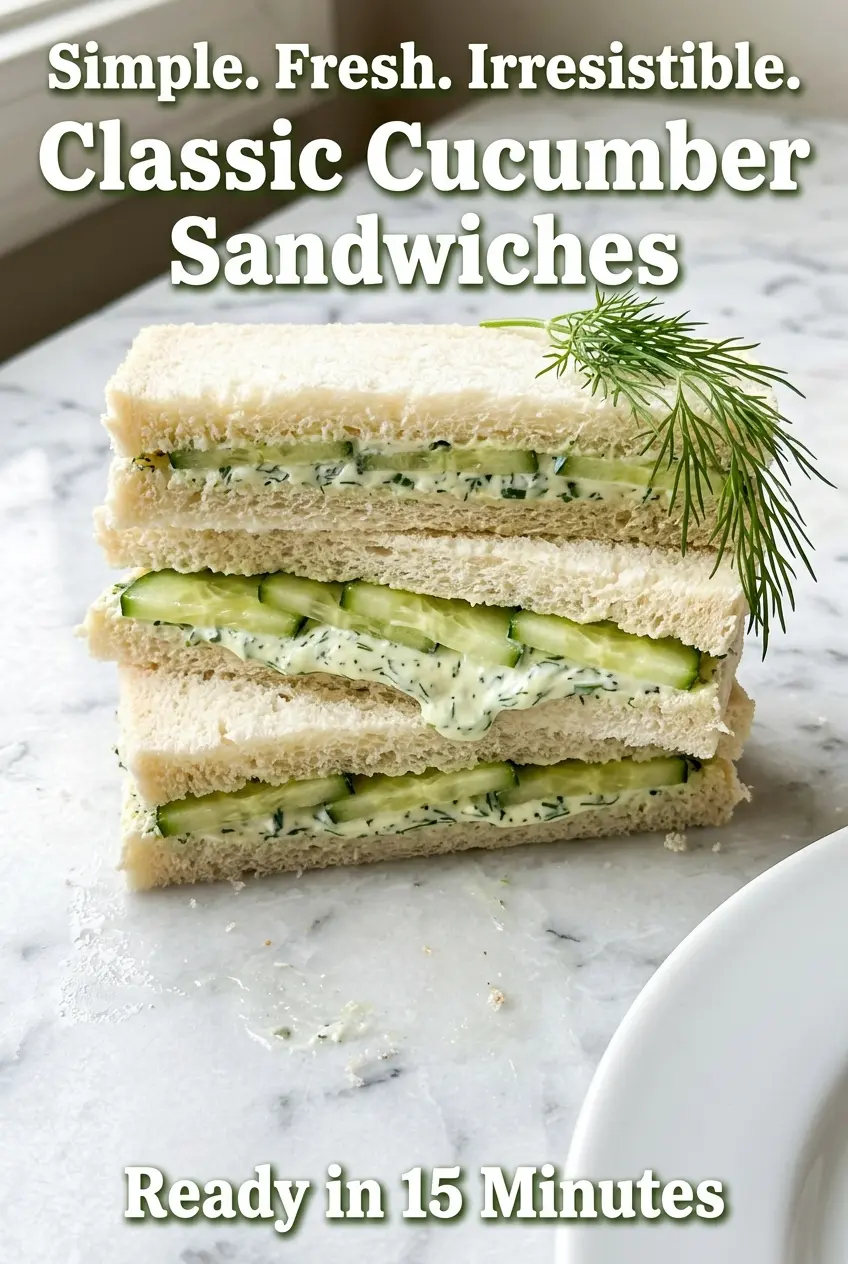
Classic Cucumber Sandwich
Ingredients
Method
- In a medium bowl, combine the softened cream cheese and sour cream, then beat with a fork or hand mixer until smooth and fluffy.
- Add the dill, chives, lemon juice, garlic powder, onion powder, salt, and white pepper, then stir until fully blended and taste to adjust seasoning.
- Slice the English cucumber into thin, even rounds about 1/8 inch thick, then pat dry with paper towels to remove excess moisture and prevent soggy bread.
- Lay out all bread slices and spread a generous, even layer of cream cheese mixture on every slice, spreading all the way to the edges.
- On 6 slices, arrange cucumber rounds in slightly overlapping layers, covering the bread completely.
- Press the remaining 6 bread slices on top, cream cheese side down, then press gently to help everything adhere.
- Using a sharp serrated knife, trim off all crusts with clean, confident cuts.
- Slice each sandwich into 3 finger sandwich rectangles or cut diagonally into 4 triangles.
- Arrange sandwiches on a serving platter, garnish with fresh dill sprigs, and serve immediately or cover with a damp paper towel and refrigerate up to 2 hours before serving.